More from Books

Slippery Jack

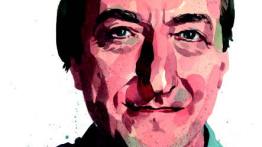
A mad, muscular Sally Bercow cavorts on the Commons chair, diminutive husband on her knee, his features impish. With a few scratches of the nib, the Independent’s merciless Dan Brown, in his cover design for this biography, passes judgment more viciously than Bobby Friedman manages over the next 250 often unexciting pages. The book is not entirely without merit. It is earnest in the manner of a schoolgirl’s essay. There are not too many spelling mistakes. The author has plainly made scores of telephone calls to old acquaintances of the man we must now, revoltingly, call Mr Speaker. Friedman deserves a B-plus for effort. His book is not, however, as vivid as it should have been, given the preening, sycophantic, short-tempered grotesque it has for a subject.

A fate worse than death

Hugo Vickers has already produced a well-documented and balanced biography of Queen Elizabeth, the Queen Mother. To follow this with the Duchess of Windsor is as bold a left-and-right as one could ask for; like writing biographies of Shylock and Antonio or Cain and Abel. ‘I will go to my grave,’ wrote the lady-in-waiting Frances Campbell-Preston, ‘trying to convince people that the Queen Mother did not hate the Duchess of Windsor.’ ‘Hate’ is a strong word; but the Duchess certainly hated the Queen Mother and Queen Elizabeth was as much as anyone responsible for the fact that the Duchess was never fully accepted by the royal family. The subtitle to Vickers’s new book is at first sight surprising.

Bookends: The last laugh

In July, the world’s most famous restaurant, elBulli, closes, to reopen in 2014 as a ‘creative centre’. Rough luck on the million-odd people who try for one of 8,000 reservations a year. It’s also a blow for the eponymous young cooks of Lisa Abend’s The Sorcerer’s Apprentices (Simon & Schuster, £18.99), the 45 stagiaires who labour in Ferran Adria’s kitchen for a season in the hope of sharing in the magic. Ferran, you see, is no mere cook. With him, ‘hot turns into cold, sweet into savoury, solid into liquid or air’. In July, the world’s most famous restaurant, elBulli, closes, to reopen in 2014 as a ‘creative centre’.

Great among the nations

The King James Bible, while uniting the English-speaking world, gave birth to centuries of radicalism and Dissent. On its 400th anniversary, Philip Hensher examines the translation’s legacy Considered as a book, the Bible is far too long. Its characterisation is not all it should be: its hero, God, seems totally inconsistent, varying from a prankster with a bizarre sense of humour (Job) to a sensible dispenser of advice. You can’t help feeling that it is really rather patchy in quality: some of it is wonderfully entertaining, such as the Acts of the Apostles and the two Books of Kings, but some of it doesn’t seem to be interested in entertaining the reader one bit. (Look at the difference between the stonking first line of Kings and the droning way Chronicles kicks off.

Cuckoo in the nest

Caradoc King, the well-known literary agent, was adopted in 1948 as a baby into a family of three girls, shortly joined by a fourth, presided over by a difficult, unhappy mother and her feebly adoring husband. He grew up unaware of the adoption and has never discovered its motive. His adoptive mother, Jill, the moving spirit behind every family decision, may have simply longed for a boy. If so, she was singularly ill-prepared for standard boyish delinquencies. Young Carodoc liked playing with matches, embroidering the truth, and inspecting — in a spirit of scientific enquiry — the private parts of his younger sister.

The wisdom of youth

‘You must write it all down’ is the age-old plea to elderly relatives about their childhood memories. ‘You must write it all down’ is the age-old plea to elderly relatives about their childhood memories. Fortunately P. Y. Betts, briefly a novelist in the 1930s, was 50 years later persuaded to do just that. Even more fortunately, her memories, now republished, are golddust. Betts was born in Wandsworth in 1909, meaning that many of the ‘people who say goodbye’ were saying hello to the trenches. Also, several of her childhood friends died of now treatable diseases.

Rather in the lurch

Will it ever end? The romantic interest in the architecture, history and life lived in the country house is as alive today as it was in 1978, when Mark Girouard wrote his seminal Life in the English Country House. There are now some three million members of the National Trust — guardians of the flame of country-house life that still just flickers in its teashops. The path to an instant peerage is along the passages of the imaginary Downton Abbey, and feudal splendour is still the dream destination of hedge-fund millionaires. How much is the dream driven by aesthetics, how much by nostalgia and how much by a fascination with social history?

Kill or cure

Frederic Raphael was the first man to use a four-letter word in The Spectator: the work of his fellow playwright Stephen King-Hall, he wrote in 1957, made him ‘puke’. Frederic Raphael was the first man to use a four-letter word in The Spectator: the work of his fellow playwright Stephen King-Hall, he wrote in 1957, made him ‘puke’. Scorching dismissals and mordant discomforting truths have been flowing ever since from the novelist, Oscar-winning scriptwriter, playwright, classicist and critic, who will turn 80 later this year. Some of his most enduring work only began to appear in 2001, when Raphael published the earliest extracts from the working notebooks that he began compiling as a teenager.

Recent crime fiction

Henning Mankell bestrides the landscape of Scandavian crime fiction like a despondent colossus. Last year’s The Man from Beijing, was a disappointing stand-alone thriller with too much polemical baggage. His new novel, The Troubled Man (Harvill Secker, £17.99), brings the return of his series hero, Inspector Kurt Wallender. The title says it all: now that he’s 60, Wallender’s trademark gloom is darkened still further by the creeping fear that his memory is no longer what it used to be, and that this is the first symptom of a far more serious condition. In the first few chapters, he also faces disciplinary action, breaks his wrist and gets mugged.

Hungarian rhapsody

Time was, or perhaps still is, though my friends long ago learned to behave, that a cutesy gift to musical acquaintances was a long, narrow notepad with the words ‘Chopin Liszt’ printed at the top and decorated with clefs and notes, free-floating and unplayable without a stave to anchor them. Stories from a Book of Liszts by John Spurling, read by Jonathan Keeble and Jilly Bond; piano played by János Balázs (Chrome Audio, 3CDs, 3hrs 16mins, £ 17.99, www.chromemedia.co.

A choice of first novels

Rocco LaGrassa was ‘stout around the middle . . . wee at the ankles, and girlish at his tiny feet, a man in the shape of a lightbulb’. In Salvatore Scibona’s first novel we join this lightbulb of a man on perhaps his darkest day: the day on which the police arrive at his door to tell him his son has just died of tuberculosis in a prisoner-of-war camp in North Korea. Rocco LaGrassa was ‘stout around the middle . . . wee at the ankles, and girlish at his tiny feet, a man in the shape of a lightbulb’. In Salvatore Scibona’s first novel we join this lightbulb of a man on perhaps his darkest day: the day on which the police arrive at his door to tell him his son has just died of tuberculosis in a prisoner-of-war camp in North Korea.

Bookends: Murder in the dark

When the Observer critic Philip French started writing on the cinema in the early 1960s, he once explained in an interview, books about film were a rarity. ‘Now I have three book-lined rooms dedicated just to the cinema, including 50 books on Hitchcock and 30 on film noir.’ I Found it at the Movies (Carcanet, £19.95), a collection of essays and occasional writings about film first published from 1964 up to the present, is intended to ‘throw light’ on the times in which they were written and chart the shifting attitudes to film as entertainment and art. But it is surprising how little has changed.

In the pink

In 1988 Katherine Swift took a lease on the Dower House at Morville Hall, a National Trust property in Shropshire, and created a one-and-a-half acre garden in what had been a field. In The Morville Hours (2008), she placed that garden in its landscape and wrote one of the finest books about the history, philosophy and the practice of gardening you are likely to read. She is currently working on a sequel, and The Morville Year is a very welcome interim volume, gathering the columns she wrote for The Times between 2001 and 2005.

The trail goes cold

For centuries, the history of the far North was a tapestry of controversies and mis- understandings, misspellings, dubious arrivals and equally dubious departures. Pytheas the Greek sailed north from Britain in the 4th century BC, found a place where the sea, land and sky seemed to merge, and was trounced by later scholars as a terrible charlatan. The Vikings mingled cartographical details with stories of trolls and hauntings. During the reign of Elizabeth I, Martin Frobisher went north and (mistakenly) thought he’d found gold. Undeterred, successive explorers and treasure hunters ventured into the Arctic wastes, many of them vanishing among the floes. Frederick Cook claimed to have reached the North Pole in 1908; his claim was promptly dismissed.

The evil of banality

Aimez-vous Heidegger? According to his admirers, he was the most significant and influential philosopher of the 20th century. For Hannah Arendt, despite her claims eventually to have found the perfect husband in Heinrich Blucher, Heidegger was the love of her life. She was his precocious teenage pupil when he lectured on Plato’s Sophist at Marburg in 1924, and the Herr Doktor’s dark-eyed Jewish mistress not long afterwards. He was 35, married with two sons, only one of whom (it emerged much later) he had fathered. His wife Elfride was an eager anti-Semite; Heidegger’s eagerness was for his own advancement and fame. Hannah never got over the thrill of being his cookie.

Haitian horrors

Twenty years ago, in 1991, I was shown round the National Palace in the Haitian capital of Port-au-Prince. A government official led me through long rococo halls crammed with oriental rugs, gilded boule clocks and vases of deep pink roses. Little had changed since Jean-Claude ‘Baby Doc’ Duvalier had fled Haiti in 1986. The Hall of Busts was lined with bronze heads of other Haitian presidents up to Elie Lescot in 1946. However, the bust of Jean-Claude’s dictator father ‘Papa Doc’ Duvalier had been removed to the ‘Dépot de Débris’, where it lay covered in dust. On 12 January 2010, the National Palace was turned to dust in an earthquake.

A world of her own

This book, written by someone whose husband was for three years prime minister of Britain, is impossible to review. Yes, it is dull, but it is so triumphantly, so ineffably, dull it enters a breezy little monochrome world of its own. There is no characterisation, for no value judgments are passed, except those on Mrs Brown’s husband, who is portrayed as such a force for good he is virtually an extra-terrestrial being intervening in the affairs of men. As for the rest they are ‘charming’ or ‘lovely’. This is Mrs Brown showing HRH Prince Andrew, as she calls him, round Chequers: Without thinking, I open the drawer that holds the wax death mask of Oliver Cromwell.

Life & Letters | 26 March 2011

When cares attack, and life seems black, How sweet it is to pot a yak, Or puncture hares or grizzly bears, And others I could mention; But in my animal Who’s Who No name stands higher than the gnu, And each new gnu that comes in view Receives my prompt attention. Wodehouse, of course, as I am sure all Spectator readers won’t need to be told, from one of the Mulliner stories as I remember, and a perfect snatch of light verse, witty and dancing. Just what constitutes light verse is no more easy to define than to decide what separates verse from poetry. Auden included Kipling’s ‘Danny Deever’ in an anthology of light verse, though a poem about a military execution might seem rather to belong to a book of grim verse.