Allan Massie

Was there no end to his talents?

From our UK edition

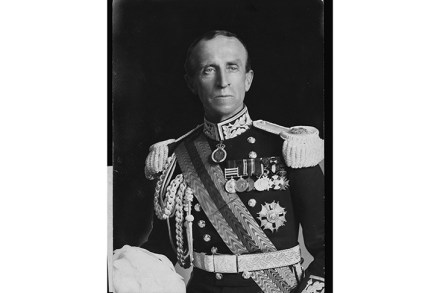
John Buchan was a novelist, historian, poet, biographer and journalist (assistant editor of The Spectator indeed); a barrister and publisher; one of Lord Milner’s ‘young men’, charged with the reconstruction of South Africa after the second Boer war; director of propaganda 1917–18, a Member of Parliament; lord high commissioner (i.e. the king’s representative) to the general assembly of the Church of Scotland; governor-general of Canada. Yet the title of this excellent biography by his granddaughter is to the point. He is best known today as the author of a thriller he wrote in a few weeks in 1914 which, more than 20 years later, was made into a film by Hitchcock. The book is still read; the film, which Buchan thought better than the book, still watched.
They’re all doomed

From our UK edition

Night of Fire is Colin Thubron’s first novel for 14 years. For most of us he is better known as a travel writer, perhaps the finest of our time. But between journeys there have been seven previous novels, and this new one draws on his travelling. Ostensibly confined to a house converted into single apartments, and a night when it is consumed by a fire starting in its basement, it actually, in its chapters each devoted to one of its seven characters, wanders the world, while also moving to and fro in time. The seven characters are designated by role or occupation: landlord, priest, neurosurgeon, naturalist, photographer, schoolboy, traveller. We know from the first that they are all doomed: they will die this night.

Clumber spaniels

From our UK edition

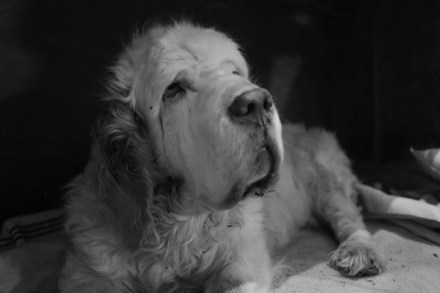
For the first time in more than 30 years we have no Clumber spaniel. We have had five: Henry, Judith, Laurie, Persephone and Wattie. The last of them, Wattie the gentlest and sweetest of dogs, died a few months ago. We feel bereft. Clumbers are special: beautiful, affectionate, wilful, sometimes difficult, never dull. They take their name from Clumber Park in Nottinghamshire, once the seat of the Dukes of Newcastle. Different in appearance from other English spaniels — heavier, low-slung, with large sagacious heads — their origin is uncertain. According to one story, they came from France, being a gift from a French friend, the Duc de Noailles, to his fellow duke.

London’s burning

From our UK edition

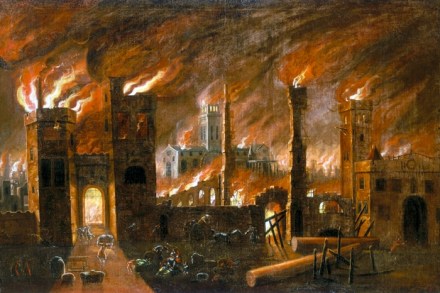
Spectator readers know Andrew Taylor from his reviews of crime fiction. Many will also know him as an admirable writer of the stuff. In a recent issue, however, he remarked that there are fewer murders now, and added that this made things difficult for crime novelists. Detection has been taken over by the scientists, DNA providing the solution more reliably than Hercule Poirot’s little grey cells. Find a suspect and DNA will tell you if he dunnit. This is boring. So it’s not surprising that for crime writers the future looks to be the past, where science is primitive and the police have no computer database — where indeed there may be no regular police force at all. London is burning. It’s 1666, not 1940; it’s the Great Fire, and St Paul’s is ablaze.

Life & Letters: A PM’s summer reading

From our UK edition

One of the weaknesses of many political biographies is that they are so often all about politics. The authors either forget that politicians are people, and sometimes interesting people, or they assume that their private life is of neither interest nor importance. So the book becomes a record of what the politician did rather than a picture of what the man, or indeed woman, was. There are exceptions. One of the best of these is Roy Jenkins’s biography of H. H. Asquith. Jenkins of course covers Asquith’s public life in detail, acutely if at times rather indulgently.

Pisa

From our UK edition

Say ‘Pisa’ and everyone thinks of the Leaning Tower. Fair enough; it’s a curiosity, and the tourist board must be pleased that Mussolini’s plan to straighten it came to nothing. It stands, or leans, next to the cathedral in the Piazza dei Miracoli, and beyond the cathedral is the Baptistry, one of the most beautiful buildings in Italy. I was in Pisa for the annual book festival, which attracts an extraordinary number of independent publishers and huge audiences (25,000 over a long weekend). Each year the director, Lucia della Porta, invites a foreign delegation, and this was Scotland’s turn.

Another near run thing

From our UK edition

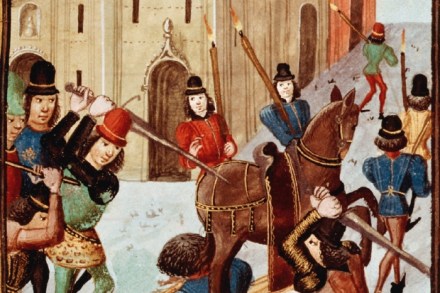
Charles VI of France died on 21 October 1422. He had been intermittently mad for most of his long reign, ‘a pathetic figure’ flitting, often witless, around his palaces. He left a ruined and divided kingdom. There was no French prince to follow his funeral. ‘Tradition was maintained by a solitary figure in a black cape and hat’ on foot behind the coffin. ‘It was the Regent of France, John of Lancaster, Duke of Bedford.’ His brother, Henry V of England, married to Charles’s daughter Catherine, would have become King of France had he not died of dysentery two months previously. His infant son, Henry VI, would indeed be crowned King of France, but that is just beyond the scope of this marvellous history, which covers the years 1400 to 1422.

Just sign here…

From our UK edition

This being the 800th anniversary of the signing of Magna Carta, it is not surprising that there should be two new biographies of King John; not surprising either that one should be billed as ‘The Making of a Tyrant’, the other as a story of ‘Treachery’ and ‘Tyranny’. King John has long been regarded as the worst English king: cruel, deceitful, avaricious, untrustworthy, incapable and cowardly. For some of us he remains indelibly the despicable younger brother of Richard the Lionheart, as so memorably portrayed by Claude Rains in the irresistible swashbuckling Errol Flynn movie The Adventures of Robin Hood.

Scotland’s miraculous century (it started with the Union)

From our UK edition

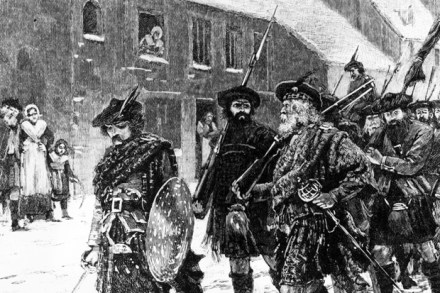
In 1707 Scotland surrendered what it had of its independence by the Treaty of Union with England. That independence had been limited since the Union of the Crowns in 1603, and arguably for at least half a century before that. But the treaty was, as Lord Seafield, Chancellor of Scotland, said ‘the end of an auld song’. It was unpopular in Scotland, popular in England because, in the middle of a war with France, it secured the Protestant succession to the throne and meant that the new kingdom of Great Britain no longer had an internal frontier to defend. Nevertheless, it would be 40 years before domestic peace and security were assured. In that time there were three Jacobite risings — attempts to restore the exiled Stuart kings.

Business books aren’t meant to cheer you up. But this one will

From our UK edition

Economics is known as ‘the dismal science’, and certainly there have been — and indeed are — economists whose day seems to have been wasted if they have left their readers with a smile on their face. Happily such puckered-brow, down-turned-lips fellows are rarely admitted through the doors of The Spectator. For more than half a century this magazine has had City correspondents devoted, like Arnold Bennett’s Denry Machin — ‘The Card’ — to the great cause of cheering us all up. In my youth there was Nicholas Davenport. He gave way to Christopher Fildes, and now we have Martin Vander Weyer to lighten the prevailing gloom on Friday morning.

Roman baths didn’t make you clean — and other gems from Peter Jones’s Veni, Vedi, Vici

From our UK edition

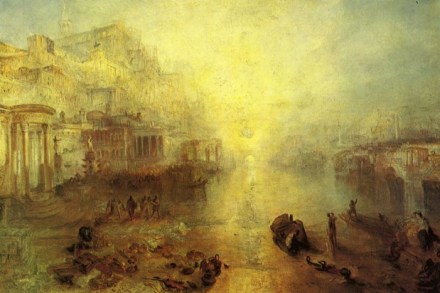
Spectator readers need no introduction to Peter Jones. His Ancient and Modern column has instructed and delighted us for many years. Now he has written an equally delightful and instructive book with the alluring subtitle ‘Everything you ever wanted to know about the Romans but were afraid to ask.’ Well, it may not be quite everything, but it is a near as dammit. He captures you from the start: ‘Romans came up with two stories about how they were founded. One (bewilderingly, we might think) was pure Greek.’ Well, all nations are uncertain and sometimes confused about their origins. So it’s no surprise to be told that ‘any account of Rome up to 300 BC needs to be taken cum grano salis’ (with a grain of salt).

Laidlaw by William McIlvanney – review

From our UK edition

Laidlaw was first published in 1977, 36 years back from now, 38 on from The Big Sleep. Like Chandler’s classic it has survived the passage of time. William McIlvanney did for Glasgow what Chandler had done for Los Angeles, giving the city its fictional identity. Hemingway used to say that all American literature came out of Huckleberry Finn; all Scottish crime writing — ‘tartan noir’ — comes out of Laidlaw. Two years before Laidlaw McIlvanney had won the Whitbread Prize for fiction with Docherty, a novel set in a mining community. This established him as the best Scottish novelist of his generation, and some of his admirers were dismayed when he followed it with a crime novel.

About to cop it?

From our UK edition

Rebus is back, in a novel long, meaty and persuasive enough to make up for the years of absence. Actually, he is only part-way back — on a civilian attachment to the Edinburgh & Lothian Police, and working on cold cases. However, the retiring age has been raised, and he has applied for re-instatement. He may not succeed; the head of this small department is unlikely to recommend him, and Inspector Fox, the officer in charge of the complaints department, who has been the lead character in Rankin’s last two novels, regards him with suspicion, dislike and contempt. To his mind, Rebus is a type of policeman who should be extinct. He doesn’t play by the book.

Life and letters | 28 July 2012

From our UK edition

With few exceptions, literary journalists moulder in the grave and are soon forgotten. They may get some sort of posthumous life if they are made the subject of other books. John Gross rescued a few from oblivion in The Rise and Fall of the Man of Letters. Otherwise it is usually only those who were also poets, novelists or social commentators such as Matthew Arnold, who are not soon forgotten. When I was young, the Sunday papers were dominated by Connolly, Mortimer, Toynbee, Nicolson and Davenport. I delighted in them all, and equally in V. S. Pritchett in the New Statesman. All of course were excoriated by F. R. Leavis in stern puritanical Cambridge.

Give me excess of it

From our UK edition

There is a joke about a retired colonel whose aberrant behaviour had him referred to a psychoanalyst. He emerged from the session fuming. ‘Damn fool says I’m in love with my umbrella. Bloody nonsense.’ Long pause, then: ‘I’m fond of it of course.’ Quite so, and likewise while people may not actually fall in love with their iPhone, 18 out of 200 students surveyed at Stanford University admitted to ‘patting’ the little thing. They may be as uncomfortable without it as an alcoholic in need of a drink before opening time. The Fix is a fascinating and at times alarming study of addiction. Damian Thompson writes with the authority of experience reinforced by wide-ranging research.

Storm in a wastepaper basket

From our UK edition

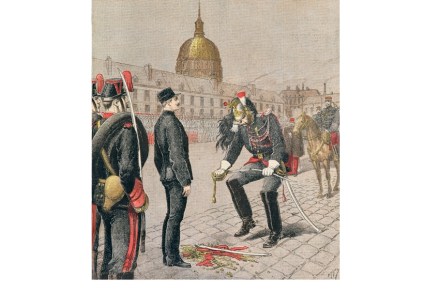
‘It’s the revenge of Dreyfus,’ came the cry from the dock. The speaker was the veteran right-wing ideologue, Charles Maurras, found guilty of treason in 1945 for his support of the collaborationist Vichy regime. It wasn’t of course that, and yet there is a sense in which Maurras spoke the truth. The Dreyfus case had divided France half a century before Maurras was put on trial in Lyon. The division between what Piers Paul Read, in this masterly and eminently balanced account of the Affair, calls ‘the France of St Louis and the France of Voltaire’ had never been closed. The end of the Third Republic and its replacement by Vichy’s ‘Etat Français’ in 1940 represented the victory of the anti-Dreyfusards.

Life & Letters: The Creative Writing controversy

From our UK edition

It came as a bit of a shock to learn from Philip Hensher’s review of Body of Work: 40 Years of Creative Writing at UEA (31 December) that there are now nearly 100 institutions of higher education in Britain offering a degree in Creative Writing. I suppose for many it’s a merry-go-round. You get the degree and then you get a job teaching Creative Writing to other aspirants who get a degree and then a job teaching … and so it goes. This, after all, has been the way with art colleges for a long time. I sometimes think I must be one of the few surviving novelists who has neither studied nor taught Creative Writing.

Allan Massie’s books of the year

From our UK edition

Graham Swift is probably still best known for Waterland, published almost 30 years ago. I rather think he is now out of fashion. Certainly Wish You Were Here received less attention that it deserved. Swift has the admirable ability to write literary novels about characters who would never read such books. He presents us with a complete world, one which his inarticulate characters struggle to understand. William Empsom wrote that ‘the central function of imaginative literature is to make you realise that other people act on moral convictions different from your own’. Graham Swift does just that. The Fat Years by Chan Koonchung is a novel that everybody interested in contemporary China should read.

Life & Letters: Shakespeare’s women

From our UK edition

Gordon Bottomley, Georgian poet with an unpoetic name, wrote a play called King Lear’s Wife with which he hoped to inspire a poetic revival in the theatre. It might be interesting to see it revived — though most 19th- and 20th-century verse-dramas proved forgettable. Nevertheless, he surely happened on an interesting subject, though one which L. C. Knights, among others, would have deplored.  In a famous essay, ‘How Many Children Had Lady Macbeth?’, he poured scorn on the practice of treating Shakespearean characters as if they were real people with an anterior life beyond the play. Yet surely it is tempting to do so.

The fascist vote

From our UK edition

At the age of 72, I begin to wonder, for the first time in my life, if there might be a future for a fascist party in Britain. The thought has been provoked by the riots, or rather the response of many to them. The riots themselves were horrible, an outburst of callous criminality, doubtless enjoyable for those who took part in it. Yet they were comparatively unimportant. To say this is not to pretend that they weren’t frightening, that people weren’t killed, or that other victims did not suffer injury or damage to their property. Nevertheless, disturbances of this kind have happened before, and will happen again. Sometimes a fuse is lit, in this case by the shooting of Mark Duggan by the police, and then the tinder-box explodes.