Colin Amery

Soaring splendour

From our UK edition

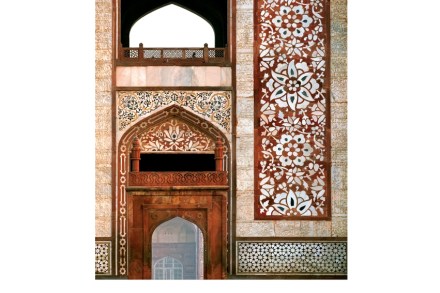
The glorious monuments built in India by the Mughal emperors, from Babur in the early 16th century to Bahadur Shah Zafar II in the mid-19th century, have long deserved a comprehensive illustrated survey in one volume. George Michell is the ideal author. He is both a great scholar and a fervent communicator on many aspect of India’s cultural history. He has worked as a hands-on archaeologist on major Indian sites and recently established a Deccan Foundation to protect the wonders of that little-known region. He has been extremely well served in this magnificent book by the photographs of Amit Pasricha, who describes himself as a ‘panoramic photographer’. His photographs are staggeringly beautiful and impossible to praise too highly.
Amazing grace

From our UK edition

It was in 1814 that the Benedictine monks arrived in Stratton-on-the-Fosse in Somerset from Douai in Flanders where, in 1606, they had established an exiled, but English, monastic house. They were forced to leave the Continent in 1795 after revolutionary France had declared war on England. They wandered a bit until they finally bought a decent house built in 1700 and a farmhouse with 21 acres at Downside. This book tells a complicated saga of the building of the present abbey and school that will enthral those readers fascinated by the morphology of the Gothic Revival. But it could appeal equally to those gripped by the ultra-montane tendencies in the history of English Catholic life. Downside Abbey’s church tower is what first strikes any visitor.

Bookends: Bloodbath

From our UK edition

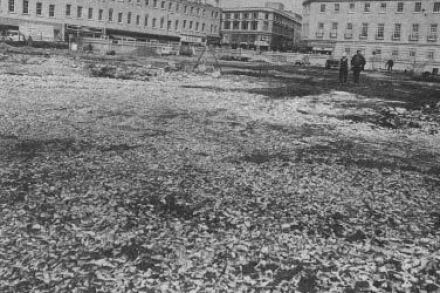
It may have been first published in 1973, but reading it again in Persephone Books’ elegant re-print, Adam Fergusson’s The Sack of Bath (£12) remains a real shocker. The fury of his polemic against the powers in Bath that seemed hell-bent on destroying everything except a few grand Georgian set- pieces in that beautiful city still has a terrible relevance today. It may have been first published in 1973, but reading it again in Persephone Books’ elegant re-print, Adam Fergusson’s The Sack of Bath (£12) remains a real shocker. The fury of his polemic against the powers in Bath that seemed hell-bent on destroying everything except a few grand Georgian set- pieces in that beautiful city still has a terrible relevance today.

Bookend: Bloodbath

From our UK edition

Colin Amery has written the Bookend column in this week's issue of the Spectator. Here it is for readers of this blog: It may have been first published in 1973, but reading it again in Persephone Books’ elegant re-print, Adam Fergusson’s The Sack of Bath remains a real shocker. The fury of his polemic against the powers in Bath that seemed hell-bent on destroying everything except a few grand Georgian set- pieces in that beautiful city still has a terrible relevance today. Looking at the photographs of acres of modest stone houses being reduced to rubble to be replaced by unbelievably low grade ‘comprehensive redevelopment’ is utterly depressing.

Rather in the lurch

From our UK edition

Will it ever end? The romantic interest in the architecture, history and life lived in the country house is as alive today as it was in 1978, when Mark Girouard wrote his seminal Life in the English Country House. There are now some three million members of the National Trust — guardians of the flame of country-house life that still just flickers in its teashops. The path to an instant peerage is along the passages of the imaginary Downton Abbey, and feudal splendour is still the dream destination of hedge-fund millionaires. How much is the dream driven by aesthetics, how much by nostalgia and how much by a fascination with social history?

Flights of futuristic fantasy

From our UK edition

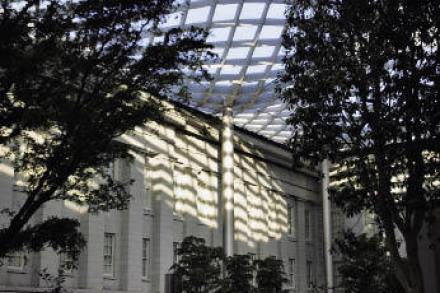
The Great Court of the British Museum is a good place to start. Norman Foster brought light into the wonderfully elegant and inspiring glazed space at the heart of the museum where there had been nothing but greyness around the domed Reading Room. It also put Lord Foster of Thames Bank OM at the heart of the British cultural establishment. Why don’t we know more about him? His creative achievement is enormous. He is 75 this year and his firm grows, employing over 1,000 people in 25 offices around the world. His clients include rulers of Middle Eastern oil rich states; the President of Kazakhstan; Commander Chen, responsible for all the new airports in China; Swiss banks and Russian oligarchs.

How long have I got?

From our UK edition

It was the neon lit windowless corridor in the surgery in Dumfries that did it. It was June 1993 when Maggie Keswick and her husband Charles Jencks heard the prognosis that she had two to three months to live as the breast cancer had spread to her liver and her bones. In fact Maggie was to live fighting the disease for another 18 months — she died on 8 July 1995. But she lives on every day through her inspired idea that cancer patients need a place to deal with the facts of what she called ‘the dreaded disease’. She wanted to show that things need not be so awful, that patients are not victims and that self-help is possible if you can be in the right kind of place. This book is moving, ambitious and brave.

With a view to impress

From our UK edition

It all began at Hardwick Hall. Imagine an impressionable and imaginative young boy staying with his relations, wandering about absorbing the atmosphere of that miraculous survivor of an Elizabethan house. Mark Girouard’s intellectual curiosity about English architectural history was ignited by his childhood experience of living in those extraordinary rooms. He was on the roof or climbing the worn stone stairs up to the High Great Chamber and experiencing the passion and artifice of Elizabethan architecture at first hand. Girouard’s major new book is the fruit of years of intensive research following on from his first book, Robert Smythson and the Architecture of the Elizabethan Era (1966).

Architect of his own misfortune

From our UK edition

Tom Coraghessan Boyle, in some 20 books, has energetically demon- strated his enthusiasm for turning the bio- graphies of figures from early 20th-century American life into quasi-historical fiction. After writing the story of the sex-obsessed researcher Dr Alfred Kinsey and the rare tale of the inventor of the cornflake, Will Keith Kellogg and his health farm, perhaps it was inevitable that the roaring private life of the architect Frank Lloyd Wright would be a natural sequel. The Women is certainly not a novel about architecture, although the narrator of the story, Tadashi Sato, is a young Japanese architectural student who is drawn to the studio/commune run by Wright at Taliesin in Wisconsin.

Differences and similarities

From our UK edition

West Workroom towards a new sobriety in architecture theory + practice, by Paolo Conrad-Bercah+w office (including contributions from Daniel Sherer, Pierluigi Panza and George Baird) ‘This is not a book….’ These are the opening words of this initially unfathomable paperback volume of architectural ramblings. It has been assembled as an account of the work of a Milan-based architecture practice, West Workroom. The firm designs commercial, residential and institutional buildings, with a special emphasis on functional offices and other workplaces.

From pillar to post

From our UK edition

The English House: The Story of a Nation at Home, by Clive Aslet Earlier this year a brave publisher republished in two volumes and nearly 800 pages the classic book on English domestic architecture, The English House, by Hermann Muthesius. It had first appeared in German as Das Englische Haus in 1904. Clive Aslet’s new book takes the same useful title for his much briefer account of some 21 dwellings that encapsulate for him the enduring qualities of the English home. Both Aslet in the 21st century and Muthesius in the 20th share the same strong sentiments about houses and the English. They both are convinced that domestic comfort and style has been perfected in England and that the intensity of our love of home and the homely virtues is unique in the world.

Back to simplicity

From our UK edition

Mlinaric on Decorating, by Mirabel Cecil and David Mlinaric I wish this book weren’t so heavy. It is full of such good things that I wanted to carry it around so that at every spare moment I could have another wallow in David Mlinaric’s beautiful world. In the end I compromised and spent hours with it at the dining-room table, where I discovered the rather encouraging information, as I looked at the paint peeling from my Doric columns, that he, the man I had always thought of as the great high priest of the perfect interior, was in fact the begetter of the decorating style known as ‘shabby-chic’.