Edward King

Empty lines on a CV

From our UK edition

The intern is everywhere, slowly but surely, infiltrating every office on the planet. But while the internship is now ubiquitous, having become the standard first rung on most career ladders and the most frequent stepping stone between education and a career, it remains a largely unexamined and unregulated sector. Somewhere between an apprenticeship and a temp job, the internship resists easy definition and is understood more in terms of social cachet than actual responsibilities. Having had his fair share of directionless and underpaid internships between various degrees at Stanford and Cambridge, Ross Perlin, a researcher in linguistics, decided that the phenomenon deserved closer scrutiny. The result is Intern Nation, an exposé of the murky world of the internship.
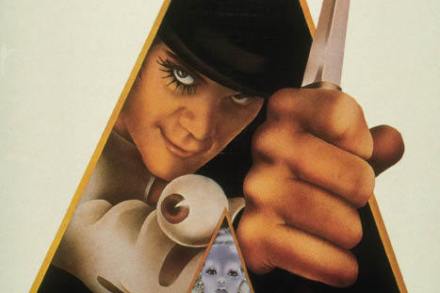
Bookends: Murder in the dark

From our UK edition

When the Observer critic Philip French started writing on the cinema in the early 1960s, he once explained in an interview, books about film were a rarity. ‘Now I have three book-lined rooms dedicated just to the cinema, including 50 books on Hitchcock and 30 on film noir.’ I Found it at the Movies (Carcanet, £19.95), a collection of essays and occasional writings about film first published from 1964 up to the present, is intended to ‘throw light’ on the times in which they were written and chart the shifting attitudes to film as entertainment and art. But it is surprising how little has changed.

Bookend: Murder in the dark

From our UK edition

Edward King has written the bookend column in this week's issue of the Spectator. Here it is for readers of this blog. When the Observer critic Philip French started writing on the cinema in the early 1960s, he once explained in an interview, books about film were a rarity. ‘Now I have three book-lined rooms dedicated just to the cinema, including 50 books on Hitchcock and 30 on film noir.’ I Found it at the Movies, a collection of essays and occasional writings about film first published from 1964 up to the present, is intended to ‘throw light’ on the times in which they were written and chart the shifting attitudes to film as entertainment and art. But it is surprising how little has changed.