More from Books

Onwards and downwards

This is a very upsetting book. The Harvard sociologist Matthew Desmond spent a year and a half living in low-income housing in Milwaukee — first in a trailer park on the mostly white South Side and later in a rooming house in the black inner city. Desmond himself plays no part in the body of the story, but he reports what he saw and heard, using a digital recorder and filling in the rest with double-sourced eyewitness accounts and official documents. And what he saw was upsetting, though not always, or not particularly, in a dramatic way. The things that happened to the people he lived among happened too often and routinely to seem extraordinary to them.

Gay tittle-tattle

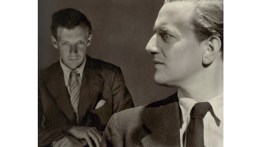
The Comintern was the name given to the international communist network in the Soviet era, advancing the cause wherever it could. The ‘Homintern’, a wry play on that, was first coined at Oxford by Maurice Bowra and gladly passed on by Cyril Connolly, Auden and others, inferring an international homosexual network of mutual interest and support. Gregory Woods, in his very first sentence, defines it thus: ‘The Homintern is the international presence of lesbians and gay men in modern life.’ A few pages later he says: ‘There was no such thing as the “Homintern”.’ So which is it to be? And what does Woods mean by ‘modern life’?

Those fearless men, but few

While reading this book in a London café, I was politely buttonholed by an Irishman: ‘Sorry to disturb you, but I saw what you were reading and wondered how far back it went.’ I answered that, as it was a group biography of the men who led the Dublin Easter Rising of 1916, it began with the eldest of them, Tom Clarke, in the mid-19th century. ‘But,’ I added, ‘it goes back further, to Robert Emmet, Wolfe Tone — even Cromwell is mentioned.’ ‘Sure the feud’s much older than that,’ was the gleeful reply. If Ruth Dudley Edwards had been at the table, I imagine she would have said that that was part of the problem — the romantic, rebel, republican view of Irish history as an unbroken tradition of justified resistance.

Obscure object of desire

Garth Greenwell’s debut novel is as dreary and oppressive as the Soviet-era apartment buildings among which it takes place. But presumably this was intentional. Having grown up in a rural backwater where ‘disease was the only story anyone ever told about men like me’, the book’s American narrator, a teacher in Sofia, seeks to escape shame and tedium by having sex with random men in the toilets beneath the National Palace of Culture. ‘It wasn’t so much pleasure I sought as the exhilaration of setting aside restraint,’ he says: ‘a thrill so intense it was almost suicidal.

A breath of fresh air

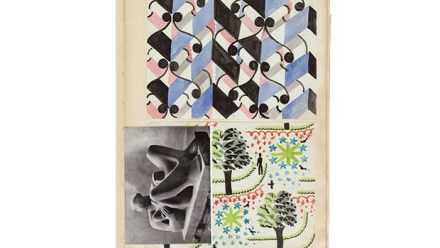
His professional achievements aside, Quentin Blake’s life has been rather short on biographical event, so this book is not a biography. (That gets dispatched briefly in a six-page timeline.) Rather, it’s a grateful appreciation — partisan, certainly, but well argued — of all that this remarkable artist has given us. Through his books, his pictures on hospital walls and his support for a variety of campaigns, Blake has brought joy, laughter and solace. The pictures in this book will make you smile.

London’s burning

Spectator readers know Andrew Taylor from his reviews of crime fiction. Many will also know him as an admirable writer of the stuff. In a recent issue, however, he remarked that there are fewer murders now, and added that this made things difficult for crime novelists. Detection has been taken over by the scientists, DNA providing the solution more reliably than Hercule Poirot’s little grey cells. Find a suspect and DNA will tell you if he dunnit. This is boring. So it’s not surprising that for crime writers the future looks to be the past, where science is primitive and the police have no computer database — where indeed there may be no regular police force at all. London is burning. It’s 1666, not 1940; it’s the Great Fire, and St Paul’s is ablaze.

The greatest anti-war poem of all

The Iliad begins with a grudge and ends with a funeral. In between are passages, if not necessarily of boredom, to alter the war adage, of lists, pathos, sex, humour, fairytale strangeness (golden fembots, a talking horse) and lyric images, punctuated by moments of pure terror (eyes popped out of heads, a spear throbbing in a beating heart, a man cradling his intestines in his hands). With several new translations in the past year alone, as well as a film in 2004, and recent novels (David Malouf’s Ransom), dramatisations, and book-length poems (War Music by Christopher Logue and Memorial by Alice Oswald), we are clearly, in our era of seemingly perpetual war, in an age of Iliads.

Pure and endless light

There has been extraordinarily little bright sunlight in the far northwest corner of Britain over the past year. Damp, drizzling summer, an endless sequence of howling autumnal gales and downpours, a muddy dismal winter. Then at the beginning of February, by some accounts traditionally a season for good weather in northern Scotland, a series of brilliant sparkling days arrived unannounced. While the rest of the country shivered and dripped, the sun in the north bounced off the sea, the hills were brilliant with deep snow, the night sky was clear and starry, northern lights pulsing on the horizon and the moon bright enough to read by. Enough to turn anyone’s fancy to Gerard Manley Hopkins. And this is what happens to Ann Wroe.

Witness to the truth

George Bell (1883–1958) was, in many respects, a typical Anglican prelate of his era. He went to Westminster and Christ Church, and passed his career in the C of E’s fast stream. Never a parish priest, he became, first, chaplain (and later, biographer) of the Archbishop of Canterbury, Randall Davidson; next, Dean of Canterbury; finally, Bishop of Chichester. He was not an intellectual or a contemplative. He was an effective, energetic leader, strongly interested in public affairs, a natural candidate to end up as an archbishop of the established church. This did not happen, probably because Bell opposed ‘area’ Allied bombing of Germany in the second world war. Such carpet-bombing threatened ‘the roots of civilisation’, he said.

Lost in translation | 31 March 2016

Trencherman was first published in Afrikaans in 2006 and translated into English for a South African readership shortly afterwards, but has only now found a UK publisher. Eben Venter — one of the notable voices in white South African writing post-Apartheid — has been ‘temporarily’ based in Australia for more than two decades, but returns to his home for stories. You can see why. After Disgrace, J.M. Coetzee emigrated to Australia — and hasn’t published a decent novel since. He evacuated his subject. For Africa-born whites, the one thing worse than staying is leaving. The left brain urges you to settle in a safe economy with prospects, where the right brain dies.

Graphic, bleak and misogynistic

If you could travel back in time, would you kill Hitler’s mother, seek out your old house and play ball with your former self, or locate your (eventual) wife during her unhappy adolescence and punch her violent boyfriends? These are the dilemmas facing Jack, the hero of Daniel Clowes’s latest graphic novel. The murderous attitude towards Hitler’s mother (rather than towards Hitler himself) fits right in with an underlying misogyny throughout. Indebted to Hollywood for most of its ideas and its deficiencies, Patience only squeaks by in the Bechdel test. It begins wittily enough with the tip of a penis, a semi-circle of cervix, and a big white splodge in between. Across this romantic conception scene the year 2012 is emblazoned.

Hostage to misfortune

Nordic noir is passé. Now we have Israeli noir. Waking Lions is a mordant thriller written by a clinical psychologist who knows how the mind is tortured by deception, infidelity, obfuscation, suspicion and sex. Eitan Green is a neurosurgeon who, exhilaratedly driving his SUV at speed on the desert tracks outside Beersheba, runs down an Eritrean refugee. As he looks at the body with its cracked skull, he thinks that since ‘he can’t save this man, at least he’d try to save himself’. From that point, Ayelet Gundar-Goshen’s omniscient narrator involves us in a web of lies, guilt, evasion, seduction and moral equivocation. The incident is registered officially as a hit-and-run case. Eitan’s wife, Liat, happens to be a senior police officer.

Courting Sultana Isabel

The idea for a mechanical cock was never going to work. In 1595 the English ambassador to Constantinople, Edward Barton, advised Queen Elizabeth I that the surest way for her to impress Sultan Mehmed III, the new leader of the formidable Ottoman empire, was to send him a ‘clock in the form of a cock’. Knowing that Mehmed had a growing reputation for psychopathy rather than ornithology — he had his 19 brothers circumcised and then strangled to death — Elizabeth demurred and eventually sent him an elaborate clockwork organ instead. The organ was accompanied by its maker, Thomas Dallam, who spent his first month in Constantinople fixing the damage it had suffered in transit before eventually playing it for the Sultan and his retinue at the Topkapi palace.

Following the followers

In his new book Apostle Tom Bissell has an advantage over writers who go looking for Jesus: he can start with human remains. His frame for this uneven combination of travel and Church history is a series of trips to the alleged tombs of the apostles. To flesh out 13 ghosts (the 12 disciples and Paul) Bissell mines the gospels, the work of Church historians both early and late, and the Apocrypha. ‘Without the Apocrypha,’ he admits, ‘the 12 apostles would seem even more irrevocably distant.’ The former disciples of Jesus are an elusive bunch. Destroyed or partial texts throw up discrepancies and cases of contested identity, equivocal traditions set in unspecified places and fanciful pasts invented by unreliable chroniclers.

Neighbours and strangers

Margaret Forster, who died on 8 February, excelled at writing about complex relationships between women. Even old friends, she demonstrated, can experience jealousy, disapproval or dislike. Here, ‘Sarah’ has changed her name to live incognito on the west coast of Cumbria, in a town chosen at random. When she gets locked out of her house, a bond is formed between her and her elderly neighbour Nancy — whose deceased friend Amy once owned Sarah’s rental and left Nancy a key. Although Sarah is ostensibly the one with ‘a past’ (prison), it was Nancy whom I found most interesting.

Worshipping the sun

The Sun is a star that many astronomers assume is only worth studying because of its averageness; it’s middle-aged and middle-sized. Its convenient proximity to us means it can act as a testbed for physics research. But we’re too well-schooled in the Copernican principle to view it as ‘special’ in any way. In contrast, Lucie Green’s huge enthusiasm for the Sun is apparent throughout her book. Her purpose is to convey the current state of knowledge about our neighbourhood star, and the story proper starts with sunspots.

Diced heart and a full-bodied red

Valerio Varesi, the Turin-born crime writer, displays a typically Italian interest (I would say) in conspiracy theory. The Italian term dietrologia, which translates, not very happily, as ‘behindology’, presumes that shadowy consortia are everywhere manipulating political scandals. A Woman Much Missed, the fourth of the excellent Commissario Soneri thrillers to be translated into English, unfolds in present-day Parma amid rumours of Mafioso-style machinations. As always, Varesi’s lugubrious, cigar-puffing detective Soneri retains a degree of disabused integrity and is a trencherman, moreover, as he seeks out only the best buffalo-milk mozzarella and bottles of Bonarda red. Under it all, though, lies a deepening corruption, where justice may not prevail.