More from Books

Sweet dreams are made of this

I’ve read several books​ ​about​ ​sleep recently,​ ​and​ ​their​ ​authors​ ​all​ ​tell​ ​me​ ​the same​ ​three​ ​things.​ ​The​ ​first​ ​is​ ​that,​ ​in​ ​the modern​ ​world,​ ​it’s​ ​hard​ ​to​ ​get​ ​enough sleep.​ ​The​ ​second​ ​is​ ​that​ ​sleep​ ​is​ ​very important.​ ​Every​ ​night,​ ​we​ ​pass​ ​out.

A cold coming to Cornwall

In 1939, Barbara Hepworth gathered her children and her chisels and fled Hampstead for Cornwall. She expected war to challenge her passion for abstract form. But her commitment deepened. The solid ovoids she sculpted carried the weight of grief and the hope of eggs. To Hepworth, they became ‘forms to lie down in, or forms to climb through’. They were a means of retaining freedom whilst carrying out what was demanded of me as a human being… a completely logical way of expressing the intrinsic ‘will to live’ as opposed to the extrinsic disaster of the world war.

Another country | 2 November 2017

In 1970 I wandered around an unfamiliar part of West Devon. Down a grassy lane I came across a farmyard in which stood three circular hay stacks, each beautifully thatched. It resembled a picture by the 18th-century painter George Morland. There was nobody about and the yard had a haunted air. In a pub a few miles away, I discovered that the settlement was called Riddlecombe. Two years later James Ravilious started work for the Beaford Centre, recording the society of this inaccessible and largely unchanged part of Devon. Seventeen years and 75,000 photographs later the project was closed. Ravilious’s pictures now form the major part of the archive, a unique record of the everyday life of the area.

Gerry and the peacemakers

When I recently asked a sardonic Northern Irish friend what historical figures Gerry Adams resembled, the tasteless reply came back: ‘A mixture of Jimmy Savile and Oswald Mosley.’ There are elements of both archetypes in this new unauthorised portrait, but it stops short of going the full distance. Perhaps we should not be surprised. The Savile reference is to the grisly theme of child abuse in Adams’s family, leading to his brother’s conviction for offences against his own daughter, and the revelation that Adams père had also sexually abused his children. Though no such accusation attaches to the Sinn Fein leader, these episodes have affected him politically as well as personally.

A sensual Greek goddess

Joan Leigh Fermor died in 2003, aged 91, after falling in her bathroom in the house on a rocky headland of the Peloponnese which she had financed by selling her jewellery. Afterwards, whenever Joan’s husband and companion of nearly six decades reclined in her place on the sofa to read, eight of her 73 cats would gather round him in a recumbent group — but after a few minutes slope off. Paddy (who died in 2011) wrote: ‘They had realised they were being fobbed off with a fake.

More secrets and symbols

Being reflexively snotty about Dan Brown’s writing is like slagging off Donald Trump’s spelling: it just entrenches everyone’s position. In a world where a quarter of people read literally no books in any given year, can we give each other a break on this kind of thing? If you found Angels and Demons good fun, thoroughly enjoyed The Da Vinci Code (as I unironically did), but despised Inferno for the worthless piece of rat doodah that it was, then the good news is that Brown is back on form here. Origin is brisk, fun and filled with adorably pointless Wikipedia paragraphs; and what’s at stake is endearingly grandiose. Here, the premise is atheism vs religion.

The martyrdom of Proust

Why would a writer like Marcel Proust, who quivered and wheezed at the slightest sensation, decide to live surrounded by neighbours in one of the busiest parts of Paris? In 1906, at the age of 35, shortly after the death of his mother, he moved to a first-floor apartment at 102 Boulevard Haussmann. ‘I couldn’t bear to live in a place that maman never knew,’ he explained. For this ghostly comfort, he paid a heavy price. Petrol fumes and tree pollen — to which he was almost fatally allergic — drifted up from the boulevard.

Songs of the blood and the sword

Jihadi Culture might sound like a joke title for a book, like ‘Great Belgians’ or ‘Canadian excitements’. But in this well-edited and serious volume Thomas Hegghammer — one of the world’s foremost experts on jihadism — has put together a collection of essays by an impressive group of scholars analysing what culture Islamism’s most adamant adherents might be said to possess. The book is not a long one. Designed for a primarily academic audience, Hegghammer’s introduction carries all of the baggage that such audiences demand. It is not writing so much as a set of pleas and signs sent out to academia’s own hostage-takers, who lurk in universities and colleges reading mainly for the hope of discovering a rival’s error.

Animals make us human

There was a time when biologists so scorned the attribution of human qualities to other animals that anthropomorphism was seen as the ultimate scientific sin and suitable only for children’s stories. Not anymore. Today the inner lives of other creatures are widely accepted as a major research frontier, and here are three books that reflect these preoccupations. One of them even defines it as an entirely new discipline: anthrozoology. Peter Wohlleben may be no scientist, but he is a professional German forester and the author of the enormously successful The Hidden Life of Trees. In this new book he sets out to overturn the stock assumption that other creatures are mere automata driven by instinct, drawing particularly on studies that use MRI digital imaging of the human brain.

The spirits of the age

Children started knocking on my door last month wearing Donald Trump face masks and asking for money. Indeed, one enterprising group turned up as Trump, Kim Jong-un, a Disney Princess, and — I’ll admit that this had to be explained to me — a zombie Taylor Swift. Truly a quartet of contemporary horrors. Halloween, it is safe to say, is not what it once was: in my day, a gentle bit of apple bobbing, turnip carving and maybe a white sheet with holes for eyes at a fancy-dress disco was about the full extent of it. Ghosts and ghouls, it seems, change their appearance depending on time and place.

Racism is a grey area

This book is an exercise in crying wolf that utterly fails to prove its main thesis: that Europe is abandoning its core liberal values under threat from a resurgent populist right. It is a largely fact-free polemic that passes itself off as an open-minded work of interview reportage. Yet if you can ignore the author’s sly interventions on behalf of his left-liberal premises, he does introduce the reader to a fascinating cast of characters, mainly from the European populist right.

A dense, angry fable

Set partly in a future surveillance society, partly in ancient Carthage and 1970s Ethiopia, partly in contemporary Greece and London and partly in the synaptic passageways of the human brain, this huge sci-fi detective novel of ideas is so eccentric, so audaciously plotted and so completely labyrinthine and bizarre that I had to put it aside more than once to emit Keanu-like ‘Whoahs’ of appreciation. Science fiction in general is having an interesting moment right now, as writers and filmmakers respond to the loopily futuristic contemporaneities of robotics and AI research, but Nick Harkaway goes further than most in this vast and baroque novel.

How to be good

Suffering, wrote Auden, takes place ‘while someone else is eating or opening a window or just walking dully along’. His poem ‘Musée des Beaux Arts’ emphasises the mundanity of pain (‘even the dreadful martyrdom must run its course/ Anyhow in a corner, some untidy spot’) and how irrelevant it is to all but the sufferer: ‘Everything turns away quite leisurely from the disaster.’ Alice McDermott’s eighth novel, The Ninth Hour, is peopled by women who refuse to turn away from the disasters of others. The ‘untidy spot’ is Brooklyn, sometime in the first half of the 20th century, and the unsung heroines with no time for leisure are the Little Nursing Sisters of the Sick Poor.

A Muslim’s insights into Christianity

I’m not a critic, I’m an enthusiast. And when you are an enthusiast you need to try your best to keep it in check when writing reviews, just in case your prodigious levels of excitement and, well, enthusiasm, threaten to overwhelm readers and only succeed in putting them off. Because people generally need a bit of room — to create some distance, establish a tiny bit of breathing space — in order to make their own considered decisions about the liable goodness or badness of a thing. But shucks to all of that.

Snatching victory from the jaws of defeat

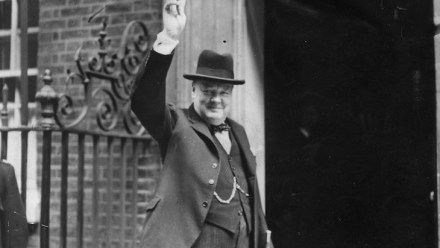
Lord Woolton put it best: ‘Few people have succeeded in obtaining such a public demand for their promotion as the result of the failure of an enterprise.’ By that, the Tory grandee meant that in the spring of 1940 Winston Churchill managed to use Britain’s grotesque military cock-up in Norway, for which he was responsible, to supplant Neville Chamberlain. Churchill sidelined Chamberlain’s most likely successor, the foreign secretary Lord Halifax. He overcame Tory backbench distrust. He even got Labour on side, though its leaders had long considered him the class enemy incarnate.

Three daemons in a boat

Philip Pullman’s new k, the prequel to his Northern Lights series — the one north Oxford academics very much prefer to Harry Potter — is an intriguing work. It’s notionally set some time near our own, but the world it evokes is the 1950s and 1960s England of the author’s youth. The hero, Malcolm Polstead, is the only child of an innkeeper — that timeless calling — and the inn was an old stone-built rambling comfortable sort of place. There was a terrace above the river, where peacocks (one called Norman and the other Barry) stalked among the drinkers...

A choice of first novels | 19 October 2017

Black Rock White City (Melville House, £16.99) is ostensibly about a spate of sinister graffiti in a Melbourne hospital. ‘The Trojan Flea’ is scrawled across X-ray screens; ‘I am so full of your death I can now only breathe your rot’ on a stairwell; and, on a dead body, ‘cut into the flesh with a scalpel, from throat to navel, is the word INSPIRATION’. A.S. Patric grabs his reader’s attention with the riddle of ‘Dr Graffito’s’ identity, while a more subtle mystery unfurls alongside. Jovan, the hospital cleaner — whose job it is to remove the offensive graffiti — has come to Melbourne from Sarajevo, where he was a teacher and ‘used to wake in the mornings with poetry emerging in rhapsodies’.

Hunt the lady’s slipper

Who would want to read a whole book about a teenage boy’s gap year? When most 18-year-olds take time off before university, they either head for Thailand to experience middle-class Western culture in warmer climes with more drugs, or spend six months shelf-stacking and six months ‘finding themselves’ at a Ugandan orphanage. A tedious evening in the pub during freshers’ week when all the gap year students bore one another into submission about how much better Mexico made them is normally enough. Leif Bersweden thought so much of his year off, though, that he wrote 360 pages about it.