Christopher Meyer

Christopher Meyer is the former British ambassador to Washington.

Will there be a ‘special relationship’ under a Biden presidency?

From our UK edition

19 min listen

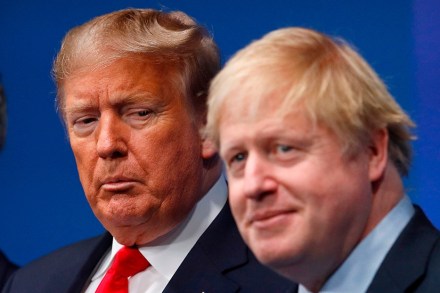
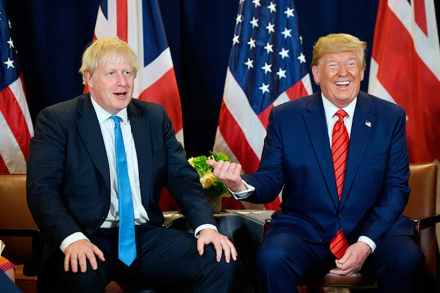
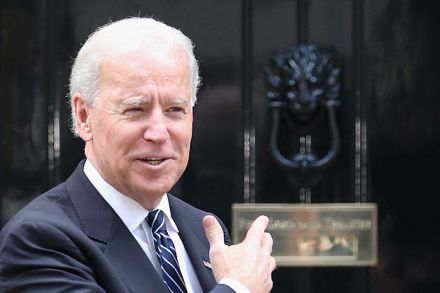
Many on this side of the pond and on the stateside believe that there is a natural affinity between Boris Johnson and Donald Trump. So what will Anglo-American relations be like under a President Biden? Cindy Yu talks to James Forsyth and Sir Christopher Meyer, former Ambassador to Washington, about the opportunities and the pitfalls.
The Special Relationship was never very special

From our UK edition

I have a book of essays from 1986 by a group of British and American scholars called The Special Relationship. The editor, Professor Roger Louis, was advised to give it another title. The director of Chatham House, the late David Watt no less, called it ‘rhetorical nonsense’. Yet, as Louis noted: The ‘Special Relationship’ would not go away. Indeed it haunted the discussions. Eventually it was referred to as the ghost, ever present yet elusive, derided by some but acknowledged by all. Thirty-four years later the ghost is still floating around. Ian Buruma’s new book is the latest attempt to exorcise it. I suspect that it will be no more successful than previous efforts.

Dear Boris: what happens if Trump doesn’t accept defeat?

From our UK edition

Dear Prime Minister, You already have quite enough on your plate. So forgive me if I hoist a storm cone over another potential problem. I refer to the US presidential election on 3 November and the possibility of its ending in deadlock and confusion. I was the British ambassador to Washington during the Bush/Gore election of 2000. The outcome hung in suspense for a month. Everything turned on which contestant had won more votes in Florida. In the end, the matter had to go to the US Supreme Court for a decision. I was present at the hearing. After 9/11, it was the most dramatic moment of my time in Washington. The events of November and December 2000 were a stress test for the American constitution.

Where are the Henry Kissingers when we need them?

From our UK edition

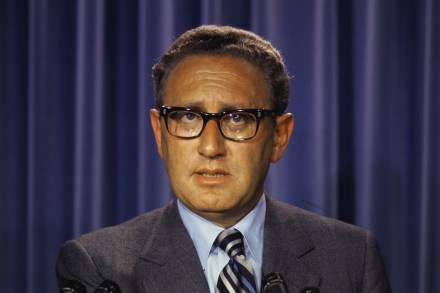
It was not until I went to Harvard in 1988 to take a year out from the Foreign Office that I came to realise how riven by ideology the world of US foreign policy had become. For 20 years I had been moulded by the resolute pragmatism of British diplomacy. My American sabbatical threw open the door to intellectual conflict in the study and practice of international relations unlike anything I had experienced. Two great warring clans — the realists and the idealists, those who took the world as they found it and those who saw the world as they would like it to be — were at each other’s throats. At the head of the realists towered Henry Kissinger, as he does to this day, aged 96. Kissinger remains a figure of profound and sometimes bitter divisiveness.

The civil service definition of bullying has changed over the years

From our UK edition

In my 37 years in the Diplomatic Service, I neither witnessed nor experienced what I considered to be bullying.  There were senior officials who took regular pleasure in finding fault with a cutting remark. Others swore like troopers. I was the speechwriter to three Foreign Secretaries. One of them told me, with a sardonic laugh, that my latest draft was 'as useful as a dead fish'.  But never in a month of Sundays did I think any of this to be bullying. The Foreign Office had exacting standards and you expected to be held to them. Still less was it grounds for complaint if the minister rejected your advice, even with contumely.  It was made very clear that once the minister had taken a decision, it was your duty to implement it to the best of your abilities.

Trump’s visit couldn’t come at a worse time – for Boris and for Nato

From our UK edition

In the next few days, on 3 and 4 December, Prime Minister Boris Johnson will host a grand international conference of 29 North American and European nations to mark the 70th anniversary of the foundation of Nato — the North Atlantic Treaty Organisation, which, led by the United States, kept the peace during the fraught years of Cold War confrontation with the Soviet Union. We are told that the Queen will give a reception in honour of the heads of state and government and that Donald Trump has accepted the invitation. Just over a week later, the British general election takes place. Intrinsically the two events are quite unconnected. In reality they are bound together by the common menace of the President of the United States, who bobs beneath them like an untethered floating mine.

Rats in the ballroom

From our UK edition

At first blush this looks like one of those run-of-the-mill coffee-table books published just for the Christmas market — expensively produced, replete with beautiful photographs, a text as undemanding as the tinkling notes of a cocktail-bar pianist, and the whole thing massively heavy. It is a beautiful — and heavy — book, with fine photographs by Luke White. But what distinguishes it is the skill and acuity with which James Stourton has written the commentary, making it a serious and engrossing work of history. His text takes the form of an introductory essay on the changing nature of diplomacy over the centuries, a model of elegant concision, followed by the histories of 26 embassies and ambassadorial residences scattered around the globe.

How Britain should handle a Trump visit, by the former ambassador to Washington

From our UK edition

For reasons I find hard to fathom the French did not come out in force to riot against the recent visit of President Trump to France. Normally the mildest provocation has them pouring into the streets to do battle with the Compagnies Républicaines de Sécurité, the CRS, notorious for their brutal handling of demonstrators. My wife, half-French herself, suggested that the quiescence of the French public reflected respect for Bastille Day, which President Macron had invited Trump to celebrate. I pooh-poohed that on the grounds that the storming of the Bastille in 1789 marked the beginning of the venerable French tradition of public rioting and was if anything a spur to violent protest against Trump.

Double speak

From our UK edition

Tom Fletcher, a young star of the Foreign Office, made his reputation last year when he blogged his ‘valedictory despatch’ from Beirut, where he had served as ambassador for several years. From time immemorial ambassadors had written these despatches on quitting their posts. It was the occasion to spread your diplomatic wings with candid observations on the country or career you were leaving. A few have been small literary gems and have been republished in book form. Some were laced with indiscretion. In his farewell despatch, Sir Ivor Roberts, our man in Rome earlier this century, was extremely rude (rightly so) about the way the Foreign Office was run.

A peacekeeping body at war with itself

From our UK edition

It takes less than an hour to fly from Washington DC to New York City. But, if you are a diplomat, you might as well be travelling to a distant planet, such is the gulf in diplomatic culture between America’s capital and the United Nations’ headquarters. Whenever I went to see my opposite number at the UN, Jeremy Greenstock, I felt that I was entering a hermetically sealed universe, where ambassadors marched to an arcane beat governed by the mysteries of multilateral diplomacy. During my time in Washington, a new French ambassador arrived, who had been transferred directly from the UN. He confessed to me that, of all his postings, he had the greatest difficulty getting used to Washington, only 200 miles or so down the road from Manhattan.

Show us the money

From our UK edition

In 2002, a few months before the invasion of Iraq, I was invited to speak at the James Baker III Institute for Public Policy in Houston, Texas. I had a meeting with Baker, one of America’s best post-1945 secretaries of state, who served under his friend George H.W. Bush. Together, they drove Saddam Hussein out of Kuwait in 1991. Jim Baker is an unsentimental politician from the realist school of American foreign policy. Like most of Bush Snr’s entourage, he clearly had doubts about invading Iraq. He recalled Douglas Hurd, then foreign secretary, complaining after the liberation of Kuwait that Britain was not getting a fair share of the reconstruction contracts. They had been hogged by American companies. I could bear witness to this.

Taking the long view

From our UK edition

While Tony Blair emerged from his memoirs as a chameleon of many colours, there is only one George W. Bush in Decision Points. The book reads like the man speaks. If it has been ghosted — and Bush gives thanks to a multitude of helpers — it has been done with consummate skill to preserve the authentic Bush voice. The result will be unexpected, even unwelcome, to many. This is an interesting and readable book, which clips along in short, spare sentences, with frequent flashes of humour. Don’t take my word for it. It has been praised by none other than Bill Clinton.

Sir Christopher Meyer reviews George Bush’s memoirs

From our UK edition

Sir Christopher Meyer, the former British Ambassador to the United States, has reviewed George Bush's biography for the latest issue of The Spectator. We've pasted his entire review below, for readers of our Book Blog. Taking the long view, Christopher Meyer, The Spectator, 20 November 2010 While Tony Blair emerged from his memoirs as a chameleon of many colours, there is only one George W. Bush in Decision Points. The book reads like the man speaks. If it has been ghosted — and Bush gives thanks to a multitude of helpers — it has been done with consummate skill to preserve the authentic Bush voice. The result will be unexpected, even unwelcome, to many.

Only good news will do

From our UK edition

There is a startling passage in this book. It recounts an intimate moment (among many, it should be said) between the President of the United States, George W. Bush, and his Secretary of State and long-time adviser, Condoleezza Rice. They are sitting on the porch of Bush’s Texas ranch. It is December 2006 and, after more than three years of war, the situation in Iraq is dire. Bush and Rice are debating the pros and cons of a ‘surge’ — the despatch of five extra brigades to pacify Baghdad. Condi has her doubts, Bush has none. She tells him that if he goes ahead, he has to get it right ‘because you are one of the four or five most consequential Presidents … maybe in our history’. She asks what will happen if the surge does not work.