More from Books

A supernatural western: Tom’s Crossing, by Mark Z. Danielowski, reviewed

Mark Z. Danielewski is best known for his House of Leaves, a typographically delirious horror novel about a manuscript written by a blind man describing a film which showed an impossible house. It seemed to exhaust a particular kind of postmodernism of footnotes, cryptography, metatexts, pop culture and more, yet remained at heart a story about grief. Tom’s Crossing is more immediately accessible, but it is every bit as clever and even more emotionally devastating. The bulk of the action takes place over five days running up to Halloween in 1982, although with a preface, ‘Some of what happened before’, and a longer epilogue, ‘Some of what happened after’.

The fertile chaos of Albert Camus’s mind

To read Albert Camus’s Notebooks – comprehensive, newly translated and expertly annotated by Ryan Bloom – is to enter the engine room of the writer’s mind and to glimpse its complex workings and components stripped back to their essentials. They comprise an intellectual and spiritual autobiography, not an account of his life. But of course they contain seductive vignettes lifted straight from experience among the aphorisms, observations, drafts and schemas for writings, stitched together in a collage that reflects a remarkably agile mind in constant motion. The Notebooks bring to mind the fertile chaos of an artist’s studio.

The strange afterlife of This is Spinal Tap

A Fine Line Between Stupid and Clever – credited to the late Rob Reiner, with Christopher Guest, Michael McKean and Harry Shearer, as well as to their Tap alter-egos Marty Dibergi, Nigel Tufnel, David St Hubbins and Derek Smalls – serves as a fitting companion to This is Spinal Tap (1984), the mother of all mockumentaries, much beloved by middle-aged men and their poor put-upon children. (My wife and my daughter, I should say, absolutely hate it: but then they prefer Pitch Perfect – and Pitch Perfect 2. So there’s no accounting for taste.) Part oral history, part behind-the-scenes memoir and part self-aware parody of rock memoir, the book’s a bit of a mess – much like the fictional band.

A prolonged love affair: The Two Roberts, by Damian Barr, reviewed

For a time, Robert Colquhoun and Robert MacBryde were at the heart of the in-crowd. Stories of Francis Bacon, Lucian Freud and their wartime circle often make reference to the two young painters from Scotland. Feted in the 1940s for their modernist styles – Colquhoun typically portraying figures, MacBryde preferring still life scenes – they later lapsed into painful, drink-sodden obscurity. Damian Barr’s novel, The Two Roberts, is a tender and evocative act of resurrection. It portrays the men’s lives from the time of their first meeting as students at Glasgow School of Art to the moment in the mid-1950s when, penniless and out of fashion, they retreated to an ancient cottage in Suffolk.

The history of modern Ireland, seen through the lives of its leaders

My passion for history was ignited by political biography when I was a teenager. You read the life story of a person who – if the writer is any good – captures your attention like the protagonist of a novel; and along the way, almost by chance, you learn about the great events in which the person was a player. My strongest memory of Disraeli, from a 1951 book by Hesketh Pearson, is his maiden speech in the House of Commons in 1837, when, after being heckled and jeered at for his flamboyant dress and delivery, he said: ‘Though I sit down now, the time will come when you will hear me.’ These days I not only read biography but write it.

The surreal drama of Helsinki’s history

In 1920, the young Finnish architect Alvar Alto flew over Helsinki for the first time. He was aghast. ‘An aviator can see where the monkeys have been and destroyed so very much,’ he recalled. Alto’s aerial view reflected a story of fragmentation and occupation spanning some five centuries, now surveyed by the historian Henrik Meinander. The capital, explains the author, was bashed about by a series of bad actors – Swedes, Russians and Germans – until Finland stood its ground and became an independent nation in the early 20th century. Helsinki is ‘a city shaped by the sea, a city best seen from the sea’, writes Meinander. ‘Wherever you are in Helsinki’s inner city, you will always be close to the water.

The diminutive dictator who ruled Spain with an iron fist

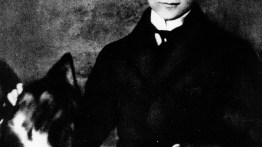
General Franco died on 20 November 1975, and with the 50th anniversary just passed, this biography – the first in years – of the man who ruled Spain with an iron fist for nearly four decades is timely, incisive and authoritative. Written by a former Madrid correspondent of the Economist, it’s also an up to date and highly accessible introduction to 20th-century Spanish history. Born in 1892 into a middle-class family, Francisco Franco shared a bedroom with his younger brother Ramon, who later won international fame as Europe’s ‘equivalent of Charles Lindbergh’. There were few signs, however, that eminence also awaited Francisco. A weedy child, who dutifully got by at school, he had a difficult relationship with his domineering Freemason father.

Margaret Atwood settles old scores

In the introduction to Book of Lives, Margaret Atwood recalls her initial response to the suggestion that she write a memoir: ‘Who wants to read about someone sitting at a desk messing up blank sheets of paper?’ Her autobiography was hardly the stuff of high adventure: ‘I wrote a book, I wrote a second book, I wrote another book, I wrote another book.’  This is not what they meant, her publishers replied: ‘We meant a memoir in, you know, a literary style.’ While Book of Lives is about a great deal more than Atwood churning out prize-winning novels, it is not written in a ‘literary style’. The style, if anything, is anti-literary. Atwood’s voice is casual, chatty, often catty.

The ups and downs of high-rise living

‘On BBC 2 last Monday,’ noted the Sunday Telegraph’s TV critic Trevor Grove in February 1979, ‘the return of Fawlty Towers was immediately followed by a programme about faulty towers.’ He went on: This was odd, but on close examination turned out to be without significance. After all, what connection could there possibly be between a comedy series based on the exploits of a domineering, havoc-wreaking megalomaniac called Basil Fawlty and a serious study of what has been done to Britain’s urban environment by a bunch of domineering, havoc-wreaking megalomaniacs who call themselves architects? The programme was Christopher Booker’s still remembered City of Towers, a ferocious attack on Le Corbusier-inspired concrete high-rise, especially when used for public housing.

How London became the best place in the world to eat out

London has become the best place in the world to eat out. Of course, there are a thousand other cities with marvellous food, but for organic vitality, ethnic variety and nose-to-tail creativity, London is unmatched. New York and Paris are parochial by comparison. Two new books locate the source of this revolution of taste and aspiration in the 1980s and 1990s. But, like the Zen paradox, this is both true and untrue. Waves of immigrants immediately raised postwar expectations. It is estimated that 80 per cent of the ‘Indian’ restaurants which dominate high streets are in fact Bangladeshi and that most of the owners arrived from Sylhet immediately after Partition. The Empire struck back.

Songs of murder, rape and desertion

A century ago, the Orkney poet George Mackay Brown was settling into his first term at Stromness Academy. His schooldays were to prove a dismal grind, but English lessons brought moments of magic. He was especially intrigued by poems – ballads, mostly – signed simply ‘Anon’. The name of the poet was lost – and perhaps there hadn’t been just one but a host of craftsmen in the making of each of these wonders. They were the creation of a tribe, the inheritance of a community, songs ‘seraphically free/ Of taint of personality’. Today, as publishers bust themselves to promote the cult of individual authors, it’s a thrilling, liberating notion.

The evasions of smalltown Alabama: The Land of Sweet Forever, by Harper Lee, reviewed

Harper Lee’s writing career was brief, but her single novel became one of the most famous in American history. To Kill a Mockingbird (1960) won the Pulitzer Prize, sold tens of millions of copies and remains a fixture of classrooms and popular memory. She published almost nothing else until Go Set a Watchman – an earlier draft of Mockingbird – appeared in 2015, just before her death and perhaps without her meaningful consent. The Land of Sweet Forever gathers apprentice stories written before Mockingbird, along with a few later magazine pieces. Most are slight and the volume is more commercial than literary.

Rory Stewart’s romantic view of Cumbria is wide of the mark

It’s tricky for writers to gather up pieces of old work and collect them in significant literary form. It’s risky for former politicians to publish outdated commentaries, with no agenda other than to show politics on the ground and as a record of their efforts and prejudices. Most hazardous of all is titling a book in such a way that it eschews the established geographical and psychological identity of the region it describes. These are the challenges Rory Stewart sets for himself in Middleland. The book consists of the granary-floor sweepings of journalistic pieces published in the Cumberland and Westmorland Herald while Stewart served as MP for Penrith and the Border.

Peril in Prague: The Secret of Secrets, by Dan Brown, reviewed

Robert Langdon is a symbologist, and that is the meta joke – the only joke – of Dan Brown’s series of blockbusters, of which this is the sixth. Langdon, an Everyman – Frodo Baggins but taller, and with a professorship at Harvard – is a monied, moderate intellectual who likes swimming. And he is very ordinary – until he isn’t. All novels have subtexts, even if they don’t really want them. They can’t help it. This one is: a monied, moderate intellectual can be interesting, and interesting things can happen to him. (I think Brown spends a lot of time at his desk. I also think he prefers ideas to people.) Langdon can set off the fire alarm in his hotel and jump out of the window into the river.

The little imps who pretended to be poltergeists

It comes as a surprise for anyone assuming that ghosthunters are easily fooled scaredy cats to learn that there was once a Society for Psychical Research based at Cambridge University. Undergraduate members would gather on Sunday evenings to hear the latest reports of investigations into supernatural phenomena. It sounds quaint; but to judge from Ben Machell’s account of the group’s charismatic leader Tony Cornell, there must have been many enthralling moments. Machell uses the figure of Cornell to prise open the SPR, founded in 1882 in London. Members included Arthur Balfour, William Gladstone and Arthur Conan Doyle. Cornell became a member after encountering a hermit in India when on active service during the second world war.

The cartographer’s power to decide the fate of millions

I had searched for it for the better part of 20 years. An enormous trove of lost maps, the 800 or so sheets of an immense and madcap Victorian project known as the International Map of the World at the Scale of One to a Million. It had taken its makers 70 years of costly surveying, engraving and printing before it was abandoned unfinished in the 1980s.  An original set of these stunningly lovely British-made maps was first deposited in the swanky Manhattan offices of the American Geographical Society. But, after falling on hard times, the AGS had to move to smaller digs in Brooklyn and had no room for the IMW collection. The set then seemed to vanish from the face of the Earth that once it had sought to chart.

Football vs opera, and the terror of being considered highbrow

After Handel introduced Italian opera to London, Georgians and Victorians went to performances to wear their diamonds and meet friends. As Victoria’s reign progressed, opera percolated down, via brass bands, organ grinders, music hall warblers and whistling delivery boys. In 1869, the Leeds impresario Carl Rosa set up ‘a sort of operatic Woolworths’, a touring company putting on shows in cinemas and working men’s clubs Lilian Baylis was the other great populariser. In 1897, she took over her aunt’s music hall, the Old Vic, and threw herself into social improvement: ‘My people must have the best. God tells me the best is grand opera.’ With 2,000 seats priced between 3d and 3/- , her operas were so popular that they subsidised her Shakespeare plays.