More from Books

A philosophical quest: A Fictional Inquiry, by Daniele del Giudice, reviewed

A researcher arrives in Trieste to piece together the life of a well-known literary figure. In cafés, bookshops and hospitals he visits the friends and lovers who were part of the writer’s circle. Now dying themselves, they share echoes of a literary scene that has long since dispersed. Women recall how they were celebrated in poetry; men how their conversation sparkled. Someone remembers how the writer once asked if he might immortalise one of his witticisms in his work: ‘Forty years ago I made a joke in a bar, and he said “Oh that’s good! Will you give it to me? I want to put it in my novel.’” But the proposed novel never came. At the heart of this short, dreamlike book is a gap: the great writer around whom this literary society orbited never published anything.

The pedant’s progress through history

No one likes a pedant. But over the past few millennia, people have shunned pedants, bores and know-it-alls for a wide range of different, often conflicting, reasons. They have been accused of obscuring the path to true philosophical knowledge and of putting learning on too high a pedestal; they’ve been regarded as unfit to be democratic leaders; too unskilled in the aristocratic virtues; too keen to rise above their natural class; and as stubborn impediments to a true comprehension of the divine. At times they’ve been deemed too unmanly and too feeble; at others, far too boorish, charmless, unable to think for themselves and probably horrible at parties. Arnoud S.Q.

An escape from investment banking to the open road

A beguiling cinema advert back in the 1970s showed a young man with a series of doors closing around him with resounding clunks. First, he was hemmed in by the boredom of school, then work, and finally a mortgage – but as soon as he got the keys to his first motorbike, he could hit the open road and escape to freedom. Vroom, vroom. I seem to remember the initial scenes were in grim black and white, but when he got the bike everything switched to vibrant colour – although that may be false memory syndrome.

The inspiration for David Lynch’s mysterious, disquieting world

‘He was the true Willy Wonka of film-making – I feel like I won the golden ticket getting the chance to work with him!’ The speaker is Lara Flynn Boyle, who played Donna Hayward, the friend of the murdered Laura Palmer in David Lynch’s small-screen masterpiece Twin Peaks. That comparison, cited in John Higgs’s terrifically lucid and compact study of the filmmaker, who died in January, aged 78, is rather brilliant.

What hope is there for Syria today?

Rime Allaf takes the long view of Syria’s descent into hell. Her story begins with President Hafez al Assad, the architect of the socialist Baathist dictatorship that, from 1970 to 2000, immiserated and impoverished an entire nation before his son and successor Bashar utterly destroyed it. It Started in Damascus is part history, part memoir, the story of a people whose hopes for a better life have been consistently strangled by the Assad dynasty for more than half a century. A Syrian-born writer and analyst who comes from a distinguished diplomatic family, Allaf is unflinching when she trains her sights on regime depravity. It makes for disturbing, compulsive and at times heart-in-the-mouth reading.

From the wilds of Kyrgyzstan to the Victorian nursery – a choice of art books

One day, according to a venerable anecdote, an earl pushed his way into Hans Holbein’s London workshop demanding that his portrait be painted straight away. Understandably annoyed, Holbein hit him. This nobleman then asked Henry VIII to punish the painter, but apparently the monarch replied: ‘I can make seven earls (if it pleased me) from seven peasants – but I could not make one Hans Holbeen [sic], or so excellent an artist, out of seven earls.’ Holbein’s pictures must have seemed miraculous when they appeared in Tudor England. In fact they still do. Seeing them is like opening a window into the past and finding it populated by people like those you might pass in the street today.

Laughing at Putin is a powerful form of protest

Penal Colony No. 2. A girl in a green coat. Red splashes of fireworks against the night sky. She arrives back in Moscow: photographers, a clamour of questions, what is it like to be free? Meetings, cops, her little six-year-old son with a sparkler, a video being recorded, her mother nearby, anxious. Like the flickering, scratchy lens of a film projector, Maria Alyokhina’s Political Girl illuminates the story of her life from the moment she and the other members of Pussy Riot were let out of prison in 2013 until, in 2022, she finally fled Russia disguised as a delivery driver. Nine years of fighting the slowly tightening noose of Putin’s regime with an endless, almost crazed persistence.

Philosophy’s greatest pessimist wasn’t so miserable after all

According to the German philosopher Arthur Schopenhauer (1788-1860), people prefer reading books about great thinkers rather than by the thinkers themselves because ‘like is attracted to like and the shallow, tasteless gossip of a contemporary pinhead is more agreeable and convenient to them than the thoughts of great minds’. Thankfully, this contemptuous attitude towards biographers has not deterred David Bather Woods, a professor at Warwick University, from taking a fresh look at one of the most influential yet misunderstood figures in western philosophy. Woods’s prose is clear and compelling, though the book’s thematic structure is confusing. He argues that the defining event in Schopenhauer’s life was the suspected suicide of his father, Heinrich Floris.

The furious tug of war between 18th-century Whigs and Tories

A foul-mouthed fantasist with a chin like an ironing board starts a wild conspiracy theory about the King’s brother. An alcoholic racing fanatic turns his gambler’s eye to the ballot box. A maniacal preacher gives such a polarising sermon that he paints himself as a second Christ and tours the country as a sex symbol. These are not the inventions of William Hogarth or Jonathan Swift; they are the figures who divided our political system in two, as George Owers tells us in his delightful new history of the birth of party politics. The Rage of Party traces the fevered rise of Whigs and Tories during the reigns of William III and Queen Anne.

In Putin’s Russia, feminism is an ugly word

The excellent Moscow-born journalist Julia Ioffe’s first book recounts a well-known slice of Russian history from a fresh perspective – that of the mighty Russian woman who, it’s said, can ‘stop a galloping horse and run into a burning hut’. And how superhumanly brave and resilient they have had to be. Women were granted sweeping rights following the Revolution, then watched them dwindle for the rest of the century, in law but mainly in practice. What remained was the Soviet obligation to work regardless of gender, which created a country of professional women in every sphere: engineers, cosmonauts, judges, professors and 70 per cent of doctors by the 1970s.

The making of William Golding as a writer

It is hard to believe that the 1983 Nobel Prize in Literature would have been awarded to the author of titles such as The Chinese Have X-Ray Eyes, Here Be Monsters or – yes – An Erection at Barchester. But if William Golding had had his way, so it might have proved. Charles Monteith, his loyal editor at Faber & Faber, saved him from himself; and thus it was that those books were called instead Pincher Martin, Darkness Visible and The Spire. For whatever reason, Golding thought himself a monster and his journals seethed with self-disgust Even Golding’s first and most famous novel, Lord of the Flies (1954), started life as Strangers from Within. Its publishing history is almost as well known as its plot (of boys stranded on an island turning savage).

The simple flatbread that conquered the world

Pizza is the Italian food that has conquered the world. From Brussels to LA, from Beijing to Buenos Aires, pizzerias are everywhere. But what are the origins of this food, and how did it become so popular? Reading Luca Cesari’sbook made me hungry not only for a thin crust margherita but also to digest the wealth of information about this simple dish. The margherita gets its name from Queen Margherita of Savoy, who, in 1889, on a visit to Naples, summoned Raffaele Esposito, the celebrated pizzaiolo (pizza-maker and hawker) to the palace to try his wares. She so liked the one with tomato, mozzarella and basil (made to represent the colours of the Italian flag) that it was dedicated to her.

The reluctant spy: The Predicament, by William Boyd, reviewed

According to the literary critic Harold Bloom, male writers have daddy issues. So keenly do they feel the oppressive influence of their forefathers that when they take up the pen it is to use it as a sword. To produce something new, they must engage their predecessors in a writerly duel to the death. Bloom’s examples are all very highbrow – Blake vs Milton, Keats vs Shakespeare – but the theory applies across the literary spectrum. When William Boyd sits down to write a new spy novel and, removing his pen from its sheath, looks up to assess the field, it is (among others) the faces of Ian Fleming and John le Carré who stare back. What better way to deal with the anxiety of their influence than to create a spy who is not only reluctant but practically monogamous too.

Serenity and splendour: a choice of gardening books

This year marks the centenary of Britain’s National Pinetum at Bedgebury in Kent, originally founded to rescue the smog-ravaged collection of the Royal Botanic Gardens, Kew, and now part of a global conservation effort: one third of all conifer species are currently threatened with extinction. To celebrate the birthday, we have Bedgebury Florilegium by Christina Harrison and Dan Luscombe (Kew Publishing, £18), featuring 20 botanical paintings by Bedgebury’s Florilegium Society. This is a group of volunteer artists dedicated to documenting the Pinetum’s remarkable collection of more than 12,000 specimen trees. But perhaps the most beautiful book to cross my desk this year is Melbourne Hall Garden by Jodie Jones (Frances Lincoln, £35), hauntingly photographed by Andrea Jones.

Faith – and why mountains move us

Sylvain Tesson’s White unfolds the story of a gruelling ski journey across the Alps during which the author aims to fulfil ‘a long-held dream of transforming travel into prayer’. Born in Paris in 1973, Tesson is a well-known adventure writer whose previous books include The Consolations of the Forest: Alone in a Cabin on the Siberian Taiga, which won awards on both sides of the Channel and was made into a film. As a public figure associated with the far right, Tesson remains divisive in his homeland. His political views do not seem to have dented book sales or literary coverage: one wonders if the same would be true if a travel writer of similar persuasion popped up here.

‘I could turn very nasty – I was an egotistical brute’, says Anthony Hopkins

It’s a good job Anthony Hopkins is only an actor, as think what he’d be like as a dictator or grand inquisitor. ‘I could turn very nasty,’ he tells us in his memoir. Doing National Service: ‘I was beginning to enjoy the fisticuffs in my life.’ Encountering a Scotsman: ‘I felt a surge of hatred and anger. I head-butted him and smashed his nose so hard I heard it crack.’ To a director who’d annoyed him: ‘Learn some manners... or I’ll change the shape of your face.’ Mickey Rourke was told: ‘Touch me like that again and I’ll smash your face right into the back of your head.’ Hopkins is a nasty piece of work, and proud of it. He calls himself ‘a vindictive, cynical, insulting, horrible man’, adding for good measure: ‘I was an egotistical brute.

The Belgian resistance finally gets its due

We are familiar with the myths and realities of French resistance and German occupation, but less so with the story of Belgian resistance. It was highly creditable, spanning both world wars, and has long deserved to be better known. This book should help ensure that it is. The title refers to the legend of the White Lady – la Dame Blanche – whose appearance was said to herald the downfall of the Hohenzollerns, the Kaiser’s dynasty. The name was adopted by a network of 1,084 Belgians who spied for MI6 against the country’s German occupiers during the first world war. According to MI6’s authorised history, this ‘became the most successful single British human intelligence operation’ of that war.

Beaujolais – a refuge for impecunious wine lovers

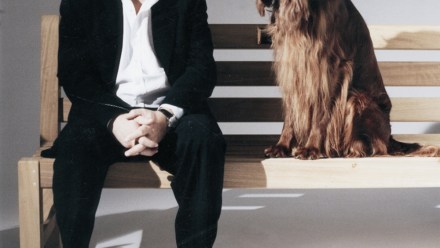
With his three-piece suits, poodle hairdo and bizarrely bendy physique, Tom Gilbey looks like he was created in a secret laboratory beneath the streets of Turnham Green by the Wine Marketing Board. But I have it on good authority that he is a real person. Gilbey came to prominence last year as the self-styled ‘wine wanker’ who ran the London marathon, stopping every mile to taste a wine blind and guessing most of them right. Now we have the inevitable book; and while Gilbey isn’t an elegant prose stylist in the manner of Oz Clarke, Thirsty: 100 Great Wines and Stories (Square Peg, £20) is an enormously entertaining read. It’s part memoir, part guide to wine. The author comes from wine royalty.