Robert Skidelsky

What comes after America’s retreat?

What is happening to the ‘rules-based international order’ despairingly invoked by bewildered European leaders? The broad answer is that we are living through the retreat of American hegemony, masked by bluster and marked by contradictions. The retreat has two aspects, economic and geopolitical. Economists talk about Trump’s tariffs breaking up the free-trade order; geopoliticians about the Trump Corollary breaking up the Nato system. These are part of a single, reasonably coherent story. But the retreat is not as straightforward as it sounds. How does the bombing of Iran fit into it? What do people mean when they talk about a global ‘rules-based order’?

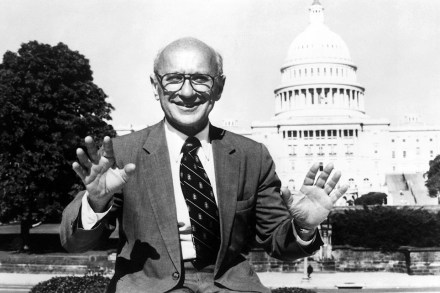
Milton Friedman – economic visionary or scourge of the world?

From our UK edition

The Keynesian economist Nicholas Kaldor called Milton Friedman one of the two most evil men of the 20th century. (Friedman was in distinguished company.) The ‘scourge’ he inflicted on the world was monetarism, a product of what Kaldor called Friedman’s Big Lie – of which more later. Moral judgments aside, how does Friedman rank in the world of 20th-century economists? By common consent, he stands with Friedrich Hayek and John Maynard Keynes at the apex of his profession. All wrestled with the defining problem of their age: the radical economic and political instability of the 1920s and 1930s. Their responses reflected their national situations.

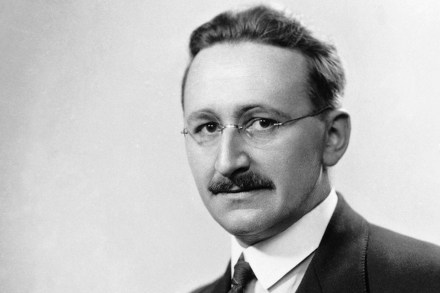
Friedrich Hayek: a great political thinker rather than a great economist

From our UK edition

Despite being awarded a Nobel in economics in 1974, Friedrich Hayek was a great thinker rather than a great economist. He called himself a ‘muddler’. His own attempt to build an economic theory floundered. His major contribution was to emphasise the limitations  of economic knowledge, and thus the inevitable frustration of efforts to build economic utopias. His theorising was abstract, but his purpose was practical: to make the case for a liberal economic order which would be proof against the political and economic wickedness and madness through which he lived: the two world wars, the Great Depression and the rise and fall of fascism and communism. Hayek’s was a slow-burning flame.

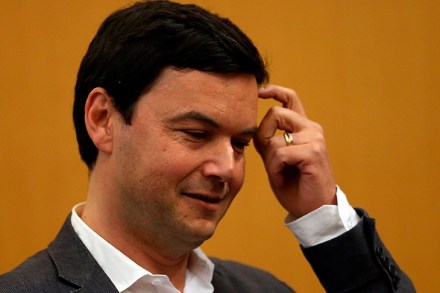
What makes Thomas Piketty so sure he can save the world?

From our UK edition

The French economist, statistician and polymath Thomas Piketty sprang to fame in 2013 with a daunting tome, Capital in the Twenty- First Century. In it he documented a ‘fundamental force of divergence’ in the capitalist system, which he represented by the equation r>g — the tendency for returns to capital to grow faster than national income, and therefore for wealth to concentrate in fewer and fewer hands. This tendency was reversed between 1914 and 1980 by the impact of two world wars, the Great Depression, social democracy and the trade unions, but it has since reasserted itself, restoring levels of inequality last seen 100 years ago.