Lead book review

Unearthly darkness

Mask of the Sun: The Science, History and Forgotten Lore of Eclipsesby Norton, £20, pp. 336 On 28 May 1900 Mabel Loomis Todd, friend and editor of the poet Emily Dickinson, stood with her astronomer husband on the roof of a house in Tripoli to witness one of nature’s most spectacular events: a total eclipse of the sun. Afterwards she wrote: I doubt if the effect of witnessing a total eclipse ever quite passes away… A startling nearness to the gigantic forces of nature and their inconceivable operation seems to have been established. My own first experience of a total solar eclipse was also in North Africa, at a remote viewing site in the depths of the Libyan desert. As the resident astronomer on an organised eclipse tour, I had done my homework.

A true original

Leonora Carrington was strikingly beautiful with ‘the personality of a headstrong and hypersensitive horse’ (according to her friend and patron Edward James); and she fled from her family, renouncing a life of privilege and ease to pursue her calling as an artist. Joanna Moorhead deplores the fact that she is ‘not much more than a footnote in art history’. But she has long been a legendary figure (among recent devotees, apparently, Madonna and Björk); in Mexico, where she lived and worked for most of her life, she is a national treasure; and for the feminist she is a heroine and her art ‘a modern woman’s codex’.

Two small boys in the sea

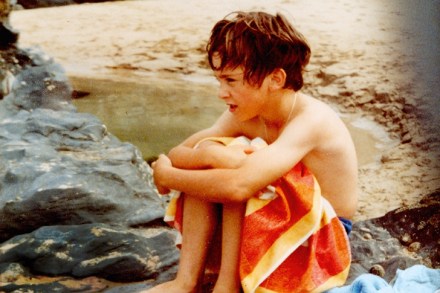
An estimated 400,000 people drown annually worldwide, 50 per cent of them children. Roughly 150 drownings occur in the UK. In the 1970s, the RNLI station at Port Isaac on the north Cornish coast responded to ‘about 30 shouts a year’, reckons the novelist Richard Beard. On 18 August 1978 at 2.30 p.m. a maroon rocket went up with a great whoosh 800 feet into the summer sky to summon the coastguard. In the language of the rescue services, there was a ‘swimmer in the water’. Ninety minutes earlier, Beard, then aged 11, was on a nearby beach with his brother Nicky, aged nine. On holiday from Swindon, the Beard family had had a picnic and had finished playing a game of beach cricket and were packing up to leave.

Welsh wizardry | 30 March 2017

When Stravinsky visited David Jones in his cold Harrow bedsit, he came away saying, ‘I have been in the presence of a holy man.’ Other admirers included T.S. Eliot (his publisher) and the Queen Mother (who wrote asking if she could buy some of his work). Harold Bloom, Kenneth Clark and W.H. Auden were all not merely admirers, but passionate in their admiration. Auden thought Jones’s long Eucharistic poem ‘The Anathemata’ the ‘finest long poem written in English this century’. Yet Jones remained completely his own man, belonging to no ‘set’. He had very little money and has never, as far as one can tell, been part of the Eng. lit. mainstream.

The man and the moment

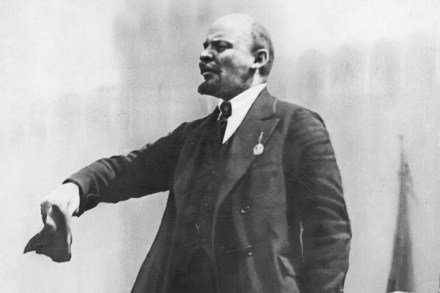
The centenary of the Russian Revolution has arrived right on time, just as the liberal democratic world is getting a taste of what it’s like to feel political gravity give way. In 2017, Lenin lives. ‘In many ways he was a thoroughly modern phenomenon,’ writes Victor Sebestyen in Lenin the Dictator, the kind of demagogue familiar to us in western democracies, as well as in dictatorships. In his quest for power, he promised people anything and everything. He offered simple solutions to complex problems. He lied unashamedly. He identified a scapegoat he could later label ‘enemies of the people’. He justified himself on the basis that winning meant everything….

Speckled Footman and Maiden’s Blush

Last year, I attempted to pass through security in an American airport carrying a small black box, containing eight batteries and a visible circuit board. If the switch was flipped, the display counted down in red flashing numbers. Unsuprisingly, the officer in Salt Lake City pulled it out of my hand baggage. ‘What’s this?’ ‘It’s to attract moths,’ I said; then, thinking this sounded feeble, added rather grandly, ‘I’m a lepidopterist.’ ‘Say that again.’ So I did, and a huge grin lit up the face of my interrogator. ‘Hey, y’all,’ he called out to his colleagues. ‘C’mon on over, listen to this… Say it again.

Back with a vengeance

One hour in No. 5 Cheyne Row, Virginia Woolf observed, will tell you more about the Carlyles than all the biographies. The house lived in by Thomas and Jane Carlyle from 1834 until their respective deaths, and now owned by the National Trust, was one of the great battlegrounds of domestic history. Here Jane warred against bedbugs and coal dust and her husband’s obsession with the vast and unstoppable Lady Harriet Ashburton (there were three people in her marriage), and Carlyle warred against the intrusions of the outside world.

All in the mind’s eye

Everyone knows what the Rorschach tests are. Like Freudian slips, boycotts, quislings and platonic friendships, however, it was long ago forgotten that they had been named after an individual human being. Hermann Rorschach was a Swiss doctor and psychiatrist with curiosity about the visual arts, a contemporary of Freud and Jung. He created the tests in a book published in 1921, and a structure for evaluating patient responses to them before dying of appendicitis the following year. Rorschach’s life has its interests, and certainly casts some unexpected light on the Europe of his time. His father wrote an artistic treatise which sounds extraordinarily like the Bauhaus writings of Paul Klee, decades later.

Frontier territory

In Ali’s Café, just inside Turkey on the Bulgarian border, Iraqi and Syrian refugees spend their days drinking tea. Now and then, someone goes into the back room to give bundles of money to smugglers who have promised to get him into the European Union. Only when piano chords strike up on the radio does Kapka Kassabova realise what Ali’s reminds her of: Rick’s Bar in the movie Casablanca, a transit realm ‘where the homeless of the day come in search of passage’. The Syrian refugees literally walked into Kassabova’s book.

The game of life

In the introduction to his new book Steven Johnson starts out by describing the ninth-century Book of Ingenious Devices and its successor, the 13th-century Book of the Knowledge of Ingenious Mechanisms by the Arab engineer al-Jazari. Here were books of extraordinarily advanced technology. The latter contained sketches of float valves that prefigure the design of modern toilets, flow regulators that would eventually be used in hydroelectric dams and internal combustion engines, water clocks more accurate than anything Europe would see for 400 years… But in both books, Johnson says, ‘the overwhelming majority of the mechanisms […] are objects of amusement and mimicry’: they are toys. A point to conjure with.

Cheating death

2016 was probably the year even the most optimistic of us — those who can genuinely square the new populist politics with a bright future for truth-seekers, scientists and rational thinkers — gave up on the possibility of time travel. Surely, on every rally stage there should have been at least one white man from the future (it’s generally a white man for the simple statistical reason that if you’re a woman or a non-white man and go travelling in time, there’s only about 0.

Sins of the flesh

Bill Schutt has an excellent subject, and he explores it from a promising angle. Cannibalism has long interested zoologists, anthropologists, historians, criminologists, literary theorists and students of theology and blasphemy — the absurd claim that Roman Catholics were commending it in their account of transubstantiation was a favourite with 18th-century English blasphemers. Few people have tried to bring all these together, and perhaps by the end we have to conclude that there is not much connecting the very different elements at the remote ends of the scale. Still, it was worth a try. Schutt is an animal scientist, and he begins with the simpler organisms. At the bottom of the scale, cannibalism in invertebrates is actually quite common for particular purposes.

A singular horror

Seventy years after the Nazi Holocaust, against the background of a rich and varied literature, Laurence Rees has achieved the unexpected: a magisterial book that consolidates what has come before and manages to offer fresh perspectives. With Brexit, Donald Trump and Marine Le Pen now centre stage, it also offers a timely reminder of the dangers that are unleashed when the path of demonisation and discrimination is embraced in the name of national well-being. As Primo Levi wrote in 1947, from his own experience, when the ‘unspoken dogma’ of group targeting becomes ‘the major premise in a syllogism, then, at the end of the chain, there is the Lager’.

Look back in anger | 19 January 2017

Pankaj Mishra’s Age of Anger wants to explain how we got to a world in ‘a pervasive panic... that anything can happen anywhere to anybody at any time’. Everything seems to be spinning out of control, and hatred, racism, violence and lies have become common currency everywhere. Facts have become irrelevant and ‘individuals with very different pasts find themselves herded by capitalism and technology into a common present’. Mishra, an accomplished and well known Indian/English writer, comes from semi-rural India. He is ‘a late comer to modernisation... a step-child of the West’. He explains to his readers the less familiar crisis of ideas in non-western states. He argues that Ayatollah Khomeini was an entirely modern leader.

An astronomical feat

Think of a computer and your mind might conjure the brushed steel contours of the latest must-have laptop or, for those of a certain age, a room full of whirring cabinets and reel-to-reel tape decks. The era of electronic computing has its roots in the code-breaking exploits of Bletchley Park; but the need for repetitive and reliable number-crunching did not suddenly begin with the wartime threat of Nazi submarines. For centuries, such everyday activities as banking, commerce, engineering and navigation have all relied on computing to manipulate large amounts of numerical information. But before there were machines to do the mathematical donkey-work, there were human brains, and in the 19th and early 20th centuries a computer was not a device but a person.

An unmagnificent seven

One of the most interesting developments in modern publishing has surely been the revival of interest in women writers of the past. Beginning with Virago Press, publishers have delved back and rediscovered exceptional female writers from the 17th century onwards. These have either been rescued from oblivion, or from the frequent fate of being dismissed as middle-brow and narrowly domestic. Editors and a new generation of scholars have unearthed excellent writers, from Fanny Burney to Elizabeth Taylor, and have changed literary taste forever. The success of the enterprise probably means that it is now easier to find a new readership for a once-popular female author than for a largely forgotten male author.

Cuckoo in the nest

‘Light as a feather, free as a bird.’ Günter Grass starts this final volume of short prose, poetry and sketches with a late and unexpected reawakening of his creative urge. After peevish old age had brought on such despondency that ‘neither lines of ink nor strings of words flowed from his hand’, he was gripped — out of the blue, and to his evident relish — by the impulse to ‘unleash the dog with no sense of shame. Become this or that. Lose my way on a single-minded quest.’ It makes for an invigorating opening: a three-paragraph paean to the unruly and questioning spirit which drove Grass’s writing throughout his hugely productive career.

To earth from heaven

When I was a child, the highlight of the summer holidays was when my cousin Simon came to stay. We shared a common obsession: aliens. Day after fruitless day, we would scan the skies, looking for UFOs. At night, long after we were supposed to have gone to sleep, we would get out our torches and pore over books on extraterrestrial life. These ranged from the sternly scientific — tomes on astronomy or space flight — to paperbacks with altogether more lurid copy. One in particular, filled with vivid images of flying saucers and Area 51, was a focus of our almost superstitious fascination. This was because it contained a picture that —to my deep embarrassment now — we had mutually decided was the scariest we had ever seen.

When reasoning goes wrong

It’s the intellectual bromance of the last century. Two psychologists — Danny, a Holocaust kid and adviser to the Israel Defence Forces, and Amos, a former child prodigy and paratrooper — meet at the end of the 1960s, and sparks immediately begin to fly. They spend countless hours locked in rooms together at Hebrew University and elsewhere, and eventually co-write a series of papers that will revolutionise the field, and lead to the surviving partner being awarded the Nobel prize in economics. Not, however, before this extraordinary partnership has itself fallen apart, like a love affair, in regret and mutual recrimination.

Atlas shrugs

In his Forward Prize-winning collection of 2014, A Cartographer Tries to Map a Way to Zion, Kei Miller’s hero describes his craft thus: ‘My job is to imagine the widening/ of the unfamiliar and also/ the widening ache of it;/ to anticipate the ironic/ question: how did we find/ ourselves here.’ This bringing of the unfamiliar into scope looms large in three new collections of cartographic curiosities which tell us about places that never were, places we’ve never been and places we will never go to. Edward Brooke-Hitching’s beautifully illustrated The Phantom Atlas presents the stories of over 50 locations that unwarrantedly found their way on to maps.