Lead book review

Armageddon averted

From 1945 to 1992 the Cold War was the climate. Individual weather events stood out — the Korean War, the Cuban missile crisis, the Hungarian and Prague uprisings, the fall of the Berlin wall — but the possibility of nuclear annihilation, the great divide between the broadly capitalist West and the broadly socialist East and the numerous proxy conflicts it spawned, were the background to daily life. In retrospect, it seems stable, almost cosy: you knew where you were. Its ramifications were so many and so all-encompassing that virtually everything you say about it will be true of some part, somewhere.

The fruits of imperialism

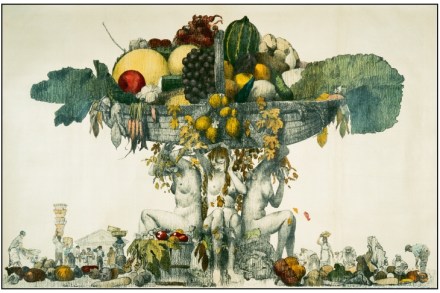
Imagine yourself a middle-class person in England in the 1870s. You sit down to drink a cup of tea while reading The Spectator. It probably doesn’t cross your mind, but in your hand you hold products from around the world. Your tea is from Ceylon, the sugar in it from Jamaica, and your porcelain cup was made in China. Your afternoon refreshment is the culmination of global trade developed over centuries. In A Thirst for Empire, Erika Rappaport traces how tea became a staple of the British diet after arriving in the 17th century, and has not lost its popularity yet. This is a detailed work, at over 400 pages of small print, but provides interesting explorations of the health-giving powers attributed to tea, and how it came to be seen as a wholesome and vital drink.

A tidal wave of grief

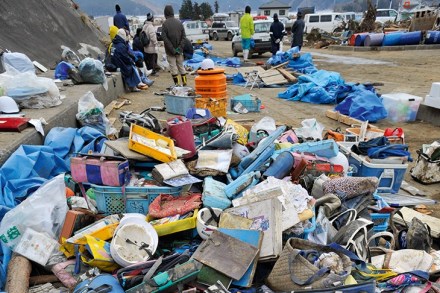
Most victims of the 1755 Lisbon earthquake — which convinced Voltaire there could be no God — perished not in the six-minute tremor, but in the tsunamis which foamed up the Tagus soon after, causing devastation as far away as Brazil. These towering sheets of water can have an impact greater than that of a nuclear explosion. The most powerful earthquake yet recorded, in 1960 off Chile, sent 80-foot waves across 10,500 miles of ocean — and struck Japan, half a world away, killing 142 people there. Japan is a magnet for super-tsunamis, which recur at intervals of 800 to 1,000 years, with lesser waves striking the north-east Sanriku coast roughly every 30 years. In 1896, 22,000 died after a moderate tremor out at sea; in 1933, 3,000 were killed by waves as high as 100 feet.

Two enquiring minds

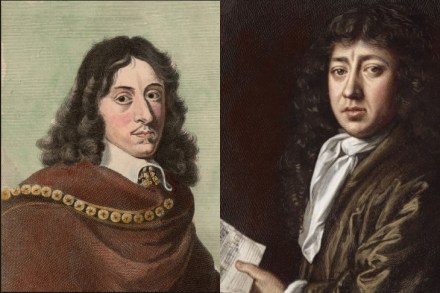
Samuel Pepys, wrote John Evelyn, was ‘universally beloved, hospitable, generous, learned in many things’ and ‘skilled in music’. John Evelyn, wrote Pepys, ‘must be allowed … for a little conceitedness; but he may well be so, being a man so much above others’. Pepys’s assessment of Evelyn was made early in their relationship, in 1665, and Evelyn’s assessment of Pepys was made on the day that his fellow diarist died, in 1703. So rest the reputations of our two great recorders of Restoration England: Pepys, the middle-class son of a tailor, was a man of the people; Evelyn, the heir of a country gentleman, was a notch or two above.

A dazzling vision

There are a number of reports by his contemporaries of Thomas Gainsborough at work. They make you realise what a very strange painter he was. There was an element of theatricality in his working practice — the public would expect to be astonished when they glimpsed it — but, even so, it is difficult to imagine any artist producing anything using Gainsborough’s methods. He painted in semi-darkness, and an observer reported that sitters for portraits found that ‘neither they nor their pictures were scarcely discernible’. The canvas, if large, was hung loosely, ‘secured by small cords’. James Hamilton describes it as ‘rigged perhaps like a small yacht, the canvas bellying with every move’.

The morality of conducting

Now he is the greatest figure for me, in the world. [Toscanini is] the last proud, noble, unbending representative (with Salvemini) of the Risorgimento & 19th-century ideals of human liberty... not just a great conductor but a symbol of discipline and spontaneity in one — the most morally dignified & inspiring hero of our time — more than Einstein, (to me) more than even the superhuman Winston [Churchill]. That is Isaiah Berlin writing in 1952, two years before his hero’s last concert, and as quoted by Harvey Sachs in this magnificent biography. Though Berlin’s encomium is extreme, it isn’t unrepresentative of the kind of things that were being written about Arturo Toscanini for many years before his death in 1957.

Drowning in mud and blood

George Orwell’s suggestion that the British remember only the military disasters of the first world war is certainly being borne out by the centenary commemorations. The focus of each year so far has been Gallipoli, the Somme and now the Third Battle of Ypres, popularly known as Passchendaele. The basic story is familiar. On 31 July 1917, in torrential rain, General Haig launched an attack against German positions in the Ypres Salient. The troops had to advance over ground that rapidly turned into a quagmire, shells having already destroyed the area’s network of drainage ditches. The attacks would continue sporadically, against the advice of those on the ground and often in atrocious weather, until November.

A strange vibration

Among the many curiosities revealed in this book, few are more startling than the fact that at the height of the so called ‘summer of love’ in 1967 the British historian Arnold Toynbee, on a visit to San Francisco, made his way to the Haight-Ashbury district — hippy central — to catch a concert by one of the Bay Area’s most popular bands, Quicksilver Messenger Service. Just what Toynbee, who was 78 at the time, made of the group’s epic exercise in free form, psychedelic improvisation, ‘The Fool’, Goldberg does not mention.

The first celebrity

It’s quite a scene to imagine. A maniacal self-publicist with absurd facial hair takes off in what’s thought to be the biggest hot-air balloon the world has ever seen. Adoring crowds gather to watch the launch. He rises rapidly and sails off towards the clouds — but in due course the whole thing goes arse-up and he comes clattering to earth, narrowly escaping with his and his crew’s life. Never mind: the catastrophe is reported around the world and has made him even more famous than he was before. It was a ‘semi-unsuccess’. And within weeks he’s back planning another ascent in another giant balloon.

Taking the rough with the smooth

In The Ambassadors, Henry James sends Lewis Lambert Strether from Boston to Paris to retrieve Chad Newsome, the wayward heir to a factory at Woollett, Massachusetts. Strether never names the ‘small, trivial rather ridiculous object of the commonest domestic use’ that has enriched the Newsomes, though he does say that it is not clothes pins, baking soda or shoe polish. In Aspects of the Novel, E.M. Forster identifies this ambiguity with James’s ‘uninvolved’ style, then suggests a button hook. Possible resolutions of the ‘Woollett Question’ also include safety matches, alarm clocks, toothpicks and, in a David Lodge campus satire, a chamber pot.

High flyers

It is conventional wisdom in the publishing industry that, despite the old adage, readers do indeed judge books by their covers. So, it seems, do passengers on the No. 29 bus. For a middle-aged man reading Clare Mulley’s The Women Who Flew for Hitler, some of the looks I got made me so uncomfortable that I took to hiding the cover behind a newspaper. So let’s get one thing straight from the beginning: this is not a niche book for Third Reich enthusiasts, nor a seedy excuse to fantasise about women in Nazi uniforms. Do not be put off by the awful title: it is in fact a serious double biography of two of the most remarkable women in the history of aviation. The first of Mulley’s subjects, and the more famous of the two, is Hanna Reitsch.

Damage limitation

One of the most pitiful sights in conflict areas is the local prosthetics store, with its rows of artificial limbs, sized from adult down to tiny child. A poignant reminder that, whether fleeing a war or injured in one, the human body and mind are subjected to extreme damage. Imagine triggering an improvised explosive device (IED) that shreds your leg and sends shrapnel, soil and debris deep into your body. Would you be able to apply a tourniquet to your injured leg, to prevent bleeding out from severed arteries? Soldiers are trained to do this. Some wear tourniquets in position, ready to wind tight should the worst happen. Your village is shelled and every member of your family killed.

In praise of neigh-sayers

Wallace Stevens gave us ‘Thirteen Ways of Looking at a Blackbird’. The German scholar Ulrich Raulff, in this meaty book about the history of man’s partnership with horses, gives us many more than 13 ways of looking at a horse. Horses have had ‘more meanings than bones’, he writes. And those meanings have been central to the human experience since pre-history. Evidence from the abraded teeth of horse skeletons indicates that man first slipped a rope into a horse’s mouth as long ago as 3,700 BCE. Horses are what Raulff calls ‘converters’: they can unlock the energy in plants and make it available for man’s use.

Gilded prostitution

‘An English peer of very old title is desirous of marrying at once a very wealthy lady, her age and looks are immaterial…’ This desperate advertisement in the Daily Telegraph in 1901 was a barometer of the impoverishment of many British aristocrats following the Long Depression of 1873–80; dependent on agriculture, the landed gentry continued to reel from those seven consecutive failed harvests. Meanwhile, America’s prairies and railroads had never produced so much wheat, cattle, oil or wealth.

The gull’s way

In 1978, Adam Nicolson received three Hebridean islands as a 21st birthday present from his father, Nigel. The Shiants, each about a mile long, were uninhabited, with just one rat-infested bothy: not everyone’s idea of paradise. But, precisely because human beings had neglected them, wild life flourished — the islands were ‘thick with the swirl of existence’, thrumming with life and death, suffering and triumph, ferocity and conquest. Sea Room (2002) is Nicolson’s rousing love lilt to the Shiants, for him the most beautiful place on earth.

The fount of all knowledge

Somewhere around the middle of the 17th century our modern concept of the museum began to take shape. Until then the cabinet of curiosities formed by a prince or a dilettante was on show solely to his friends or to scholars deemed worthy of having it unlocked. Nothing in the way of a systematic catalogue existed to help them navigate the gallimaufry of odd objects filling its shelves and cupboards. A Japanese netsuke button, an Arawak headdress and a handkerchief soaked in the blood of Charles I could be found nestling beside a stuffed alligator or a bezoar stone, calculus from an animal’s stomach held to possess magical curative powers.

The city of ugly love

Cuba’s gorgeous, crumbling capital has always been a testing ground for writers. That heady combination of revolution, cocktails, sex and unpainted mansions seems somehow to set literary pulses racing. Trollope, Hemingway and Graham Greene all described it with verve, but there’s also plenty of dross. The city certainly charmed me, and, a few years ago, I thought I’d add to the pulp with my own contribution. I started courting London’s Cubans, and even had the ambassador to lunch. But despite some intriguing gossip (e.g. that Che Guevara was no fun at parties, and utterly deadpan), I abandoned the whole idea. It seemed to me that Havana was about to change forever, and that whatever I wrote would be old hat before the ink was dry.

Love under wraps

It’s an important subject: the existence of a permanent and significant minority within London’s life. Gay men and lesbians have always been there, leaving — or taking care not to leave — traces of their existence. But for the historian, a difficulty arises: often the only evidence lies in their occasional brushes with the law. We often know nothing about how gays lived in each other’s company. Letters were destroyed; diaries were scrupulously kept free of anything that could lead to a conviction; and lives were reconstructed around the fictions of a bachelor chambers, or two ladies sharing. How many devoted footmen to bachelor barristers were actually lovers of decades?

When will we ever learn?

In 2012, sugar became more dangerous than gunpowder. According to the historian Yuval Noah Harari, of the 56 million people who died that year, 620,000 did so by the hand of their fellow humans: 120,000 in war and 500,000 from crime. By contrast, 1.5 million died from diabetes. Harari’s wry observation adds weight to Steven Pinker’s assertion in The Better Angels of Our Nature (2011) that humans are on a trajectory towards peace and non-violence. But wars in the Middle East, Afghanistan, across the Sahel and Yemen; Russian and Chinese irredentism; nuclear threats from North Korea; Trump’s belligerency, not to mention the asymmetry of terrorism, render urgently relevant the continued study of war. In War: An Enquiry, the philosopher and ethicist A.C.

The wondrous cross

How did the cross, from being such a loathsome taboo that it could scarcely be mentioned, change into an image thought suitable viewing for all ages in public art galleries? There is no doubt about its early despicable reputation. A hundred years before the birth of Jesus, Cicero declared that ‘the very word cross should be far removed not only from the person of a Roman citizen but from his thoughts’. It was the cross that gave rise to the word excruciating. It makes me feel rather queasy to envisage the slow death by suffocation of the crucified man, left without the strength to draw breath, so I was glad that Robin M. Jensen trotted fairly briskly through the forensic evidence, which includes a first-century heel bone with a nail through it.