Philippe Sands

Philippe Sands: 38 Londres Street – On Impunity, Pinochet in England and a Nazi in Patagonia

From our UK edition

58 min listen

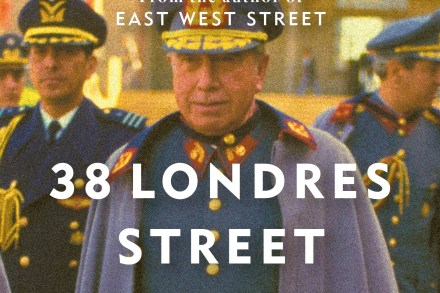
Sam Leith’s guest on this week’s Book Club podcast is the lawyer and writer Philippe Sands, whose new book 38 Londres Street describes the legal and diplomatic tussle over the potential extradition of the former Chilean dictator General Pinochet. Philippe tells Sam why the case was such an important one in legal history, and presents new evidence suggesting that the General’s release to Chile on health grounds may have been part of a behind-the-scenes stitch-up between the UK and Chilean governments. He sets out some of that evidence and pushes back on our reviewer Jonathan Sumption’s scepticism about the case. Here’s an old case, but not yet a cold case. Produced by Oscar Edmondson and Patrick Gibbons.
Loyd Grossman, Tanya Gold, Harry Halem, Angus Colwell, Philippe Sands and Michael Simmons

From our UK edition

45 min listen

On this week’s Spectator Out Loud: Loyd Grossman pleads to save Britain's cathedrals, as he reads his diary for the week (1:31); Unity Mitford is a classic case of aristocratic anti-Semitism says Tanya Gold (7:47); looking ahead to another Strategic Defence Review, Harry Halem warns that Britain is far from prepared for the era of AI warfare (12:42); 'the worst echo chamber is your own mind': Angus Colwell interviews philosopher Agnes Callard (24:24); reviewing Prosecuting the Powerful: War Crimes and the Battle for Justice, by Steve Crawshaw, Philippe Sands argues that while the international criminal justice system was prejudiced from the start the idea was right (31:01); and, Michael Simmons contradicts the Pope and declares that gossip is good for you (41:21).

The international criminal justice system was prejudiced from the start

From our UK edition

Three generations ago, Britain and the United States joined forces to propose the establishment of a revamped international rules-based system to remake the world. This was initially articulated in a document that came to be known as the Atlantic Charter, signed in August 1941. Other countries, including the Soviet Union, were persuaded to join the effort, part of a grouping that came to be known as the United Nations. The new rules would address trade and other economic matters, decolonisation, war and the fundamental rights of human beings. In the summer of 1945, the Statute of the Nuremberg Tribunal was drafted, reflecting agreement on a list of international crimes and the notion of individual criminal liability, up to the very highest levels of public office.

The heroic couple who defied Hitler

From our UK edition

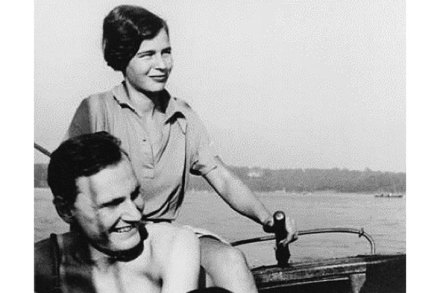
In the face of authoritarian rule, what is a citizen to do? Some will join the oppressors, while others, such as the diarist of the Nazi era Victor Klemperer, will keep their heads down, hoping the horrors will pass (they usually do not). Some, generally a tiny minority, choose the path of civil courage and resistance, of activity that aims to sabotage the regime. Such acts may take many forms, one being to work secretly from within the new establishment of which you are a part. That was the one taken by Libertas Haas-Heye and Harro Schulze-Boysen, two Berlin intellectuals who fell in love and worked to undermine the Nazi war effort. The story told by Norman Ohler, which is not newly discovered but not well known, is deeply engaging, enticingly written and extremely affecting.

Philippe Sands on the trail of Nazis

From our UK edition

38 min listen

In this week’s Book Club podcast my guest is the writer and human rights lawyer Philippe Sands. His new book The Ratline: Love, Lies and Justice on the Trail of a Nazi Fugitive describes his painstaking quest to track down the real story of a Nazi genocidaire who fled justice into the murky underground society of postwar Italy. Philippe tells me about the strange world of shifting allegiances he uncovered, and his own no less shifting relationship with his subject’s son - who continued against all the evidence to believe his father was a good man.

A force for good: Samantha Power is driven by a deep sense of idealism

From our UK edition

In the spring of 2008 I spent a fine day in the company of Samantha Power. She had come to the Hay Festival to talk about Chasing the Flame, her book about Sergio Vieira de Mello, the UN Special Representative to Iraq who was murdered in the August 2003 bombing of UN offices in Baghdad, who was Power’s colleague and friend. The audience was captivated by an exceptional individual, one who spoke with care and clarity, in a gravelly voice of distinct cadence. She was forthright, self-deprecating, intelligent, humorous and thoughtful in response to my questions and those of the audience. She was also a cracking storyteller, one who quickly won her audience over with a recollection of the moment President George W.

A singular horror

From our UK edition

Seventy years after the Nazi Holocaust, against the background of a rich and varied literature, Laurence Rees has achieved the unexpected: a magisterial book that consolidates what has come before and manages to offer fresh perspectives. With Brexit, Donald Trump and Marine Le Pen now centre stage, it also offers a timely reminder of the dangers that are unleashed when the path of demonisation and discrimination is embraced in the name of national well-being. As Primo Levi wrote in 1947, from his own experience, when the ‘unspoken dogma’ of group targeting becomes ‘the major premise in a syllogism, then, at the end of the chain, there is the Lager’.

Diary – 30 June 2016

From our UK edition

Referendum day is as nondescript and wet as the day before, happily spent in Cambridge at my son’s Leo’s graduation. Even here the coming vote intrudes. Some students say that the master of Trinity College has come out for Brexit. Leo’s boyfriend Eddie, newly graduated in German studies and about to head to a job in Berlin, worries about job prospects. Our lunch table is shared with genial and smiling but very divided family. The polling station is equally lively, a place for chat with neighbours. The working day is uneventful. Dinner with friends in the evening, asleep before the first results. I wake in the middle of the night, switch on the television, and see it’s going the Brexit way. On Friday I’m on the Tube early. The mood is horribly subdued.