Lead book review

Two enquiring minds

Samuel Pepys, wrote John Evelyn, was ‘universally beloved, hospitable, generous, learned in many things’ and ‘skilled in music’. John Evelyn, wrote Pepys, ‘must be allowed … for a little conceitedness; but he may well be so, being a man so much above others’. Pepys’s assessment of Evelyn was made early in their relationship, in 1665,

A dazzling vision

There are a number of reports by his contemporaries of Thomas Gainsborough at work. They make you realise what a very strange painter he was. There was an element of theatricality in his working practice — the public would expect to be astonished when they glimpsed it — but, even so, it is difficult to

The morality of conducting

Now he is the greatest figure for me, in the world. [Toscanini is] the last proud, noble, unbending representative (with Salvemini) of the Risorgimento & 19th-century ideals of human liberty… not just a great conductor but a symbol of discipline and spontaneity in one — the most morally dignified & inspiring hero of our time

Drowning in mud and blood

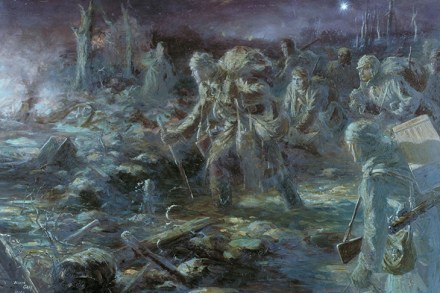
George Orwell’s suggestion that the British remember only the military disasters of the first world war is certainly being borne out by the centenary commemorations. The focus of each year so far has been Gallipoli, the Somme and now the Third Battle of Ypres, popularly known as Passchendaele. The basic story is familiar. On 31

A strange vibration

Among the many curiosities revealed in this book, few are more startling than the fact that at the height of the so called ‘summer of love’ in 1967 the British historian Arnold Toynbee, on a visit to San Francisco, made his way to the Haight-Ashbury district — hippy central — to catch a concert by

The first celebrity

It’s quite a scene to imagine. A maniacal self-publicist with absurd facial hair takes off in what’s thought to be the biggest hot-air balloon the world has ever seen. Adoring crowds gather to watch the launch. He rises rapidly and sails off towards the clouds — but in due course the whole thing goes arse-up

Taking the rough with the smooth

In The Ambassadors, Henry James sends Lewis Lambert Strether from Boston to Paris to retrieve Chad Newsome, the wayward heir to a factory at Woollett, Massachusetts. Strether never names the ‘small, trivial rather ridiculous object of the commonest domestic use’ that has enriched the Newsomes, though he does say that it is not clothes pins,

High flyers

It is conventional wisdom in the publishing industry that, despite the old adage, readers do indeed judge books by their covers. So, it seems, do passengers on the No. 29 bus. For a middle-aged man reading Clare Mulley’s The Women Who Flew for Hitler, some of the looks I got made me so uncomfortable that

Damage limitation

One of the most pitiful sights in conflict areas is the local prosthetics store, with its rows of artificial limbs, sized from adult down to tiny child. A poignant reminder that, whether fleeing a war or injured in one, the human body and mind are subjected to extreme damage. Imagine triggering an improvised explosive device

In praise of neigh-sayers

Wallace Stevens gave us ‘Thirteen Ways of Looking at a Blackbird’. The German scholar Ulrich Raulff, in this meaty book about the history of man’s partnership with horses, gives us many more than 13 ways of looking at a horse. Horses have had ‘more meanings than bones’, he writes. And those meanings have been central

Gilded prostitution

‘An English peer of very old title is desirous of marrying at once a very wealthy lady, her age and looks are immaterial…’ This desperate advertisement in the Daily Telegraph in 1901 was a barometer of the impoverishment of many British aristocrats following the Long Depression of 1873–80; dependent on agriculture, the landed gentry continued

The gull’s way

In 1978, Adam Nicolson received three Hebridean islands as a 21st birthday present from his father, Nigel. The Shiants, each about a mile long, were uninhabited, with just one rat-infested bothy: not everyone’s idea of paradise. But, precisely because human beings had neglected them, wild life flourished — the islands were ‘thick with the swirl

The fount of all knowledge

Somewhere around the middle of the 17th century our modern concept of the museum began to take shape. Until then the cabinet of curiosities formed by a prince or a dilettante was on show solely to his friends or to scholars deemed worthy of having it unlocked. Nothing in the way of a systematic catalogue

The city of ugly love

Cuba’s gorgeous, crumbling capital has always been a testing ground for writers. That heady combination of revolution, cocktails, sex and unpainted mansions seems somehow to set literary pulses racing. Trollope, Hemingway and Graham Greene all described it with verve, but there’s also plenty of dross. The city certainly charmed me, and, a few years ago,

Love under wraps

It’s an important subject: the existence of a permanent and significant minority within London’s life. Gay men and lesbians have always been there, leaving — or taking care not to leave — traces of their existence. But for the historian, a difficulty arises: often the only evidence lies in their occasional brushes with the law.

When will we ever learn?

In 2012, sugar became more dangerous than gunpowder. According to the historian Yuval Noah Harari, of the 56 million people who died that year, 620,000 did so by the hand of their fellow humans: 120,000 in war and 500,000 from crime. By contrast, 1.5 million died from diabetes. Harari’s wry observation adds weight to Steven

The wondrous cross

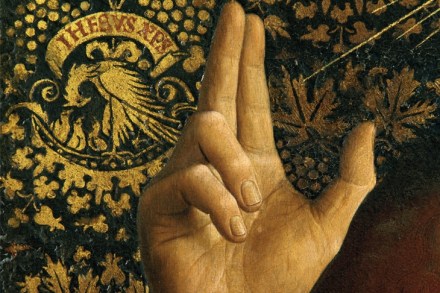
How did the cross, from being such a loathsome taboo that it could scarcely be mentioned, change into an image thought suitable viewing for all ages in public art galleries? There is no doubt about its early despicable reputation. A hundred years before the birth of Jesus, Cicero declared that ‘the very word cross should

Unearthly darkness

Mask of the Sun: The Science, History and Forgotten Lore of Eclipsesby Norton, £20, pp. 336 On 28 May 1900 Mabel Loomis Todd, friend and editor of the poet Emily Dickinson, stood with her astronomer husband on the roof of a house in Tripoli to witness one of nature’s most spectacular events: a total eclipse

A true original

Leonora Carrington was strikingly beautiful with ‘the personality of a headstrong and hypersensitive horse’ (according to her friend and patron Edward James); and she fled from her family, renouncing a life of privilege and ease to pursue her calling as an artist. Joanna Moorhead deplores the fact that she is ‘not much more than a

Two small boys in the sea

An estimated 400,000 people drown annually worldwide, 50 per cent of them children. Roughly 150 drownings occur in the UK. In the 1970s, the RNLI station at Port Isaac on the north Cornish coast responded to ‘about 30 shouts a year’, reckons the novelist Richard Beard. On 18 August 1978 at 2.30 p.m. a maroon