Lead book review

A dutiful exercise carried out in a rush

Like department stores, empires and encyclopaedias, the multi-volume narrative national history is an invention of the later 18th century. It reaches its apogee, promising to bring everything important within a single enclosure, in the 19th and early 20th century. After that, ambitious examples appear to be fighting against a general lack of enthusiasm. Most of these works are little read now, from David Hume’s 1750s The History of England all the way through to Winston Churchill’s idiosyncratic A History of the English-Speaking Peoples in the 1950s. The grand sweep has a tendency to define the significant in advance.

Hubris, blunders and lies characterised the war in Afghanistan from the start

And so the reckoning begins. As frantic Afghans wrestle with the agonising, life-and-death choice between staying in Kabul and risking execution by the Taliban or running the gauntlet of checkpoints around the airport in search of freedom overseas, it’s noises off in the West. Pundits and policy- makers pontificate, grizzled generals rue another foreign adventure ending in defeat and the media provide a live stream of grief and anguish. ‘I’m terrified,’ an Afghan friend and former colleague in the Ghani government WhatsApped me as Kabul fell. The Taliban had already killed two of his close colleagues and were searching for him. ‘I need to get out. Now it is time that our international friends do something to support me.

W.G. Sebald’s borrowed truths and barefaced lies

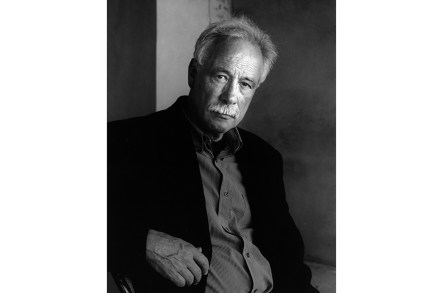
W.G. Sebald is the modern master of the uncanny — or perhaps that should be ‘was’, as he died in a car crash near Norwich in 2001 at the age of 57. Deciding which tense to use depends on whether you mean ‘W.G. Sebald’ as a shorthand for his body of work, which outlives him, or to refer to the man who wrote it, known to his acquaintances as Max. The question poses its own Sebaldian conundrum, reflecting his strange crepuscular writings with their meditations on the dead and the living, past and present, culture and identity. His ghost lives on in the flickering half-light, the most enigmatic, perhaps, of his characters.

Churchill as villain – but is this a character assassination too far?

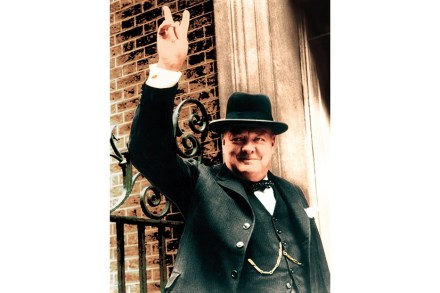
The veteran journalist Geoffrey Wheatcroft claims in his prologue to Churchill’s Shadow that: ‘This is not a hostile account, or not by intention, nor consciously “revisionist”, or contrarian,’ before launching into a long book that is virtually uninterrupted in its hostility to Winston Churchill, his memory and especially anyone who has had the temerity to admire Churchill or learn lessons from his life and career. Churchill revisionism is hardly new.

An interest in the bizarre helps keep melancholy at bay

If you crush the right testicle of a wolf and administer it in oil or rose water it will induce a loathing for sex. The Turks have a drink called coffee (for they use no wine). The Chinese have no nobility, or only those philosophers and doctors who have raised themselves by their worth. If you allowed a human being 25 square feet each, the Earth could bear 148,456,800,000,000 people. The Persian kings trained sparrows to hunt butterflies, inspired by hunting with hawks. Speaking of sparrows, the reason they are so short-lived is because of their salacity, which is very frequent.

The disappearing man: who was the real John Stonehouse?

November 1974 was the month to disappear. On the 7th, Lord Lucan went missing, and a fortnight later John Stonehouse MP dis-appeared from a beach in Miami. Lucan was never found, so remains prominent in our national mythology. Nothing endures like a mystery. Stonehouse, on the other hand, was discovered in Melbourne six weeks later, living under an assumed name. His vanishing trick, so carefully rehearsed, had unravelled — partly due to Lucan, as it happened. Having been alerted to a suspicious Briton by a beady bank clerk, the Australian police thought he might be Lucan. Their first act after arresting their suspect was to lift his trouser leg to look for the missing earl’s telltale scar. Stonehouse had long had a tendency to vanish.

Playing with fire — did QAnon start as a cynical game?

On Easter Monday 2018, Donald and Melania Trump stood on the balcony of the White House next to a giant bunny. It’s part of the job: since 1878, presidents have hosted a children’s Easter egg hunt on the south lawn. Usually they rhapsodise abut what fun the kids are going to have. Trump, true to form, told his young guests to ‘just think of 700 billion dollars, because that’s all going into our military this year’. And he also said that the White House was an amazing place, in ‘tip-top shape’. The liberal media rolled their eyes about Trump boasting to children about military spending but quickly moved on. The fools! They’d just missed the biggest story since 9/11.

The US tech companies behind China’s mass surveillance

In January, the United States declared that China’s brutal treatment of the Uighur people in Xinjiang amounted to genocide. ‘I believe this genocide is ongoing, and we are witnessing the systematic attempt to destroy the Uighurs by the Chinese party-state,’ said Mike Pompeo, the former US secretary of state. British MPs made a similar declaration in April. Beijing fervently denies the accusation, and some experts maintain that ‘cultural genocide’ is a more appropriate label. But whatever we call it, the systematic attempt to erase Uighur identity, culture and history is a heinous crime against humanity.

Oh! Calcutta! Amartya Sen’s childhood memories brim with nostalgia

Santiniketan, in West Bengal, about 100 miles from Kolkata, is one of the most magical places on Earth. The Bengali writer Rabindranath Tagore used a stretch of family land there to set up a great university. Modestly scaled buildings are scattered among groves; classes are conducted under the trees. The last time I was there, our rickshaw driver puttered to a halt outside a handsome residence. That, he said with some pride, was the house of Professor Amartya Sen. I’m not sure that there are many professors of economics, even in university towns, whose presence inspires the cab drivers like that. Sen, over the past decades, has earned the gratitude of ordinary people by his honesty of thought and dedication to how their lives in general might be improved.

The short, unhappy life of Ivor Gurney — wounded, gassed and driven insane

The poet and composer Ivor Gurney (1890-1937) is a classic but nevertheless shocking example of literary neglect. Although he brought out two respectfully received collections of war poetry during his lifetime, the idiosyncrasies of his style have prevented him from being widely recognised as the equal of his greatest contemporaries. His history of mental illness has further destabilised the reception of his work, not just by encouraging people to think of him as crazy, but by compounding practical difficulties surrounding its publication. In the 1980s Michael Hurd wrote a somewhat sketchy biography, and P.J. Kavanagh edited an expanded, but still partial, sample of his work.

How William Hogarth made Britain

Has any artist ever had a wider impact on the world than Hogarth? He was the motivator behind the most important legislation protecting artists’ copyright, meaning that artists from ordinary backgrounds no longer had to depend on the whims of rich patrons. Like Dickens, he used his art to laugh at and root out abuses — the proposals for electoral reform in the great ‘Humours of an Election’ series are as specific as satire ever gets (the haggling over the bribes, the man who somehow votes despite being dead). His early and energetic commitment to Thomas Coram’s Foundling Hospital did much to discourage the widespread practices of infant abandonment and murder.

A divided city: the Big Three fall out in post-war Berlin

When did the Cold War start? Not when the second world war ended. There were many differences between the Soviet Union and its western allies, but they did not then seem insuperable. It was not obvious that the post-war world would be divided by ideology. On the contrary, the victorious United Nations hoped for an era of peace. The Americans planned to pack up and leave Europe as soon as possible. The future of Germany had been decided before a single Allied soldier had crossed onto German soil. Meeting at Tehran in November 1943, the Big Three — Roosevelt, Churchill and Stalin — had agreed that defeated Germany would be under military rule, divided into three zones of occupation, one each for America, Britain and Russia.

The scandal of OxyContin, the painkiller that caused untold pain

Last week I was staying in a cool hotel in the middle of San Francisco. When I walked out to find coffee in the morning, I came across a man with his trousers lowered as he injected himself in the groin. An older fellow nearby used the street as a toilet, adding to the human excrement on the pavement. A woman lay crashed out, hair matted over her face in the heat. Returning later in the day, passing the clusters of tents and people chasing dragons from foil, I was asked: ‘Do you want anything?’ These disturbing scenes of human despair were beside a smart shopping mall in the city with the most billionaires per capita on the planet.

Orcadian cadences: celebrating the reclusive poet George Mackay Brown

Few journalists can have conducted such a dismal interview as mine with George Mackay Brown in the summer of 1992. The Times had sent me to Orkney, and the night before we met I sat up in my B&B reading his poetry, spellbound. So much to ask him! But that first meeting was a disaster. Brown was so shy he answered my questions in monosyllables. After five minutes he sat back and rested his lantern jaw on long hands, silent. Seamus Heaney called Brown ‘the praise singer’. There was no singing that afternoon. But the next day I ran into Brown at Mass (he was that rare thing, an Orcadian Catholic). He invited the whole congregation — five of us — to tea. In familiar company he was transformed: a generous host, a brilliant raconteur.

An orange or an egg? Determining the shape of the world

Thirty-two years ago the young Nicholas Crane, who would go on to become one of England’s most esteemed television geographers, set out to woo a young woman by spiriting her off to the unfailingly romantic landscape of Chimborazo and Cotopaxi. The couple spent their high-altitude idyll walking the hills in hobnail boots, making river passage in dugout canoes and boarding a Quito-bound steam train through the Andes, run by the estimable Empresa de Ferrocarriles Ecuatorianos. Their journey had its moments: at one stage both parties were to be found at 13,000 feet, crusted with ice and huddled overnight from the gales inside a pair of plastic rubbish bags; they then got themselves lost for a while among a wilderness of huge and very active volcanoes.

Over the rainbow: D.H. Lawrence’s search for a new way of life

When it comes to biography, some authors draw the punters, and others leave the mob cold. D.H. Lawrence has been written about a lot, from the moment he died. At least ten memoirs were published in the five years after his death by authors ranging from his sister and his wife to patrons such as Mabel Dodge Luhan. More followed, and only professional Lawrence scholars will have read all of them. There must be dozens of them, and some, such as the Cambridge three-volume effort by different authors, are immensely long. By comparison, there are only a handful of full-scale lives of James Joyce, and poor old Arnold Bennett has only one (excellent) biography, by Margaret Drabble. What is it about Lawrence that draws them so?

The evolution of England — from ragbag kingdoms to a centralised state

The title of Marc Morris’s new history makes me want to get up and dance a little jig. The modern Inquisition has been jabbing its finger at the term ‘Anglo-Saxon’, accusing it of thought crime and threatening it with the cucking stool. (At least one august history society in the US has renamed itself in response.) Bad people have no doubt used the word, but Alfred the Great (871–99) and Æthelstan (924–39), among others, identified as such, and so contemporary historians have a reasonable case for using it too. Bravo Mr Morris for getting on with it. Having spent many years at academic conferences around the world, I can reassure readers that if today’s Anglo-Saxon scholars are closet white supremacists, their cover is pretty darn deep.

Straight lines and grandiose schemes — Napoleon the gardener

On 1 January 1806, a little over one year after his coronation, the Emperor Napoleon ordered the abolition of France’s new republican calendar and a return to the old Gregorian model. Over the past seven years republicans had grown used to ‘empire creep’, but even for those who had been forced to watch the principles of the revolution dismantled one by one and a republican general metamorphose into Emperor of the French, this last insult carried a peculiarly symbolic charge. For all its engaging dottiness — each new year, coinciding with the autumnal equinox, would begin on a different date — the short-lived republican calendar had embodied some of the most attractive and fragile dreams of the revolution.

Why should art have ever been considered a male preserve?

‘I’m a lady,’ insists the improbable damozel in David Walliams’s Little Britain sketch. I’m a lady, I kept thinking, reading these two books. More: I’m a lady art historian. Oughtn’t I to like books by other lady art historians about lady artists and ladies in art. Why don’t I? Why so out of sync with the sisterhood? Start with the positive. Jennifer Higgie’s The Mirror and the Palette follows an interesting, original line: ‘If she had access to a mirror, a palette, an easel and paint, a woman could endlessly reflect on her face and, by extension, her place in the world.

Two of a kind: Monica Jones proved Philip Larkin’s equal for racism and misogyny

By the time Philip Larkin died in 1985, he’d long since achieved national treasure status: his poems were critically admired as well as widely read; his reticence (‘the Hermit of Hull’) was a matter of affectionate respect; and his cantankerous published remarks about ‘difficulties with girls’, children, left-wing politics, and ‘abroad’ were generally embraced as proof of valiant individualism — or possibly a grouchy kind of joke.