Features

Turkey’s dilemma: whose side is Erdogan on?

Istanbul Vladimir Putin’s ill-conceived blitzkrieg in Ukraine has failed thanks, first and foremost, to the guts of Ukrainian soldiers and civilians. British and US-supplied anti-tank weapons have played a crucial role, too. But it’s Ukraine’s Turkish--made TB2 Bayraktar drones that have been the war’s most unexpectedly effective weapon. Unexpected not just because of their battlefield killing power but because the father-in-law of the TB2’s inventor and manufacturer is Recep Tayyip Erdogan – the only European leader to have once described himself as a friend of Vladimir Putin. Erdogan, with a foot in the East and West, has emerged as the war’s key power-broker – and his loyalty is being actively courted by both Moscow and Washington.

The invasion of Ukraine has exposed the West’s impotence

When the Ukrainian President, Volodymyr Zelensky, addressed the House of Commons recently, he was afforded two standing ovations from MPs, both lasting about 40 seconds, before and after he spoke. He was probably used to it, having received a similar reception when addressing the European Parliament a week before. On both occasions, then, he was engulfed by warm, moist waves of adulation and respect. On both occasions he also asked for important, difficult stuff from the people he was addressing and didn’t get any of it – just lots of applause and legislators delicately dabbing their eyes before quickly averting them.

The decline and fall of Durham university

When Mark Hillery – Durham University’s largest donor – cut his funding for the institution last month over ongoing Covid-19 restrictions, the students of Collingwood College had the most to worry about. Hillery had previously endowed his alma mater with a £5.6 million arts centre, a shiny new gym and a revamp of its junior common room. He was also known for returning once a year to attend a formal dinner and pick up a bar tab that regularly exceeded £10,000. Double Grey Goose Red Bulls were a popular drink on those jubilant evenings in the Stag’s Head. But the Durham of recent years is being fuelled by a stronger stimulant.

Why Boris can’t blame rising energy prices on Ukraine

Are you ready to take cold showers to do your bit for the war effort? Protestors in Berlin have been holding up placards suggesting they’d sooner do so than use Russia’s gas. Boris Johnson has called on the British public to make similar sacrifices, solemnly telling us that we need to drop cheap Russian energy and ‘accept that such a move will be painful’. The government will spend billions to help ease that pain, he says, but ‘none of us can afford to carry on like this for long’. On the surface, it sounds like the start of an honest conversation: telling voters that the cost of living squeeze we’re experiencing now has only just begun.

How Ukraine can win

If Ukraine lasts for another thousand years, people will still say, ‘This was their finest hour.’ The Ukrainians’ magnificent defiance will shape their country’s image in the world for generations to come, as the lone stand led by Winston Churchill did for Britain. But what almost certainly awaits Ukrainians in the next few days is far worse than what the British went through in 1940. They are about to face a Russian campaign of long-distance bombardment and siege to try to break their will to resist, through fear, hunger, thirst, cold, sickness and all the other consequences of indiscriminate destruction. Mariupol has already been devastated. Now the Chechen butcher Ramzan Kadyrov has announced he is in Ukraine, knife sharpened for more butchery.

Prince Philip’s links with the Russian imperial court

The late Duke of Edinburgh would have had so much to say on the abomination being wreaked upon Ukraine. Prince Philip was our last living link with the Russian imperial court. He enjoyed childhood encounters with a killer of Rasputin. He also played his part in trying to bring post-communist Russia round to western ways during that brief, chaotic millennial window of opportunity. So did the Queen, who still serves tea from the samovar Boris Yeltsin gave her on her state visit to Russia, though she would rather forget the four days in 2003 when the Blair government imposed Vladimir and Lyudmila Putin on her as house guests. Prince Michael of Kent, for his part, has built something of a career around the Windsor--Romanov connection.

Putin has revived the cruelty of the Soviet regime

Among the many Russians who have protested against the war in Ukraine was 26-year-old Muscovite Aleksandra Kaluzhskikh, who was arrested earlier this month. She managed to record her interrogation while she was being beaten and sexually humiliated by police shouting expletives. ‘Look at the schmuck,’ one of her interrogators said, as Kaluzhskikh sighed and sobbed. ‘A marginal. What, you think they’ll do something to us for this [beating her]? Putin told us: kill them… That’s it! Putin is on our side. You are enemies of Russia. You are enemies of the people. I can kill you, and that’s it. And that’ll do it. They’ll give us a bonus for it.’ As I listened to this appalling 11-minute recording, I thought of precedents.

This be the curse: Philip Larkin’s big problem

In matters of sex, Philip Larkin was late getting away. On his 23rd birthday, he wrote defeatedly to Kingsley Amis: ‘I really do not think it likely I shall ever get into the same bed as anyone again because it is so much trouble, almost as much trouble as standing for parliament.’ His 2014 biographer, James Booth, adds that Larkin was ‘still effectively a virgin… [and] Amis was puzzled that his friend failed to follow through his pursuit of sexual satisfaction’. There is no join-the-dots explanation for what Larkin called the ‘sex-fear and auto-erotic fantasies’ that beset him all his life. But in the centenary of his birth, it’s time to bring in the anatomical peculiarity incarnating his trouble with sexual fulfilment: his penis.

What if Putin hasn’t miscalculated – but the West has?

Conventional wisdom dictates that Vladimir Putin has ‘miscalculated’ in his invasion of Ukraine. His blitzkrieg has been poorly executed. He has reinvigorated the Nato alliance and the EU and triggered heavy sanctions. And he has lost the ‘information war’ to Volodymyr Zelensky, the TV comedian turned global hero. But what if the West has ‘miscalculated’ in reading Putin’s intentions? What if the West’s sanctions, along with intensified military aid to Ukraine and a courageous local resistance, encourage Putin to double down? What if he decides to use a weapon of last resort, a nuclear, chemical or biological weapon, even at the risk of World War 3?

The commodity kings: have traders finally discovered a moral compass?

Many people around the world were glued to their screens in horror on 4 March, as they watched Russian shells raining down on Ukrainian cities. On a trading floor in central London, the oil traders at Shell were also glued to their screens – but watching the price of Russian oil. It was becoming a lot cheaper than normal (Brent) oil, due to the understandable reluctance to support Putin. But then again, everyone has their price. The Shell traders watched, and waited, as every minute the price was lowered further– to a $23 a barrel discount, then a $24 discount, then a $25 discount. Finally, at around 4 p.m., the traders could no longer resist. They agreed to buy the Russian oil at $28.50 below the world oil price (then just over $118).

Border farce: Britain is failing Ukraine’s refugees

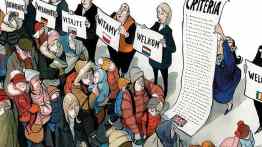
 Calais, France ‘The British government is not turning anybody around,’ Priti Patel told her French counterpart last weekend. ‘Ukrainian refugees are welcome in the UK.’ She doubled down on her claims in the House of Commons on Monday: ‘It is wrong to say that we are just turning people back; we are absolutely not.’ You don’t have to spend long in Calais to disprove the Home Secretary’s claims. As we checked into our hotel at 1.30 a.m. on Tuesday, we saw seven Ukrainian refugees resting on the couches in the lobby. There was nothing eye-catching about the group, apart from their obvious weariness and the pile of Ukrainian passports and documents on the table in front of them.

Are you man enough to eat raw offal?

The dominant wolf gets the liver, at least according to the American podcaster Joe Rogan. In one episode, a bodybuilder called ‘CarnivoreMD’ (real name Paul Saladino) tells him: ‘If you eat liver, you get to be an alpha male… or alpha female.’ Offal has taken a markedly macho turn in recent years. No longer resigned to memories of the postwar school canteen, organs have become the preferred food of a certain type of gym bro. The word offal implies wastage – from the Middle Dutch for offcuts – but it can also be a delicacy. Recently saved from a government ban on cruel foods, foie gras is only the most obvious example. For the most part, though, the West has become squeamish about what was once called ‘variety meat’.

The war is redefining Poland’s place in the world

The Polish government has for years been something of a pariah on the liberal international stage. Poland’s ruling Law and Justice party, which is firmly on the political right, is at odds with the EU establishment, particularly over its judicial reforms, which critics say will threaten the key democratic principle of separation of constitutional powers. The EU accuses Poland of undermining the ‘rule of law’ and the European Commission is, as a result, withholding the billions of euros that Poland is due from the Union’s coronavirus recovery fund. Russia’s invasion of Ukraine could transform all that. The war raises some almighty diplomatic, economic, security and humanitarian challenges for Poland as Ukraine’s neighbour.

Nadhim Zahawi: how I escaped Saddam’s Iraq

One night in December 1977, when Saddam Hussein was deputy leader of Iraq and already the strongman of the government, Nadhim Zahawi’s father was tipped off that Saddam’s secret police were after him. Zahawi, a Kurd working in Baghdad, decided to leave right away. He phoned the office to say that he was travelling to the north of the country for work and quickly set about his escape. The Baathist secret police did come for him that night, but by the time they arrived at his house, he was at Baghdad International Airport with a ticket to London.

Could the Ukraine war save Taiwan?

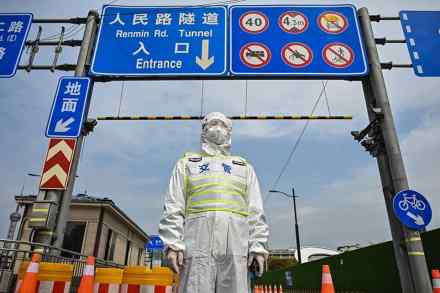
The phrase wuxin gongzuo – ‘working with your mind on Ukraine’ – has been trending on Chinese social media network Weibo. Essentially what it means is ‘distraction from work because you’re obsessed with the war’. One blog that monitors the site, What’s on Weibo, reports that shortly after Russia’s invasion of Ukraine a page with updates on the conflict had received more than two billion views. Censorship, of course, limits what Chinese social media commentators can say, but there is clearly plenty of sympathy for the dying civilians and fleeing refugees.

My escape from Kiev

I spent my last night in Kiev in the ‘Presidential Suite’ of a city hotel – what used to be known as the underground car park. The general manager, a man whose name I never knew but who I hugged tightly before leaving, had promised to make it a shelter for guests who hadn’t checked out by the time it was clear that war was looming. We stayed there with his staff, their young children and elderly parents, their dogs and cats too. It is still the home of the BBC staff who remain in Kiev: the reporters and presenters you know as well as those whose roles are just as important but whose names you seldom hear.

Germany’s attitude to Russia is changing. Does it go far enough?

It’s hard to overstate the pace of the change now under way in Germany. A country that had been defined by its reluctance to deploy military force is now sending lethal weapons to Ukraine and promising €100 billion more in defence spending. The Nord Stream 2 pipeline, which would have ferried more Russian gas to Germany, has been abandoned. Germany has accepted Russia’s exclusion from the Swift banking system, in spite of the collateral economic damage. All of this adds up to the biggest policy shift that I can remember. Perhaps the most significant change is in the tone of German public debate. Take last weekend’s gathering of 100,000 on Berlin’s streets: it was not your usual anti-war protest.

In Japan, being a token westerner is big business

About ten years ago I was interviewed in Tokyo for a job as a fake Catholic priest, performing wedding ceremonies for Japanese couples who wanted the aesthetics of a Christian service without all the hassle of actually being Christian. In a room cluttered with tacky plastic religious paraphernalia I watched a training video of the company’s ‘top man’, an American Tom Cruise-lookalike in a cassock, ‘marrying’ a young couple. I was offered the job and it paid well but, fearing I might fluff my lines, collapse into giggles or, worst of all, come face to face with an ex-girlfriend approaching down the aisle, I turned it down.