Features

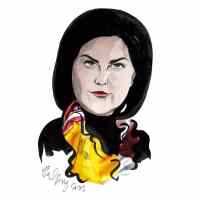
Nadine Dorries: My vision for the BBC

When Nadine Dorries was named Culture Secretary last year, it proved to be the most controversial appointment of Boris Johnson’s reshuffle. Her critics weren’t afraid to point to what they saw as her flaws. She was a Scouser and former nurse put in charge of the cultural crown jewels. The only explanation they could come up with: she was intended to embody a two-finger flick, on behalf of the PM, to the BBC, Channel 4 and the arts world in general. The furore, she says, didn’t come as a surprise. ‘There are some men who do have a problem with a woman from my background achieving,’ she says. It also pointed to something else: a fear that she might do what her predecessors had not done. ‘I think they obviously knew that I was going to deliver.

Can Elon Musk take on the tech censors?

After three centuries of failing to assert power over the printed press, the House of Commons is finding the digital world easier to conquer. The Online Safety Bill now going through parliament will give ministers the power to decide what can and can’t be said online by banning what they regard as ‘harmful’. The word is not very well defined – which, of course, gives sweeping powers to the government regulators who will define it. It will be one of the most ambitious censorship laws that the world has ever seen. Enter Elon Musk. His $44 billion takeover of Twitter is intended, he says, not to make money but to defend free speech.

Are China’s censors losing control of Shanghai?

For weeks, Shanghai’s 25 million residents were assured that they would not be locked down. Then when the order came, the lockdown was supposed to last only seven days. It is now almost into its fourth week, and the government is struggling to suppress the chaos. Last week, 82-year-old Yu Wenming called his neighbourhood committee to say he had run out of medicine and food. Rather than reassure him, the local official despaired. ‘I am really helpless,’ he admitted. ‘I’m more sad than you are, because you are just one person. I see countless families…’ The elderly Mr Yu ended up comforting the worker. When a recording of their conversation was posted online, it was shared rapidly. By the time it was deleted, the damage was done.

Narcissist vs fantasist: France’s gruesome choice

Something strange is happening in advanced western democracies. In America and France, voters keep finding themselves choosing between candidates for whom they have very little affection. In America, we saw Clinton vs Trump, followed by Biden vs Trump. And in France this week, we have Macron vs Le Pen again. As many French voters now say, this is a choice between la peste (plague) et le choléra. Emmanuel Macron is disliked: arrogant and narcissistic to the point where he has compared himself to Jupiter, king of the gods. He has spent five years insulting and patronising voters and delivering mediocre results. His management of the epidemic was repressive and absurdist. He failed in Africa, failed with Putin, threw tantrums over Australia and Brexit.

How I finally learned to love my eco-home

Nine years ago, when I invested every-thing I had in a part-rent, part-buy, one-bedroom, government-backed eco-home which proved to be a boiling box in summer, my first instinct was to throw myself out of a window – but I couldn’t because they opened only ten centimetres. My second was to complain about it in The Spectator. Now, I return to update you on my energy bills. Prepare to turn green with envy. Friends who live successful sorts of lives – involving houses, spouses and gardens – exclaim ‘Oh, so you weren’t joking about living in a J.G. Ballard novel?’ when they come around for the book launches I host in my living room, before asking if I can open a window. ‘I can actually,’ I boast.

The missing mandarins: why won’t civil servants go back to work?

‘Mother nature,’ says Boris Johnson, ‘does not like working from home.’ The Prime Minister wants workers to return to offices so they can have the ‘stimulus of exchange and competition’. His ministers are just as evangelical. Kwasi Kwarteng, the Business Secretary, says he favours ‘being able to interact directly’ with colleagues and Rishi Sunak has spoken about how young people need the office space to learn. The nation’s employers should, they say, get their staff back to their desks. Yet nine months since the end of lockdown and tumbleweed is still blowing through the corridors of power.

Can you tell which of these artworks was created by a computer?

Take a look at the four paintings on this page. If you are acquainted with modern art, you will probably assume, at a quick glance, that it shows four works by the Russian artist Wassily Kandinsky (1866-1944). However, whatever your knowledge of modern art, I suggest you look again, because not all of these works are by that great pioneer of abstract painting. More than one of them is an original image created by a computer model, which was asked to do a digital artwork in the style of Kandinsky. Which are the fakes? I’ll give you the answer at the end of the article. Before we get there, you need to know how a computer can make such startlingly echoic images, and what it might mean for art.

The survivor: how much longer can Boris Johnson keep going?

On Tuesday night, after apologising again to the House of Commons for breaking lockdown rules, Boris Johnson addressed a private meeting of Tory MPs. He had a message for his critics: ‘This is the beginning of the end.’ ‘For a minute, I thought he was talking about himself,’ says one MP. In fact, the Prime Minister was referring to his belief that the biggest political scandal of his premiership is reaching its finale – one in which he comes out on top. Some of the MPs in attendance struggled to see much to be optimistic about. Johnson subjected the country to draconian lockdown rules which the police have found he did not observe, making him the first prime minister in history to admit to breaking the law while in office.

Why more and more Russians are backing the war

O, do the Russians long for war? Ask of the stillness evermore, Ask of the field, or ask the breeze, And ask the birch and poplar trees. So begins a famous Soviet-era song and poem, written by Yevgenii Yevtushenko during Khrushchev’s Thaw. Volodymyr Zelensky cited the poem in his eve-of-war address to Russians, hoping it would rekindle these pacifistic sentiments and encourage resistance against the Kremlin’s imminent invasion. Apart from a relatively few (very) brave souls, Russians did not rise up.

My Easter recipe: Greek-style marinated lamb

This is a delicious way to cook lamb with a distinctly Mediterranean feel. It’s super fresh, easy to prepare and would be perfect for Easter Sunday. I would serve it with pitta bread and chilli sauce. It pairs well with a chilled bottle of Sangiovese.

‘Putin still has a lot left to lose’: Niall Ferguson and David Petraeus in conversation

David Petraeus is a former CIA director who, as a four-star general, led US military campaigns in Iraq and Afghanistan. He speaks to the historian Niall Ferguson about the war in Ukraine. NIALL FERGUSON: General, I wanted to ask you to give your assessments of the Russian invasion of Ukraine. If you were grading Russia’s military performance and Ukraine’s, what grades would you give? DAVID PETRAEUS: Clearly Russia has failed. That’s the only way to describe the campaign thus far. And the Ukrainians, gosh, I think you have to give them an A at least and perhaps even more for just the sheer determination. But it’s much more than fighting for their very survival. They have done it very, very impressively.

Putin’s war is a cross to bear for all Russians

‘The photographs of murdered civilians, their hands tied behind their backs, shot in the head and tossed like animals on to the street… we will not forget, and no one will let us forget,’ wrote Russian journalist and author Yevgenia Albats last week. ‘The guilt for this will lie on our children and grandchildren. Bucha, Irpin, Motyzhin – we will now have to live with them for ever.’ Powerful words and moving nostra culpa for Russian atrocities in Ukraine. But they raise a vital question. Who, exactly, is the ‘we’ who is to bear the blame, guilt and punishment? All Russians? The 70 per cent of Russians who official polls claim actively support the war? Russian soldiers responsible for the atrocities?

Why so many African leaders support Putin

The Russian atrocities against civilians in Ukraine have been met with silence from Dar es Salaam, Harare and Juba. Not a word from Addis Ababa, Maputo or Khartoum. On Russia’s invasion of Ukraine the Ugandan President’s son, lieutenant general Muhoozi Kainerugaba, is clear: ‘Putin is absolutely right!’ Nearly half of Africa’s 54 nations refused to vote against Russia at the United Nations last month. Not only African governments but multitudes of Africans, even in countries that opposed Russia, such as Kenya, enthusiastically support Vladimir Putin. And the curious thing is that it’s the very countries that have historically received the most western aid that seem most in favour of him. In fact, they support him because he is the West’s enemy.

The war has helped to resurrect Poland’s Catholic church

In my wife’s home city of Wroclaw, there’s a luxury hotel named after John Paul II. It has always seemed strange that the Catholic church sanctioned this. Giant chandeliers and glitzy bathrooms weren’t really what St John Paul stood for, and since the hotel opened in 2002 it had seemed as much a monument to the church’s decline as a tribute to a saint. But everything changed with the war in Ukraine. Some 2.5 million Ukrainians have fled to Poland since Russia’s invasion and the hotel is currently home to more than 100 refugees. It’s as if the building has finally discovered its real purpose. What’s true of the John Paul II hotel is true more widely of the Polish Catholic church.

I can feel my heart hardening as the war goes on

Palm Sunday in Perugia. Umbrians were scuttling around with twigs and leaves, but I was in town to celebrate another faith. It was the annual International Journalism Festival, which hasn’t been ‘annual’ for the past two years due to Covid. Happy reunions were applauded with the sound of countless clinking glasses, but the mood was often mournful. In the first panel I was on, the moderator, Natalia Antelava, asked for a moment of silence for the 18 journalists already killed in Ukraine. Among them was Oksana Baulina, a former colleague of Natalia’s at Coda Story news platform, where I am also a contributing editor. Oksana was Russian.

Europe’s last dictator: Lukashenko’s fate depends on Ukraine

A young man wearing combat fatigues and an extravagant moustache, and carrying a heavy machine-gun over his shoulder, nods towards some burned-out armoured vehicles. ‘We smashed the orcs today,’ he says, using the Ukrainian soldiers’ term for the invading Russians, a reference to the sub-human legion in Tolkien’s The Lord of the Rings. He goes on: ‘Putin, you are a dickhead – your Greater Russia will die together with you.’ The soldier – his uniform has a badge saying ‘Ivanov’ in Cyrillic – is not, in fact, Ukrainian. He is one of a small number of volunteers from Belarus, next door, a country that is certainly part of the Greater Russian project.

Progressives vs populists: Macron, Orban and Europe’s faultline

As soon as Emmanuel Macron was sure that Joe Biden had won the American election, he tweeted: ‘We have a lot to do to overcome today’s challenges. Let’s work together!’ There was no effusive tweet this week from the Élysée when 54 per cent of Hungarian voters re-elected Viktor Orban as Prime Minister for a fourth term. The silence from Macron was deafening. Not so his principal rival in France’s impending election. On Sunday evening Marine Le Pen tweeted an old photo of the happy couple shaking hands with the declaration: ‘When the people vote, the people win!

The cult of the extortionate ‘English’ kitchen

A house around the corner is on its fourth kitchen in a decade. Every two or three years, the house changes hands, the pristine kitchen comes out and a newer, pristiner kitchen goes in. They are always white, they are always shiny, and when I peer through the basement windows there is nothing in the way of signs of life. I reckon I can predict the next kitchen. Think homespun, think rustic, think scullery maid in mobcap and pinny. What the rich want now is a plain old Plain English kitchen. Hand-crafted cabinets, antiqued brass, Delft tiles with authentic craquelure. Starting at £34,000 and going up to… well, how much have you got? Don’t you dare put Dulux on your artisan doors. Plain English has its own bespoke paint chart.