Features

The law of war: conflict has always had its limits

The waging of war has never been a pure free-for-all. Every culture has had a sense of limits: when war could be legitimately declared and how it would be legitimately waged. For ancient civilisations, war was a means of preserving the cosmic order. The ancient Egyptians believed their wars had to be sanctioned by the gods. Under the Zhou dynasty, Chinese armies would wage war only after oracles were consulted. Similar patterns are observable from the ancient Hindus to the North American Indian tribes. The Second Lateran Council in 1139 banned the crossbow and ballista, the weapons of mass destruction of their day, because these armour-piercing instruments were considered too violent.

Male friendship is in crisis

Most of my women friends work hard to keep ancient friendships alive; the seasonal lunches, shopping trips and afternoon teas are observed as scrupulously as the feasts of the liturgical calendar. ‘Friends make all the difference in life,’ my mother used to say. In her late eighties, she would defy the wobbles of Parkinson’s and haul herself on to a bus for the all-important ‘Tea with Daisy’, inscribed with a shaky hand in her diary. My sister was the same. In September last year she marched her girlfriends off to Whitby for a week of what I assume was slightly manufactured jollity (she was dying of cancer), but you’d never tell from looking at the photographs.

Nicola Sturgeon’s secret state

As Westminster grapples with the P&O scandal, a very different farce over ferries has been playing out in Scotland. In the run-up to the 2014 independence referendum, a Glasgow shipbuilder went bust and was rescued by a Scottish National party adviser. It was later awarded a £97 million government contract to build two ferries. Neither emerged. The cost now stands at £240 million and last month Scots learned that there will be another eight-month delay to the boats. What happened? Why did so much public money change hands? Was the taxpayer swindled? Those trying to get to the bottom of these questions have hit a problem common to Nicola Sturgeon’s Scotland: much of the relevant documentary evidence has vanished.

Can Imran Khan cling on to power in Pakistan?

In the brief interlude of Chechen independence between the Russia-Chechen Wars of the 1990s, I travelled with Imran Khan from Grozny to Baku, where we were due to meet Azerbaijan’s finance minister. We had different reasons for our visit. I was interested in the business potential of the countries of the Caucasus, while Khan, a former cricketer turned fledging politician who had recently formed the Pakistan Movement for Justice party (PTI), was keen to support the then independent Sufi Islamic state of Chechnya. To get to Baku we had to catch a plane from the neighbouring Russian republic of Dagestan. Our Chechen hosts told us that we did not need papers to get across the border.

My childhood Cold War fears are back

On the day before my seventh birthday, which I spent at my grandma’s in Yorkshire, a young man named Raymond Jones walked into North End Music Stores in Liverpool and asked the guy behind the counter for a record on which an obscure local group called the Beatles provided the backing track for a song titled ‘My Bonnie’. The guy behind the counter was the shop’s manager and the son of its owner. His name was Brian Epstein, and as a restless budding entrepreneur he felt he should be alert to what was going on around him. Because of young Raymond’s evident enthusiasm, Brian made a note on a piece of paper saying: ‘The Beatles? Check on Monday.’ Which he did. Intrigued by what he saw, he wondered if he should become their manager.

Covid has changed London for the better

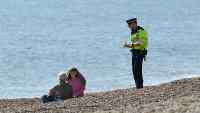
For some it was the taped-off park benches, or the sight of police officers handing out fixed penalty notices to sunbathers. For others it was the sheer numbers of deaths being reported in inner boroughs. London in the spring of 2020 was definitely not the place to be. As with other world cities, it faced what seemed an existential crisis. The streets quickly drained of people, and those who could fled to second homes in the country. The voracity with which Covid-19 spread sparked a fear of living at high densities. Pundits in Britain and America quickly proclaimed the death of cities. The belief was that remote-working had freed people from the constraint of living close to the office and they would now opt for quieter lives in smaller towns and suburbs.

Biden’s war: does he know what he’s doing?

Anyone could see that Joe Biden veered off-script during his big speech in Poland. ‘For God’s sake, this man cannot remain in power,’ he said of Vladimir Putin, which sounded a lot like a cry for regime change. Luckily for him, though, and perhaps for world peace, Leon Panetta, a former secretary of defence under Barack Obama, was on hand to explain the comment away: ‘I happen to think that Joe Biden – you know, he’s Irish – really has a great deal of compassion when he sees that people are suffering.’ To be sure, to be sure. Still, even if Biden’s threat to Putin can be wholly attributed to a Gaelic jig playing in his head, the fallout has been the same.

Ukraine’s most wanted – an interview with Dmitry Firtash

If you’ve heard of Dmitry Firtash, the odds are you’ll have the impression of a deeply controversial man. He was arrested in Austria in 2014 at the US government’s request on charges of ‘conspiracy to bribe’ in India. A warrant was then issued for his arrest in Spain. Last year, Firtash was sanctioned by Ukraine over claims that he was selling titanium products to the Russian military. In America, he has been called ‘Ukraine’s most wanted’. In Britain, he gave £4 million to Cambridge University and spent much more on other projects, and has since been held up as a classic example of an oligarch buying his way into our establishment.

The descent of New York

New York When Will Smith strode to the stage and slapped Chris Rock, I was surprised by how many of my friends thought the violence had been staged to rescue the Academy Awards from its years-long ratings decline. I instantly recognised it as authentic rage, not because I know anything about Hollywood or Will Smith, but because I witness similar ugliness so frequently on the New York City subway. For me, Smith’s outburst was shockingly familiar – emblematic of a simmering, pre-volcanic atmosphere in the country that no one seems to be examining or attempting to explain.

40 years on, war still casts a shadow over the Falklands

For the Falkland islanders, the war in Ukraine brings back haunting memories of their own trauma four decades ago. Having themselves experienced a barbaric invasion by a big bully next door, they understand all too well what the people of Ukraine are going through. ‘I still feel that gun in my back,’ one islander told me recently, describing the day Argentine troops landed on Pebble Island and brutally rounded up the locals. Much has changed in the Falklands since 1982, nearly all of it for the better, yet the war remains seared in the memory. This year’s 2 April is, therefore, hugely significant – the 40th anniversary of the invasion.

The scourge of urban gulls

Early this year, five dead herring gulls were discovered on a Cornish beach, and when tested it was found they had bird flu. This should have provoked serious concern: these were the first gulls to be found carrying bird flu in Britain. But because of the war and because we’re sick of epidemics, it was largely ignored. The dead gulls matter because gulls live among us. Some 75 per cent of our herring gulls are now urban. There are 100,000 to 180,000 breeding on rooftops in England, according to the 2020 national census. Tim Newark sounded the alarm in these pages that year, but since then the problem has grown and now there may be bird flu to contend with.

As Shanghai locks down, China is facing its greatest Covid crisis yet

The coronavirus is spreading through Hong Kong, Shenzhen and other cities in China like a bush fire; tens of millions of Chinese have been ordered to stay at home yet again. Shanghai, a city of 26 million souls, has been split in two. Those on the eastern side of the Huangpu River will be locked down until Friday, their west bank neighbours from the start of April.   It won’t work. Like a new Mercedes, the BA.2 model of the omicron variant of the Sars-CoV-2 virus is faster, quieter and 30 per cent more prolific. There is no chance of stopping it with lockdowns, mass testing or social distancing – even in Xi Jinping’s China.

Kirill, the Patriarch in league with Putin

Until very recently, Patriarch Kirill of Moscow, leader of the Russian Orthodox Church, was most famous for being the owner of a phantom wristwatch. It had the magical property of disappearing from sight, visible to onlookers only as a reflection. Don’t believe me? Google ‘Kirill’ and ‘watch’ and you’ll find a photo of the Patriarch of Moscow and All Rus’ meeting the Russian justice minister. It was taken in 2009, the year Kirill succeeded the late Patriarch Alexy II as spiritual leader of 110 million Russian Orthodox Christians. On his head Kirill is wearing a white koukoulion, the so-called ‘helmet of salvation’, with side flaps like the ears of a giant basset hound. But his cassock is plain black and his wrist is bare.

Tina: the drug devastating the gay community

Something is ravaging through the gay community, leaving death and misery in its wake, yet few are willing to talk about it. If I’d written that sentence a generation ago, I’d have been referring to the Aids crisis. But this time the enemy isn’t a virus, but a substance called ‘tina’ or ‘ice’. It is a methamphetamine – a stimulant drug that is either smoked or injected into the veins. Tina is also called crystal meth, made famous by the Netflix series Breaking Bad. It causes a rapid increase in dopamine, serotonin and noradrenaline, which leads to euphoria, alertness, energy and self-confidence. It also triggers an almost insatiable increase in libido. It’s easy to see the appeal. But the downsides are horrific.

Why I’ve stayed in Kyiv

I write this from my Kyiv air raid shelter. It has become my second home, an improvised bedroom, study and kitchen. For food, we eat bread and borscht. It is a spartan existence, but conducive to reflection. I still can’t get used to the siren that sounds five times a day, although I have got used to sleeping on the floor, in hallways, subways or the metro. I keep a bag packed with essentials by the door that I can grab and run with when the alarm sounds. On the first night of the war, I spent the first hours in the subway, along with thousands of Kyivites. Nobody slept. Everyone sat in silence. From time to time in different parts of the platform, dogs barked, cats purred and, of course, babies cried.

Inside Putin’s mind: the lessons of Chechnya

As far as Vladimir Putin is concerned, ‘we are nobody, while he who chance has enabled to clamber to the top of the pile is today Tsar and God’. So said Anna Politkovskaya, the eminent Russian journalist, in her book Putin’s Russia. She continued: ‘In Russia we have had leaders with this outlook before. It led to tragedy, to bloodshed on a huge scale, to civil wars. I want no more of that.’ She wrote those prophetic words almost two decades ago. A reporter for the Russian newspaper Novaya Gazeta, Politkovskaya came to prominence during the second Chechen war. Her accounts of that conflict, which officially lasted from 1999 to 2000, revealed Putin’s war against separatist rebels in the Caucasus as a hideous, corrupt sham.

How should cartoonists respond to war?

Laughter has always been a coping mechanism for dealing with war. Some of this country’s most memorable cartoons have been born out of conflict. Think of Gillray’s ‘Plumb-Pudding in Danger’, Bairnsfather’s ‘Well, if you knows of a better ’ole, go to it’ or Low’s ‘Very well, alone’ – they are the quintessential images that defined the Napoleonic, first and second world wars. War didn’t stop cartoonists in the thick of the action from making light of their circumstances. Bruce Bairnsfather, a young officer who began sending jokes to the Bystander in 1915, was invalided out of Belgium suffering from shell-shock, but continued to draw.