Anshel Pfeffer

Anshel Pfeffer is the Israel correspondent for the Economist, a correspondent for British and Israeli newspapers and the author of Bibi: The Turbulent Life and Times of Benjamin Netanyahu.

Netanyahu thinks he’s Churchill, Israelis see Chamberlain

From our UK edition

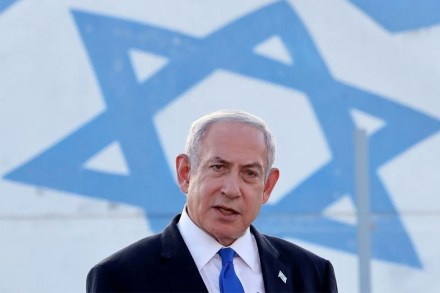
Aleading member of Israel’s wartime cabinet has threatened to resign should Benjamin Netanyahu fail to present a strategy for ending the war in Gaza. The liberal politician Benny Gantz, who would win an election were one held now, has given a public ultimatum. He will collapse Netanyahu’s fragile coalition if no peace plan is delivered by Saturday. Netanyahu might believe he’s a Churchill; most Israelis consider him a Chamberlain Meanwhile, the largest protest since 7 October took place last weekend when 120,000 Israelis marched in Tel Aviv. Families of the 120 hostages held in Gaza (at least a third of whom are presumed dead) have joined the growing demonstrations against the government.
The Israeli-Hamas negotiations are fraught with complexity

From our UK edition

Jerusalem For weeks the Israel Defense Forces (IDF) had been preparing for an assault on Rafah. Yet when the order finally came on Monday night, it caught Israel’s generals by surprise. This was despite the fact that two armoured divisions had been deployed on Gaza’s southern border, and hundreds of thousands of leaflets printed warning the local population to evacuate to a ‘humanitarian area’ on the coast. Twice the plan to drop the leaflets over Rafah had been postponed, following American pressure. On Monday morning, when the green light came, the plan was to give civilians at least a week to move. Ten hours later the tanks moved in. There was another reason for the generals’ surprise.

Joe Biden is running out of time in the Middle East

From our UK edition

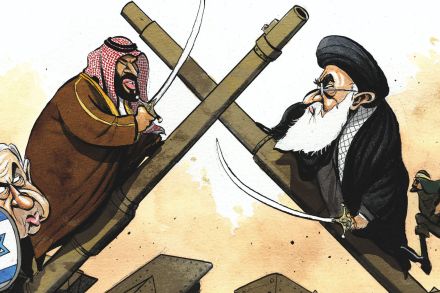
Jerusalem The idea of a Saudi-Israel rapprochement would have been unthinkable not so long ago, and yet, shortly before the 7 October attacks, it was on the cards. The Emirates and Bahrain had recognised Israel’s sovereignty. Crown Prince Mohammed bin Salman (MBS) was positioning Saudi Arabia to do the same. Now Joe Biden – who on Tuesday said he was ‘outraged’ at a convoy strike that killed seven people – is desperately trying to see if he can get things moving again. Jake Sullivan, the White House national security adviser, is in Saudi Arabia this week meeting with MBS in a last-ditch attempt to save Biden’s grand design for Middle East peace.

Permanent stalemate in Gaza suits Netanyahu

From our UK edition

Jerusalem After midnight on Thursday is dead-time for the Israeli media. The weekend editions have gone to print (newspapers don’t come out on Shabbat) and the Friday night TV news shows have been pre-recorded. The country’s journalists are yearning for respite from a long week covering the war. Benjamin Netanyahu chose that black hole of news, 2 a.m. last Friday, to leak his ‘Day after Hamas’ plan for post-war Gaza. There was no speech. No briefings. Just a page and a bit, double-spaced, presented to his cabinet for discussion. The plan has not been designed to end the war in Gaza. It is about Netanyahu’s own political survival But the plan is not a plan.

Has Iran lost control of its proxies?

From our UK edition

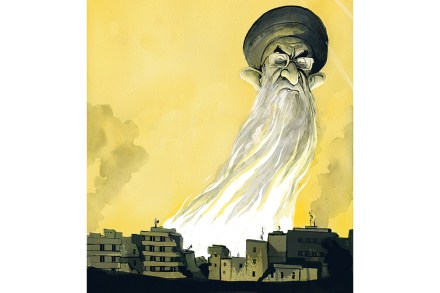
During a press conference in Tehran at the end of last month, Islamic Revolutionary Guard Corps spokesman Brigadier-General Ramezan Sharif claimed that ‘the Al-Aqsa Storm was one of the retaliations of the Axis of Resistance against the Zionists for the martyrdom of Qasem Soleimani’. It was an extraordinary statement. Iran had insisted that while it supported the Al-Aqsa Storm (what Hamas calls its 7 October attack), it wasn’t directly involved in its planning or execution. Israeli intelligence believes this to be true. Despite receiving significant Iranian weapons and training, Hamas had not informed Tehran in advance of its plans.

Can Israel keep the West on side?

From our UK edition

Jerusalem On 7 October, Israeli security officials were already questioning how long they would be allowed to fight in Gaza. As the Israel Defence Forces (IDF) hurriedly mobilised more than 300,000 reservists, one official told me that ‘destroying Hamas depends on the length of our window of legitimacy’. Last week, I was on an embed with an IDF unit in Gaza City. As the sun set over the Mediterranean, I checked the date on my watch and realised the 18th day of the ground campaign had just ended. During the 2009 and 2014 Gaza ground offensives, the IDF was forced to stop fighting by the 18th day and accept a ceasefire (brokered both times by the Egyptians and forced on it by the US).

Benjamin Netanyahu is increasingly seen as Israel’s curse

From our UK edition

Jerusalem On Tuesday, I was driving down to an Israeli army headquarters on the border with Gaza as a massive convoy of police cars and black bullet-proof limousines forced me onto the side of the road by the town of Ofakim. In Israel, only one man travels in a convoy that large.  It was 7 November, a month after the Hamas attack on Israeli communities in which 1,400 were murdered and the war between Israel and Hamas in Gaza began. Even during peacetime the Prime Minister’s movements are shrouded in secrecy until he is safely back in one of his homes or offices.

Netanyahu has failed Israel

From our UK edition

Jerusalem Israel’s war with Hamas in Gaza is rapidly evolving into a war with all of Iran’s proxies on its borders, including Islamic Jihad and Hezbollah. Its outcome will determine the country’s future for a generation, perhaps longer. The conflict is not even in its third week, and as I write these words the inevitable ground invasion of Gaza has still not begun, and yet this is already proving to be an epochal episode in the country’s history.  The Hamas terror attack on 7 October not only revealed a conceptual flaw in Israel’s regional strategy, exposed glaring problems within its celebrated intelligence services and caused the terrible deaths of some 1,400 Israelis. It also shook the self-confidence of Israelis to their core.

War at close quarters: a report from the Kfar Aza kibbutz

From our UK edition

When faced with a tragedy on the scale of Saturday morning’s attack by Hamas terrorists on Israeli communities near Gaza, it’s natural to look to history for comparisons. Many did that over this week. The event that was mentioned most often was Israel’s previous intelligence failure at the start of the Yom -Kippur War, exactly 50 years ago. Other military debacles that came up were Pearl Harbor, 9/11 and the 1968 Tet Offensive in Vietnam. Israel has tried for so many years to pretend that the Gazans don’t actually live right alongside it All had many points in common that are worth considering, but there is one major difference between those historic episodes and what happened on the Israel/Gaza border.

The increasing irrelevance of Benjamin Netanyahu

From our UK edition

Jerusalem The most tedious question in Israeli politics is: ‘Will this be the end of Benjamin Netanyahu?’ It has come up again in recent weeks as Israel has found itself on the brink of chaos over his coalition government’s attempts to pass laws weakening the independence of the judiciary, including the Supreme Court. And while the civilian unrest is unprecedented in the country’s history, anyone who has spent even a moderate amount of time observing Israel in the past decades should know by now that the answer, as long as Netanyahu is still breathing, is ‘no’. Netanyahu can’t discipline or sack his ministers.

Anshel Pfeffer, Laura Gascoigne and Simon Barnes

From our UK edition

19 min listen

This week: Anshel Pfeffer discusses Bibi's recent misstep (00:54), Laura Gascoigne reads her arts lead on Vermeer's women (06:54), and Simon Barnes examines the cultural life of orcas (14:32).  Produced and presented by Oscar Edmondson.

Bibi’s big mistake

From our UK edition

Jerusalem As 100,000 Israelis gathered outside Israel’s parliament, the Knesset, on Monday, to protest against Binyamin Netanyahu’s government’s plans to pass a series of laws dramatically weakening the power of the Supreme Court, the first speaker was Netanyahu himself.  Actually, it was a recording from an interview he had given in 2012, where he said that ‘without a strong and independent Supreme Court there can be no protection of rights. It’s what makes the difference between dictatorships and democracies’. The crowd jeered. There had been fear of violence at the demonstration. Police set up barricades, but there was no real need for them. The mood was surprisingly upbeat for a demonstration which claimed the end of Israeli democracy was nigh.

It looks like Bibi is back from the dead

From our UK edition

Could it really be over? As Israeli political reporters stand before their cameras or hunch over their keyboards, their brains screaming with caffeine, that is the one question they’re asking. As are millions of voters, who remarkably turned out on Tuesday in impressive numbers, despite their election fatigue.    As I write this, there are still a quarter of the votes in Israel’s general election waiting to be counted. Many of the ballot boxes come from Bedouin communities in the Negev desert and other Arab communities. Who knows, perhaps they could still change the outcome? Mathematically it’s certainly possible.

The odd couple: Israel and Turkey’s tentative alliance

From our UK edition

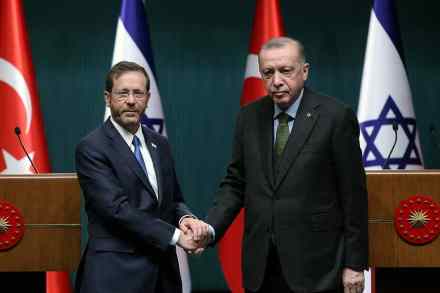
 Jerusalem On Friday night, when the Israeli government usually shuts down for Shabbat, the Prime Minister’s office issued an emergency briefing. An attack on Israeli tourists in Istanbul was ‘imminent’, it said. Israelis in Turkey were ordered to stay in their hotel rooms for fear of assassins, sent by Iran. There was no attack that night, as it happened, but the threat to the many Israelis in Turkey remains. Iran’s Islamic Revolutionary Guards Corps has become increasingly enraged by Mossad’s assassinations of IRGC officers in Iran, and decided that the best and easiest way to get revenge is to target the thousands of Israelis in Istanbul. Both Turkish and Israeli intelligence confirm this. This is not as strange as it might sound.

Is a return to power in Netanyahu’s grasp?

From our UK edition

Jerusalem ‘Netanyahu’s coming back soon, and he’ll be back with a vengeance!’ Simcha Rothman’s eyes flashed as he made his bold prediction. The normally mild-mannered lawyer, an ultra-nationalist Knesset member, was convinced. ‘He’s coming back and it’s all the left-wing’s fault for demonising him. If it wasn’t for them, the right-wing would have found a different leader by now. But the left made him into an icon and much more dangerous.’ Will Rothman be vindicated soon? It’s been a year since Benjamin ‘Bibi’ Netanyahu, Israel’s longest-serving prime minister, was forced into opposition by an eclectic coalition of parties united only by their determination to keep him out office.

How Israel’s Prime Minister got burnt by bread

From our UK edition

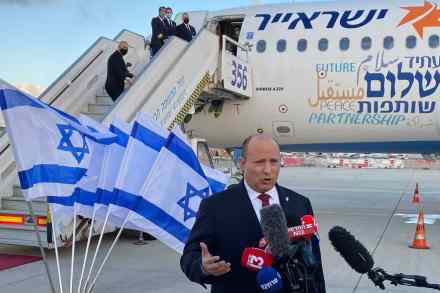
Jerusalem For nearly ten months now, ever since his surprising elevation to the Israeli prime minister’s office, Naftali Bennett has been focused mainly on one thing. He has been trying to prove to Israelis that he can be every bit the master statesman his predecessor, the eternal Benjamin Netanyahu was. And by all accounts that has worked well. He’s had two successful meetings with Joe Biden and met twice with Vladimir Putin as well, the second of those meetings, a surprising flight to Moscow after the invasion of Ukraine began, was made in the hope of brokering a ceasefire between the two countries.

Israel’s Arab-Sunni alliance is piling pressure on Iran

From our UK edition

The world’s eyes are, naturally, all on Ukraine. But elsewhere in Europe, diplomats are locked in a series of talks to prevent an altogether different war in another region. In a hotel in Vienna, negotiators from Britain, Germany, France, Russia and China have been meeting their Iranian counterparts. In an adjacent hotel, negotiators from the United States are waiting to see Iran’s latest proposals. This is the eighth — and perhaps the last — round of talks which have gone on intermittently for the past ten months over the potential return of the US to the Iranian nuclear agreement, which Donald Trump’s administration withdrew from in 2018.

Can a third dose of vaccine stave off Israel’s fourth wave?

From our UK edition

Jerusalem I thought I’d found the most efficient small clinic in Jerusalem, a quarter of an hour’s drive from my home. For months, I’ve been going there for testing, with no fuss or waiting time. At the end of last week, the government authorised the third ‘booster’ dose of Covid vaccine for over-forties. I made my appointment for a Sunday afternoon and soon found out how things had changed. The car park was packed. Inside the clinic, in the corridor leading to the vaccination cubicles, matters were even worse: several people had been given online appointments for third doses for the same time. It’s a far cry from the first vaccine rollout just eight months ago, in which sports stadiums and city squares were converted into mass jabbing centres.

Netanyahu’s toxic legacy

From our UK edition

A week ago Israel was about to have a new government supported by right-wing, left-wing, centrist and Arab parties which was to concentrate on a 'civilian agenda' and 'reconciliation'. Five days of internecine violence shattered that illusion. It’s still Netanyahu’s Israel. I’ve yet to see real evidence Netanyahu somehow engineered these dual crises in Gaza and between Jews and Arabs in Israel but it’s a direct result of his policies. He inherited in 2009 the previous government policies of blockading Gaza but in 12 years did nothing to change it.

Palestinians in Jerusalem live in a strange limbo

From our UK edition

Jerusalem Thomas Friedman has a lot to answer for. The New York Times’s oracle has ruined, through overuse in his columns, the best source of local knowledge for journalists: the cab driver. No other hack can now quote his driver for fear of colleagues’ ridicule. Which is a pity, because the cab drivers in Jerusalem are those rare creatures who not only regularly cross between the three deeply divided cities — Zionist Jerusalem, ultra-Orthodox Jerusalem and Palestinian Jerusalem — but also converse freely with the denizens of all three.