Simon Callow

An actor’s recipe for insanity

From our UK edition

I’m on the road, a very proper place for an actor to be. Never mind all those jokes about some people having tours de force and others being forced to tour – a tour gets the stuff out to the people. If they can’t come to us, we must go to them, each actor on his ass, as Hamlet smuttily tells Polonius. I fancy that my generation of actors was the last to assume that we would take our wares around the country. Personally, I’ve always enjoyed discovering all the different playhouses, with their different challenges and opportunities – a chance to rethink the thing. Standing in the same place, on the same West End stage night after night, peering out into the same auditorium, is a recipe for insanity or at the very least automatism.

How it feels to get a bad review in The Spectator

From our UK edition

It is delightful to be writing for a magazine I’ve read, man and boy, since I was 15. Such is my affection for The Spectator that I felt a particular puff of pride when my name appeared on the cover a few weeks ago. The fact that the words in question were ‘Simon Callow’s Wagnerian disaster’ barely dented my pleasure. It advertised a quite collectibly horrible review of a short biography of Wagner I had written. The reviewer was Michael Tanner, a great explicator of philosophers, and indeed of Wagner himself. The review, dripping with scorn, had a certain personal edge to it.

An actor’s notebook

From our UK edition

It is delightful to be writing for a magazine I’ve read, man and boy, since I was 15. Such is my affection for The Spectator that I felt a particular puff of pride when my name appeared on the cover a few weeks ago. The fact that the words in question were ‘Simon Callow’s Wagnerian disaster’ barely dented my pleasure. It advertised a quite collectibly horrible review of a short biography of Wagner I had written. The reviewer was Michael Tanner, a great explicator of philosophers, and indeed of Wagner himself. The review, dripping with scorn, had a certain personal edge to it.

Messy genius

From our UK edition

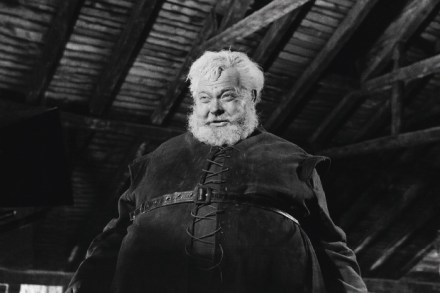
Orson Welles would have been 100 this month. When he died in 1985, aged 70, the wonder was that he had lasted so long. His bulk was so immense, his productivity so prodigious in so many areas, his temperament so exorbitant, that he seemed to have been part of the landscape for ever. Never was ruined greatness so visible. The other great auteurs maudits of this century, Abel Gance and D.W. Griffith, disappeared into silence and oblivion. Eisenstein simply died young. Not Welles. Every time he trundled insincerely through some commercial for cheap liquor (he, the great bon viveur; he, for whom the very word commercial was an insult when applied to film), he sent a pang through the world’s heart.

Simon Callow’s notebook: What it’s like to lose at an awards ceremony

From our UK edition

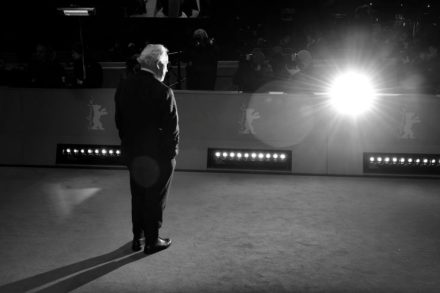
It was one of those weeks. On Monday, I was in four countries: I woke up at crack of dawn in Austria, took my first plane in Germany, my second in Switzerland, and was back in Blighty by lunch. The next day, I travelled up to Scotland to play the sodomitical Duke of Sandringham in the new historical blockbuster Outlander. Then I had a day off, so went from Glasgow to visit chums in Balquhidder, in Stirling, a village of 150 people, which has its own loch, snow-covered mountains, burbling rills, Highland steer, Rob Roy’s grave, and a sublime restaurant. Back to London a couple of days later, then off to Dublin at the weekend for the Irish Times Theatre Awards.