Features

Shadows of Macron: could Valérie Pécresse become France’s first female president?

Paris Perhaps the best thing that can be said about Valérie Pécresse’s presidential election campaign is that it’s better than the Socialist party’s. Which is to damn with faint praise. The French left are in such a dire state that if the opinion polls prove correct, their candidate, Anne Hidalgo, the mayor of Paris, won’t pass the 5 per cent mark in the first round required for candidates to recoup half their campaign costs. Pécresse has no worry on that score but she has failed to inspire the electorate since she was selected as the nominee for the centre-right Les Republicans (LR) in December. An opinion poll this week had her trailing Emmanuel Macron and Marine Le Pen, with Éric Zemmour only one point behind her on 14.

Boris’s bunker: the PM’s defensive strategy

When Boris Johnson first became Prime Minister, he did not have a majority in parliament. Still, he didn’t worry too much about making friends with Tory MPs. He decided to work from the outside in, using his public popularity to pressure colleagues. A snap election was looming: backing him, he said, was their best hope of surviving. He was right, and delivered a majority of 80. This gave him huge personal authority. MPs deferred to his judgment even when they disagreed. How different things look now. Johnson finds himself pleading with his MPs not to pull the plug on his premiership in what seems like a daily struggle. ‘He’s now a prisoner of the parliamentary party,’ says one minister. They make demands; he attempts to appease them.

Revealed: how the NHS waiting list will hit 9.2 million

Before the pandemic hit, NHS England waiting lists were at a record high of 4.4 million. Three lockdowns later, they’ve risen to six million: an unacceptable figure for a Tory government which has spent years trying to rebrand itself as the ‘party of the NHS’. Boris Johnson’s decision to break his manifesto pledge and raise taxes was directly linked to the idea that the money would first be funnelled into the health service to fix the backlog. So can he now deliver for patients? When Health Secretary Sajid Javid announced his ‘elective recovery plan’ in the House of Commons on Tuesday, he said that the waiting list would start shrinking by March 2024, though he stressed that the numbers will rise before then. By how much?

After Covid, Kenya’s flower industry is gearing up for its next challenge

The alpine slopes of Kenya’s extinct volcanoes are the floral equivalent of Bordeaux. It’s there that the roses grow for the world’s weddings, funerals and Valentine’s Day bouquets. The higher the altitude, the larger your flower head, and roses raised in the shadow of Mount Kenya’s glaciers, or on the vast caldera of Mount Elgon, come in a dazzling spectrum of colours, petal shapes and scents. In normal years, billions of blooms fly out of Nairobi, destined for everywhere from Shanghai and Riyadh to Melbourne and Slough. But in 2020, the roses bloomed in vain. The world’s skies emptied of aircraft in March 2020, and Kenya’s rose growers threw away mountains of flowers that could not be exported.

Bring back communion wine

The Church of England has always been clever at producing theology to suit itself. If we don’t start protesting, we may never get communion wine back again. Too many risk-averse clergy have discovered how efficient, hygienic and cheap it is just to give us a wafer each. They explain it away by reminding us that ‘Christ is sacramentally and equally present in both the bread and the wine, so if you receive only one, nothing is lacking’. ‘But it’s so unfair,’ I want to hiss at the presiding priest when I see him or her having a sip of wine ‘on behalf of the congregation’. ‘It’s one rule for you, another for us.

How I’d write your perfect speech

For many of our clients we are a dirty secret. Phone calls regularly begin with variants of: ‘Can you guarantee discretion?’ But there’s not a dealer, pimp or even a Botox clinic in sight. We write speeches. Traditional taboos are fast disappearing. Personal trainers, moisturising creams and therapists are shared between friends. It is socially acceptable to plan your wedding with a professional and outsource every-thing from the flowers to the invitations. But the groom is about as likely to reference his speechwriter as his affair with the chief bridesmaid. Our client meetings are arranged in dimly lit pubs and distant cafés, far from the prying eyes of spouses and friends. My colleague Dolan met an Arab princess on a park bench in Battersea.

The day I was tapped up by Chinese intelligence

Nigel Inkster, a former director of MI6, has described China as an ‘intelligence state’. This was true even before the Chinese Communist party (CCP) passed laws that all individuals and organisations must help the security forces when asked. Chinese officials, party members and citizens have long been active across a broad front in advancing the interests of the CCP, seeking out political, military, scientific, technological and commercial information. Britain has to be wary of more than just the Ministry of State Security (MSS) — China’s secret police agency — or the military intelligence department.

70 years on: the making of Queen Elizabeth II

Princess Elizabeth was 25 when her father died. She was on the first leg of a Commonwealth tour and she spent the night of 5 February 1952 at Treetops Hotel, set in the branches of a large fig tree in Aberdare National Park in Kenya. ‘For the first time in the history of the world,’ wrote the British naturalist Jim Corbett, who was a guest at the hotel at the same time, ‘a young girl climbed into a tree one day a princess and, after having what she described as her most thrilling experience, she climbed down from the tree next day a Queen.

Are wolves stalking us on the school run?

Dante's Beach, Ravenna The other morning, my wife Carla was driving home after the school run in her battered old Renault Trafic people-carrier when through the fog she saw what looked like a wolf. It was ambling across the fields, which were covered in white ice. The wolf was only about 50 metres away, so she pulled over and took a picture, which she texted to the local dog rescue centre. She then followed the animal as it continued on its way, parallel to the road, in the direction of our house. Eventually it vanished in the fog about half a mile from our front door. ‘Yes, it’s a young wolf,’ said the man from the rescue centre when my wife spoke to him on the phone. ‘You can tell it’s a wolf from its tail,’ he explained.

Trudeau vs truckers: a head-on collision

Two-and-a-half centuries ago in 2015 I had a video call with a Canadian friend who lives in my hometown of Toronto. As we spoke, she was putting together a Middle Eastern spice box for the Syrian refugee family she’d sponsored through her daughter’s school, carefully printing the labels in Arabic. Canada had recently committed to accepting 25,000 refugees, compared with the UK’s 10,000, which we both agreed was stingy. I explained to her that although there were lots of charities and refugee initiatives here, the public attitude was different. Not xenophobic, I insisted, just less precious. None of the parents at my son’s school, as far as I knew, were organising welcoming committees for the Syrians, let along putting together spice boxes.

The CCP training programme at the heart of Cambridge

‘Use the past to serve the present,’ declares the website of the China Centre of Jesus College, Cambridge. It seems a sensible motto, until you know that it’s the first half of a maxim of Chairman Mao’s, and that the second half is ‘make the foreign serve China’. The China Centre is directed by Professor Peter Nolan, a fellow of Jesus and an expert on China’s economy. In the 1980s, he studied China’s collective farms and edited a volume that referred to itself as ‘a preliminary attempt to construct a new socialist political-economic strategy for Britain’.

Frozen: can China escape its zero-Covid trap?

To understand what Xi Jinping wants from the Winter Olympics, look at the man chosen to direct the opening ceremony. Zhang Yimou is one of China’s most famous film directors, but his hits (such as Hero and Raise the Red Lantern) are better loved by foreigners than by the Chinese. His job is to wow the outside world with images of China’s power and culture. In a deeply controversial Olympics — already being boycotted by ministers and officials from Britain, the US and many others — he is Beijing’s secret artistic weapon. But unlike the extravagance of Beijing’s 2008 opening ceremony (also directed by Zhang), this Winter Olympics will be a decidedly pared-down affair.

In Fortress New Zealand, faith in Saint Jacinda is starting to fade

Wellington Jacinda Ardern recently told an American television host that she finds it ‘slightly offensive’ when outsiders assume every other New Zealander starred in Lord of the Rings. Quite so. New Zealand has only one real film star in 2022, and that’s the Prime Minister herself. But the way things are heading, she might best suit an adaptation of Lord of the Flies. The place has gone mad. Many countries, even nearby Australia, have responded to the arrival of the Omicron variant by drastically easing many of their formerly draconian measures in response to Covid, in particular the widespread use of lockdowns, or what some might prefer to describe as mass house arrests. New Zealand’s government is not one of them.

The abandoned revolution: has the government given up on Brexit?

There is a lesser-known Robert Redford film, The Candidate, in which he plays a no-hope Democrat taking on a popular and well-liked Republican in a Californian election. After engaging unexpectedly well with the public and winning an improbable victory, he turns to one of his aides and asks, bewildered: ‘What do we do now?’ The question is left hanging in the air like the back end of the bus in The Italian Job. The script might as well have been written about Boris Johnson and the Brexit referendum campaign. It is nearly six years on from that victory, and two years on from Brexit itself. And yet it is still far from clear what — if anything — the Prime Minister intends to do with his victory. We thought we knew what he wanted from Brexit.

The march of South Korea’s anti-feminists

The two leading candidates for South Korea’s presidential election in March, Lee Jae-myung of the incumbent Democratic party and Yoon Suk-yeol of the conservative People Power party, have both made men’s rights central to their campaigns. They hope to appeal to the growing constituency of outraged men’s groups who vent their frustration at feminist overreach on internet message boards and sometimes even protest on the streets. And this is no fringe community: in a poll in May, more than three-quarters of South Korean men in their twenties claimed they had suffered gender discrimination. The ostensible provocation for this anger is the outgoing president Moon Jae-in’s self-declared ‘feminist’ administration.

The irresistible lure of classified ads

The great thing about classified ads is that they have not usually been created by an agency — so what you get is the advertiser’s own best efforts to announce themselves, and what they have to offer, in just 20 words or so. You can glean a lot from what they say, and not always in the way intended. Take this particularly telling example from the Spectator personal ads a couple of years ago: ‘Looking to meet woman on HRT (Hormone Replacement Therapy).’ That he added (and paid for) the last three words tells you more than he could ever understand.

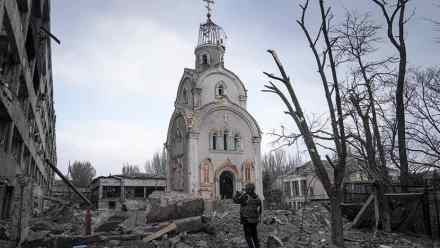
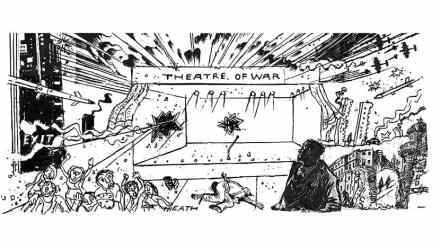
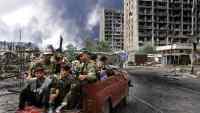
Letter from Odessa: life on the front line of a new Cold War

‘God Save the Queen’ trended on Ukrainian social media over the weekend. ‘As a Brit in Kiev I have never felt so popular,’ one expat tweeted. Four hundred miles to the south, however, on the once grand, now shabby streets of Odessa, the enthusiasms of the Twittersphere seem remote. There is little optimism that Britain, or indeed any other western country, can do much to halt the tidal wave that locals fear Russia is about to release on them. At first blush, life might look normal. On the main pedestrian street, Deribasovskaya, horsemen offer children rides on ponies with pink saddles. But in the city’s cafés, markets and large open squares, there is gnawing fear and growing unease. ‘How can we plan for tomorrow?