Features

Because she’s worth it

The scandal over Liliane Bettencourt’s L’Oréal fortune is exposing the way French high society operates, says Patrick Marnham. And it is harming President Sarkozy in the polls It all started as a banal family squabble over €17 billion. Liliane Bettencourt is heir to the L’Oréal family fortune and among the 20 wealthiest individuals in the world. She is 87 years old, a widow and rather deaf, and she lives alone with half a dozen servants in a mansion in Neuilly, the most expensive suburb in the Paris region. Last year her daughter, Françoise, discovered that her mother had given about €1 billion to a pushy society photographer who had also become a major beneficiary in Liliane’s will.

Dressing down

Mad dogs and Englishmen go out in the continental midday sun. But at least the mad dogs don’t dress in vests, belly-hugging T-shirts or those cut-off trousers that make short men shorter and fat men fatter. Why do they do it? How has it happened that you can spot Holidaymakerus britannicus in an instant, from the other side of the piazza — from the far end of the tapas bar? The romantic legend that the British provide a model of good dress still lingers on. The British invented the modern suit, so the myth goes, Savile Row stands for the best tailoring in the world, so those sartorial standards must be written into our dressing DNA. Well, it just goes to show how difficult it is to dislodge a national stereotype.

Time to take the thumbscrews off the banks

The biggest risk to the economy is not government cuts, says John Redwood, but lack of credit. There’s plenty ministers can do to get companies, and people, borrowing again This time it is different. Normally the UK economy bounces back from a downturn, and we have several years of rising prosperity. Today there are many experts who fear another downturn hard on the heels of the big recession we have just lived through. I welcome the government’s decision this week to write about the funding gap for business, and to float ideas including more banking competition. They will need to move quickly and purposefully from consultation to remedies to fuel the recovery.

Cartoons Special 

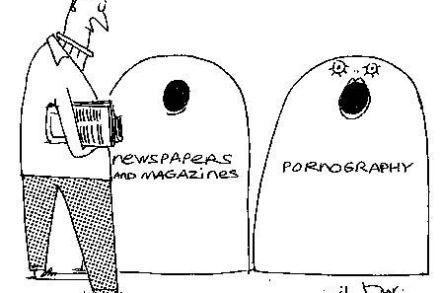
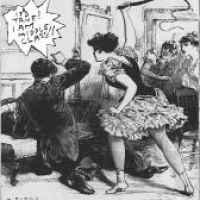
Here is a collection of some of The Spectator’s best cartoons from the last decade, put together to take your mind off the humourless PC world we are now trapped in. Some people say they only read The Spectator for the cartoons. Who am I to argue? Here is a collection of some of The Spectator’s best cartoons from the last decade, put together to take your mind off the humourless PC world we are now trapped in. Some people say they only read The Spectator for the cartoons. Who am I to argue? My sincere thanks to all the cartoonists, even the ones whose names I have inadvertently left out: Sally Artz, Bernie, Hector Breeze, Dish, Dorrance, Nick Downes, Dredge, GG, Grizelda, Hawker, Nick Hobart, Holland, Hunter, Tony Husband, Ivor, Meyrick Jones, K.J.

Rotten Apple

There is a point in the life of all companies where they go from being truth machines to lie machines. The honesty necessary to succeed when times are difficult, either as a start-up or as a firm fighting off disaster, becomes a tendency to distortion when the cash is flowing freely and the profits seemingly endless. Apple may not quite be there yet. But the firm regarded as the benchmark for elegant, popular technology is fast becoming one of the bad guys, a byword for the moral failings of global capitalism. While its profits soar, minor blips, like the recent news that the latest iPhone has a dodgy antenna, can be smoothed over. Last week, all it took was a presentation by its revered CEO Steve Jobs, and consumers were reassured.

Prison may not work for them, but it works for us

Crooks who are in prison are not burgling your house, says Theodore Dalrymple. They themselves understand that perfectly clearly: it is only sentimental mugs who don’t When Mr Clarke went recently to Leeds Prison, prior to announcing in a speech that prison wasn’t working and that therefore fewer people ought to be locked up, he was reported to have been much affected by the story of a man he met there who had been imprisoned for six weeks for having failed to pay child support. The man told him that the brief sentence had ruined his life, that he had lost his job because of it and that when he came out of prison he would have to go on the dole. Whether Mr Clarke asked himself some rather obvious questions about the case is unknown.

Tibet Notebook

Lhasa I experience an electrifying culture shock upon arrival in Lhasa. Not because it is so different to what I’m used to in London, but because it is so similar. Having been raised on a diet of Tintin in Tibet and other tall tales of a snowcapped mountainous land inhabited by a mystical people, I was expecting a paranormal experience, monks in snowboots, maybe even a yeti or two. So imagine my surprise when I notice that the Tibetan man driving me from Lhasa airport to my hotel is wearing a Playboy jacket. Which he might have bought at the Playboy shop that I later see in central Lhasa, near the Nike shop, the Tibet Steak House, and a casino in which young Tibetan men in leather jackets, hair spiked skywards, try their luck at the slot machines.

Searching our bins is a rubbish idea

All too late in the day, I have come to worry about the stuff I put out in my waste bins. It is not the recycling issue that bothers me, but what council officials, poring over my detritus with rubber gloves in some sanitised hell in Maidstone, might find out about me, and what they might decide to do as a consequence. Obviously, nothing good. It never is anything good. They are not going to ring me up and say sir, as a consequence of your rubbish inspection, we’ve decided to reduce your council tax per year to what it would cost to feed a family of 12 in Mali for seven decades. That never happens. We are told that rubbish inspections will en-able local councils to help us more efficiently, to provide a better service.

Turn on, tune in, drop out

Don’t knock daytime TV, says Lloyd Evans. It may be mindless and banal, but it is entertainment in its purest form It’s happening right now. I just had a flick-through and it’s all going on. You wouldn’t believe it. A Labrador called Pongo has been squashed by a tractor and is having his broken paw fixed at the vet. A grandmother from Dartford is trying to raise funds for her daughter-in-law’s wedding by auctioning a trunkload of heirlooms. And Mandy and Oona (in the blue), are hoping to make a bigger profit at the car-boot sale than Vaughan and Sanjay (in the red). It’s gripping stuff, take my word for it.

What Mandy didn’t say

Lord Mandelson’s memoirs left the real questions unanswered, says Trevor Kavanagh. If even he won’t tell the truth about the Blair-Brown years, who will? Peter Mandelson had a rich seam before him as he sat down to write The Third Man. He was present at the birth of New Labour, helped plot its path to power and then sat on the burning deck when it sank. From start to finish, Mandy was in the thick of it. Little wonder that there should be excitement about his memoirs. But anyone reading the three-part serialisation this week would be left wondering — where is the dynamite? Either the Times had missed the best bits, or Lord Mandelson has sold us all short.

The 89-year-old Boy

By the age of 21 Geoffrey Wellum knew his life had peaked. It was downhill from here on in. He was a squadron leader and had won a DFC. Moreover, he had lived through the Battle of Britain. Today, he is one of the few of ‘The Few’ left to tell the tale of how they won the battle 70 years ago this summer. Waiting for Wellum in his local hotel bar, perched on the cliffs of Mullion Cove, I watch the rifle-green Channel grinding on to the rocks below. I’m reminded of the watery graves of the many fellow pilots he pays tribute to in his bestselling memoir First Light. In it he details his days as the youngest Spitfire pilot in the fray. The BBC has now adapted the book to mark the anniversary.

My Gatwick hell

Alex Murray was detained for two hours by Special Branch at Gatwick for using the word ‘bomb’ at security — and finds that in this age of terrorism airport staff just can’t take a joke I live in France, but because I have family in England and Belgium, I travel frequently. And so, on the occasions when I have to fly rather than take the train, I do everything to get through the hell of British airport security with the minimum of fuss. I never wear a belt. I usually check bags and often board empty-handed.   Indeed, my main concern when travelling is usually my wife. She’s a Belgian citizen who also travels frequently. She claims that airport security is worse in Britain than anywhere else in the world and she sees it as her duty to point this out.

The Raoul Moat affair has uncovered a seething pit of northern madness

What on earth is the government going to do about all these deranged northerners running amok shooting people? The more callous among you might well argue that it doesn’t really matter, as these madmen are only shooting other northerners, and so it is therefore none of our business. Perhaps. But there is no guarantee that the next deranged northerner will not get on a train, if he can afford it, and start shooting at us, instead. This is the thing; you simply cannot tell with nutters, there is no logic to their mayhem.

Too late to save Britain — it’s time to emigrate

Part of me feels that those who have helped to bring the country down — venal politicians, false educators, degraders of the media, thieving privatisers of the public domain — need to be fought to a standstill, here on this battlefield, by those with the energy, strength and clarity of mind to do so. For no one wants to believe that the country of his birth, language, upbringing and way of thinking cannot be redeemed. But the thousands, and tens of thousands, leaving Britain — another million and more will be gone in the next five years, the largest category of them the young, the skilled, the professional — are not wrong. The country’s dilapidation has gone too far.

Swiss welfare runs like clockwork

In Britain we are now glumly entering the age of austerity and everyone expects unemployment to go on rising. This has been the case in the past: even when the economy starts to grow, there is a painfully long lag before unemployment starts to fall. But not in Switzerland is different. There, unemployment is already falling. Since January, it has fallen from an already low 4.5 per cent to 3.8 per cent, half the UK rate. If you go to Zurich and ask why there are so comparatively few people out of work, you have a good chance of being told: ‘employment is picking up fast because it is cheap to sack people’. It is a classic paradox and not the only one to be found in this part of the world. In recent years, British policy wonks have looked at how things are done in America.

This referendum could change the Tory party forever

Quietly, David Cameron is warming to Nick Clegg’s proposed plans for voting reform — even though it could bind the two parties together for a decade or more. James Forsyth on a Tory gamble that dares not speak its name On the Monday after the election, David Cameron summoned his front bench for not one but two meetings as he frantically tried to put together a government. In the second one, he asked them for their support in offering the Liberal Democrats a referendum on electoral reform. The Tory party has long stood against this. It believed that any move away from first-past-the-post would be bad for the country and for the party; that it would lead to a string of mushy centrist governments and backroom deals between politicians that shut out the electorate.

Sex by sat-nav

Theo Hobson is depressed by the media’s rapturous welcome for Grindr, a new software device that helps gay men locate each other for impromptu sex I am not a homophobe. But I suppose I might be a pinkophobe. I do not think that homosexuality is wrong, bad, inferior, hateful in the eyes of God. And yet I find male homosexual culture objectionable. I think, especially in the last decade or so, that it has come to have a corrupting influence on sexual culture generally. The heart of the matter is the fact that male homosexuality has a special relationship with promiscuity, and gay culture fails to be ashamed of this. Instead it glories in it.

Archive Diary

For almost three decades the novelist Beryl Bainbridge, who died last week, wrote book reviews and diaries for The Spectator. They were, without exception, brilliant. It has been said over the last week that she was the best novelist of her generation, but she was also (though a life-long Labour voter) the best sort of conservative: ‘What a mistake change is!’ she wrote in a diary in 2000: ‘Who needs those ghastly new buildings which have taken over Swiss Cottage? Why was Peter’s bookshop in Camden Town done away with, and the off-licence and the pet shop and the Delancey Café?’ Which Spectator reader would disagree?