Daniel W-Drezner

While Britain stagnates, America is roaring back

From our UK edition

Predicting the decline of the United States has been in vogue since the birth of American hegemony. Sputnik, Vietnam, stagflation, budget deficits, trade deficits and even the end of the Cold War all triggered predictions of the end of America. With the 2008 financial crisis, however, there seemed to be a sense that this time was different. Tomes with titles like The Post-American World and The End of Influence began to appear on bookshelves. Germany’s finance minister confidently predicted that the United States was entering its last days as a financial superpower. Serious commentators spoke about how a ‘Beijing consensus’ would supplant the ‘Washington consensus’. America looked as if it would disappear in a vortex of debt.

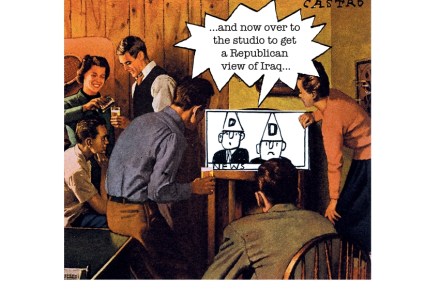
Republicans vs the world

From our UK edition

During the 2008 US presidential election cycle, the respected journal Foreign Affairs invited the leading presidential candidates from both parties to outline their views of world politics. All of them responded with essays that, one presumes, they at least read if did not write. This year, ahead of next year’s elections, Foreign Affairs has proffered the same invitation to the leading Republican aspirants. To date, they have all refused or not responded. This parallels the trend of not talking about international affairs in their endless series of presidential debates: mentions of Afghanistan and Iraq are reported to be down 65 per cent from 2008.

A world of ignorance

From our UK edition

America’s politicians are hopeless at understanding other countries – but they’re not alone in that Ever since the United States rose to great power status, it has displayed bouts of appalling ignorance about the politics and cultures of the rest of the world. Pick a region, any region, and one can find quotations and policies that demonstrate a breathtaking ability to think that other countries were just like the United States. During the Cold War, US policymakers continually misread the Pacific Rim. In the 1940s, Senator Kenneth Wherry of Nebraska vowed that ‘with God’s help, we will lift Shanghai up until it is just like Kansas City’. It turned out that the communists were more successful in that endeavour than Chiang Kai-Shek.

The paranoid style in world politics

From our UK edition

Polio vaccines in Nigeria are part of a Western plot to make African women infertile. Foreign zombies are replacing indigenous labourers in South Africa. Barack Obama was born in Kenya and is a secret Muslim who hates the United States and wants to institute ‘death panels’ to govern the healthcare system. The United States triggered the earthquake in Haiti to expand America’s imperial reach. These are just a small slice of the conspiracy theories floating around the global ether of rumour and innuendo. Such theories are hardly a new phenomenon in world politics. Athens fell victim to the politics of rumour and conspiracy during the Peloponnesian war.

Uncle Sam vs the Dragon

From our UK edition

The growing rift between the United States and China has chilling similarities to America’s old rivalry with the Soviet Union, says Daniel W. Drezner When Barack Obama burst into the room to disrupt China’s meeting with its fellow climate change sceptics at the Copen-hagen summit, it was clear that something was not right in the relationship between the two countries. The American president had made his way past reporters, with a face like thunder, and shouted at his Chinese counterpart, ‘Mr Premier, are you ready for me?’ Wen Jiabao was not; and according to numerous press reports, Mr Obama was berated by a mid-ranking Chinese official for his rudeness.