Allister Heath

In place of tinkering: the 2020 Tax Commission

From our UK edition

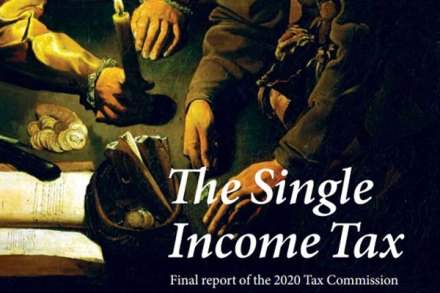
The report which Fraser mentioned last week, from the 2020 Tax Commission, has just been published - you can download the summary here and full report here. Allister Heath, chairman of the commission and a contributing editor of The Spectator, says more here:- It is time for Britain to make a vital choice. Our economy is stagnant, crippled by excessively high public spending, high levels of leverage, a mismanaged and inefficient public sector, an extraordinarily complex and punitive tax system and a public mood that has become increasingly anti-capitalist. There are two options. We can either decide to tweak the status quo – try and keep a lid on public spending, reform bits of the public sector and hope for the best.
This is going to hurt

From our UK edition

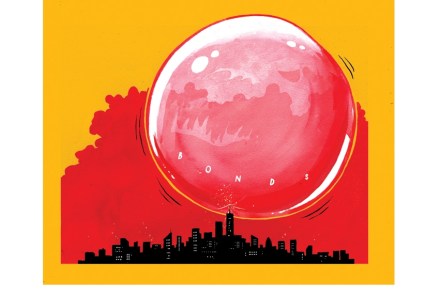
There is much to be terrified about in today’s global economy. The eurozone’s death dance, China’s slowdown and America’s inability to create jobs are enough to make the most upbeat investors gloomy. But even these problems pale in comparison with the biggest threat, one with implications so hideous that financiers are reluctant to talk about it even now. The truth is that the economies of rich countries, including the UK, are being kept alive by another and astonishingly under-reported bull market — in government debt. This is the bond bubble; and when it bursts, as it surely will, the result will be a recession far deeper than the crash from which we are trying to recover.

Wake up, Osborne!

From our UK edition

He has been desperately trying to persuade us that things could be worse, but the truth is that this week’s news is a bitter blow for George Osborne. He has been desperately trying to persuade us that things could be worse, but the truth is that this week’s news is a bitter blow for George Osborne. Our economy only grew by 0.2 per cent this quarter, at a time when he desperately needs stronger growth to generate the tax required to finance public spending and reduce his awful budget deficit. Our chancellor may seem nonchalant but, as he knows, this pitiful growth means less money for the exchequer, and the prospect that Britain will be stuck in a permanent state of semi-stagnation. The coalition government has seemed weirdly insulated from the bleak reality.

Politics: If Greece falls, Britain will suffer

From our UK edition

When George Osborne delivered his first budget, Greece made the perfect backdrop. The television news channels had split screens: on the left side, the new Chancellor making the case for austerity. On the right side: riots in Athens as a government confronted the consequences of its profligacy. Now, as then, British eyes are on Greece — but for different reasons. The prospect of a Eurozone banking crisis has now overtaken rampant inflation as the greatest single threat to the British economy. The risk is not Greece itself, which, for all its great difficulties, remains a small and marginal economy. British holidaymakers may quietly pray for the return of the drachma and, with it, the cheap European holiday. But this is where the opportunity ends.

Forget the cuts

From our UK edition

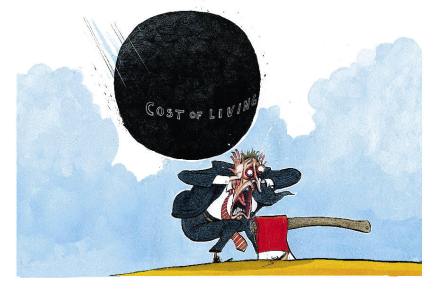
To listen to the reporting of the Chancellor’s phased and rather limited spending cuts, you would think that the gates of fiscal hell opened at 12.30 p.m. on Wednesday. They are the ‘most savage cuts in our lifetime’, said an ITV reporter. The ‘fastest, deepest cuts in public spending ever mounted by a government in modern times’, declared a hyperventilating Will Hutton, a newspaper columnist and government adviser. It has been so long since Britain attempted fiscal restraint that a cut in total government spending of under 4 per cent in real terms over four years is treated like the coming of the apocalypse. That there will be severe pain is not in question. There will be real hardship for the soldiers and public-sector workers who are laid off.

The Irish problem

From our UK edition

It isn’t spending cuts Those arguing against spending cuts have recently adopted a one-word argument: Ireland. The case it stands for is as simple as it is bogus. Ireland had a deficit, now even worse than Britain’s. It adopted an agenda of sharp public spending cuts, on the same logic used by the British government. The result? A double-dip recession and a fresh round of misery. The lesson from Ireland is that cuts don’t work — and that George Osborne is leading Britain into the swamp. The argument is seductive, but only if one is ignorant about what has just happened in Ireland.

The Budget

From our UK edition

As valedictory Budget statements go, this one did not disappoint. Alistair Darling may lack Gordon Brown’s verbal chutzpah, but he made full use of Labour’s arsenal of debt and tax concealment tricks, all of which have been carefully honed by this government since 1997. The most important points were buried in the fine print, missing altogether or assumed away thanks to growth and revenue forecasts so optimistic that they would have made even Lehman Brothers’ accountants blush. The central ‘achievement’ of this Budget — that the deficit this year will be £167 billion rather than £178 billion — is something which any self-respecting Chancellor should be deeply ashamed about. This sum still represents an overspend of 11.

Day one: getting us back in business

From our UK edition

Dear Treasury Permanent Secretary, Good news: the nightmare is over. We both know that Gordon Brown is one of the greatest economic vandals ever to have resided in Downing Street. And to make Britain competitive again will require hard work. We can start immediately, and without the need for legislation. I’d like the following to be in place by the end of our first 100 days. 1) Please draw up plans for a two-year public sector pay freeze, and for a few billion pounds worth of immediate cuts. Rather than trimming spending across all departments, I’d like to axe entire programmes. These will include Sure Start, which would save £1.4 billion a year, and the NHS national programme for IT, saving £1.2 billion. The markets are watching us anxiously.

Britain must be saved from the financial abyss

From our UK edition

A few months ago, Alistair Darling was asked how long he thought his government could continue to borrow £600 million a day. Might creditors one day refuse? The Chancellor gave an oblique reply. ‘When you walk over ice, you never know it is too thin — until you fall through.’ He said no more, but his message came across. If the bottom falls out of the British economy, it will do so instantly and dramatically. There will be no warning. For some time now, Gordon Brown’s government has been walking on the thinnest of ice. But it has been helped, ironically, by the widespread expectation of its electoral annihilation.

Britain on the brink

From our UK edition

It is a calculation that should fill all of us with an immense sense of dread: there is now a 72.2 percent chance of a hung parliament. Or so says Michael Saunders, Citigroup's chief European economist and the one man in the City everybody listens to when it comes to the interaction between parliamentary politics and the financial markets. His model, which incorporates the standard data about the Westminster first-past-the post system, and into which he has fed all of the latest polls, also suggests that there is just a 6.2 percent chance of strong Tory majority, a 19.1 percent chance of a weak one and 2.5 percent chance of a Labour majority.

Darling’s budget was bad. Osborne’s complicity was worse

From our UK edition

There was much that was absurd about Wednesday’s pre-Budget Report, from Alistair Darling’s failure to outline a realistic plan to prevent Britain’s national debt from exploding, to his risibly over-optimistic long-term growth forecasts. Public spending will jump again next year, we’re told. Schools, hospitals and police will be protected from cuts if Labour wins the election — which, plainly, it has not the slightest expectation of doing. This was about political positioning, banker-bashing, with a new bonus tax, and pretending to the electorate that a few efficiency savings and National Insurance tweaks will be enough to rescue Britain. The intention was to deceive voters, with the pain only kicking in after the election.

Why is Osborne obsessed with bonuses?

From our UK edition

It is hard to work out what the bankers did to George Osborne. Perhaps he was refused an overdraft at a formative age. Whatever it was, he is taking his revenge, saying that the large British banks should only be allowed to pay trivial cash bonuses. The plan has its political attractions — focus groups tell him no punishment is too harsh for the City of London — but also three significant economic drawbacks. It is vindictive, ineffective and it fails to address the true reason for the crash. Let us first examine this on a practical level.

Savage cuts are the safer option

From our UK edition

If John Maynard Keynes were alive today, he would be appalled at the disastrous state of our public finances. He is loved and hated in equal measure as the man who made pump-priming during downturns intellectually respectable. But nothing he ever wrote could be used to justify the scandalous mess in which Gordon Brown has landed Britain. Not only has Keynes been body-snatched by advocates of big state spending, but he finds himself in the battleground for the next general election. At Labour’s conference next week, the Prime Minister will say that Labour must be re-elected precisely because it will cut spending by less than the Tories. David Cameron’s attempt to reduce the fiscal deficit more quickly, he will argue, will tip the economy into a new recession.

A shameless Budget

From our UK edition

It's official: enterprise, hard work, education, success and aspiration are no longer valued in Britain. Yesterday's Budget, by far the most irresponsible in recent history, marked the final death of the New Labour project, which was meant to reconcile social democratic policies with a competitive economy. From next year, anybody earning between £100,000 and £112,950 will be hit by a marginal income tax rate of 60 per cent as their personal allowance is wiped away ­ the real rate will hit 61.5 per cent with national insurance. After that, the tax rate will fall back to 40 per cent for a while ­ 41.5 per cent with the new national insurance super-rates. After £150,000 it will jump to 50 per cent ­ or 51.

A predictable guru

From our UK edition

There is only one politician who has emerged from the recession with his reputation enhanced. Yes, you’ve guessed right: I’m referring to Vince Cable, the ubiquitous grey-haired, sober-suited deputy leader of the Liberal Democrats. Even many Tories would feel reassured were Cable, who exudes reasonableness, to become Chancellor; broadcasters with little understanding of finance defer to him, with the BBC treating him as a cross between a living saint and a Nobel laureate in economics. A former chief economist at Shell, he is always at the other end of a mobile phone; journalists know they can count on better copy talking to him than anything on offer from the Tories.

The great downhill bicycle ride

From our UK edition

A little over a year ago, when it was already obvious to virtually everybody that the boom was over, the City’s Panglossian crowd came up with one last, seemingly profound, argument to allow them to continue to deny reality. Going by the ugly name of ‘decoupling’, the theory was that the emerging economies were no longer reliant on exports to the West. America and Europe could plunge into recession, the argument went, but Indian and especially Chinese consumers would take over, allowing their economies to shrug off the West’s downturn. Like assumptions underpinning the boom years, this one has since been found wanting.

The grim state of public finances

From our UK edition

Once again, Gordon Brown has got away lightly with his gross mismanagement of the economy. Today's public finances statistics were less bad than feared, thanks to strong revenues from income and corporation tax in January, but they were pretty grim nevertheless. That is not the impression one gets scanning today's almost universally positive headlines, however. So here is a reality check: in the financial year 2007/08 to date, public sector net borrowing -- the main measure of the budget deficit -- has already reached £26.5bn. This is a cool £6bn more than over the same period last year, and represents a horrific deterioration in the health of the public finances.

Fleecing non-doms is the thin end of a bad wedge

From our UK edition

Allister Heath says that Brown’s poll tax on Britain’s 114,000 non-domiciled residents will drive away talent when our economy most needs it. Shame the Tories would do the same You would have thought that with the economy weakening, the stock market sliding, house prices tanking and Northern Rock’s botched rescue a daily humiliation, Gordon Brown would be doing all in his powers to help the City of London weather the gathering storm. Instead, he appears intent on making life even more difficult for it. His reckless plan to crack down on Britain’s 114,000 non-domiciled residents, including many of the City’s most important financiers, will be the most damaging in a long list of spectacularly ill-timed tax hikes due this year.

The economy in 2008: chilly showers but no hailstorms

From our UK edition

Allister Heath forecasts that Britain’s economy will suffer less than America’s, but that homeowners and consumers will still feel the pain — and blame it on Gordon Brown First, the good news: there will be no recession next year in Britain. But while avoiding ‘the Big R’ will be some cause for celebration, the overall outlook for 2008 remains bleak. The economy will not shrink but it won’t grow by much either. And there will be plenty of pain to go round. House prices will fall noticeably, which means that most members of the property-owning majority will become poorer — the first drop in wealth levels in more than a decade.

Braced for a new oil shock? Relax, this isn’t the 1970s

From our UK edition

Those of us born in the late 1970s have a great advantage when it comes to understanding today’s oil market: we cannot remember Opec embargoes, nor the double-digit inflation and bitter recessions they triggered. So while many of our elders and betters were predicting Armageddon as the price of oil climbed inexorably over the past couple of years, we younger ones took the surge in our stride — rightly, as it turned out. There is little doubt that the black stuff will soon cost at least $100 a barrel, while a litre of petrol routinely tops £1. But the British and global economies have changed so much over the past 40 years that they can now handle it.