Features

Blackballed by Cameron

David Cameron’s Conservative party has several uniquely destructive traits. But perhaps foremost is that it believes the lies of its enemies. And even when it doesn’t, it panders to them. A perfect example arose three years ago when the shadow minister of homeland security, Patrick Mercer, gave a newspaper interview in which he mentioned the fact that he had heard racist comments while he was in the army. Even a cursory glance at the interview showed that Mercer was reporting — and deploring — these comments. But Cameron didn’t bother with a glance. Here was an opportunity to show the new Conservative party.
We need your vote

To celebrate 25 years of The Spectator/Threadneedle Parliamentarian Awards, we invite you to nominate the best MP of the past quarter-century The question hangs in the air: what makes a great parliamentarian? And the answer echoes back: many things. A great parliamentarian may be a swashbuckling orator whose rhetoric never fails to draw blood. He or she may be an energetic campaigner, striving on their constituents’ behalf for a new hospital or school. He may be a crumpled backbencher who upholds the tenets and conventions of their party. He may be a thinker, a gambler, a rebel or a ham. A gilded few might claim with some justification, ‘I am all of the above.

Cameron’s new model army

The Conservatives are planning to chip away at the lower middle-class voter and release his inner Tory Two inconvenient truths will put the dampeners on what could have been a celebratory Conservative party conference in Birmingham next week. First, there is a champagne ban for the third year running. There are to be no pictures of Tories with bubbly. Next, there is no real victory to toast. David Cameron failed to win a majority against Gordon Brown, which is something of a sore point among his advisers. Visitors to No. 10 are told that this is ‘not a helpful subject’ to bring up. There is a ‘don’t mention the campaign’ policy running in Cameron Towers. But beneath this defensiveness lies an understanding of what went wrong.

Moral authority

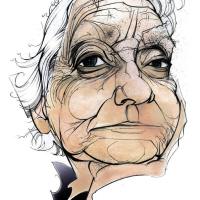
Baroness Warnock, atheist pillar of the liberal establishment, on the need for Christianity in schools and the folly of human rights Baroness Warnock has had many battles with religion over the course of her long and distinguished career. In 1984, when the Warnock Report recommended allowing in vitro fertilisation and research on embryos, she was attacked by the chief rabbi, Immanuel Jacobowitz. The Times headline, she recalls when we meet at the Royal Society of Arts, was ‘Warnock destroys morality’. ‘I rather treasured that.’ The next year, Enoch Powell, who expressed ‘revulsion and repugnance’ at the report, introduced the Unborn Children (Protection) Bill into parliament to counteract it.

It’s their party

Right-wing Tea Party activists might well reshape the US Congress – but they have already routed the Republican establishment When angry right-wing American voters started taking to the streets to protest against the Obama administration’s policies, leading Republicans were ecstatic. In the group of protesters who became known as the Tea Party, they saw a grassroots movement they could ride back to power. Now, with the midterm elections approaching, Tea Partiers may indeed change the balance of power in Washington — but a lot of establishment Republicans will be joining their Democratic counterparts in the unemployment queue.

In bed with politicians

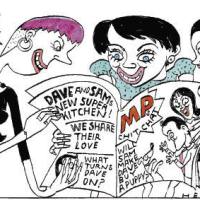
Who on earth wants to know about the leaders' children, pets, kitchens and favourite biscuits? I am sitting in the audience at Labour party conference, watching a tribute video to Gordon Brown. As Brown smiles, walks, talks, scowls and moves his limbs up and down, giving a fairly decent impersonation of a soon-to-be-discontinued toy, I have a sudden realwisation. I don't know if Stanley Baldwin liked Murray Mints. I have never seen Winston Churchill sob on Piers Morgan's lap, like cheese melting on toast. And I - I - I have no idea whether Clement Attlee had a nice kitchen. Why is this? Is it because the private lives and decoration choices - the mood boards, if you will - of politicians used to be yucky, but shrouded?

I refuse to buy meat from supermarkets until they ban halal slaughter

There is a view, prevalent among a sizeable minority of people in this country, and particularly within the angry, fat and drunk white underclass, that one day very soon the green flag of Islam will fly above Westminster and Britain will have become a Muslim country, by stealth. This is the snarled and yet resigned reaction to every inflammatory news story printed in the popular press about Muslim-only swimming nights at local leisure centres, or councils banning Christmas, or teachers upbraided for talking about Jesus Christ in school and so on.

Risky Business

The Spectator/KPMG conference explored investment opportunities in today’s uncertain geopolitical climate We live in an age of uncertainty. The predictable threats of the Cold War have been replaced with more nebulous dangers: great power politics might be stable but across large parts of the world instability rules. The Spectator’s ‘Global Risk and Opportunity’ conference in association with KPMG explored the consequences of this uncertain global environment for business. Andrew Neil opened the event by observing how the all-party desire in America to withdraw from costly foreign entanglements threatened the Pax Americana that has kept the peace since the end of the Cold War.

Post-racial America? Forget it

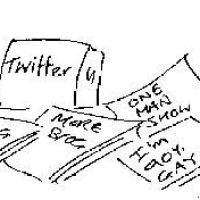
The United States is almost as segregated under Obama as it was in the time of Martin Luther King As I arrived in New Orleans this summer, there was a juicy racism row blazing across the airwaves and the blogosphere. Like lots of the juiciest rows, it was over a little thing. The question was, do black people use the social networking site Twitter differently from white people? According to Farhad Manjoo, Slate magazine’s technology correspondent, the answer is yes. He’d noticed that a group of black Twitter users in America were much more likely to react to particular topics. Some of them were race-based, such as ‘If Santa was black …’; answers included ‘He wouldn’t say ho-ho-ho, he would say yo-yo-yo’.

City of fear

A day in Juárez – once a party town, now the murder capital of the world ‘We’re not going to die, are we Dan?’ asked my friend Joe, a CBS radio reporter, shortly before we crossed from El Paso into Juárez, Mexico, murder capital of the world. ‘Nah,’ I replied. ‘Our guide is a priest. It’s a Sunday. The narcos will respect that.’ I was lying to make him feel better. In February, a sacristan in Juárez was killed, one of more than 1,000 drug-related murders in the city so far this year. Elsewhere in Mexico priests had been beaten and butchered: for the cartels, nothing is sacred.

Gut reaction

Hookworms are parasites. But could they also be a revolutionary medical treatment? In a bright modern office in the University of Nottingham's complex of bright and modern buildings, Dr David Pritchard has fallen silent and is sitting staring at his hands. It's been a few minutes since he stopped talking. In the first 30 seconds I sent off a string of little vacuous questions that hung in the air like soap bubbles, then popped for want of response. Now I'm sitting silent too, also looking at his hands, considering - as perhaps is he - how much may be within their reach.

Waving while drowning

With or without global warming, Britain is disappearing into the sea. We must invest more in coastal and river defences I have an idea for saving public money: replace the Department for Energy and Climate Change with one man and a sandwich board carrying the words: 'Prepare to Meet Thy Doom'. It shouldn't cost much more than £40 a day to pay for him to pace up and down Oxford Street. And it would achieve exactly the same as DECC: constantly reminding us of the grim warnings regularly put out by ministers - while doing sweet Fanny Adams to save us. Maybe that is just a tad unfair. We do, after all, have the new Committee of Climate Change, established by the Climate Change Act 2008, which last week published its report 'How Well Prepared is the UK for Climate Change?

From the trenches to the stalls

The writer Sebastian Faulks exudes a sense of calm accomplishment. But even he seems tense about the stage adaptation of his bestselling novel Birdsong 'I'm not excited. I don't do excitement,' says Sebastian Faulks. Which is probably just as well. Four years have elapsed since the project he's currently involved with, a dramatisation of his bestselling novel Birdsong, was first suggested to him by the playwright Rachel Wagstaff. I meet them both in Faulks's Holland Park flat, where he writes every day on a huge Apple Mac overlooked by miniature portraits of two deceased colleagues. A picture of Dickens, which belonged to his mother, hangs on the wall beside a relief of Tolstoy reproduced on what looks like the bottom of an ashtray. 'From his house in Moscow,' Faulks explains.

The night our house burnt down

Murray Sayle, who died last weekend, wrote regularly for The Spectator. Here is an edited extract from his column of 13 May 1989. Aikawa, near Tokyo The night of 19 December last was cold and starry. Our house stood in a clearing in a pine forest halfway up a mountainside, and the flames could be seen a good ten miles away, down by the Nissan factory. Some of them even downed tools for a moment or two, we heard, wondering what the bright light was. Not that fires are unusual in Japan. Before the days of concrete cliffs they were called ‘The Flowers of Edo’, the old name of Tokyo.

Labour’s coming up on the rails

Even leaderless and without fresh ideas, Labour has surged in the polls. Think what the party might be able to do with someone – anyone – in charge The Labour leadership contest has been easy to mock. It has set brother against brother, lasted for months and shown that the party has no heir to Blair. In private, Labour politicians are frank about the failings of their candidates. When I asked a senior backbencher about who he was endorsing, he replied, ‘The least worst one.’ Coalition ministers are gleeful about the weaknesses of the field.

WEB EXCLUSIVE: Review of Spectator arts funding debate

‘Time for the arts to stand on its own two feet and stop sponging off the taxpayer’ From the start, the combatively worded motion came under attack. Culture secretary Ed Vaizey called it ‘brutal, vulgar, left-wing, and hostile to excellence and quality.’ He urged us not to think of the arts as a layabout teenager watching Neighbours and eating cold pizza all day. The arts doesn’t sponge off the taxpayer, he said, it’s the other way around. The subsidy supports the burgeoning tourism market. He revealed that the independent arts sector welcomes stated-funded art and regards it as a research and development department. He defended free entrance to museums with this economic parable.

I think, therefore I’m guilty

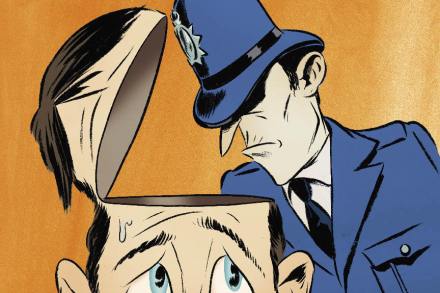
Britain is a liberal and progressive utopia – and the authorities will arrest anyone who disagrees Everyone can agree that today’s Britain — which we’re always being told has become so much more liberal — is the very model of a forward-looking, tolerant society in which freedom of expression is paramount. Correct? If only. In fact, the intellectual trend in Britain is a remorseless slide towards a dark age of intolerance, reverting to a reason-suppressing, heresy-hunting culture in which certain opinions are being turned into thought crimes. Astoundingly, people are being arrested by the police — even if the case against them eventually falls — because of what they have said. They are not inciting violence or any criminal activity.