Features

The coming showdown

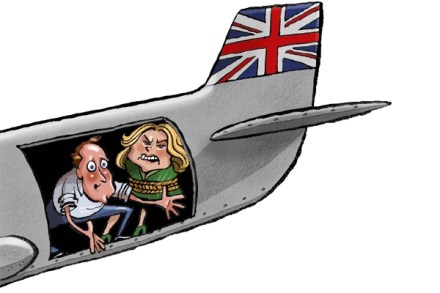
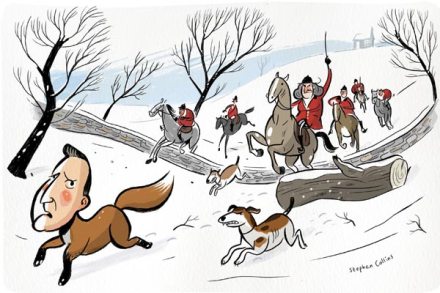
Angela Merkel is running out of nice things to say about David Cameron and the Tory rebels who are dictating his European policy. Der Spiegel magazine recently compared the British to ‘at best spectators in the gallery like Statler and Waldorf, the two old men on The Muppet Show’. This was apparently after a briefing from Merkel’s office. If she thinks the Tories are bad, the public are much worse. Over the summer, the European Commission asked 32,000 people across the continent what they thought about the EU. The Poles are still enthusiastic, the austerity-stricken Irish less so. The Italians are smarting from having lost their prime minister and the Greeks are a bit raw over the sado-austerity. But the most hostile EU member state, by a clear margin, is Britain.

In praise of Bryan Ferry

Francis Lee, the barrel-chested footballer who banged in goals for Bolton Wanderers and Manchester City, was my first idol. Billy Wilder, Johnny Mercer and Philip Larkin rank among the heroes of my maturity, though nobody will ever displace Chekhov and Schubert at the head of the table. But the vicar’s son who went up to public school in 1972, hoping to find a pop group he could call his own, stumbled upon the man who lit up his adolescence 40 years ago this month: Bryan Ferry. On the first day of November that year, during the half-term break, I walked into Rare Records in Manchester and handed over £1.75 for the first LP by Roxy Music. I hadn’t heard a note, yet it seemed the right thing to do.

End of the Party?

The 18th Congress of the Chinese Communist Party had begun, and President Hu Jintao was droning his way through his last big speech before stepping down for good. Irritatingly, he raised his voice to a low shout every time he reached the end of a significant sentence. That was when the assembled delegates were expected to applaud, and of course they did. They’d all been issued with copies of his speech telling them precisely where to start clapping. I’d had as much of this as I could take, so I walked out of the grand theatre in the Great Hall of the People into the equally grand lobby outside. It was about the size of a Buckingham Palace reception room. I sat down on the marble staircase and starting writing my report.

Bringing obituaries to life

I used to be a foreign correspondent. Sometimes I thought it was a pretty glamorous job. At dinner parties I might occasionally drop hints about the dangerous sorts of places I had been to. But the only people who cared were other foreign correspondents, and then only because they were eager to dwarf my boasts with their own tales of derring-do. To my youthful indignation, nobody else gave a hoot. Now I am the obituaries editor at the Telegraph. Quite a career shift, I’m prepared to admit. These days if people ask what I do I tend to mumble something about being a journalist. But this, I’m afraid to say, is not because I am now wiser and less vain.

Seven things to do if you’re not skiing

These days, a winter holiday isn’t just about skiing. The majority of larger resorts offer a range of activities from dog-sledding to five-star spa facilities, while adrenalin-fuelled sports such as snow polo and skeleton bobsleighing are becoming increasingly popular. If you fancy doing something a bit different this year, here are some ideas: 1 If you’re a Cameron-style huskie-hugger, then dog-sledding will be right up your street. By day or by moonlight, you can’t beat the feeling of tucking yourself into your sled, and setting off into the snowy wilderness with your pack of canines. Mush! 2 Sledging is always popular with children and the young-at-heart, and most resorts offer toboggan rental, with specially designed toboggan runs on or near the main skiing pistes.

Downhill for generations

My 22-year-old daughter is feeling a little low. Me, too, actually. I’ve just told her there aren’t enough pennies in the coffers to go skiing this season — just as there weren’t last season. I suggested she should get together a group of friends and do it on the cheap but we all know that doing skiing on the cheap means pretending you’re flying down the mountain while parked in your local Costa with a hot -chocolate. ‘We’ll go next year,’ I said. And we will. In fact, I’ve already been in touch with those nice people at -Powder White and I am about to sign up for a 12-berth chalet in Courchevel 1650 that has an open fire, a hot tub on the roof and the promise of freshly baked cake every evening when we get down from the mountain.

Hope? Yes. Change? No

What a long and nasty campaign that was. It is hard to imagine that a political race of such magnitude could be so intellectually and emotionally bunged-up. But it’s over, and we can now ask ourselves what the point was of President Obama clubbing his way to another four years of access to the White House gym. What now? Because even after so many months of campaigning, it’s not entirely clear. Certainly not the way it was in 2008, when voters swooned over his promise of hope and change. Then, Obama promised light after the darkness of the Bush-Cheney years. He would bring peace and harmony, end wars and reconcile the partisans of Washington. This time, his promises were more grounded: competence, experience and more of his statist approach to managing the economy.

Obama’s new majority

‘I’ve come back to Iowa one more time to ask for your vote,’ said President Obama at an emotional ‘last ever’ campaign meeting. ‘Because this is where our movement for change began, right here. Right here.’ And his eyes briefly moistened. The nostalgia was doubtless sincere, and the address correct, but it was misleading to describe his 2012 election campaign as a continuation of his earlier ‘movement for change’. In reality, it has been a smoothly ruthless operation to distract attention from a record that has been disappointingly bereft of change. He triumphed over himself as much as over the hapless Mitt Romney.

What the butler did

What has happened to butlers? They used to be the epitome of discretion and loyalty: but last week the Pope’s former butler, Paolo Gabriele, began an 18-month prison sentence for passing documents from his employer’s desk on to a journalist. The trial of Paoletto, or ‘Little Paul’, as the Pope fondly called him, follows the trial of another butler nicknamed ‘Small Paul’, Paul Burrell, who was also found to have concealed his employers’ property in his home. (The main difference was that, despite hints that a Papal pardon might be forthcoming, Gabriele was not rescued from jail by the intercession of an 80-year-old head of state.

Won’t get fooled again

Few have been more influential in the process of Tory modernisation than Nick Boles. He founded Policy Exchange, the think tank that came up with most of its ideas, and has been a tireless, tieless advocate for the cause. But when we meet in the Palace of Westminster, he is in reflective mood. The first phase of his career is complete (he was elevated to the government in the recent reshuffle) and he wants to talk about what he and his fellow modernisers got right and what they got wrong. Boles is 6ft 6in, but he’s a friendly chap and he smiles a lot so you don’t feel talked down to. After we take our seats, he needs a moment to unfurl his limbs, but he’s soon talking animatedly, keen to discuss whether the financial crash affected the Tory modernisation project.

Beyond a joke

This week the National Theatre opened another new play — its seventh — by Alan Bennett. For those who know only his earlier work, Bennett remains the Queen Mother of British literature, a national treasure adored by all for his cosy charm and twinkly-eyed naughtiness. But anyone who holds this view has clearly not seen, or is blind to the failings of, his recent work. For me, sitting through new Alan Bennett plays has increasingly become like discovering that in old age the Queen Mother developed a sideline as a flasher. Of course, the quality of all writers’ work varies. But few have fallen off so steeply or horribly as Bennett. At one point this original member of the Beyond the Fringe quartet appeared to have real creative longevity.

America’s carbon clash

What happens when an irresistible force meets an immovable object? In US energy issues today, the irresistible force is broad public support for more energy consumption; the immovable object, on the other hand, is elite opposition to that energy consumption, specifically hydrocarbons. Four-fifths of American energy comes from fossil fuels, and so that accounts for a huge force of folks accustomed to driving their cars, heating their homes, and powering their workplaces by burning oil, natural gas or coal. Yet all that energy consumption — and the 5.2 billion or so metric tons of CO2 that it emits annually — is generating immovable opposition among green-influenced elites. US public opinion is clear enough — it wants more energy, and more consumption.

New paths to power

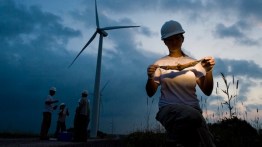
The energy debate is stuck in a rut: all politicians seem to be able to talk about is a narrow set of existing technologies — coal, gas and nuclear power stations, supplemented by wind farms and rooftop solar. Each of these technologies has its own lobby, and they fight each other for subsidies. Should we, like Germany, build more coal power stations, or go for a big nuclear programme, embark on another dash for gas, or build lots more wind farms on- and offshore? In one sense this is not surprising. The abiding feature of the electricity industry over the past century has been its lack of technical progress. Coal power stations are 19th century.

What the papers won’t say | 1 November 2012

The chilling effects of Lord Leveson are already being felt in every newsroom in the country — and it is the rich, powerful and influential who are reaping the benefits. I know this because after 17 years working in national newspapers, the last seven of which I spent on the Daily Mail, I have just walked away from a job I loved. The decision — one of the hardest of my life — was driven partly by a desire to spend more time with my young family. But a major factor was the menacing post-Leveson culture in which journalists are already forced to operate. Few journalists will talk about it, but the rules of the game have changed. If you inquire about certain establishment figures or MPs, they make use of the tools they possess to intimidate you.

Sandy in the suburbs

We live in the age of managed expectations — of projected outcomes and likely damage. It will be some days before the actual effects of the tropical storm absurdly named Sandy are computer-assessed, news-reported and blog- and Twitter-dissected. And debated too, one suspects. Already some wonder whether Sandy is this year’s ‘October surprise’, meaning, in crassest terms, a question of which of the presidential candidates will profit from it, perhaps even receive a ‘bounce’ in the insta-polls released between now and election day (next Tuesday).

Should Alice marry Bob?

Two problems: 1. You are in an airport and are walking from the main departure lounge to a rather distant gate. On the way there are several moving walkways. There is a small stone in your shoe, which is annoying enough that you decide that you must remove it. If you want to get to the gate as quickly as possible, and if there is no danger of your annoying other passengers, is it better to remove the stone while on a moving walkway or while on stationary ground, or does it make no difference? 2. You want to give £1,000 to somebody as a 21st birthday present. The person in question is just about to turn 16. A savings scheme offers a guaranteed interest rate of 3 per cent for the next five years, provided you save the same amount at the beginning of each year.

Losing the ashes

I’m pessimistic about the ash trees. It seems unlikely that a fungus that killed 90 per cent of Denmark’s trees and spreads by air will not be devastating here, too. There is a glimmer of hope in the fact that ash, unlike elms, reproduce sexually so they are not clones — uniformly vulnerable to the pathogen. But it’s only a glimmer: tree parasites, from chestnut blight to pine beauty moth, have a habit of sweeping through species pretty rampantly, because trees are so long-lived they cannot evolve resistance in time. The Forestry Commission’s apologists are pleading ‘cuts’ as an excuse for its failure to do anything more timely to get ahead of the threat, but as a woodland owner I am not convinced.