Features

What I’m fighting for

I’m often asked why I keep banging on about the press. Am I a lefty? I’m not. I’m not a righty either. I drift. (And in terms of impartiality, by the way, the same goes for Hacked Off – as a campaign group we are determinedly hermaphrodite.) Am I a muzzler? I really don’t think so. I recoil from the dead hand of the state. I grind my teeth when they swipe my passport at UK immigration. Do I want to be a moral arbiter? Hardly. Rupert Murdoch recently called me a scumbag. Harsh, but I see where he’s coming from. So am I a whingeing celeb? No, in that it really isn’t all about getting caught with my trousers down in 1995. That was a matter of public record, so how could it not be reported?

Turning toxic again

Five years after the run on Northern Rock, four years after the epoch-making crash of Lehman Brothers, the clouds over Britain’s banking sector remain as dark as ever. We may have been the first country to recapitalise our banks when the crisis struck, but as the years have unfurled the sheer scale of the legacy of the ‘nice decade’ (1997-2007, ‘nice’ being the Bank of England governor Sir Mervyn King’s acronym for non-inflationary consistent expansion) has been revealed, and regulators have begun to wonder out loud whether further injections of capital may be needed before the repair job is completed. It is often forgotten just how big a role the wider financial sector plays in Britain’s economy.

Reform at last

A decade ago I wrote here about the way financial advisers are paid. I told you how, instead of giving you a bill, your adviser is allowed to sell you investment products in exchange for a commission from the product provider plus a cut of your assets every year for as long as you continue to hold those products. So if you buy an investment fund from an independent financial adviser (IFA), he will receive a payment up front and then another payment every year,  whether you ever have the good fortune to come across him again or not. All these payments will come out of your money — you just won’t know much about it.

Markets love lame ducks

Next week’s too-close-to-call US presidential election must make a big difference to the way stock and bond markets perform over the next few years — or so you might think. Yet experience suggests that investors should probably stifle a yawn rather than place too much significance on whether Obama or Romney comes out ahead. In practice, markets rarely assign as much importance to the outcome as politicians and their supporters think they should. For this there are some sound historical reasons. One is that hardly any politician ever succeeds in implementing everything he or she has promised in order to get elected.

All together now | 1 November 2012

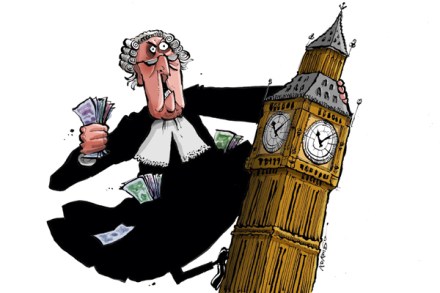
Fraser Nelson British politicians have long dreamt of regulating the press, but have always been hampered by the basic point that the press isn’t theirs to regulate. Only now, with the industry on its knees, do the enemies of press freedom feel able to strike. Their hope is to appoint a press watchdog who would stand well back at first, but be able to tighten the screws if need be. The less scrupulous MPs believe that from that moment on, power will shift. They will be able to speak softly to journalists, while carrying a very big stick. I had a taste of this last month when a senior MP telephoned me asking me to discipline a Spectator writer who had displeased him on Twitter.

What should happen now?

If you work for the BBC, you dislike seeing the outfit’s name in the headlines. It usually means the BBC is in trouble. No good complaining that much of the British press (to the bewilderment of people outside the country) have it in for the BBC, big time. Nor is it any good pointing out that there are a few politicians with an intense longing to dismantle the BBC altogether. These are facts of corporation life, and always have been. Its top executives have to ensure it doesn’t provide its existential critics, tiny in number but always noisy and weirdly angry, with ammunition. This time the BBC has handed them a veritable ammunition dump.

Bullets over the Beeb

Ring, ring, goes the telephone, every hour that God sends. And it’s always some producer from the BBC, ringing me up to ask me on to some programme to stick the boot in to the BBC. Newsnight, The World at One, This Week, BBC Good Morning Biddulph, BBC Top o’The Mornin’ Paddy. It is not enough that they should, like nematode worms which stab themselves to death with their own penises, -simply attack the BBC themselves; they want multitudes of other people to do it, too. ‘Tell me, just how useless is the BBC, and in particular its senior executives? Could they be more useless if they tried?’ This is evidence, if the BBC’s senior managers are to be believed, of the corporation’s honest and open approach to its own affairs.

Travel: Shop like a Roman

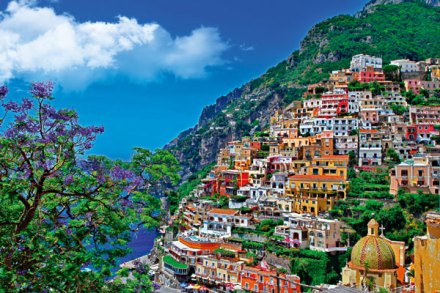
When I am in Rome, I do as the Romans — I engage in rampant materialism. The eternal city may be — via the Church which has its headquarters there — the way to heaven; its population, however, is more interested in this world than the next. The city is full of superb shops, as the Italians’ gift for manufacture, and their seemingly effortless creation of beauty, remain undimmed by the advance of modernity. Rome is therefore a perfect destination for Christmas shopping because by visiting it, you can combine limitless consumerism with a warm glow of spiritual self-satisfaction. Isn’t that what Christmas is all about? Taxis and buses are plentiful in Rome but most tourists walk.

Is Obama stalking you?

At a wine-tasting-cum-briefing of volunteers at the Democratic Women’s Club headquarters in Washington last month, Obama campaign adviser Mindy Burrell stood up in a flowery dress. ‘Get people to visualise election day,’ she told the women about to knock on doors in the key swing state of Virginia. ‘How will they go and vote? What time will they go — after work? After dropping the kids off at school? What route will they take?’ If people said they planned to vote for President Barack Obama, the women were to ask them to sign a pledge card explaining why, which would be posted back to them just before election day on 6 November. The volunteers, mostly lawyers or wealthy housewives, looked dubious.

Repeat offenders

The Prime Minister gave a stirring speech last week in which he outlined the government’s new policy on law and order. The key, he insisted, was to be ‘tough and intelligent’ — which naturally suggested that previous policy had been soft and stupid. The truth, however, is that there is much more continuity between the old policy and the new than David Cameron suggested. One of the ‘new’ policies is ‘two strikes and you’re out’: if you commit two serious violent or sexual offences, you will get an automatic life sentence. Similar regimes have been promised before. Previous Labour governments introduced ‘indeterminate sentences for public protection’ for serious offences.

Lost in Europe

As you read this, the Conservatives seem to be edging towards some promise, to be contested at the next general election, of a referendum in the next parliament over Britain’s membership of the EU. You can see how far opinion has moved by the fact that government ministers — Michael Gove only last week — can now say that we should contemplate getting out of Europe without the heavens falling in on them. If Mrs Thatcher had said anything like Mr Gove did, she would have been ejected from office at once. Now of course we should welcome all genuine attempts to give our own citizens a fuller say in their constitutional future. At some point, there will have to be a referendum.

Girls’ own

Everyone was so busy celebrating Hilary Mantel’s second Booker Prize victory last week that it was easy to overlook the announcement that another of our literary prizes has been saved from extinction. The Orange Prize had lost its sponsor — but has been rescued by a group of women sponsors, including Cherie Blair. It ought to be a matter of rejoicing — but the notion of a women-only prize is still deeply contentious. The usual complaint is that a prize for literature by women is patronising, outdated, and isn’t fair to men. Despite the fact that pretty much every prize discriminates against something in its entry requirements — be that nationality, age or genre — none seems to generate quite as much fuss as this one.

A brother’s suffering

My brother David died recently in the care of the NHS. His death was not their fault: no one can do anything about bone cancer except alleviate the pain. Which is what they spectacularly failed to do. Bone cancer does not kill you. It just hurts like hell and your bones become so fragile that coughing breaks ribs. You have to wait for the disease to spread to an organ, the failing of which will kill you. Or you can hope for pneumonia, ‘the old man’s friend’, to finish you off. Either way, you should not have to endure months of pain and die in agony. Pain relief is possible, and many hospices and a few hospitals (notably the Royal Marsden) manage a patient’s dying days with compassion and palliative drugs (notably morphine) tailored to the patient’s pain.

Even if he wins, Obama will be diminished

If a US presidential election has the potential to wear down foreign observers, let alone the American public, imagine what it must do to the candidates. The challenger must spend years campaigning for the endorsement of their own party — fighting rebellions and pandering to diehards — while the incumbent has to work equally hard just to keep in play, while also keeping up the presidential day-job. Perhaps the effects this can have only really sunk in for the President’s supporters as they watched the first debate. His friends have for a while recounted tales of a Commander-in-Chief increasingly disengaged, mooching around the White House as the limitations of the world’s most powerful office sink in.

Which way is right: Tories should seek truth, not comfort

The below is a response to a piece by Spectator columnist Matthew Parris ‘If you look for truth,’ counselled C.S. Lewis, ‘you may find comfort in the end.’ If, however, you look for comfort ‘you will not get either comfort or truth’. A patriotic politician should reflect on Lewis’s wisdom. In good times almost anyone can succeed in politics but in tough times voters expect more. Voters don’t look to elect politicians, but statesmen, and they can usually smell the difference between the two. Statesmen don’t begin every day wondering how they can win power; they begin by thinking about how they can serve their country.

Which way is right: the centre holds

Few put a political argument better than Tim Montgomerie, the editor of ConservativeHome, and his latest column in the Times is no exception. Policies portrayed as priorities of the Tory right, he said, are also shared by the majority of the public. Some 70 per cent of Britons want a referendum on Europe and 80 per cent support a tougher approach to crime. He reprised Sir Keith Joseph’s argument about the ‘common ground’ which politicians ought to share with the public. You really can be Eurosceptic and cherish the NHS. It’s possible to favour less immigration and a more generous state pension.

Visiting rites

The slowest and most expensive museum refurbishment in world history must be that of the Rijksmuseum in Amsterdam. It is taking longer and costing more than it took and cost to build it in the first place. Let us hope that the result will be magnificent, with all the interactive features that any modern child could desire. For those who cannot wait for the re-opening, however, there is always the branch Rijksmuseum at Schipol Airport. This was an inspired idea, a tranquil space in the middle of the busy airport where the Rijksmuseum displays a changing selection of minor works from the Golden Age. At Schipol recently with a few hours to kill, I visited the branch museum.