Features

Vote Tory | 30 April 2015

Andrew Roberts  Biographer The Cameron ministry of 2010-15 will go down in history as having made Britain as the most successful economy in the developed world, despite it having inherited a near-bankrupt nation from a Labour party that spent money like a drunken sailor on shore leave. Ordinarily that should be enough to have it returned to power with a huge majority, but we live in gnarled, chippy, egalitarian times.

Plan Bee

It will be interesting to learn next week what proportion of the UK vote is now postal. Because postal voting boosts the turnout, people seem happy to ignore the risk of in-family coercion, or the fact that a vote may not be private. Thirty years ago it was assumed that postal voting was for the infirm or for people serving in the military. Now it is presented as just a handy alternative to the polling booth — the drive-thru lane of democratic consensus. But should there be a cost to voting, even if it’s only a short contemplative walk to the polling booth? Do you want everyone to vote? Why encourage people who are happily indifferent to express an opinion, and so cancel out the opinions of others who care a great deal?

‘I have worked my socks off’

David Cameron is sitting underneath a sign that reads QUIET CARRIAGE, speaking loudly enough to be heard in the next carriage. He knows that even his closest allies are worried he may lose the election if he doesn’t show more passion, so he has been trying to compensate in recent days. He chops the air with his hands as he speaks, furrows his brow, and sounds a little more angry. He has no end of passion, he says. But he is the leader of the Conservative party — a tribe of people who, as he puts it, ‘don’t always wear their beliefs on their sleeve’. Why do so many people, including members of his own government, think that Cameron must do more to show he really wants to win? ‘I don’t know,’ he replies.

The boy David

I can claim a milligram of credit for David Cameron’s first star billing. In early 1991, standing in for the late John Junor on the Mail on Sunday and seeking a weekly instance of some Labour frontbencher making an eejit of himself, I inquired who was the best sniper in the Conservative Research Department. The answer was David Cameron. I phoned him and, for the next three weeks, one sheet of paper arrived with brief quotes, all of them firecrackers. Week four: the boy David is on leave, so his boss, Andrew Lansley, the then director of CRD, stands in. I receive 20 sheets of very damp squibs. Around that time, a couple of Prime Minster’s Questions did not go well for the new PM. I asked John Major if he had enough political help; he thought that he could do with more.

The Plame game

Nothing is capable of undermining American democracy more than its legal system. Amid the plea bargains, perp walks and 95 per cent conviction ratings for some crimes, one feature of the system stands out as particularly rank — the role of ‘special prosecutor’. A new piece of evidence relating to a high-profile conviction eight years ago provides a perfect demonstration. The case relates to a legal dispute spanning President George W. Bush’s period in office. In late 2003 the situation in post-war Iraq had already begun to go horribly wrong. In the US, many who had eagerly supported the invasion and warned of the risks of WMD were flaking away and seeking scapegoats. In the ‘Plame affair’, the perfect outlet seemed to have been provided.

Rhodes to nowhere

‘Rhodes must fall!’ shouted angry black students at the University of Cape Town. The problem is — and it is the profoundest problem of race relations — they were also demonstrating by their every action and desire that they want Rhodes to rise even higher. Last month a black 30-year-old student, Chumani Maxwele, in a great blaze of publicity, threw ‘human excrement’ over the statue of Cecil John Rhodes on the steps to the university’s upper campus. It was followed by similar acts and protests across South Africa against symbols of white imperialism and colonialism. At UCT itself, black students stormed into a council meeting chanting, ‘One settler, one bullet!

The roots of the matter

[audioplayer src="http://rss.acast.com/viewfrom22/panictimefordavidcameron-/media.mp3" title="Lara Prendergast and Louise Bailey, a hair extensions specialist, discuss the hair trade" startat=1622] Listen [/audioplayer]Perhaps you recall the moment in Les Misérables when Fantine chops off all her hair? The destitute young mother sells her long locks, then her teeth (a detail often excluded from child-friendly adaptations) before she is eventually forced into prostitution. It would be nice to think that her experience was no longer a reality, that the business of human hair had gone the way of the guillotine — but the truth is, it’s booming. The modern market for extensions made of real human hair is growing at an incredible rate. In 2013, £42.

Shrunk

 New York City Nothing says New York like a psychoanalyst’s couch. Think Woody Allen or those New Yorker cartoons. It fits our perception of east-coast Americans as all neurotic and self-obsessed. But that mental picture needs updating, because traditional psychoanalysis is in dramatic decline in its traditional heartland. Across the urban US, in fact, the profession is dying out or having to change drastically. New figures from the American Psychoanalytic Association reveal that the average age of its 3,109 members is 66, up four years in a decade. More seriously, the average numbers of patients each therapist sees has fallen to 2.75. Some shrinks now never meet patients, dealing with them only via the phone, Skype or email.

Remembering Raymond

I first heard of Raymond Carr, who wrote for this magazine for more than 40 years, when I was in Italy in the army at the end of the second world war, and I had a letter from my sister in London saying that she had met the most marvellous man who was not only very funny but immensely clever, and I must meet him when I got back. By the time I did, Raymond had moved from being a wartime schoolmaster at Wellington College to a being a resident fellow of All Souls, Oxford. He was, yes, both immensely funny and rather grand. Raymond Carr had been educated at Brockenhurst school, and then in 1941 won a history scholarship to Christ Church, Oxford, having continued his education (as he used to put it) by teaching himself the clarinet and supporting himself by performing in a jazz band.

Hillary’s left turn

The centrist Democratic party bequeathed to President Barack Obama by Bill Clinton is not the one he will leave to his successor. By every measure, it is more left-wing, and more populist both in spirit and ideological composition. And this poses serious problems for the campaign of the candidate seen as America’s most likely next president: Hillary Clinton. That she knows it’s a problem is obvious from the way her campaign has begun. ‘Everyday Americans need a champion, and I want to be that champion,’ she declared in a video released last weekend. Almost a year ago, launching the memoir of her time as Secretary of State, Clinton had begun testing populist themes. The nation, she said at the time, must ‘deal with the cancer of inequality’.

Scotland’s new national faith

The Church of England’s catechism begins ‘What is your name?’ The old Presbyterian catechism favoured in Scotland asked a better, sterner question: ‘What is the chief end of man?’ The difference is telling and, in this general election, illuminates something useful about the differences between politics north and south of the Tweed. Nicola Sturgeon is a populist, certainly, but she is offering something stronger on the side. If England’s election offers a meek choice between Cameron and Miliband, Scotland’s is a faith-based affair. The answer to the catechism’s question, in these irreligious days, appears to be that man’s chief end is to glorify Scotland and enjoy her for ever.

Easy virtue

Go to a branch of Whole Foods, the American-owned grocery shop, and you will see huge posters advertising Whole Foods, of course, but — more precisely — advertising how virtuous Whole Foods is. A big sign in the window shows a mother with a little child on her shoulders (aaaah!) and declares: ‘values matter.’ The poster goes on to assert: ‘We are part of a growing consciousness that is bigger than food — one that champions what’s good.’ This a particularly blatant example of the increasingly common phenomenon of what might be called ‘virtue signalling’ — indicating that you are kind, decent and virtuous. We British do it, too. But we are more sophisticated, or underhand.

Jews against Miliband

When he was seven, Ed Miliband was taken to visit his grandmother in Tel Aviv. Pointing to a black-and-white photograph in her home, young Ed demanded to know who ‘that man in the picture’ was. He was told the man, David, was his grandfather and had died in Poland many years before he was born. Only years later did Miliband realise that his grandfather had been murdered by the Nazis for being Jewish. Miliband’s parents only narrowly escaped a similar fate: fleeing Belgium as the German armies overran it in 1940, his 16-year-old father caught the last boat from Ostend to Britain.

‘Paint goes on living’

Maggi Hambling is 70 later this year, and a career that took off when she was appointed the first artist in residence at the National Gallery, in 1980, shows no signs of slackening in momentum. Hambling is still as uncompromising as ever, and as difficult to categorise. An artist of sustained originality and inventiveness who fits no pigeonhole and is part of no group, she is a resolutely independent figure (she enjoys the description ‘maverick’) who considers it her duty to keep questioning assumptions (her own as much as other people’s) and looking afresh at the world.

Fat chance

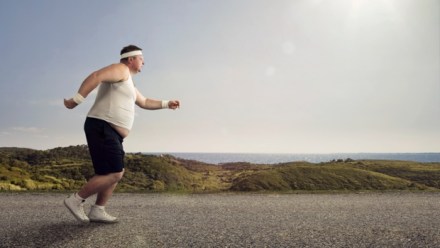
[audioplayer src="http://rss.acast.com/viewfrom22/theriseofleft-wingpopulism/media.mp3" title="Julie Burchill and Katie Hopkins discuss whether you can be fat and happy" startat=924] Listen [/audioplayer]I’m a very off-message type of fat broad; one who gladly admits she reached the size she is now solely through lack of discipline and love of pleasure, and who rather despises people (except those with proven medical conditions) who pretend that it is generally otherwise. I’m not attached to my fat in any but the most obvious way; would I lose it if I could snap my fingers? Without doubt. Would I work at losing it? Not a chance, Vance. ‘But it’s not about vanity,’ the weight bores bleat, ‘it’s about health.’ Hmm.

The Miliband agenda

Here's what to expect 52p top rate of tax Ed Balls won’t be looking for money when he says the ‘additional’ top rate of tax will go back up — there’s no evidence it will raise any. Top-band income tax will be 50p, which added to the extra 2p National Insurance would give Britain an effective top tax rate of 52 per cent. If it’s a temporary measure, as Balls has hinted, one-percenters will defer bonuses and disappear from the statistics (a problem, when they pay £1 in every £4 of income tax). If it’s permanent, they may scarper. If Balls really wanted to raise money from the rich he’d cut the 45p rate. But what he’s really after is banking public support by banker-bashing.

Ed dawn

[audioplayer src="http://rss.acast.com/viewfrom22/edcouldstillwin/media.mp3" title="Dan Hodges and George Eaton discuss what will happen if Ed wins" startat=40] Listen [/audioplayer]What if Ed Miliband wins? His victory is still seen, especially by those on the right, as a near-impossibility — an event so improbable as to defy the laws of political gravity. But then again, we’re three weeks away from the general election and still the Conservatives still haven’t managed to establish a convincing lead. He might yet defy the bookies. And what then? Imagine it’s the morning of Friday 8 May. Prime Minister Miliband has just crossed the threshold of Downing Street, the famous door swinging shut behind him. What happens next? One thing happens immediately.

Fringe benefits | 9 April 2015

No election night is complete without a man dressed as King Arthur waving a plastic sword as the result is read out. Eccentricity is the bedrock of British democracy. The freedom of a madman to waste £500 to get on the ballot is precious. On these islands, we have a right to rave. And sometimes what we rant about is quite revealing. I’ve been fascinated by eccentric independent candidates ever since as a teenager I met Mr Mark Ellis, a perennial independent running against EU domination and casual littering. He used to patrol Sevenoaks high street with a shopping trolley, collecting rubbish. A profile in the local newspaper revealed that he slept on two chairs pushed together in his living room, and that he shared his house with a duck.