Elliot Wilson

There’s an important lesson for politicians in the fall of Leo Varadkar

From our UK edition

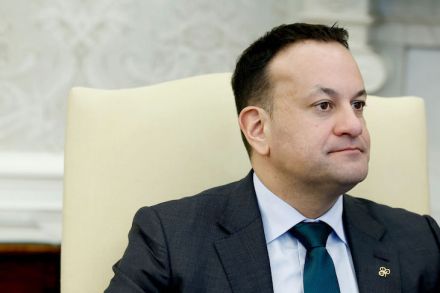
So farewell, then, Leo Varadkar. The Taoiseach says he is stepping down because he is no longer 'the best person for that job'. But the reality is that Varadkar found out the hard way that delegating decisions to voters can come back to bite. This wasn't the first time Ireland's leaders have chosen to hand difficult decisions to voters Varadkar's fate was sealed earlier this month when his government suffered a crushing defeat in two referendums. Irish voters were encouraged to back changes to the constitution which would clarify the definition of 'the Family' to mean 'whether founded on marriage or on other durable relationships' and omit a definition of 'the institution of Marriage' as a concept 'on which the Family is founded'.
China needs Britain more than Britain needs China

From our UK edition

When King George III sent the diplomat-statesman Lord Macartney to Beijing in 1793 to meet China’s all-powerful Qianlong Emperor, history was in flux. The Celestial Empire had dominated world trade for two millennia, yet it was in a state of protracted decline. Britain in contrast was a rising superpower on whose empire (to use a term coined by Macartney) the sun ‘never set’. The mission’s task was simple: unveil the latest wares from Manchester, Bristol and Edinburgh – globes, telescopes, weaponry – then wait for a dazzled and covetous audience to open trade routes through northern China. Yet despite pausing lovingly over an ornate clock, the 81-year-old Emperor declined the offer.

Even China can’t buck the market

From our UK edition

Some years ago, I sat with an old China hand in a Beijing teahouse sipping oolong. An American director at a local education firm, his face was grey, creased by decades of pollution and office politics. But when talk turned to the country’s first spacewalk, recently completed, his brow furrowed. 'Have you ever noticed that the government is trying to do everything the United States did, but 50 years later?' He ticked off a list of the mainland’s aims and achievements, from manned space travel, to plans to place a Chinese citizen on the surface of the Moon. But the comparisons don’t end there. For all of its trumpeted exceptionalism, this is a country desperately striving to catch up with and copy the West. A network of Chinese motorways mimic Dwight D.

China’s ‘Black Monday’ is just the start

From our UK edition

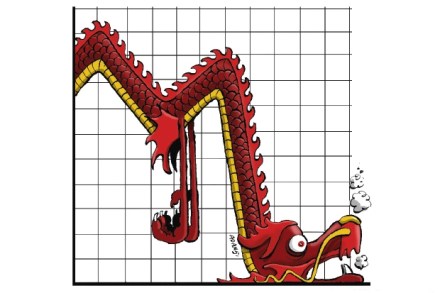
One-party states are rarely any good at admitting to any form of blunder. It is certainly the case with China’s prickly political leaders, who love to flood domestic media with jolly tales of fashion shows and bamboo-chomping pandas – anything to divert people’s attention from a flagging economy and rising unemployment. This makes today's main headline on China Daily's website all the more arresting: 'Stocks plunge most since 2007 as state support measures fail' the state-run newspaper blared, after the Shanghai Composite share index lost 8.5 per cent in a single day. The wider world followed China’s lead: all major Asian stock indices fell on Monday, with oil tumbling to a six-year low.

Exit the dragon

From our UK edition

[audioplayer src="http://rss.acast.com/viewfrom22/chinasdownturn-labourslostvotersandthesweetestvictoryagainstaustralia/media.mp3" title="Elliot Wilson and Andrew Sentance discuss China's economic slump"] Listen [/audioplayer]I stood alongside the chairman of the board of a state-owned enterprise in eastern China. The factory floor, partially open to the elements, stretched out far in front of us, littered with towers and blades designed for some of the world’s largest wind turbines. It was an impressive sight, one to which regular visitors to mainland factories are accustomed: China as the workshop of the world. But something was missing: workers. ‘They’ve been given the day off,’ the chairman said with a slight cough, as we stared out over the vast compound.

Why everyone will suffer if China cracks down on Hong Kong

From our UK edition

With all the chaos and confusion engulfing Hong Kong in recent weeks, it’s worth reminding ourselves what an extraordinary city it is — and what a loss to investors the removal of one of the world’s great safe havens would be. Hong Kong has long operated in a culturally neutral zone somewhere between China and the world, a bridgehead between the West and the world’s rising superpower. By the time London handed it back to Beijing in 1997 after 150 years of British rule, a once barren rock had been transformed into a genuinely global city. In the 17 years since, China has adhered largely to a set of principles thrashed out in 1984 by Margaret Thatcher and Deng Xiaoping, which allowed the city to retain its free media and independent judiciary.

If you think British banks are bad, you’ve never tried China’s

From our UK edition

It’s hard to think of anything more badly run than a Chinese bank. Somalia perhaps, or the BBC’s remuneration committee. Certainly, Beijing’s embattled lenders make ours look like paragons of financial rectitude. We may dislike RBS et al for bringing our economy to its knees, but at least we’re not saddled with a cabal of banks inextricably linked to whoever resides in Downing Street. Let’s start with good old-fashioned service. We may complain about our banks, how they all look the same and bombard us with adverts that would patronise a two-year-old. But at least they pretend to care. China’s banks don’t. Service is dire wherever you go. Internet or mobile banking ranges from poor to non-existent.

Breaking the bank

From our UK edition

The vendetta against Bangladesh’s Nobel Peace Prize winner ‘It is all lies,’ says Muhammad Yunus, his voice quiet but firm. ‘The media in Bangladesh attacks me unceasingly and I cannot stop them, but the accusations are untrue.’ I believe him absolutely. Yunus is a Nobel Peace Prize winner who has done perhaps more than any other living person to alleviate global poverty. Grameen Bank, the microfinance operation that he founded nearly 30 years ago, has (by lending to even the very poorest families) transformed the lives of millions of his fellow Bangladeshis and become a model emulated across the world. But he is now living in fear of his government, which seems bent on discrediting him. ‘My voice is not heard.

Gallantry is a finite resource

From our UK edition

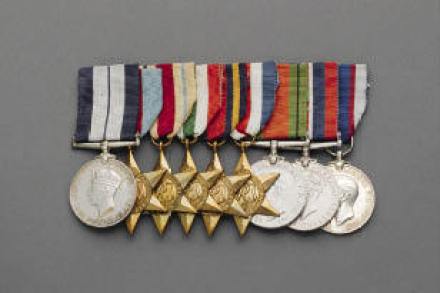
Few individuals better personify the eccentric, combative and rarefied world of medal collecting than Michael Ashcroft, the businessman and controversially deep-pocketed Tory party eminence grise. A self-made man whose fortune is estimated by the Sunday Times at £1.1 billion — more than the entire net worth of Belize, the tiny Central American state he calls home — Lord Ashcroft has also carved out a near-monopoly of a very finite resource: the Victoria Cross. Since being introduced in 1856 at the tail end of the Crimean War, just 1,356 VCs have been awarded. Most are in public collections, notably that of London’s Imperial War Museum. Those that are not are most likely to be in the hands of Lord Ashcroft.

Will Kraft’s plastic cheese smother Cadbury’s heritage?

From our UK edition

Elliot Wilson says there are synergies between the takeover protagonists — but it will be sad to see the British chocolate maker swallowed by a bloated US conglomerate When consumer goods giant Kraft tabled a £10.2 billion bid for Cadbury two weeks ago, the outcry was immediate and heartfelt. Here was an American monster buying an iconic British household name, one of our very last independent, home-grown, corporate crown jewels. Some of the resentment was understandable. Cadbury’s heritage is part of our national psyche. Founded 185 years ago by John Cadbury, a Quaker tea-and-coffee trader, the firm’s aims were as much to do with social improvement as with profit. Moreover, Cadbury seemed to be a great survivor.

Keep on digging: Boris’s route to recovery

From our UK edition

Elliot Wilson says all the razzmatazz for the start of work on Crossrail highlights the construction industry’s urgent desire to soak up public funds before Tory cuts set in No major city anywhere has achieved as much as London has with such poor public transport at its disposal. Trams that break down; bendy buses that burst into flames; an underground rail network that overheats in the summer and taxes the patience and the wallets of millions of commuters all year round. The experience has been likened by London’s own mayor, Boris Johnson, to ‘sardine-tin travel’ — doing little for its citizens’ quality of life, or its reputation as the world’s leading centre for financial services, media and communications.

City Life | 5 September 2009

From our UK edition

After 50 years of communist gristle, no wonder old Fidel’s guts are playing up There’s a degree of natural justice in the fact that Fidel Castro had to cede power to his brother Raúl last year because of serious gastro-intestinal problems. Put bluntly, after 50 years of Castro communism, Cuban cuisine is absolutely revolting. It’s rumoured that barely a thousand head of cattle remain on the island — down from several million pre-Fidel — and that gristly offcuts of beef and mutton are imported from Venezuela, Costa Rica and even the US. Restaurants come in two grades: cheap, cheerful and awful; or pricey, miserable and awful.

The nuclear power-dresser

From our UK edition

Barbara Judge is an extraordinary human being, particularly for those of us who struggle to iron a shirt. Apart from her flawless grooming — in a power suit with a starched ruff, she resembles a cross between Marie Antoinette and Jessica Tandy — she has more titles than most monarchs. Lady Judge, a British-American dual citizen married to philanthropist Sir Paul Judge, sits on boards on both sides of the Atlantic, chairs the School of Oriental and African Studies, and is a trustee of the Royal Academy. Her past is no less impressive. In 1980, the then Barbara Thomas became the youngest-ever head of the US Securities and Exchange Commission. By 2007, she was reported to hold no fewer than 30 directorships.

One day, the kharbouza will be mightier than the Kalashnikov

From our UK edition

Afghan farmers can prosper by producing the world’s finest melons, pomegranates and grapes, says Elliot Wilson, but first they must be weaned off growing the opium poppy Modern-day Afghanistan conjures up many fearsome images, from rocket-launchers and retreating Soviet tanks to mujahedin warriors and Taleban zealots. Yet this war-ravaged central Asian state, which has to date repelled every barbarian invader foolish enough to set foot on its dusty red soil, has another, much gentler aspect to its national character. When no one is looking and the men have hung up their Kalashnikovs for the day, many of them attend to their second career: growing melons. And not just any melons. Afghanistan has been producing the world’s finest kharbouza for at least 4,500 years.

Let India 2.0 rise from the ashes of Bombay

From our UK edition

Elliot Wilson says that an energetic form of political activism — principally on the internet — is needed in India and there are encouraging signs on Facebook, MySpace and other sites If there is any good to come out of November’s bloody terror attacks in Bombay, it can be found not on the city’s angry streets, nor in the Lok Sabha, New Delhi’s lethargic lower house, but in a more nebulous place, dismissed by both Hillary Clinton and John McCain but embraced by US President-elect Barack Obama: the internet.

A new job for the IMF: as global policeman

From our UK edition

In early November the head of the world’s leading multilateral agency made a remarkable public bid for survival. Speaking in São Paulo, addressing the world’s most powerful finance ministers, Dominique Strauss-Kahn, managing director of the International Monetary Fund, announced that his institution was the right one to lead us out of our financial and economic malaise. Conveniently overlooking some uncomfortable facts — that the IMF must at least share responsibility for getting parts of the world into this soup, and that it failed to predict the coming financial storm — Strauss-Kahn told his audience that the world needed ‘a stronger IMF, particularly as far as early warnings are concerned’. In this the Frenchman was at least half correct.

Britain cannot afford a failed Pakistan

From our UK edition

Pakistan is a failing state, and barring a mammoth bail-out few can now afford, it will become the world’s first bankrupt nuclear power. Bowed down by our own financial crisis and an economy teetering on the edge of recession, should we care? In sovereign terms the Islamic Republic of Pakistan, which last year celebrated its 60th birthday, is into its adolescent years, now something of a cross between a prodigal son and the family’s black sheep. A major exporter of fertiliser, potash and terrorists, it is also the world’s only Muslim nuclear power.

Chasing dragons: the Chinese army takes up art collecting | 1 November 2008

From our UK edition

In 2003, during a long night of swilling fine French wines in Beijing, talk turned to China’s rising economic fortunes. Old China hands at the table reminisced about camel trains clattering through the capital’s dim 1970s streets. Then a mysterious American chipped in with an extraordinary tale. Back in 1983, he said, China’s coffers were so low that starving officers in the People’s Liberation Army (PLA) were reduced to selling off the country’s heirlooms. One chilly winter evening he had backed a truck into the Forbidden City and quietly loaded it with priceless antiques. Ten minutes later he was on Chang’an Avenue, weighed down with art worth more than the average bank bail-out.

Chasing dragons: the Chinese army takes up art collecting

From our UK edition

In 2003, during a long night of swilling fine French wines in Beijing, talk turned to China’s rising economic fortunes. Old China hands at the table reminisced about camel trains clattering through the capital’s dim 1970s streets. Then a mysterious American chipped in with an extraordinary tale. Back in 1983, he said, China’s coffers were so low that starving officers in the People’s Liberation Army (PLA) were reduced to selling off the country’s heirlooms. One chilly winter evening he had backed a truck into the Forbidden City and quietly loaded it with priceless antiques. Ten minutes later he was on Chang’an Avenue, weighed down with art worth more than the average bank bail-out.

City Life | 30 August 2008

From our UK edition

The credit crunch reaches the home of the rotten apple and the ‘Rolexo’ watch James Gregory Pool III is an elderly, stooping Canadian with a most un-usual job. Every month he boards a plane from Canada with 200 sedated heifers and flies with them to Almaty to beef up and variegate Kazakhstan’s breeding livestock. He’s the archetypal eccentric foreign entrepreneur one finds in this eccentric Central Asian city.