Kim Sengupta

Iran’s hardliners are exploiting Trump’s rhetoric

From our UK edition

A year and eleven months ago, Iran’s parliamentary elections ended in a resounding victory for the reformists. Last May, the reformist candidate Hassan Rouhani convincingly defeated his hardline rival, Ebrahim Raisi, in the Presidential election. Rouhani's inauguration was presented as a celebration of the country’s democracy and stability. But last Thursday demonstrations began at the city of Mashhad and then rapidly spread across the country, growing in clamour and violence with, so far, 21 dead and 450 injured. Earlier this week, the Grand Ayatollah, Ali Khameini, who had sought to stay above it all, intervened to accuse foreign powers of sabotage.

Qatar can thank Donald Trump for its current woes

From our UK edition

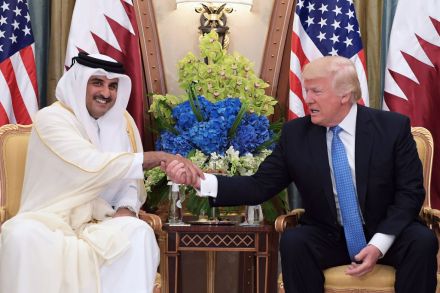
The deadline imposed on Qatar to agree to the demands made by the Saudi-led Sunni coalition has passed without Doha caving in. This was to be expected -- the main stipulations, among the 13 made, had no chance of being accepted. The deadline has now been extended by 48 hours and the Kuwaitis are trying to mediate. The Saudis and their cohort meanwhile are threatening more sanctions against Doha and possibly even extending  them to countries which continue to trade with Qatar. Qatar may also be expelled from the Gulf Cooperation Council. There is, for the time being, no threat of military action. To recap: Saudi Arabia, the UAE, Egypt and Bahrain accuses Qatar of a variety of charges, including supporting terrorism.

How Libya became a breeding ground for jihadists

From our UK edition

In August 2011, I was in Sabratha, the latest city on the road to Tripoli to fall to the rebels. After months of fighting, there was now a clear sense that the endgame was approaching in Libya’s bloody civil war: the trap was closing around Muammar Gaddafi. While admiring an ancient basilica in Sabratha, a Unesco heritage site - built on rich layers of Phoenician, Roman and Byzantine history - an American colleague and I were approached by an armed fighter dressed in combat fatigues. He was Akram Ramadan, from Manchester, who had given up his job as an MOT inspector to join the revolution in the country of his birth. Ramadan wasn't the only one to have made the journey from the north west of England: we met other fighters, many from Manchester.

How Donald Trump could decide Iran’s election

From our UK edition

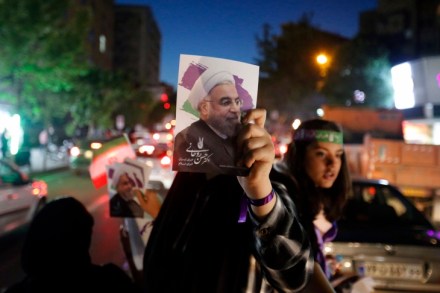
Tehran Waiting to vote in Iran’s parliamentary election last year, Navid Karimi told me about his plans: to get a well-paid job with his recently acquired engineering degree, go on a road trip in the US and avoid dying fighting in Syria. Fifteen months on, as the country votes in a presidential election, I met him again in Tehran.  He is yet to find a job; the road trip, the result of being introduced to Jack Kerouac by an uncle educated in Illinois, is not going to happen anytime soon with the uncertainties surrounding Donald Trump’s Muslim travel ban; but he has so far managed to avoid conscription and being sent to Syria. It is the lack of a job which is having the most direct impact on the life of 23-year-old Navid.

If only the Government had listened to Henry Worsley

From our UK edition

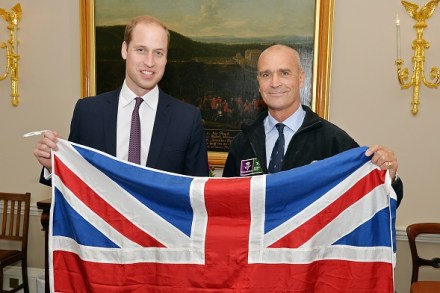
Dust swirled up from Lashkar Gar airfield in the sunshine towards the blue skies; convoys were forming, line after line of bulldozers, oil tankers, 4x4 cars bristling with guns and men in wraparound sunglasses. The American private security company, DynCorps, had come to town to start Afghanistan’s opium war. Lieutenant Colonel Henry Worsley watched the build up with a mixture of anxiety and distaste. “We will need to liaise with them, just to make sure we do not go anywhere near those areas. Our position is quite clear, we are not going to get involved in eradication,” he said. This was in March 2006, Britain was about to deploy a task force of 5,700 to Helmand.

Monumental heroes

From our UK edition

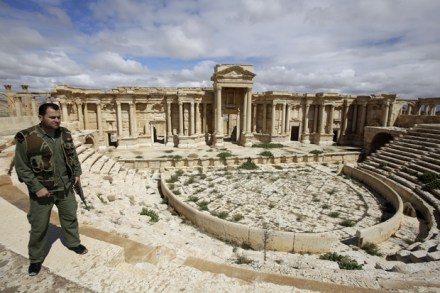
Leptis Magna was deserted when I last visited — no wonder. Tourists daren’t visit Libya these days and so I had the ruins to myself. I climbed the steps of the vast Roman theatre, looked out to where the Wadi Lebda meets the sea, then stopped. Men with AK-47s. My immediate fear was that they were Islamic State. Isis move closer to Leptis Magna every day and it would make sense for this most spectacular site to be next on their hit list. Their last great coup was on the other side of the Med, when they blew up the Temple of Baal Shamin in Palmyra, known as ‘the Pearl of the Desert’. It’s part of their cultural jihad, but they also do it for the global outrage that follows. No such thing as bad press for Isis.

Who’s running Libya?

From our UK edition

When I covered Libya’s revolution in 2011, I had a driver named Mashallah. Mashallah was a decent and stoical man with an interesting propensity for malapropisms. He was regarded with fondness by us journalists — so when I decided to return to Libya recently, I sent him an email: did he want to work for me again? Unfortunately, replied Mashallah, he was in Paris. This seemed strange. How would he have got a French visa? I emailed again suggesting another week and received another profound apology. That week he was going on to Ankara and Istanbul. A quick look online solved the mystery.

In Gaza, the siege mentality is helping Hamas

From our UK edition

  Gaza The main entrance to Al-Shifa Hospital was crowded with what seemed to be journalists. This wasn’t unusual. They wait here most days for ambulances ferrying in the dead and wounded from Israeli air strikes; but this time there seemed to be more of them. Getting nearer, I saw that what I had taken to be microphones in their hands were in fact slippers. These weren’t hacks, they were angry Gazans, come to fling shoes (the ultimate insult in the Middle East) at Jawad Awad, the minister of health of the Palestinian Authority, paying a visit from Ramallah. This was an important day in the current round of bloodletting between Israel and Hamas.

The hero of Baghdad

From our UK edition

Baghdad We shall slaughter them all. God will barbecue their bellies in hell. We trap and beat them everywhere. I triple guarantee you, there are no American soldiers in Baghdad.' The last declaration was made while a US army Abrams tank could be clearly seen blazing away across the Tigris. Welcome to the world of Mohammed Said al-Sahaf, who until Tuesday was Iraq's minister of information. During the war, Sahaf was by far the most high-profile member of Saddam Hussein's regime: television viewers from Tokyo to San Francisco became accustomed to him boasting how the Iraqi forces had inflicted stunning defeats on the 'mercenary lackeys of the Zionist entity'.