Features

Privet sorrow

It is said that the road to hell is ‘paved with good intentions’. Well, so is the typical front garden in what used to be our green residential streets. In the last ten years, 13 per cent of the lush greenery in British front gardens has disappeared; 4.5 million of our front gardens are now entirely paved over. We used to laugh at overgrown front gardens populated with bearded garden gnomes; but those are surely preferable to grey rectangular deserts of nothingness, mere off-street parking spaces for the car. An exemplary front garden has been created for this week’s Chelsea Flower Show, demonstrating how parked cars and plants can and should live together in harmony.

Reality check | 21 May 2015

Gore Vidal once famously said that ‘Television is for appearing on, not watching.’ I feel the opposite. I’ve just turned down a financial offer from Celebrity Big Brother for this summer’s series so big it made my eyes water — and I’m not easily impressed, size-wise. Verbal people just don’t do well in such a visual medium — and speech is my second language, anyhow. It would be easier to go in if I was guaranteed first eviction — but Liz Jones was stuck in there for weeks, and I’m a good deal more entertaining and lovable than she is. There’s a chance I would end up walking out, thus losing my fee. I would miss my husband, being alone (a textbook only child, I feel like murdering someone if can’t be by myself for six waking hours each day), and reading.

Making Labour work

[audioplayer src="http://rss.acast.com/viewfrom22/thelastdaysofmiliband/media.mp3" title="Dan Hodges and Andrew Harrop discuss the final days of Miliband" startat=34] Listen [/audioplayer]The Labour party is in a worse position today than after its defeat in 1992. Then, the electorate sent Labour a clear and simple message: move to the centre, don’t say you’ll put taxes up and select a more prime ministerial leader. This time, the voters have sent the party a series of messages, several of which are contradictory. The reasons Labour failed to win Swindon South are very different from why it lost Morley and Outwood and the reasons for that defeat are different again in Scotland, where almost all seats fell to the nationalists.

Miliband’s downfall

Ed Miliband was writing his victory speech on election night when the nation’s broadcasters announced the exit poll. He remained convinced — as he had been all along — that he was destined for No.10. In his defence, most people in Westminster thought the same. But within his ranks, a rebellion had already broken out. At 2 p.m. that afternoon, a member of his shadow cabinet had resigned — fearing not defeat, but the debacle that would follow Miliband’s success. ‘I was being briefed by Ed’s team about their post-election plans,’ the shadow minister told me. ‘It was nuts. They were explaining how there would be “no concessions”, no “tacking towards the centre”, nothing.

Away from the herd

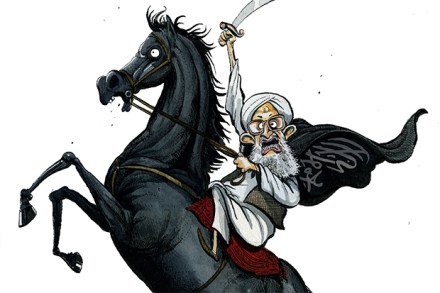
 Erbil, Iraq The Kurds here are fighting Isis — everyone knows that. Most of us are at least peripherally aware that the brave Peshmerga (Kurdish militia) have proved an effective force against the Islamists, and we cheer them on. What we don’t realise is that as they battle the world’s latest bogeyman, the Kurds are also simultaneously suffering from another sort of crisis. Traditionally the Iraqi Kurds are nomadic pastoralists. They’ve herded sheep since biblical times, leading their flocks from the mountains to the lowlands and back. The passion they feel for their land is rooted in this pastoral tradition. It’s a weird irony, then, that as their dream of a separate state grows close to being realised, their way of life is dying.

Servants of the super-rich

‘Let me tell you about the very rich,’ said F. Scott Fitzgerald. ‘They are different from you and me.’ Indeed they are. They can afford to live in London. Just how different became clear when The Spear’s 500 — ‘the essential guide to the top private client advisers’ — landed at the office. (We assume Spear’s sent it by mistake. We write for love here at The Spectator, and would be insulted if the editor offered us anything so vulgar as money.) Still I was glad to read it. Spear’s paints the best portrait I have seen of a world beyond our means and comprehension. Do you have a starstruck child you wish to impress?

Dead expensive

They say that death and taxes are the only two certainties in life. But there seems to be a third, linked to death and as painful as taxes. It’s the astronomical cost of organising a funeral. My partner’s father died recently, and for the honour of a bog-standard cremation in a far from fashionable part of East Anglia she was charged just over £4,000. Jo felt no shame in asking for the cheapest option (it’s what her father would have wanted — he was never a man to waste money), and so the answer came as something of a shock. When a figure has you imagining the cheeky little jaunt to the Caribbean it could fund instead, you know things have turned serious. ‘How the hell do they justify four grand?’ I asked. Jo went through the itemised list.

Demob unhappy

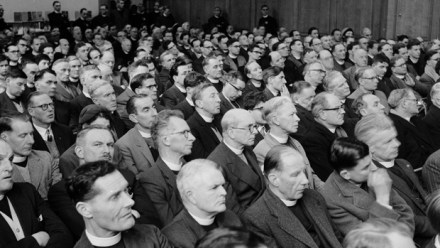
After all the carousing and flag-waving that followed VE day in 1945, millions of young men fortunate enough not to be still fighting the Japanese faced a problem. Having spent five or six years in uniform, they needed jobs. For those who lacked explicit civilian skills, which meant most, it was hard to persuade employers that a talent for flying a Spitfire, commanding a gun battery or navigating a destroyer qualified a man to run a factory or even sell socks. For years after the shooting stopped, newspapers bulged with small ads placed by demobilised officers. Many such entries exuded unconscious pathos. That quirkily brilliant writer Richard Usborne had the notion of investigating the responses received by such men, who had risked much and borne life-and-death responsibilities.

The moment of Ruth

Unusually for a modern Conservative leader, Ruth Davidson seems to enjoy meeting voters. When I joined her on the campaign trail, she had been posing with a giant eagle in Kirkcaldy. Then she jumped on to a Harley Davidson in Stirling. Such props, she says, are a ‘springboard’ to talk about Scottish Conservatism — which, thanks to her, is no longer an oxymoron. Davidson’s sparkling performances in the various debates stood in welcome contrast to David Cameron’s. Not once has she mentioned the ‘long-term economic plan’, or the other clichés issued from Conservative HQ. Her message is simple: thanks to a Conservative-led government, she says, Britain now has less pensioner poverty, more jobs than ever, and fewer children in workless households than ever.

Scotland’s nasty party

You get bad losers in politics and bad winners, too, but it’s surely a rare business to get a bad winner who didn’t actually win. Yet this, since they lost last September’s referendum, has been the role of the SNP. Dismay, reassessment, introspection, contrition, resignation; all of these have been wholly absent. Instead, they have been triumphalist. Lording it, with cruel and haughty disdain, over their vanquished foes. Who, we must remember, they didn’t even vanquish. Well, maybe they’ve vanquished them now. I write this pre-election, with the polls all saying that the Nats will win something between almost every Scottish seat and actually every Scottish seat. Only, of course, you don’t call them ‘Nats’ any more, do you?

‘Mili-what? Who’s he?’

‘Are all of these questions about politics love — because I’m really not political?’ Oh dear. I’ve just lost another respondent two minutes into a three-minute survey and the chances of achieving my hourly target, and therefore continuing my employment in pre-election polling, are receding fast. Perhaps she didn’t hear my scripted preamble: ‘Could you spare a few minutes to take part in a survey on the upcoming general election?’ What sort of questions did she think I’d ask? ‘Do you think SamCam pulled off the midi-skirt?’ At least I can take pleasure in hearing a colleague struggle a few booths down. ‘No, not electrics madam, election.

Children of Gomorrah

In the early hours of 25 July 1943, nearly 800 RAF Halifaxes and Lancasters launched a 50-minute bombing raid on the Third Reich’s second largest city, Hamburg. The pilots used the neo-Gothic spire of St Nikolai’s church in the city’s historic heart as a landmark and killed 1,500 people. Three nights later, just after midnight, the bombers returned. What was to follow was immeasurably worse. The RAF’s target was the city’s overcrowded working-class districts, Hammerbrook, Hamm and Borgfelde, to which many of those who had lost their homes in the previous bombardment had fled. Unusually warm weather and heavy loads of incendiaries combined to create a hurricane-like firestorm.

Victim status

I was riveted to read about Ione Wells, an Oxford student, aged 20, who was savagely attacked on a London street. She then wrote about the experience for her university paper and has now hit the national news, prompting other students to write about their experiences too. Ione has kick-started her career as a journalist, and discovered that a woman reporter can often do well by cannibalising her own life, as long as she is a good writer, which Ione seems to be. Her story was interesting to me because in 1982, just after I came to London, I was attacked while walking home in south London. It was a violent assault; the perpetrator tried to strangle me before attempting rape. Like Ione, I was rescued by a local person.

One-nation Boris

[audioplayer src="http://rss.acast.com/viewfrom22/theelectionwhereeverybodyloses/media.mp3" title="Tim Montgomerie and Ryan Bourne discuss Boris' vision for conservatism" startat=758] Listen [/audioplayer]Boris Johnson strides into the Uxbridge Conservative Club, asks after the barmaid’s health and sits down beneath a portrait of Margaret Thatcher. Churchill and Harold Macmillan are on the other walls. The room comes from the days when the Conservatives were not just a political party but a huge social network: a natural party of government. Times have changed, however. The Conservatives’ membership has dwindled and the party is in a desperate fight to hold on to power. But Johnson is full of optimism. He assures everyone that this election is going to have a happy ending.

The people from the sea

 Lampedusa The young hang about in packs or speed around town, two to a scooter. Old women group together on benches around the town square in front of the church. The men continually greet each other as though they haven’t met for years. The likelihood is small. With fewer than 6,000 inhabitants, and as close to Libya as it is to Italy, Lampedusa is the sort of place from which any ambitious young Italian would spend their life trying to escape. Yet every day hundreds and sometimes thousands of people are risking their lives to get here. ‘Please tell people we have nice beaches,’ one islander pleads.

Mansion migrants

This election will see me up all night until the last results are in. It will have me knocking on doors, handing out leaflets and driving old ladies to the polling stations. All this is a first for me — and for the many others I find myself doing it with. Why does this election galvanise like no other? One issue has made it up close and personal — Labour’s mansion tax. As one neighbour canvassing with me yesterday remarked, ‘It is landing us in the shit.’ We are all of a certain age. We range from the comfortably off to the quite poor. We have lived in our houses a long time and now we find our homes under threat. A new Labour government will hold a budget in June and send out mansion tax demands shortly after.

Tinder feelings

Through some freak accident of PR, I was invited to an event organised by Tinder. If you’re over 40 or have become prematurely married, you might not know what Tinder is. It’s the mobile-phone app that facilitates courtship by allowing people to signal their interest in other users within a certain radius — you can set it to just a mile, if you’re in a real hurry to ‘connect’. It’s the modern human version of mating calls and frog croaks. A million Londoners are said to use it. But Tinder is now under threat. Trendy dating apps such as Happn or Hinge, which present themselves as a bit less nakedly Darwinian, are growing in popularity. In response, Tinder is launching Tinder Plus, and the venue for the launch is a boutique gym called One Rebel.