Paul Collier

The Singapore model: lessons for the new PM from Lee Kwan Yew

From our UK edition

Labour has sneered at talk of ‘Singapore-on-Thames’ as a post-Brexit economic model, while the tax-cutting wing of the Conservatives has embraced it with a passion. But neither seem to know much about how Singapore actually achieved its remarkable prosperity. Lee Kwan Yew, the country’s prime minister from 1959 to 1990 (and one of the greatest national leaders since 1945), transformed Singapore from corruption, division and poverty by moral, fiscal, social and market acts of genius which gave people a new sense of hopeful purpose. First, the moral genius. The population of Singapore was bitterly divided by racial and ideological antagonisms that had left the country isolated from its neighbours.
Should the UK create a post-Covid Sovereign Wealth Fund?

From our UK edition

Soon, the short-term credit being lent abundantly to Britain’s small and medium firms to stave off bankruptcy during the shutdown will be due to be repaid. The prospect of this forcing many businesses to shed jobs by the thousands is rightly ringing alarm bells. The can could be kicked down the road for a few months by postponing repayment. But the people who kicked the can would still have to confront the problem. They would find that firms saddled with accumulated short-term debt, and revenues that remain reduced, will want to shed workers.

Northern lights: Seven steps for levelling up Britain

From our UK edition

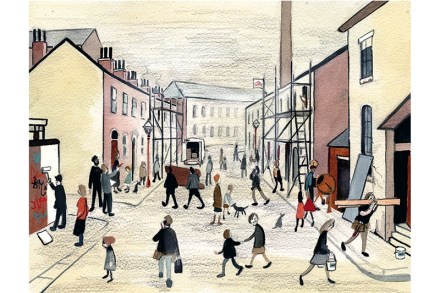
If you ever need a reminder of what northern Britain has achieved, I’d recommend a trip to York. The National Railway Museum brilliantly evokes the local creative energy that produced Stephenson’s Rocket which ran on the world’s first inter-city passenger railway and ushered in the railway age. Just over the River Ouse is the chocolate museum, which celebrates York’s chocolate-makers and their entrepreneurial legacy. It’s easy to be scornful about Boris Johnson’s talk of ‘levelling up’. Real levelling up would mean that for the foreseeable future, the North will grow faster than London, which seems almost unimaginable to Whitehall and in the City.

Now is the time for the Tories to be borrowing more

From our UK edition

How should fiscal conservatism be defined? George Osborne inherited a fiscal deficit that was clearly unsustainable. During the panic over the possibility of a global depression and concerned for his electoral prospects, Gordon Brown had massively inflated government spending. Only Alistair Darling prevented more excess. As Chancellor Osborne said, there was no choice but to retrench: his expression was ‘there is no Plan B’. But in fact, there was a viable choice. In an article published at the time, I somewhat cheekily christened the fiscally conservative alternative ‘Plan A+’. My argument was that we indeed needed to retrench on spending.

Take back control

From our UK edition

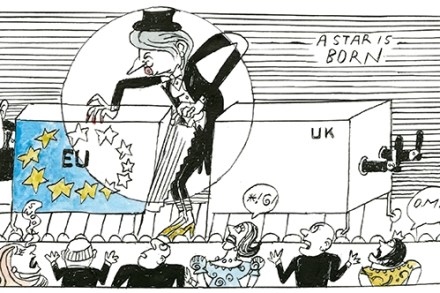
Brexit was a mutiny. Like all mutinies, it was driven by anger at authority rather than by a strategy for the future. To date, the consequences have been to deepen polarisation, but triumphant victory for either side is not the way forward. That there is no majority for any of the current options is entirely understandable: they are all awful. We can only break the polarisation with a new strategy. The Brexit mutiny should have been a wake-up call. Instead, the elite are angry that the mutiny was not suppressed, while the mutineers have become ever more distrustful. There is a way out of this nightmare. Why are all the Brexit options awful?

The hard centre

From our UK edition

The Conservative party has to move beyond Brexit and leaders: what is it going to be about? I suggest it has to be about healing capitalism. Capitalism is the only system that is capable of delivering mass prosperity, but it cannot be left on autopilot. Once every few decades it veers off track and requires active public policy. In the mid-19th century, the old Tory party was revolutionised by Disraeli’s ‘one nation’ agenda, correcting the social catastrophes of early industrialisation. In the 1930s, there was no Disraeli: indeed, no political party rose to the challenge of mass unemployment, which was addressed as an inadvertent by-product of rearmament.

The camps don’t work

From our UK edition

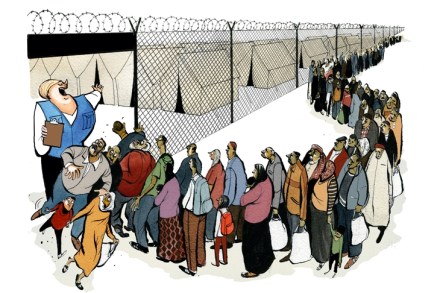
The civil war in Syria, and the resulting displacement of half the population, has been the tragedy of our times. We cannot turn our backs on the ten million people who have been forced to flee their homes. Every decent society knows this and knows that it’s our moral duty to come up with a workable way of helping the refugees. But while the scale of the displacement is substantial, it is not unmanageable. The 21st century should be capable of dealing with such catastrophes and we must prepare ourselves actually to do so. To rise to the challenge, we need to combine the instinctive compassion that mass suffering arouses with the dispassionate analysis necessary to craft an effective response. We need the heart supported by the head.

Breaking

From our UK edition

Was everybody scared? Mum was, certainly. Slip-clinging hold, respectability. World-lost, he didn’t care,   Or didn’t cotton on. Inexplicably, He once broke out, performing memorably: Reckless, and with aplomb.   Mistiming exquisite; Turning their stomachs; Master-class for me in how to flummox Guests: it was The Visit.   Scented and Sunday-clad, – Teacups four-high, stacked, And then paraded like a circus act – Mother pronounced him mad.   Kitchen philosophy, The moment passed. The next time tumbled everything amassed; Her judgment, prophecy.

Here’s the answer to your migrant crisis, Mr Cameron

From our UK edition

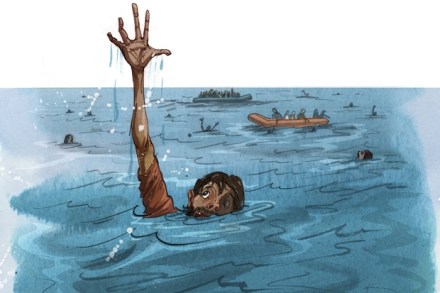
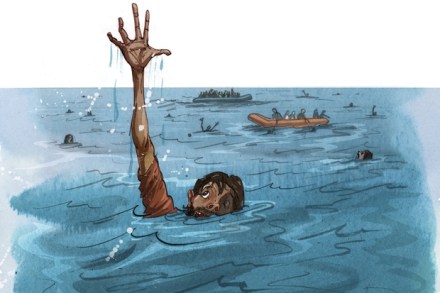
[audioplayer src="http://rss.acast.com/viewfrom22/howtofixtherefugeecrisis/media.mp3" title="Paul Collier and Douglas Murray discuss how to fix the migrant crisis" startat=32] Listen [/audioplayer]For all its difficulties, Europe is prosperous and safe: one of the best places on Earth. Many other societies have yet to achieve this happy state: some are murderous and poor. Two of the most troubled zones in the world are near Europe: the Middle East, and the Sahelian belt which spans northern Africa. Unsurprisingly, many of the people who live in these societies would rather live in Europe. Impeded by immigration controls, a small minority of this group are taking matters into their own hands, trying to enter Europe illegally by boat across the Mediterranean.

A real rescue plan

From our UK edition

[audioplayer src="http://rss.acast.com/viewfrom22/howtofixtherefugeecrisis/media.mp3" title="Paul Collier and Douglas Murray discuss how to fix the migrant crisis" startat=32] Listen [/audioplayer]For all its difficulties, Europe is prosperous and safe: one of the best places on Earth. Many other societies have yet to achieve this happy state: some are murderous and poor. Two of the most troubled zones in the world are near Europe: the Middle East, and the Sahelian belt which spans northern Africa. Unsurprisingly, many of the people who live in these societies would rather live in Europe. Impeded by immigration controls, a small minority of this group are taking matters into their own hands, trying to enter Europe illegally by boat across the Mediterranean.

Only Muslims can stop more terror attacks

From our UK edition

The targeted assassinations at Charlie Hebdo are triply repellent. Being planned, they are the product of considered decisions, not a moment of folly. Being aimed at journalists, they have deliberately chosen the vulnerable heart of the freedom that is fundamental to our values. Being gratuitously cruel in casually murdering an already wounded policeman, they display a chilling depravity. As such, attacks like this are intolerable: they must be stopped, and therefore they must be understood. The assassinations follow the random car-crash terrorism of December and the Syrian beheadings of November. All were perpetrated by young Muslim men. But what we are experiencing is not the product of a religion: it does not deserve to be so dignified.

How to fix Britain’s immigration crisis (without leaving Europe)

From our UK edition

The response to the Ukip surge has reached the panic stage. Just as British business and academia chorused the economic benefits of Union in the final stages of the Scottish referendum campaign, now their refrain is of the economic benefits of immigration. A letter from ten chief executives in the Financial Times pronounced that unimpeded immigration from Eastern Europe is highly valuable. The previous week economists estimated that immigration from Eastern Europe had contributed £20 billion net in taxes. But Ukip supporters are no longer overawed by businessmen and dons, so what is to be done? Within the accepted rules of English social hierarchy, the tempting implication for the rest of us is condescension.