Features

What to do with a squirrel (without getting prosecuted)

Gardeners are up against it. There are thousands of garden pests, exciting new ones discovered every day, and few remedies left with which to fight them. The wonderful cure-all chemicals we once depended on have long been banned — they ‘cured’ a little more than was intended. And how do you repel that king of garden pests, the alien grey squirrel? Squirrels destroy baby birds, bulbs, fruit, young trees just as they begin to look like real trees, and bird feeders too. Not (yet) the human variety of bird feeders, but the peanut and seed containing varieties. At this time of year they are frantic for food and liable to chew up your beloved buds; the females become aggressive in spring and can attack.

Forget Geneva: the real US-Iran carve-up is happening in Iraq

 Washington DC and Iraq   We stood on a bleak hillside in eastern Iraq looking at a makeshift grave. It held a dozen Shia Arabs, according to the Kurdish troops escorting us. The dead were men, women and children murdered by fighters from the so-called Islamic State as they retreated, said the Kurds. We stepped gingerly around scraps of women’s clothing and a bone poking out through the dirt. In the town on the dusty plain below, Shi’ite militias were busy taking revenge on Sunnis, our escorts said, looting and killing. The town’s Sunni Arab population had fled to a miserable camp. Streams of sewage ran between their tents. But they wouldn’t go home, they said, until the militias left, replaced by the army. They may be there a while.

I know just the vicar for my parish church. Pity he’s fictional

For cheap laughs you should look at the situations vacant column of the Church Times — pages of jobs for Anglican clergy. The language, with its dreary emphasis on compliance and its neglect of individualism, may help to explain why the Church of England has become the Labour party at prayer. Number one word in these adverts is ‘team’. Applicants need to be ‘team players’. Other hot words: ‘passionate’, ‘change’, ‘management’ and ‘skills’.

The end of childhood – what we lost when we dropped the age of consent

[audioplayer src="http://rss.acast.com/viewfrom22/the-death-of-childhood/media.mp3" title="Melanie Philips and Sarah Green discuss the end of childhood" startat=37] Listen [/audioplayer]In all the sound and fury about historic sex crimes against children, one crucial factor has been generally ignored. Last week, a review of the agencies dealing with the phenomenon of ‘grooming gangs’ in England said that more than 370 young girls in Oxfordshire had fallen victim to them over the past 15 years, and called for an urgent national debate into these ‘indescribably awful’ sex crimes.

Why Hillary Clinton always seems to have an inbox full of scandal

   Washington DC [audioplayer src="http://rss.acast.com/viewfrom22/the-death-of-childhood/media.mp3" title="Bob Tyrrell and Sebastian Payne discuss the Hillary email scandal" startat=1457] Listen They may blame it on 'the vast right-wing conspiracy' or on sunspots, but the scandals keep accumulating [/audioplayer]To the trained eye something is up on the Clinton front. Of course, there are the stories, often one a day, that make her more newsworthy here in the United States than Ebola. There are the usual Clinton tales about her staffing problems, problems between competing fundraisers, her public appearances for hundreds of thousands of dollars, often at state universities where the money is tight.

Andy Burnham interview: ‘I wanted a different approach, because I’m mainstream Labour’

Time was when Andy Burnham passed for a middle-of-the-road Labourite: he was deemed insufficiently dramatic and impressive to secure much support when he stood for leader five years ago. But these days, his colleagues — and the bookmakers — consider the shadow health secretary the frontrunner in any new contest. At an otherwise funereal Labour conference last year, his speech received standing ovations. In three months’ time, Burnham will either be health secretary or a serious contender for Labour leader. He has already survived calls from within his party to remove him from the health brief, though he claims Miliband has never raised the prospect.

Jawaab explained

It is not easy to be young, British and Muslim. Since the atrocities of 9/11 and 7/7, the media has been awash with stories of the threat of terrorism and the ‘problems’ of multiculturalism. References to Islam or being a Muslim are rarely positive and Muslims are given few opportunities to respond. Those who do can end up in the firing line, especially from commentators quick to assume the worst. Rod Liddle’s column in this magazine last week was a case in point. Liddle made a grave error when referencing the work of Jawaab (see apology in Letters).

When Isis destroy ancient monuments, it’s not always true that ‘people are more important’

Perhaps we need censorship. The Isis vandals now destroying the greatest sites in ancient Mesopotamia have no care for history, so why do they bother? The answer is to get publicity. As with beheadings, they want to taunt us with their outrages. So why give them what they want, which is our obvious dismay? Why encourage more destruction? To read of the loss of ancient monuments is heartbreaking. When they date from the dawn of western civilisation in the Mesopotamian valley, the pain is the greater. Nimrud, Hatra and Nineveh are 6,000-year-old bedrocks of our culture. Like the smashed statues in Mosul museum, their destruction tears at the roots of Eurasia’s shared identity. That identity may stay recorded in books, pictures, museums. But the continuity of place is lost.

Why I’m thankful that Atos found me fit to work

I was signed off work five years ago. I had lost my job and was, unsurprisingly, feeling low; I went to see my GP, as I was having difficulty sleeping. Rather than dishing out a few sleeping pills, as I had hoped, my doctor googled the letters PHQ-9 on his computer and quickly went through the multiple-choice test for depression he found. Within a few minutes, I walked out of the surgery with a diagnosis of depression and a sick note stating that I was, in his medical judgment, unfit for work. Looking at the Patient Health Questionnaire now, one thing immediately stands out: the copyright notice.

Exciting new ways of not writing a novel

I read that Damon Runyon, in New York in the 1930s, would get up at 1 p.m. for a breakfast of ‘fruit, broiled kidneys, toast and six cups of coffee’. Then he would read all the newspapers. Then he would bathe, shave, dress and go out for a long walk which would probably include some shopping — one of his favourite activities. (‘He wanted to buy prize fighters, and racehorses, and great houses, and stacks of clothes and jewellery for his lovely [second] wife.

The teachers who (quietly) miss Michael Gove

‘Michael Gove,’ the joke goes, ‘you either loathe him or hate him.’ According to one poll (by Ipsos Mori) the former education secretary is by far the most unpopular politician in Parliament, with a net likeability rating of minus 32. A video of him falling over has been watched 487,000 times on YouTube, you can buy crocheted pin cushions of his head for £25 and teaching groups loudly accuse him of ‘doing to children what Thatcher did to the miners’. So why does my mother love him? It’s pretty simple. She’s been a primary school teacher for more than 20 years, and she says her pupils are producing better work than they ever have thanks to his reforms.

Tell Mama and the battle for the future of British Islam

Tell Mama is Britain’s most prominent opponent of anti-Muslim prejudice. It monitors everything from criminal assaults to everyday abuse. The far right loathes it, and the Conservative press sells the grotesque pretence that the group exaggerates prejudice to divert attention from the horror of Islamist violence. But attacks from the right only wound. Tell Mama’s ‘friends’ in the Muslim community have turned out to be far more dangerous and are threatening to destroy the organisation. ‘I am on a knife edge,’ one activist told me. ‘I may just leave. I’m so fed up.

The shocking truth about police corruption in Britain

Imagine you lived in a country which last year had 3,000 allegations of police corruption. Worse, imagine that of these 3,000 allegations only half of them were properly investigated — because for police officers in this country, corruption was becoming routine. Imagine that the police increasingly used their powers to crack down not on criminals but on anyone who dared speak out against them. What sort of a country is this? Well, it’s Britain I’m afraid — where what was once the finest, most honest service in the world is in danger of becoming rotten. Some of this was revealed in a little-noticed report by HM Inspectorate of Constabulary, which went on to deliver some even more shocking news.

George Osborne interview: smaller government is not enough

[audioplayer src="http://rss.acast.com/viewfrom22/putin-s-empire-building/media.mp3" title="James Forsyth and Fraser Nelson discuss Osborne's election manoeuvres " startat=839] Listen [/audioplayer]Puccini’s doesn’t seem like George Osborne’s sort of restaurant. It is a pizza-and-pasta place in the safely Labour constituency of Salford and Eccles, Greater Manchester, most notable for the fact that Sir Alex Ferguson once took his whole squad there. (‘Penne alla Giggs’ is still on offer to prove it.) In recent years, however, the Chancellor has become something of a regular — he has even taken the Prime Minister along — and is made welcome to the point that when we met there last Thursday diners queued to be photographed with him.

Shelling, militiamen and shattered villages: welcome to eastern Ukraine’s ceasefire

  Eastern Ukraine For a moment, the sound of shelling is drowned out by a thumping beat coming from a camouflaged van. ‘Separatysty [Separatists]!’ says the rousing chorus: ‘The day of your death is here!’ We are with a Ukrainian nationalist militia in a village outside Donetsk airport, which is in the hands of pro-Russian rebels, usually referred to by the Ukrainians as terorysty or bandyty. But despite their bravado, the war is not going well for the Ukrainian side. There have been a series of disastrous setbacks, towns and territory lost, whole units put to panicky flight. The shattered village, Piesky, reminds me of Chechnya or Bosnia, the houses’ red roofs caved in, shell craters in the soft earth, rubble everywhere.

Sorry, but I don’t think feminists can fight the male gaze by baring their breasts

Imagine that you have stepped back in time to the 1970s. Feminists are out on the streets of London protesting against the Miss World competitions. There you meet a sleazy men’s magazine publisher who tells you he has a new idea for getting women to show men their breasts. He’s not going to offer them money or fame like Playboy or Penthouse. No, he’s going to get them to take off their tops in the name of women’s liberation. ‘I have seen the future of feminism,’ he tells you, ‘and it has great tits!’ Naturally you think: this man is insane! Surely no woman would fall for that? Wrong. Not only did they, but the link between showing your breasts and serving the feminist cause didn’t come from men but from women themselves!

It’s Nato that’s empire-building, not Putin

[audioplayer src="http://rss.acast.com/viewfrom22/putin-s-empire-building/media.mp3" title="Peter Hitchens and Ben Judah debate Putin's empire building" startat=33] Listen [/audioplayer]Just for once, let us try this argument with an open mind, employing arithmetic and geography and going easy on the adjectives. Two great land powers face each other. One of these powers, Russia, has given up control over 700,000 square miles of valuable territory. The other, the European Union, has gained control over 400,000 of those square miles. Which of these powers is expanding? There remain 300,000 neutral square miles between the two, mostly in Ukraine. From Moscow’s point of view, this is already a grievous, irretrievable loss.

Why an SNP surge at Westminster could mean the end of Britain

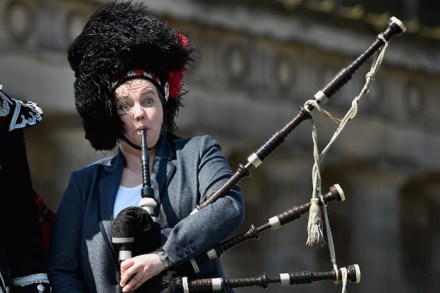
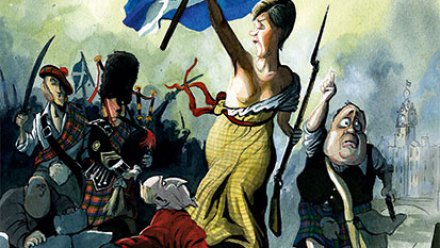
[audioplayer src="http://rss.acast.com/viewfrom22/the-snp-threat-to-westminster/media.mp3" title="Alex Massie and Sebastian Payne discuss what an SNP victory will mean for the union" startat=42] Listen [/audioplayer]Anyone seeking to understand the strength of the SNP should look to those parts of Scotland where the party is supposed to be weakest. At the last election, the nationalists took just under 10 per cent of the vote in the Scottish Borders. This year, Tory canvass returns suggest the SNP may treble its share of the vote in one of the most staunchly unionist seats in Scotland. For months, opinion polls have made unremittingly gloomy reading for unionists. The nationalists are heading for a victory on a scale still not fully comprehended in England.