Features

Rides without romance

You know the old designation NSIT — Not Safe in Taxis? Well, we need a new one: TSIU — Too Safe in Ubers. I don’t want to get into the rights and wrongs of Uber, whether the gig economy puts more money in the pocket of the taxi driver from Wembley or benefits only the San Francisco app-ocracy. I don’t have strong feelings about Ubers vs black cabs and whether the former are undercutting the latter, doing them out of their Knowledge and their livelihoods. My objections to Uber are not economic or ethical, they are romantic. Uber has killed off the back-of-the-taxi clinch. It used to be that, after a date, a party, a play, a chap could prove his mettle by striding to the kerb, raising his arm and shouting ‘Taxi!’ in a firm, strong baritone.


Toff luck

F. Scott Fitzgerald got it wrong; it’s not the rich who are different from you and me — it’s the posh. There is no social act so rude or outrageous that it cannot be explained and then excused on the grounds that the perpetrator was posh. I was recently at a drinks party and saw a man scratching his bottom in front of the buffet table — a full, hand-down--trouser buttock-scratch. With the very same hand that he’d used on his bottom, he picked up a sausage, examined it and put it back in the pile. He then picked up another sausage and put it back. Then, after another quick bottom--scratch, he began to poke around the samosas.

Who will be London’s next bishop?

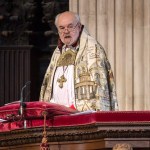
In typical theatrical style, the outgoing Bishop of London, Richard Chartres, he of the sonorous voice and imposing beard, ‘never knowingly underdressed’, ‘the last of the great prince bishops’, attended his final service as bishop at last Thursday’s liturgy at St Paul’s Cathedral for Candlemas — the day on which Simeon spoke the words, ‘Lord, now lettest thou thy servant depart in peace.

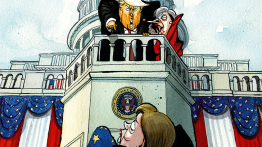
Surviving Trumpworld

While he was on the campaign trail, Donald Trump was asked an intriguing question by Bob Lonsberry of WHAM 1180 AM, a local radio station in Rochester, New York. ‘Is there a favourite Bible verse or Bible story that has informed your thinking or your character through life, sir?’ Lonsberry said. Trump’s answer? ‘An eye for an eye.’ If you wanted a quick glimpse inside Trump’s brain, that quote’s as good as any. It captures his narcissism, his thin skin, his exponentially cranked-up aggression.

‘Above all else, fun’

Alexander Chancellor’s ‘Long Life’ is over; but it was not nearly long enough. I was feeling rather gloomy last Friday, having just had our old terrier put down, when I opened The Spectator and was immediately cheered up by the first paragraph of Alexander’s column. It was so typical of the way that he often looked at the world, and of his delightfully quirky sense of humour, that he should relate a children’s song to the new President of the United States. Recalling Nellie the elephant and her trumpety-trump, he wrote: ‘I’m hoping against hope that Donald Trumpety-Trump will also say goodbye to the circus in Washington and return to the jungle whence he came.

Abandoned to their fate

Another day in northern Nigeria, another Christian village reeling from an attack by the Muslim Fulani herdsmen who used to be their neighbours — and who are now cleansing them from the area. The locals daren’t collect the freshest bodies. Some who tried earlier have already been killed, spotted by the waiting militia and hacked down or shot. The Fulani are watching everything closely from the surrounding mountains. Every week, their progress across the northern states of Plateau and Kaduna continues. Every week, more massacres — another village burned, its church razed, its inhabitants slaughtered, raped or chased away. A young woman, whose husband and two children have just been killed in front of her, tells me blankly, ‘Our parents told us about these people.

Rules for loneliness

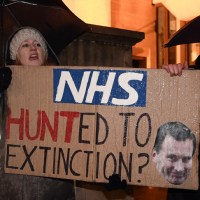
An old acquaintance died recently. A friend of mine, who was closer to him than I was, rang to tell me. She’d known him for 40 years and looked after him at various times when he fell ill. He was diagnosed with cancer three weeks ago and died suddenly in hospital last week. She tried to find out what happened, but as she is not next of kin (he had no relations) she will probably never know. Within the monolith of the NHS, patients, particularly the elderly, are able to disappear from view as effectively as prisoners in the Soviet gulag. If they don’t re-emerge alive, no except a close relation can discover why. I first realised this two years ago when I moved from London to Oxford, and tried to carry on volunteering as a hospital visitor. A neighbour broke her leg.

The ghastly truth

Paul Johnson once wrote that the ability to say ‘really’ in 12 different ways was the birthright of every true Englishman, or woman. Really rather awkward. Really dreadful. Really good effort. Really went to town. I know him really well. Did she really mean that? I mean, really! One word, many meanings. ‘Ghastly’ is another thoroughly English word, in tone and application. Its meaning is implicit, rather than explicit. It’s a word shared by people of similar (that is to say, well-brought-up) backgrounds, which makes it all the more surprising that Tatler magazine, which likes to present itself as a guide for metropolitan smarties, has declared ghastly to be ‘unfashionable’.

Keep the change

Can we do without cash? Since 2015, digital payments in the UK have outnumbered those in cash, and we are invited by the great and the good to cheer this on. The fully cashless era will be magnificently convenient, they say, with goods delivered directly to the door: no fumbling for change, just tap and go. Some London branches of several chains (Waitrose, Tossed, Doddle) don’t accept cash any more. Many others fast-track customers who can pay by contactless means. Businesses and banks want to abolish cash because they have near-pathological fears of the black market and tax avoidance. Yet we should worry about the death of cash, because physical money possesses worth far above its face value. Cash is the great leveller.

Orange alert | 26 January 2017

That the US should have elected as president someone like Donald Trump came as a shock. But the US is a strange country, given to periodic outbursts of political madness — though perhaps never quite as mad as this. That the Dutch, often caricatured as pragmatic, bourgeois, phlegmatic, business-minded, tolerant and perhaps a little boring, might in March pick a party led by a vulgar rabble-rouser with dyed blond hair to be the biggest in the land is more surprising. But the rise of Geert Wilders, leader (and only official member) of the Freedom party, shows how populism is sweeping across the Netherlands too. Wilders was one of the main attractions at the recent far-right jamboree in Koblenz, where he hailed Brexit, Donald Trump and what he called the Patriotic Spring in Europe.

Save our stables!

There are plans in place to tax horses out of British life. Proposed adjustments in business rates for non--residential properties — increases of up to eight times — could make vast swaths of the horsey world unviable. Life will be tough for top-end enterprises like racing yards and stud farms; it will be the end for the many riding schools and livery yards that exist on the far edge of the possible. This is a disastrous way to carry on. The horsey life should have vast and sweeping tax exemption because it helps people to enjoy life more fully and to endure it more steadfastly. It keeps the blues away more efficiently than anything out of a bottle. Simon Barnes and Camilla Swift join Isabel Hardman to celebrate the horsey life: Horses are great teachers.

Keynes’s grandchild

‘Did you really deserve the Nobel prize?’ I ask Amartya Sen. ‘Why do you think you won?’ When you’re sitting opposite the world’s most respected living economist, at a time when the dismal science is under intense scrutiny, an opening question should be punchy. Thankfully, Sen, an 83-year-old Harvard professor, has a sense of humour. ‘You can’t ask me that,’ he says with a grin. ‘I have absolutely no idea why I won.’ He then composes himself. ‘Like any researcher, I’m happy if my work interests others,’ he says carefully. ‘But it would be a pretty bad way to conduct one’s life, thinking about how to win prizes, rather than being listened to.’ Sen has achieved both.

Losing patients

For weeks now, we have been reading about a crisis in A&E — a symptom, we’re told, of a funding crisis in the National Health Service more generally. Since I started working for the NHS almost 45 years ago, this has been a familiar theme: the system is creaking, but a bit more tax money should suffice. To many of us who have seen the system close at hand, another question presents itself: what if the NHS were to cut down on waste? And perhaps recover costs from the health tourists who turn up for treatment to which they are not entitled? I first made the case for doing so four years ago, in the pages of this magazine, when I was the senior surgeon of a rare cancers unit at the Royal Marsden Hospital in London.

Our debt to the Tudors

‘The Reformation was a process of both renewal and division among Christians in Europe,’ said the Archbishops of Canterbury and York in a ‘joint reflection’ statement marking 500 years of Protestantism. ‘In this Reformation anniversary year, many Christians will want to give thanks for the great blessings they have received to which the Reformation directly contributed.’ Many will want to? OK, but what about you? Why this timid slippage into the third person? Some journalists reported the statement as an apology. They were technically wrong, but tonally correct. It reminded me of the day after Brexit, when Boris and Gove were so nervous of seeming cocky that they forgot to seem glad.

Flight into Israel

I’ve always lived in London. I grew up near Baker Street and went to school in Camden. Even when I was at college in Kent, I lived in Islington and commuted. Five years ago I moved to Belsize Park and I’ve been here, the nicest place I’ve lived, ever since. I didn’t mean to stay — I was going to see the world, but my father died and my mother said she needed me to be close. She said it with a tremor in her voice, so I stayed. London is in my heart and in my blood, but the wind has changed, like it did for Mary Poppins, and I think it’s going to blow me out of the city, all the way to Tel Aviv. The referendum result didn’t make me decide to leave, but it was a penny on the scales. This no longer feels like home.

A renewed special relationship

Freddy Gray, Paul Wood and Kate Andrews discuss Trump's arrival at the White House:   As president, Barack Obama was too cool for the special relationship. The romantic bond between the United States and Great Britain, which always makes Churchill fans go all soggy-eyed, left him cold. Obama was more interested in globalism, ‘pivoting’ to Asia and the European Union. Donald J. Trump is a very different creature. The new US President seems to cherish Great Britain, whereas the EU annoys him. Brexit is beautiful, he believes — and the EU is falling apart. Trump may or may not know the name of the British Prime Minister but, as he told Michael Gove this week, he is determined to strike a free trade agreement with Britain ‘very quickly’.

Monumental folly

The astonishing has happened at Stonehenge. Some prehistoric force has driven ministers to make a decision. It is to spend half a billion pounds burying the adjacent A303 in a tunnel, to bring ‘tranquillity’ to the ancient place. The result has been a predictable outcry from protestors. The television historian Dan Snow has compared the Transport Secretary, Chris Grayling, with Isis in Palmyra: ‘vandals and zealots who destroy ancient artefacts’. Stonehenge drives men mad. The stones have for a quarter of a century been as impregnable to change as they have always been to interpretation. Whitehall has been unable to decide what to do with a single-carriageway road which runs 200 metres from the stones and causes hour-long traffic jams in summer.

The plots against Trump

The ‘most deadly adversaries of republican government,’ wrote Alexander Hamilton, arise ‘chiefly from the desire in foreign powers to gain an improper ascendant in our councils. How could they better gratify this, than by raising a creature of their own to the chief magistracy of the Union?’ Hamilton’s warning against ‘intrigue, and corruption’, published in 1788, speaks eerily to the Washington of today, where Donald Trump’s enemies imagine he is a Russian ‘agent of influence,’ bought or blackmailed by the Kremlin.