Features

Too big not to fail

‘Bad policy.’ ‘No discernible impact on the key outcomes it was supposed to improve.’ ‘Deliberate misrepresentation of the data… a funding model that could have been designed to waste money’. ‘A waste of £1.3 billion’. ‘Failed’. The media’s treatment of the troubled families programme, whose evaluation has recently been made public, cannot have cheered David Cameron in his last week as an MP. History does not look likely to be kind to his great social policy. We should, however, be grateful to the former prime minister for his quixotic attempt to do the right thing on a massive scale.

‘Hillary Clinton is a disaster!’

Talking to Camille Paglia is like approaching a machine gun: madness to stick your head up and ask a question, unless you want your brain blown apart by the answer, but a visceral delight to watch as she obliterates every subject in sight. Most of the time she does this for kicks. It’s only on turning to Hillary Clinton that she perpetrates an actual murder: of Clinton II’s most cherished claim, that her becoming 45th president of the United States would represent a feminist triumph. ‘In order to run for president of the United States, you have to spend two or three years of your life out on the road constantly asking for money and most women find that life too harsh, too draining,’ Paglia argues.

Murder and politics

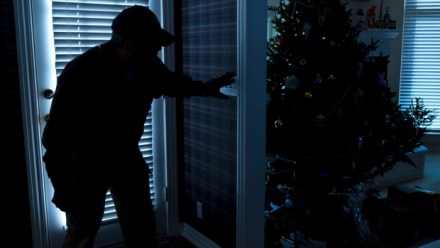
Six months ago an old friend of mine was murdered on his doorstep. This week his killer was sentenced to life imprisonment. In both cases, the first I heard of it was when someone I follow on Twitter posted a joke with a link to a news story. Both jokes were whimsical rather than callous — both were, in fact, musing on which Sunday evening television detective would most likely solve the crime — but whimsy in these circumstances feels like callousness. The tweets made me very angry. I read the reports of the trial. The murderer had made a spreadsheet of his potential victims, for robbery or kidnap, with their names in one column, planned modus in another and ‘reason’ in a third.

Le Pen’s long game

Marine Le Pen can be excused for thinking her time has come. With six months to go until France’s presidential election, the left-wing government of François Hollande has produced only one winner, and it is her. She’s providing the Gallic contribution to the insurgent charge epitomised elsewhere by Brexit and Donald Trump. France, the home of joie de vivre, has become an introverted place whose citizens fear their nation has lost its way. It is an existential challenge, in the birthplace of existentialism, that the mainstream right is failing to answer. Le Pen, on the other hand, says she has all the answers — and, despite the questionable nature of many of her remedies, up to a third of the electorate appears to agree.

Stop the sabre-rattling

I have been wondering these last few weeks whether it would be cheaper to excavate a basement and buy a Geiger counter and iodine tablets, or emigrate to New Zealand. Call me frit, but I don’t like the way things are heading. Probably the second option is easier: Armageddon outta here, etc. I can re-enact Nevil Shute’s On the Beach from some rocky cove near Dunedin, waiting for the fallout to arrive. I was sentient only during the latter stages of the Cold War but from what I can remember, the two sides, them and us, behaved for the most part with a degree of rationality and common sense. (I like my politicians to be pragmatic rather than charismatic, which is why, if you were to ask who my favourite Soviet despot was, Brezhnev would always be the answer.

Climate of ignorance

Global greening is the name given to a gradual, but large, increase in green vegetation on the planet over the past three decades. The climate change lobby is keen to ensure that if you hear about it at all, you hear that it is a minor thing, dwarfed by the dangers of global warming. Actually, it could be the other way round: greening is a bigger effect than warming. It is a story in which I have been both vilified and vindicated. Four years ago, I came across an online video of a lecture given by Ranga Myneni of Boston University in which he presented an ingenious analysis of data from satellites. This proved that much of the vegetated area of the planet was getting greener, and only a little bit was getting browner.

Hope, fights and grammar schools

A typical Kentish town, with its grammar school at one end and its secondary school at the other, is a throwback to the Bad Old Days, or the Good Old Days, depending on what your views are on academically selective state education. If Theresa May’s plans go ahead, the whole country might look something like this. In my childhood home town of Sandwich, Kent, the two schools, Sir Roger Manwood’s grammar school and the Sandwich Technology School, have staggered going-home times to avoid the fights on the station platform that used to happen every afternoon. Their uniforms are tellingly different: the Manwood’s students wear smart blazers and ties, the Tech ones wear casual black polo shirts and black jerseys. There’s a slight shiftiness in the afternoon atmosphere.

Carney must go

Oh dear. Mark Carney is irritated. His proud independence has been challenged. The Prime Minister had the temerity to admit that she was not altogether thrilled with his ‘super-low’ interest rates and quantitative easing. These policies meant that people with assets got richer, she pointed out. ‘People without them suffered… People with savings have found themselves poorer.’ Mr Carney found this intolerable and haughtily rebuffed her, saying, ‘The policies are done by technocrats. We are not going to take instruction on our policies from the political side.’ Back in your box, Mrs May. Carney’s in charge!

Ghosts of the seasons

Forget killer clowns. Halloween was once a very different affair from the Americanised gorefest it is now. In its-original Irish form, as when I was growing up, it was an opportunity for children to dress up in their parents’ clothes, wear a mask and a hat and go begging from door to door for nuts, apples or money for bobbing — viz, sticking your head in a basin of water to dive after coins and apples. There was barmbrack — a sort of yeasted fruitbread you ate on the night — which contained a ring to predict who would be the next to marry (that dates it) and, in old-fashioned houses, a matchstick to predict poverty. It was quite a big thing, but over in a day or two.

Gstaad: Swiss charm

‘Come up, slow down’ is the official slogan for Gstaad, but they seem to have forgotten one last important phrase — ‘and blow some serious cash.’ For most visitors, money is no object. But Gstaad is making an effort to attract people with less giant budgets. While chalet owners such as Madonna give the resort its showy reputation, there is another side to it — a sleepy Swiss village where the cows outnumber people. Gstaad is picture-postcard pretty. In the village centre you’ll often see a horsedrawn carriage jing-ling around the streets. An old Bernese mountain dog named Nico rides in the passenger seat. And while the streets are lined with high-end designers, the sweet wooden chalets which house them are pure alpine charm.

Vanity bombing

‘When you’ve shouted Rule Britannia, when you’ve sung God Save the Queen, when you’ve finished killing Kruger with your mouth…’ So wrote Kipling derisively of the domestic cheerleaders of the Boer War. The lines came to mind this week as the Commons again strained at the leash of war. Horrified by the Aleppo atrocities, MPs dug deep into the jaded rhetoric of a superannuated great power. They vied for abuse to hurl at the Syrian and Russian forces laying siege to the wretched city. There were the obligatory parallels with Hitler. The Tory MP Andrew Mitchell, spoke of ‘events that match the behaviour of the Nazi regime in Guernica’. He wanted a no fly zone and a safe haven. Others wanted ‘action not words’.

Jolly good show

It’s tempting for a Brit to look over the Atlantic and smugly conclude that, after 240 years, the American experiment of self government has failed — that this ingenious country could not even find two decent people to run for the White House, and has instead laid on a political freak show that’s best watched from behind the sofa. British politics has its faults, we say, but we’re nowhere near as bad as that. But who would be bold enough to say that had Andrea Leadsom not dropped out of the race, Tory members would not have voted her in? And looking at the House of Commons, can we really say that it’s functional? We have no opposition to speak of, thanks to the crisis in the Labour party.

Lights, camera, politics: the triumph of showbiz over argument

At the end of Sunday night’s US presidential debate, the moderators snuck in a final question from a slightly shell shocked looking member of the audience. After an hour and a half of brutal, bitter exchanges, a man asked Hillary Clinton and Donald Trump if they could think of ‘one positive thing that you respect in one another’. In the resulting pause and exhalation it felt as though the country had seen itself in a mirror and realised it looked hideous. Unlike some of our MEPs, the candidates for US president only sparred verbally in St Louis. And nobody watching politics from the continent of Europe (Beppe Grillo anyone?) should be too sanguine that it won’t happen here. Nevertheless there is something especially noxious happening on American prime time.

Breach of Trust

Ever since it was founded in 1895, the National Trust has been considered a good thing. That oak tree sticker on the windscreen isn’t just a passport to some of the country’s finest heritage. It is a middle class status symbol declaring that you are cultured, a lover of the bucolic, someone who’d rather their children went out collecting tadpoles and tramping round nature reserves than staying in glued to an iPad. But the Trust, originally set up to ensure ‘the preservation for the benefit of the nation of lands and tenements of beauty or historic interest’ seems to have abandoned at least one of the laudable aims that made it so popular.

The road to the Jungle

 Calais On Sunday evening a British motorist, Abraham Reichman, 35, from Stamford Hill, north London, hit two Eritrean migrants who were trying to block the A16 outside Calais. They had leapt in front of his car, he says, as he slowed down to avoid dozens of migrants on the motorway. Terrified, Mr Reichman drove off at speed to the police station, where he later found out that one of the Eritreans had died. The police released him after several hours but he is under investigation for homicide involontaire. It is not difficult to meet migrants so determined to get to the land of milk and honey on the British side of the English Channel that they are prepared to risk their lives and put those of drivers in mortal danger.

Berlin: The return of German pride?

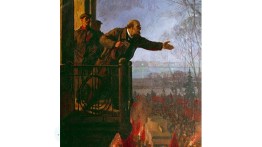
On a windswept square beside the river Spree, across the road from Berlin’s Museum Island, there is a brand new building which epitomises Germany’s shifting attitude to its imperial past. For 500 years this was the site of the Berliner Schloss, seat of Prussia’s royal family. After the second world war it was demolished, and now it’s being rebuilt from scratch. The Berliner Schloss has always been a barometer of German history. It was the residence of Frederick the Great, that daft enlightened despot who put Prussia on the map. In 1914, Kaiser Bill addressed his loyal subjects from its balcony. In 1918, Karl Liebknecht stood on this balcony to proclaim his ‘Free Socialist-Republic’. That balcony has been preserved, cemented into an adjacent building.

Beautiful city, beautiful game…

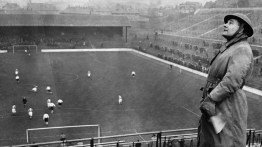
The secret to keeping any relationship going is, of course, to see as little of each other as possible. We all know what familiarity breeds, so there’s no point pushing your luck. Imagine my delight, therefore, on discovering a holiday company that specialises in separating you from your other half while you’re away. Well, for a couple of hours anyway. Footballbreak.co.uk offers trips to European cities whose teams play the beautiful game particularly beautifully: Madrid, Munich, Paris and the like. As well as organising your flights and hotel, they also arrange tickets for the match. So while the female(s) of your party swan off to hammer the credit card, the male(s) can sit and admire the skills of Ronaldo or Alonso or Silva.

Hong kong: Eating it up

The brilliant thing about Hong Kong is that you don’t have to worry for a second about all the culture you’re missing. That’s because there’s absolutely nothing to do there except shop (I got a seriously nice bespoke dinner jacket for just £400 from Lafarfalla Tailor) drink and, most importantly, eat. Oh all right, so there are some half-strenuous walks you can do in the surprisingly uncrowded countryside just outside the city (you can cab it from the centre to the pretty Shek O beach — which on weekdays is half-deserted — in just 25 minutes) but even then the main purpose of the exercise is to end up in another restaurant.