Features

The Breitbart conspiracy

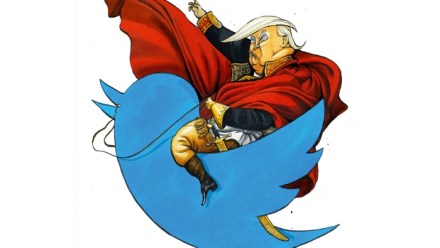
Donald J. Trump always keeps everyone guessing. Is the president-elect ditching his crazy act in order to bring in a conventional Republican government? Or ditching conventional Republican government in order to bring in his crazy act? Is he bringing together the anti--politics outsiders and the Washington insiders? Or is he playing them against each other? Are we witnessing the usual scramble for power that accompanies every incoming administration? Or is the Trump transition a new kind of shambles? The answer to all these questions is yes, probably. Take the role of Steve Bannon, executive chairman of the right-wing website Breit-bart (aka ‘Trump Pravda’), who served as the Donald’s campaign manager in the run-up to the election.

Which side are you on?

Trump’s victory sets a test for conservatives, a test they are failing with embarrassing ineptitude. They are making the oldest mistake in politics. They are carrying on as if nothing has changed. In the early 21st century, it was easy to attack the supposed liberal left. These alleged liberals were for real censorship. The white working class was their enemy. Radical Islam was the fascism of the time, yet liberals who thought themselves anti-fascists accepted that misogyny, prejudice and hatred of individual rights were fine, as long as the haters had brown rather than white skin. Apparently moral conservative writers joined the democratic left in tearing into such double standards. Yet in the background hung questions they should never have been allowed to duck.

The new normal

-What was your favourite response from the liberals to Donald Trump’s victory in the US presidential election? Actress Emma Watson handing out copies of a Maya Angelou book to bewildered commuters in New York? Cher announcing that she wasn’t simply leaving the USA, ‘but Planet Earth too’ — a move some of us assumed she had made at least 40 years ago? The hysterical protestors who set fire to their own shoes because they thought the said shoes were pro-Trump? The hyperbolic hatred spewed out towards those who voted for the Donald, or Matthew Parris suggesting that maybe this democracy caper has gone too far, or the teachers telling tearful children that we’re all going to die?

The perfect mismatch

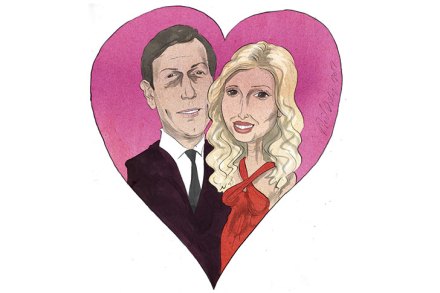
“Is she really going out with him?’ asks the old Joe Jackson song about a mixed-attractiveness couple. ‘They say that looks don’t count for much — there goes your proof.’ High society used to abound with couples in which the woman was far more beautiful than the man. But while we can still point to famous aesthetically mismatched partners (pudgy Trump and pulchritudinous Melania anyone?), the mating patterns of the young now mean we are witnessing the death of the mixed-attractiveness couple. This is thanks to the way millennials fall in love — more often than not, online. They flick through potential matches on sites such as Match.com and MySingleFriend with distressing rapidity, discounting anyone they don’t fancy straight away.

China’s quiet Christians

 Beijing A strong coffee always perks me up on a smoggy day, especially when I can drink it somewhere clandestine — like an ‘illegal’ church. Seek, and you shall find — but when it comes to Christianity in China, you’re likely to get a bit lost. Without being told where it was, I could have spent a lifetime walking past the anonymous, seemingly empty office block, never knowing that inside it was abuzz with religious activity. A discreet sign in the lobby is the only indication that a Sunday service is in progress. In other parts of the world, a church announces itself to the faithful with a cross on a steeple.

The new first lady

It was a race between the first dude — Bill — and the first nude — Melania. And in the end, the first nude won, appearing next to her husband in the early hours wearing a white jumpsuit straight out of Charlie’s Angels. It may seem unfair to judge Mrs Trump so early on, but judged she will be. She awaits her turn, just as Hillary Clinton once did. How will she fare? Well, liberal American voters will want targets, and she looks like one. People are already making jokes about Michelle Obama writing Melania’s first speech, to save her the trouble of plagiarising again. There is so much for her to live up to. She must be as elegant as Jacqueline Kennedy; as eloquent as Mrs Obama; as astute as Nancy Reagan; as political as Hillary Clinton.

Trump’s triumph

 Washington DC Donald J. Trump’s long, triumphant march to the White House didn’t start on 16 June 2015, when he announced his candidacy at the Trump Tower in Manhattan. It began four years ago, on 19 November 2012. On that day, days after President Barack Obama had defeated Mitt Romney, Trump filed a trademark application for the slogan ‘Make America Great Again’. It was, like all things Trump, a bit of a rip-off. Ronald Reagan’s successful presidential campaign of 1980 had coined the phrase. But Make America Great Again was even more potent in 2015-16. After the crash, those four words spoke powerfully to the anguished spirit of America: to the nation’s nostalgia for the Reagan era, and to its insatiable longing to fix itself.

Like Uber, but for hippies

On the same day I put my spare room on Airbnb I also had my first cabshare experience, courtesy of Uber. When I mentioned this to a young friend of mine, he patted me on the back and said, ‘Welcome to the sharing economy!’ The sharing economy is one of those buzz terms that everyone uses these days — but what exactly is it? Apparently, it refers to a whole range of online goods and services that instead of buying and owning, we can borrow, rent or have access to — sometimes free, usually for a price. Likewise, we can be the ones providing these goods or services, and make a profit. Share a taxi ride, borrow a dog for an afternoon or rent out your flat for the weekend and you’re part of the sharing economy.

In defence of post-truth politics

Donald Trump’s shock US election victory has provoked a transatlantic howl of disbelief from a cosmopolitan elite aghast that American voters have had the temerity to reject its one true liberal world-view. Hillary Clinton’s loss is seen less as the rightful humiliation of a discredited machine politician and more as proof that the masses have, once again, rejected ‘the facts’ of the situation. To this elite, installing the Donald in the White House represents the apocalyptic dawn of a ‘post-factual era’. After all, Hillary Clinton’s chief weapon against Trump was an army of fact-checkers.

Vicar, can you spare a dime?

‘I am a Messianic Jew,’ says the jittery young man at the rectory door. He is pale and drawn, with a close-shaven scalp and several days of bristles on a sharp chin. The bloodshot eyes search for me swimmingly. ‘A Jew, a Messianic Jew,’ he emphasises. I should have a clever rejoinder, but I am assessing if he has a knife so I only manage, ‘Ah yes, and how can I help?’ ‘Is this you?’ is thrown back at me, as he jabs his finger at the screen of his phone and then holds it up to my face like a mirror. I admit my identity (an image from our website), and this makes him confident of success. ‘You must pay my bus fare to-Latvia.’ Such encounters are the commonplace of the daily life of the urban vicar.

Breaking the Bank

The exchange of letters this week between Mark Carney and Philip Hammond made it very clear who the supplicant was. The Governor of the Bank of England informed the Chancellor of the Exchequer that he was prepared to extend his term by one year. Carney pointed out that while the personal circumstances that had made him want to limit his term to five years had not changed, this country’s circumstances had. So he would be here a little longer. Things had seemed very different a few weeks ago, when Theresa May bemoaned the consequences of the Bank’s monetary policy in her party conference speech. ‘A change has got to come,’ she had warned. ‘And we are going to deliver it.

Bordering on insanity | 3 November 2016

There are lots of signs at Gatwick about how it is unacceptable to be ‘rude or abusive’ to Border Force staff. One poster warns that losing your temper or gesticulating in a threatening manner could be a criminal offence. Keep a lid on it, is the-message. My wife Joanna and I recently had plenty of time to study these missives and just about kept a lid on it after returning from a weekend in Spain. It was a Monday evening that became a Monday night at Gatwick’s north terminal as thousands of travellers snaked back and forth for nearly an hour at passport control in an atmosphere that swung from anger to sheer astonishment at the incompetence of the government agency that mans the UK border at British airports.

Take a letter

Enrolling at Parsons College in New York the other day, a friend was asked to state her name, subject and PGPs. Her what? Her preferred gender pronouns. In other words, did she want to be referred to as ‘she’ and ‘her’, or ‘he’ and ‘him’, or ‘it’, or ‘they’, or none of the above, and was she a Mr, Miss, or Mx? If she wasn’t sure, a support group was on hand to help, called the LGBTQIAGNC. There was no need — she said her name was Clare and ‘she’ would do fine. And the rest of the class? ‘No one stated a PGP other than the obvious,’ she reports, ‘although we do have a large LGBT community.

Star-spangled banter

This weekend at the Edenbridge bonfire in Kent, near where I live, an effigy of Donald Trump will be burned. Last weekend, at Halloween, people up and down the land went out dressed up as him, or as a woman being groped by him. It is hard to imagine any American doing anything like this in homage to our own least popular political candidate in a generation, Jeremy Corbyn. And that’s caused me to wonder why, exactly — when we’re so turned off by our own politicians — we are so enthralled by the Donald across the pond.

Home to roost

‘Prefabs to solve housing crisis,’ screamed the front page of the Sunday Telegraph last weekend. Can the shortage of homes in Britain really be so bad that ministers are floating plans to encourage the first new generation of temporary, pre-packed houses since the great reconstruction drive which followed the second world war? The UK is in the midst of a housing shortage that numerous credible experts now describe as ‘chronic’ and ‘acute’. While it’s widely recognised that we need 250,000 new homes each year to meet population growth and household formation, house-building hasn’t reached that level since the late 1970s. During the Thatcher era, as fewer council houses were built, an average of 190,900 new homes were constructed each year.

Blinded with science

We’re continually assured that government policies are grounded in evidence, whether it’s an anti-bullying programme in Finland, an alcohol awareness initiative in Texas or climate change responses around the globe. Science itself, we’re told, is guiding our footsteps. There's just one problem: science is in deep trouble. Last year, Richard Horton, editor of The Lancet, admitted that "much of the scientific literature, perhaps half, may simply be untrue." In his words, "science has taken a turn toward darkness." Medical research, psychology, and economics are all in the grip of a 'reproducibility crisis.' A pharmaceutical company attempting to confirm the findings of 53 landmark cancer studies was successful in only six instances, a failure rate of 89pc.

Sweet sorrow

So, is that it? The end of sweetness, and the end of taste? Physically speaking, those things will no doubt carry on, when The Great British Bake Off moves to Channel 4 next year. We’ll still take vicarious pleasure in the mouth-watering sweetness of someone’s ‘crème pat’. The taste of lavender will still ‘come through’ in a contestant’s 12 identical puff pastry miniatures. But I’m referring to the abstracts: the sweetness, and the taste. I fear that those might have gone for ever.