John R. Bradley

Oil on troubled waters: the US-Saudi alliance is crumbling

From our UK edition

Donald Trump said in October 2018 that the Saudi royal family ‘wouldn’t last two weeks’ without American military support. Last week, on the back of the collapse of the US fracking industry, he finally acted on his long-standing anti--Saudi instincts. He ordered the immediate withdrawal of two patriot air defence batteries, sent to defend the kingdom’s oil infrastructure in September after a missile attack blamed on the Iranians. He also recalled hundreds of US troops and said the US Navy presence in the Persian Gulf would be scaled back. Leaving with the ships were dozens of US fighter jets, which would have been crucial for defending against any full-scale Iranian assault.

Has Trump finally decided to dump Saudi?

From our UK edition

In a dramatic move even by his own mercurial standards, Donald Trump has authorised the withdrawal of two Patriot missile systems guarding Saudi Arabia's oil facilities, accompanied by hundreds of American military troops operating them. They were deployed last September after a massive cruise missile and drone attack on the Saudi oil infrastructure – blamed on the Iranians but claimed by their allies the Houthi rebels in Yemen – that knocked about half of the kingdom's production capacity offline. Now Saudi Arabia has just two Patriot batteries, located at Prince Sultan Air Base in the middle of the Saudi desert. They are not there to protect the royal family and its economic resources, but rather the estimated 2,500 American soldiers stationed at the remote military hub.

Could President Trump lose the oil war?

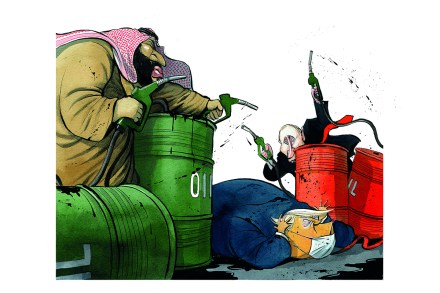
In a cover story for The Spectator that appeared just after Saudi Arabia launched an oil war against Russia in March, I wrote: 'One wonders how Donald Trump — who hates personal disloyalty more than anything — will react when he wakes up to the fact that the Saudi leader he has stuck with through thick and thin is now out to destroy the domestic industry Trump is most proud of.' Well, now we know. By the first week of April, Trump was so concerned about the impact of dramatically lower prices on the domestic fracking industry that he called the Saudi leaders and gave them a stark ultimatum. Unless they pressured OPEC members to cut oil production, he would be powerless to stop lawmakers from passing legislation to withdraw US troops from the kingdom.

oil

Saudi may have won an oil truce – but a greater conflict now looms

From our UK edition

For the first time in months, the coronavirus panic was briefly demoted as the main news story on Sunday when OPEC and oil-producing non-OPEC nations agreed a deal to cut oil production by 9.7 million barrels a day – initially to stabilise and then hopefully increase prices. It is the most dramatic production cut in history and of course not unrelated to the pandemic itself. Last month, demand collapsed as the global economy began to shut down but Russia shot down a Saudi opening proposal fearing it would give a boost to the American fracking industry.

Crude tactics: Russia and Saudi Arabia are at war over oil prices

From our UK edition

It all started at what every-one thought would be a routine meeting between Opec and non-Opec nations in Vienna. There were the usual fake smiles and firm handshakes in front of the cameras from the dignitaries. Bored journalists roused themselves to prepare to write stories they expected never to be read, before they could at last head to the pub. And then, out of nowhere, came a bombshell. Downward pressure on oil prices from the coronavirus panic was posing an obvious risk to Saudi Arabia’s still heavily oil-dependent economy. And this is what a cartel like Opec is for: to agree to release less oil into the market, pushing the price back up. A Saudi-led motion proposed a cut of 1.5 million barrels per day. To everyone’s shock, Russia rejected this outright.

Shaken Saudis hedge their bets on détente with Iran

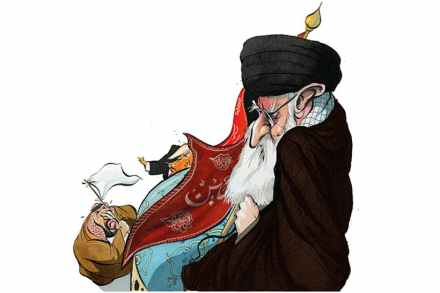
After the assassination of General Qasem Soleimani a month ago, Iran offered Saudi Arabia and its Sunni Gulf allies a stark choice. Stick with your newfound ally Israel and risk having your cities bombed to smithereens in the event of military escalation with the United States, or work on a peace deal with Tehran and stay out of the fray. The Iranians had already proven their ability to launch devastating missile strikes against Saudi Arabia's oil facilities, and the ineffectiveness of the US defensive anti-missile systems supposedly protecting them. Now it is clear that the shaken Saudis have decided to hedge their bets on détente with Iran.

saudis

Ten years on, the Arab Spring has only benefited the Islamists

From our UK edition

A decade after the Arab Spring, good news anywhere is hard to find. In contrast to Asia, Latin America and sub-Saharan Africa, extreme poverty has increased in the Arab region. Both internal economic growth and direct foreign investment have declined. Unemployment, especially among the young, has grown. Education standards are falling. There is less press freedom, less freedom of association. A BBC survey last year found that more than half of Arabs want to emigrate. In the countries where autocratic leaders were overthrown — Tunisia, Libya, Egypt and Yemen — there is nostalgia for the pre-revolutionary era.

The ‘Iran Spring’ delusion

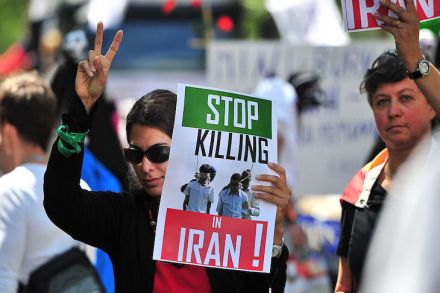
What a difference a week makes when it comes to the western media narrative on the Middle East. When countless millions were mourning Gen. Qasem Soleimani in what was possibly the biggest funeral in history, we were told that Iran and its leadership had never been more united. Now, amid smaller protests inside the country against the mistaken downing of a Ukrainian airliner with mostly Iranian students on board, we are told that the Iranian people are rising up en masse to overthrow their hated leaders. Have the famously sophisticated Iranian people really become so absurdly fickle overnight? There is another explanation for the self-contradictory nonsense we are being told. Whatever happens in the Middle East, there is only one constant.

iranian

Donald Trump has just blown up his goal of isolating Iran

From our UK edition

A blood red flag was raised over the Jamkaran mosque in the Iranian holy city of Qom last week, one normally reserved to commemorate the death of martyrs. This time, it was intended as a call to arms. ‘We have unfurled this flag so that all [Shia] believers in the world gather around it to avenge Qassem Soleimani’s blood unjustly shed,’ said the mosque’s leader. In Tehran, there were calls for bloody retribution for the air strike that killed Iranian general Soleimani — and everywhere, talk of all-out war. If it was also intended to strike the fear of Allah into the hearts of Iran’s Sunni Arab enemies, it certainly succeeded. In Riyadh, there was panic.

The Soleimani assassination is Donald Trump’s biggest gamble yet

From our UK edition

Ever since Donald Trump was elected president on a non-military interventionist platform, sceptics have questioned his commitment to withdrawing troops from the Middle Eastern quagmire and stopping the endless wars he claims to despise. Now he has authorised the assassination of Qasem Soleimani, the head of the powerful Iranian Quds Force, we can be in absolutely no doubt on whether he stands: he’s no different to the other US presidents. It’s a massive strategic gamble. Soleimani was the second most powerful figure in Iran, answering only to the Ayatollah himself. For more than a decade he has been the architect of Iran’s regional military strategy. He helped Iraq and Syria defeat Isis. Among the Iranian masses, he was a hero like no other.

Trump’s common-sense response to the Saudi shooter

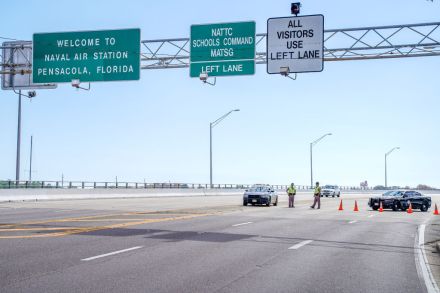
Observing the rocky relationship between the United States and Saudi Arabia is like watching two men balancing on a log in the middle of a fast-flowing river. Even when both manage to get what appears to be a secure foothold, you know it is only a matter of time before they go hurtling back into the water. The latest fall out between the two countries centers on the Saudi Air Force's Mohammed Saeed Alshamrani, who last week murdered three sailors and wounded eight others at Pensacola navy base before being shot dead himself. Amid initial reports that he may have acted in conjunction with a number of other Saudis, wild analogies were quickly drawn with the September 11 attacks on the Twin Towers and the Pentagon, carried out by mostly Saudi hijackers.

pensacola saudi

The story behind Donald Trump’s fake withdrawal from Syria

From our UK edition

That noise you can hear is Donald Trump flip--flopping in the sand. Last week, American troops and dozens of tanks and armoured vehicles moved to occupy oil fields in Syria. The escalation came just half an hour after Trump had tweeted that all US soldiers had left the country and would be coming home. As so often, the President says one thing, then orders the military to do the other. On Twitter, Trump is ending the endless wars. In the real world, he is perpetuating them. Trump’s focus is not really Syria, of course. It is the presidential election next year, and his precious voter base. But he can’t seem to decide if his supporters are peaceniks or bloodthirsty chauvinists. His problem is that they are both and neither.

Al-Baghdadi’s death comes at the perfect time for Donald Trump

From our UK edition

When President Donald Trump speaks at a press conference later today we can be sure he will be milking, for all it is worth, the presumed killing of Isis leader Abu Bakr Al-Baghdadi during a raid on his compound in north-western Syria by US special forces. Trump is said to have authorised the operation last week, and multiple news outlets have confirmed that Al-Baghdadi is presumed dead. For the first time since Trump bombed Syria over President Bashar Al-Assad’s alleged use of chemical weapons against his own people, the US media, and political allies and foes alike, will be celebrating an obvious foreign policy triumph.

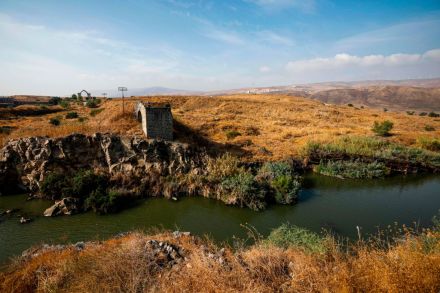
When will the Syria conversation turn to Trump’s ‘betrayal’ of Israel?

The other evening, Fox News host Tucker Carlson appeared to be on the point of literally tearing out his hair as he railed against the relentless and near-universal negative reaction to President Donald Trump’s decision to relocate a few hundred US troops in northeastern Syria. At first glance, it is indeed baffling, even perhaps hinting at a kind of mass psychosis. On the ground in Syria, after all, the fallout thus far has been anything but catastrophic. The Kurds are now protected by the Syrian and Russian armed forces. These countries’ leaders, on the back of US sanctions against Ankara, are negotiating a ceasefire with Turkey.

israel

Pulling US troops out of Syria will prove to be the right decision

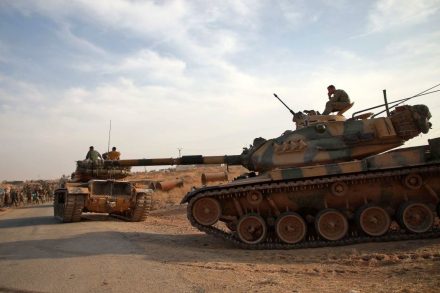
This article is in The Spectator’s November 2019 US edition. Subscribe here. Whenever neoconservatives and liberals chant in unison about American policy in the Middle East — as when they championed the Iraq invasion, for example, or the overthrow of Colonel Gaddafi in Libya, or the thwarted attempt to topple the Assad regime in Syria — it means we are being told a pack of lies. Par for the course is the hysterical response to President Donald Trump’s ‘betrayal’ of the Kurds in the wake of Turkey’s invasion of northern Syria. Turkey’s goal was to repatriate at least two million of 3.6 million Syrian refugees inside Turkey in a border zone controlled, until the invasion began, by the US-allied, Kurdish-led Syrian Democratic Forces.

turkey syria kurds

The alliance between America and Saudi Arabia is over

From our UK edition

The oil-for-security alliance between the US and Saudi Arabia, forged in 1945 when Franklin D. Roosevelt met King Abdul Aziz aboard a US Navy destroyer, is now over. Just look at the American reaction to the attack by Iran on Saudi oil facilities. Secretary of State Mike Pompeo duly called it an ‘act of war’; the Wall Street Journal told us the attack was ‘the big one’. But then nothing: President Donald Trump merely shrugged and declared the US energy independent. ‘We don’t need Middle Eastern Oil & Gas,’ he said. Industry experts warned that such an assessment was premature; but oil prices stabilised and the sound of war drums faded. We are witnessing the beginning of a new geopolitics in the Middle East.

What Syria should teach us about Venezuela

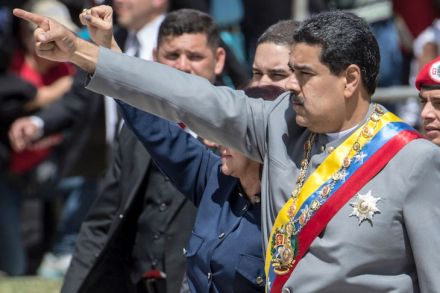
It is no mere coincidence that Donald Trump turned his attention to Venezuela straight after announcing the withdrawal of US troops from Syria. Nicolás Maduro, fighting for his survival on so many fronts at home and abroad, probably hasn't had much time to think about the man who thus inadvertently created the political quagmire engulfing him: Syrian leader Bashar Al Assad. Maduro would do well, though, to brush up on how Assad survived against all the odds, as would Trump. The knowledge could prove invaluable for averting another reckless US push for regime change abroad. Trump's decision last month to accept Assad remaining in power in Syria enraged many Middle East hawks, who long saw Assad's removal as the springboard for war against Iran.

maduro venezuela syria

Is a hanged child rapist part of the persecuted LGBT minority in Iran?

I’ve written repeatedly for The Spectator about how the Western media has a track record of misreporting on the plight of homosexuals in the Middle East. However, an outrageous article by Benjamin Wenthal for the Jerusalem Post on the hanging of a child kidnapper and rapist in Iran, which was picked up by dozens of major news outlets, has introduced new depths of inaccuracy and sensationalism to the coverage. Published under the headline ‘Iran Publicly Hangs Man on Homosexuality Charges’, the article quotes Iranian student media as saying a 33-year-old man was executed in the southwestern city of Kazeroon ‘based on his criminal violations of “lavat-e be onf” – sexual intercourse between two men.

child rapist

Ignore the hawks, Trump’s Syria withdrawal is bold and brave

Warmongers on the Left and Right are united in their fury at President Donald Trump’s extraordinarily bold and brave decision immediately to begin withdrawing all US troops from Syria. For those of us who prefer peace, it is a sure sign that Trump deserves our unconditional support and gratitude, no matter how we view the rest of his presidency. After all, the only other time Trump united the neocons and liberal hawks was when he launched a futile cruise missile barrage last year at an empty Syrian airfield in response to an alleged chemical weapons attack against civilians.

syria

Jamal Khashoggi is the right TIME Person of the Year – for all the wrong reasons

From our UK edition

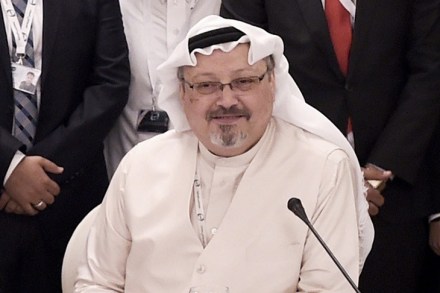
TIME magazine has lost relevance, in the United States and globally. The only thing it is now known for is its Person of the Year issue, the 2018 edition of which was out on Tuesday. Historically, its editors have chosen ‘the person or thing that had the greatest impact on the news, for good or ill – guidelines that leave them no choice but to select a newsworthy – not necessarily praiseworthy – cover subject.’ If only that ambiguous sentiment had determined this year’s choice: killed and imprisoned journalists. The magazine calls them ‘The Guardians’, who were chosen ‘for taking great risks in pursuit of greater truths, for the imperfect but essential quest for facts, for speaking up and for speaking out’.