Carola Binney

Carola Binney

Carola Binney is an undergraduate History student at Magdalen College, Oxford. She writes on student life.

There’s only one way to win the war on drugs

From our UK edition

Earlier this month, I attended a family-friendly music festival in the glorious sunshine. There was stone-baked pizza, a champagne bar and paddle board yoga. There was also quite a lot of ecstasy, ketamine and cocaine. You cannot attend a music festival – even a supposedly wholesome one – without realising how normalised drugs have become among my generation of middle class young professionals. The mention of Class A drug use may conjure images of single-use phones, street corners and sneaking into the toilets – there was none of that. Cheery, well-spoken dealers offered my friends and me their wares as we sunbathed outside our tent; by the stage, fellow attendees snorted lines for all to see.


Beyond the pale | 17 August 2017

From our UK edition

Setting off to spend a year teaching English in Zhejiang province in south-eastern China, I expected plenty of surprises. But what struck me most was something they tend not to tell you about in the guidebooks: the racism. It started when I went around the classroom, asking pupils which city they were from. When I got to a slightly darker-skinned boy, his classmates thought it was hilarious to shout ‘Africa!’ It’s a theme. A girl with a similar complexion was taunted with monkey sounds; her peers refused to sit next to her, saying she smelt bad. I apparently erred when, teaching the word for wife, I showed my students a picture of Michelle Obama. The image of the then First Lady was greeted with exaggerated sounds of repulsion: ‘So ugly!’ they said.

China’s new way to drown out the Christmas message? A sea of tat

From our UK edition

If you think capitalism has blinged up Christmas, you should see what the Communists are doing to it. At this time of year, Chinese cities are dressed up like one big Oxford Street, but with lights that put London’s in the shade. Christmas Eve has become the biggest shopping day of the year. At the school where I taught last year, every classroom had at least three Christmas trees: one outside the door, one inside the door and one at the back. Tinsel ran up staircases, fake snow adorned all the windows. The Chinese have even developed their own Christmas traditions: revellers give each other elaborately packaged apples, and Father Christmas is always pictured playing the saxophone.

Christmas in China

From our UK edition

If you think capitalism has blinged up Christmas, you should see what the Communists are doing to it. At this time of year, Chinese cities are dressed up like one big Oxford Street, but with lights that put London’s in the shade. Christmas Eve has become the biggest shopping day of the year. At the school where I taught last year, every classroom had at least three Christmas trees: one outside the door, one inside the door and one at the back. Tinsel ran up staircases, fake snow adorned all the windows. The Chinese have even developed their own Christmas traditions: revellers give each other elaborately packaged apples, and Father Christmas is always pictured playing the saxophone.

Corbyn supporters are peddling ‘fake economics’

From our UK edition

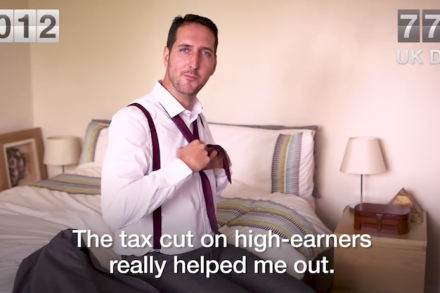
Labour have been up-in-arms this weekend about a viral Conservative campaign video, which used some dubious editing to suggest that Corbyn said ‘No’ when asked whether he would condemn the IRA. In fact, he said ‘No, I think what you have to say is all bombing has to be condemned and you have to bring about a peace process.’ This still doesn’t sound like a full-bodied condemnation, but, that aside, the Tory video still has far fewer views than a similarly dubious one by a Labour supporting group. The clip, entitled ‘We’re all in it together’ was uploaded by The People For Jeremy Corbyn, a grassroots organisation, last weekend. It features a time-lapse of a banker and a nurse (both played by actors) discussing Tory economic policy.

In defence of cultural history

From our UK edition

Why study history? It's a question which often gets asked, and the historian R. G. Collingwood's answer - that history should enable us to ‘see more clearly into the situation in which we are compelled to act’- is one of the best responses. The idea that the study of the past should be applicable to the present has directed the career of Niall Ferguson, who was recently bemoaning the degradation of the subject. Discussing the current focus on race, class and gender in history faculties in a recent speech, Ferguson argued that undergraduates are being robbed of the chance to study events of real significance.

Theresa May should beware of grammar schools

From our UK edition

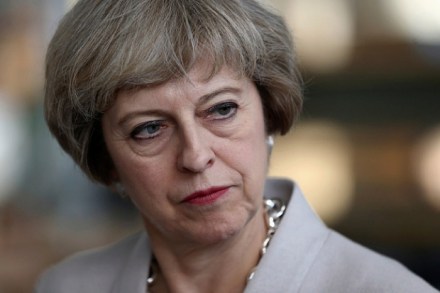
In 1960, my father failed the eleven-plus. He was lucky: his parents could afford to send him to a private school. In 1968 he went up to Cambridge, in 2000 he was elected a Fellow of the Royal Society and last year he retired as head of Theoretical Physics at Oxford. Although it was seldom recognised as a condition in the 1960s, my father’s late academic development and early difficulties with basic literacy skills are characteristic of dyslexia. Dyslexia runs in families,  and I very much doubt that I, a card-carrying dyslexic, would have passed the eleven-plus either. While I may never reach my father’s academic heights, after an inauspicious start to my school career I did well in my GCSEs and A-Levels and graduated from Oxford this summer.

That Cameron is out while Juncker has stayed shows us just what’s wrong with the EU

From our UK edition

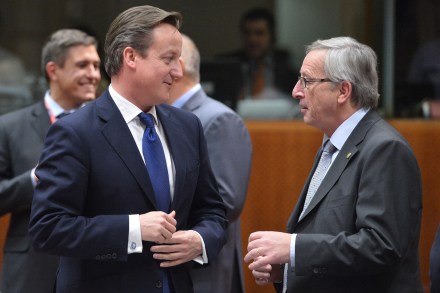
According to Jean-Claude Juncker, the President of the European Commission, the Brexit vote was David Cameron’s fault: ‘If someone complains about Europe from Monday to Saturday then nobody is going to believe him on Sunday when he says he is a convinced European’, Juncker told the German newspaper Bild. Thursday’s vote brought with it the inevitable pressure on the leaders of the campaign for Britain to remain in the EU to resign: Cameron will be gone by October, as might Corbyn if the no confidence motion brought by two of his MPs succeeds. But there was also a sense of inevitability about three notable non-resignations: Juncker is remaining firmly in place, as are Martin Schulz and Donald Tusk as Presidents of the European Parliament and Council respectively.

There’s nothing safe about student ‘safe spaces’ anymore

From our UK edition

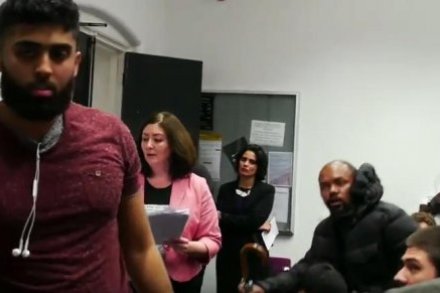
Iranian human rights activist Maryam Namazie was harassed by members of the Goldsmiths University Islamic Society on Monday night, while speaking to the university’s Atheist, Secularist and Humanist Society. Namazie, whose talk was about ‘Apostasy, blasphemy and free expression in the age of Isis’, has been branded an 'Islamophobe' by members of the Islamic Society for her criticism of political Islam and aspects of Islamic theology. Footage of the talk has been posted on YouTube, and makes for depressing viewing: a group of young men in the front row aggressively interrupt Namazie throughout, shouting 'Safe Space!' and one of them eventually unplugs the projector when a cartoon of the Prophet Muhammed is displayed.

The backlash against the Stepford Students is intensifying

From our UK edition

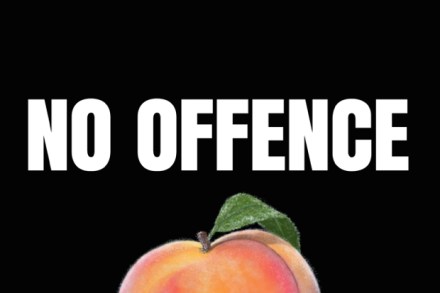
The Oxford University Student Union this week added another feather to its cap on free speech by banning a new student magazine called No Offence from being distributed at Freshers’ Fair next week. The ban was on the grounds that the publication might - you guessed it - 'cause offence'. No Offence was, according to its founders Jacob Williams and Lulie Tanett, set up to 'promote debate and publicise ideas people are afraid to express'. It’s an offshoot of the Open Oxford Facebook group - the open-minded antithesis to some of Oxford’s more notorious social media expurgators - which aspires to 'welcome all view-points, however controversial, and encourage vigorous but respectful discussion'.

Students worrying about ‘value for money’ miss the point of an arts degree

From our UK edition

University towns are already awash with fur-trimmed gowns and proud parents, but behind the smiles there’s a glimmer of resentment: four in 10 of those graduating this year think they’ve been ripped-off. According to a survey of 1000 final-year students by ComRes, students are split over whether they think their degree was good value for money. One factor determining their verdict was their subject, with two-thirds of those studying science, technology, engineering and maths saying their course was worth the fees. Just 44 per cent of humanities and social science students agreed.

Young people want a future, not freebies

From our UK edition

Ed Miliband wants the youth vote enough to have spent an evening with Russell Brand earlier this week. My generation could decide the election next Thursday, and politicians seem to think there are two ways to win young voters’ hearts: celebrity endorsement and self-interest. The battle for the youth vote has hinged around promising to save us money. Now they’re done bickering about tuition fees, the party leaders are busy telling students how we would personally benefit from their governments: Labour would ban unpaid internships, the Tories would help us buy our first homes and the Lib Dems would cut our bus fares by two-thirds. But when it comes to young voters, self-interest doesn’t sell: we want a vision for society.

Voters want visions, and powerful posters deliver them – not Twitter

From our UK edition

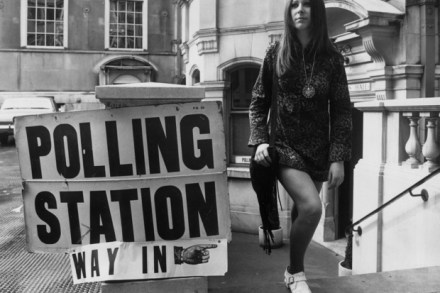
If no-one was very excited about the launch of the Lib Dem’s election poster this morning, it wasn’t just because of the rain. According to The Times, political posters are on their way out. Political parties are spending 50 per cent less on outdoor posters this year than they did in 2010, and unofficial reports have suggested that the Conservatives’ spending on outdoor ads is yet to hit seven figures. By the end of March 2010, the Tories had already splashed out over £3 million. No doubt the barrenness of Britain’s billboards is partly the result of a lack of funds, but it’s also a conscious choice based on the belief that social media will win the election by reaching my undecided generation.

I wouldn’t vote for Marine Le Pen but I can understand why people might

From our UK edition

On Thursday evening, I queued outside for almost two hours to see Marine Le Pen, the leader of France’s Front National party, speak at the Oxford Union. Thanks to protestors, who scaled the debating society's walls and allegedly chased Union officials through the building, I then waited an hour more. About 200 anti-fascist demonstrators gathered outside the Union buildings, holding placards saying ‘Marine Le Pen… Never Again!’ and chanting 'This is free speech, that is a platform'. Queuing quietly, it felt somewhat ironic to be called 'Nazi Fascist Scum!' by angry people in balaclavas.

History is the art of making things up. Why pretend otherwise?

From our UK edition

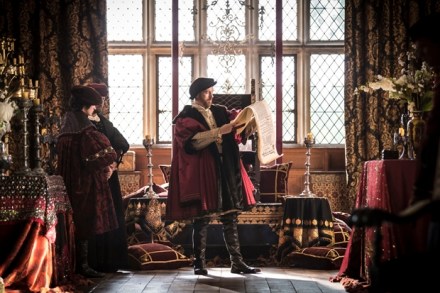
In a recent interview, the celebrity historian and Tudor expert David Starkey described Hilary Mantel’s Wolf Hall as a ‘deliberate perversion of fact’. The novel, he said, is ‘a magnificent, wonderful fiction’. listen to ‘David Starkey on Wolf Hall’ on audioBoom But if Oxford has taught me one thing, it’s that all the best history is. Starkey is a Cambridge man, and maybe they do things differently there. But any perceptive Oxford undergraduate will soon realise that a little bit of fiction is the surest way to a First. What the admissions material opaquely describes as ‘historical imagination’ turns out to be an irregular verb: I imagine, you pervert the facts.

Does Ed Miliband think my generation is lazy, stupid – or both?

From our UK edition

According to Ed Miliband, my generation is about to be disenfranchised by the coalition. He's getting quite worked up about it. On Thursday, he accused David Cameron and Nick Clegg of... “sitting by and watching hundreds and thousands of young people in our country lose their sacred democratic rights.” So what's going on? By what treachery is my generation being disenfranchised? Well, in an attempt to reduce fraud the government is removing the option to register everyone in a household at once - all voters, young and old, must now add themselves individually to the electoral roll. One of the effects of this is that universities can no longer register students living on campus: undergraduate have to do it themselves, like everyone else.

Letting Ched Evans play football would give young offenders a much-needed role model

From our UK edition

On Sunday, Hartlepool FC quashed rumours that they would be signing Ched Evans, the former Sheffield United forward and convicted rapist. In response to the Hartlepool manager Ronnie Moore’s comment that 'if it could happen, I would want it to happen', the club released a statement saying that they would not be signing Evans, 'irrespective of his obvious ability as a football player'.  Following Sheffield United’s example, Hartlepool have been pressured by the public into administering vigilante justice to a man who has been deemed by our justice system to have served the appropriate amount of time for his crime.

Cloakrooms should be free to stop young women freezing to death

From our UK edition

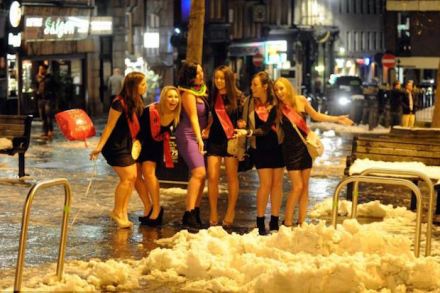
As I wiggled into my tights in preparation for an end-of-term night out, I was faced with the perennial clubbing question: should I take a coat? Logic, and my mum, would say the answer was obvious. My outfit was hardly cosy, and a tipsy walk home at 2am in December is an adventure best braved from within my wardrobe’s most wind-proof, water-proof and fur-lined offering. But the question wasn’t just one of insulation – I had a financial decision to make. The cloakrooms at most Oxford clubs cost between one and two pounds: what did I want more, healthy circulation or a Jägerbomb?

Don’t ban unpaid internships – let interns work from home instead

From our UK edition

An unpaid six month internship costs graduates at least £5,000, according to a study by The Sutton Trust. The social mobility charity has analysed interns’ expenditure on rent, food, transport and other bills while working for free, and found that the average half-year placement in London costs over £6,000. The figure for Manchester was only marginally less ruinous, at slightly over £5,000. While seven out of ten Britons now believe that unpaid internships are unfair because they make top graduate jobs the preserve of the rich, one third of interns don’t receive a wage. My year at Oxford are approaching our penultimate summer as undergraduates, and internships are the hot topic. Financial considerations are key: McKinsey and Co.

Four (more) reasons to loathe Oxford

From our UK edition

Nick Cohen observed in a recent Spectator: 'The graduates of Oxford’s Politics, Philosophy and Economics course form the largest single component of the most despised generation of politicians since the Great Reform Act.' Who could argue? However, Oxford does not only lead the UK in punting, prime minister production and sales of academic gowns. Here are four more nightmarish records held by the city of dreaming spires: 1. Oxford is the most expensive locale in the UK outside of London. The average price-tag on a house in Oxford is £340,864 - eleven times average local annual earnings; also, roughly two-and-a-half times the typical house price in the UK's cheapest city, Stirling, per the figures from Lloyds Bank.