Features

Can these bones live?

BBC Radio 4  – The Reith lectures A few years back, before I began writing novels about the Tudors, my partner and I bought a new-build house in Surrey. We bought it off-plan, and watched it grow out of an open field. The site looked like a battlefield from the Great War. It was a churned-up wasteland filled with shattering noise, and if you visited it after working hours, you felt as if you had arrived in the middle of a temporary truce, and the ground beneath your feet was still shaking. There was a sea of mud in which stood pipes and half-built walls and shrouded piles of bricks, and abandoned diggers stood in ditches, their jaws encrusted with clay. The evenings were silent. There was no birdsong, because no trees: nature had been eradicated.

Harry Potter and the millennial mind

Which Hogwarts house would you be in? There are four options, and everybody fits into one. The brave and chivalrous are put in Gryffindor. Patient and loyal types head to Hufflepuff. Ravenclaw is for the witty and intelligent. The cunning and ambitious — and potentially evil — are destined for Slytherin. In the Harry Potter books, a pugnacious talking hat, known as the ‘Sorting Hat’, carries out the selection. If you are like me and under 35, you probably didn’t need that explaining. Almost every young person who can read has read Harry Potter — 450 million copies have been sold worldwide. Not to do so was an act of rebellion. On Monday, fans will celebrate the 20th anniversary of the first book’s publication — two decades on and J.K.

The Maybot 3000

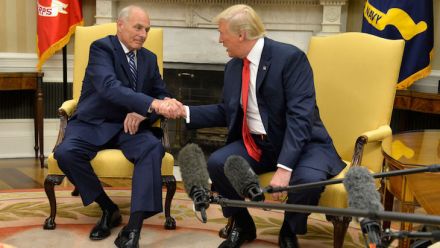
Had Theresa May won the election with the landslide she expected, she’d have fired several of the cabinet with her trademark brutality. They knew who they were. And last Monday, three of them took the opportunity to tell the Prime Minister where she had gone wrong. In the first meeting of the political cabinet since she blew her party’s majority, Philip Hammond asked why there had been no economic message in the campaign. Andrea Leadsom said that while May had repeatedly claimed the election was all about Brexit, she had never said what Brexit was actually for. The most pointed contribution, though, came from Sajid Javid, who lambasted the high-handed way that May’s team had run No. 10. However, this was ritual humiliation, not a mutiny.

Oceans apart

Readers of The Spectator will be familiar with the argument that climate change, like Britpop, ended in 1998. Raised on a diet of Matt Ridley and James Delingpole, you may have convinced yourself that climate scientists, for their own selfish reasons, continue to peddle a theory that is unsupported by real-world evidence. You may also have picked up the idea that the ‘green blob’, as it has been called in these pages, is somehow suppressing the news that global warming is a dead parrot. That was the case made by Dr David Whitehouse, science editor of Lord Lawson’s Global Warming Policy Forum in a Spectator blog in February last year.

Corbyn copy

Since the election, Jeremy Corbyn has been parading himself as prime-minister-in-waiting. ‘Cancellation of President Trump’s State Visit is welcome,’ he tweeted this week, ‘especially after his attack on London’s Mayor and withdrawal from #ParisClimateDeal.’ The message was clear: unlike ‘Theresa the appeaser’, Jeremy is willing and able to tell that climate change-denying Islamophobe across the water to get stuffed. Jez we can, Jez we can. There may be another reason why Corbyn is glad to think that Trump might not come to these shores, and that’s because the more the British see of the dreaded Donald, the more they might recognise how much he and the Labour leader have in common.

Fad diets are just junk

Why do we do it? We really need to stop supporting the snake-oil industry. We know there is no such thing as a miracle diet, a magical health cure, a mystical practice or a strange (and always expensive) product that is going to make us youthful, happy and, above all, thin. When Planet Organic first opened in Westbourne Grove, it was a great shop, with a butcher, fishmonger and baker as well as a good range of veg and groceries. Now a third of the shop is shelf upon shelf of supplements, beauty preparations and diet books; another third is a café; and what meat and fish there is comes in vacuum packages. You can’t blame the owners. We are addicted to coffee and a cup of it nets the shop about £2 in profit.

Alt-hate

At the start of the year, a Facebook friend messaged me, telling me that she and a chum had been asked to leave their north London book group (how I hugged myself on reading those words!): she for posting a link on Facebook to a Spectator piece by me — pleasingly and rather reasonably headlined ‘The Brexit divide wasn’t between young and old but Ponces and Non-Ponces’; her friend for liking it. I was naturally fascinated, my curiosity driven by righteous indignation and unrighteous glee. I asked for more information and Judith — my penpal’s suitably heroic name —wrote back: ‘The last line from the email of the man who runs the book group was “I am therefore asking you to resign from the group.

The Macron miracle

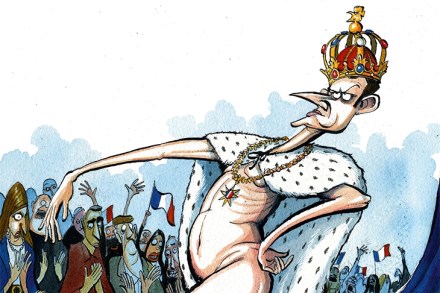
 Paris While Theresa May flounders in a mess of her own making, Emmanuel Macron is striding out on to the sunlit uplands of French politics. Six decades after Charles de Gaulle set up the Fifth Republic, his seventh successor is charging ahead with his attempt to restore a quasi-monarchical authority to the occupant of the Elysée Palace. After three hollow presidencies, the 39-year-old hope of the European reformist centre is bent on turning the clock back in terms of presidential power with a broad-based electoral appeal, positioning himself above the sclerotic political world that has alienated most voters and blocked structural change in France since the 1980s.

To catch a jihadi

My taxi was about 90 seconds behind the murderers who struck on London Bridge last week. My wife and I saw their victims on the road. It made no sense until we stopped and got out. Then with horror we realised what we were witnessing. As everyone has already said, the emergency services’ response was flawless. A police 4x4 screeched up behind and two officers jumped out with submachine-guns. Within minutes, we learnt afterwards, the jihadis had been shot dead — but only after they had killed eight people, and injured scores more. Hundreds of others will have been on that bridge or in Borough Market. I suspect all of us will be thanking the police, but also wondering how it came to this.

Big trouble in little Qatar

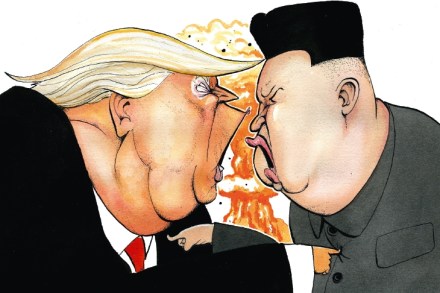
 Washington DC At 8:06 on Tuesday morning the Tweeter-in-Chief reached for his Android phone and told the world: ‘During my recent trip to the Middle East I stated that there can no longer be funding of Radical Ideology. Leaders pointed to Qatar — look!’ At 9:36 a.m. we heard from @realDonaldTrump again. ‘So good to see the Saudi Arabia visit with the King and 50 countries already paying off. They said they would take a hard line on funding… extremism, and all reference was pointing to Qatar. Perhaps this will be the beginning of the end to the horror of terrorism!

Post-truth, pure nonsense

For as long as there have been politicians, they have lied, fabricated and deceived. The manufacture of falsehood has changed over time, as the machinery becomes more sophisticated. Straight lies give way to sinuous spin, and open dishonesty disappears behind Newspeak and Doublethink. However, even if honesty is sometimes the best policy, politics is addressed to people’s opinions, and the manipulation of opinion is what it is all about. Plato held truth to be the goal of philosophy and the ultimate standard that disciplines the soul. But even he acknowledged that people cannot take very much of it, and that peaceful government depends on ‘the noble lie’. Nevertheless, commentators are beginning to tell us that something has changed in the past few years.

Let there be dark

Who’s afraid of the dark? Who now fears shadows and bumps in the night? Where do you even find any dark to be afraid of when your phone is only a pocket away? One swipe and the screen lights up blue-white like the old explorer’s match in a cave. If I wake in the night I don’t bother with the bedside lamp. A bar of light comes under the blinds. Lights from the flats opposite. Fire-escape lights from the hotel next door. The jaundice glow of London light pollution. Even staying with my parents, on the edge of a village, there’s no real darkness. There are lights from the lane, lights from the next farm, lights from the main road on the hill. Intruder lights come on each time a muntjac makes for Mum’s vegetable garden in the small hours. Click. Click. Click.

Generation wars

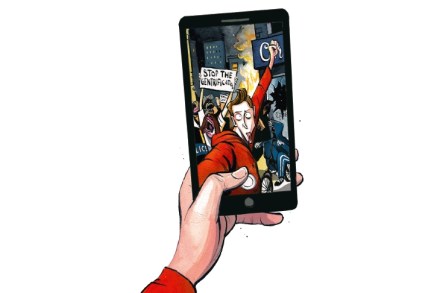
British general elections have often evolved from contests between parties into battles between two opposing themes or ideas. In 1964, it was modernity vs the grouse moors; 1979, trade unionism vs individualism; 1983, Cold War strength vs unilateral nuclear disarmament. This year was supposed to be the Brexit election, yet instead developed into something loosely associated with that, but at the same time quite different: it became the intergenerational election. Jeremy Corbyn was never supposed to have had a shout. Way to the left of any Labour leader who had ever won a general election, his economic policies were considered by many to be simply incompatible with the values of the modern, aspirational British population.

Weak and wobbly

When Theresa May decided to go for an early election, she transformed the nature of her premiership. Up to that point she had been the steady hand on the tiller, righting a ship of state buffeted by the Brexit referendum. By going to the country to win her own mandate, she sought to become more than that. She wanted her own sizeable majority and, in so doing, invited comparison with the two prime ministers who have done the most to shape modern Britain: Margaret Thatcher and Tony Blair. She was asking to be judged against their electoral triumphs. At the start of this campaign, May looked comfortable in this company. The polls suggested that she would get a higher vote share than either Thatcher or Blair and win a majority to stand any comparison with their landslides.

Chez newts

The dragon hung motionless above the surface of the earth, belly picked out in the colours of fire and a stegosaurus zigzag along his back. A beautiful thing, this dragon, but not easily seen: you must go out at dusk in spring with a torch and a knowledge of the places they lurk. Here was just such a spot. It was his season of grand passion, and yet the expression on the face was remote, almost indifferent. A great crested newt. Floating in a pond. It is the dread of every developer: to pay decent money for a mandatory ecological survey and to have the surveyor find a population of them right in the middle of your working area, meaning compensation, relocation and, in some cases, cancellation. It’s easy to mock this process.

Writing wrongs

Does anyone still care about handwriting? Although it was for centuries the medium and motor of daily life, handwriting has become, like public libraries and secondhand bookshops, a rare sight. One in three British adults now uses pens only to sign their names. Starved of opportunity, most people’s writing has regressed into a near-illegible scrawl. When even the leader of the opposition confesses that he can’t read his own writing, something is up. So should we cut our losses and follow Finland, which since 2015 has taught keyboard lessons in lieu of handwriting? Emphatically not. Handwriting remains the most cogent vehicle for personal expression. If we let the skill lapse, we all lose out.

Duchy original

The Cornish nationalist party Mebyon Kernow (‘sons of Cornwall’) is not contesting any seats in the general election. Its leader of 20 years, Dick Cole, said its members were ‘exhausted’ after their local election campaign — it retained four councillors at ‘County Hall’ (Cornish nationalists always put County Hall in inverted commas, to avoid the inference that the Duchy is a mere county), and were only six votes shy of getting as many seats as Labour. It did not have the resources to fight an election so soon after 2015, when all its candidates lost their deposits. You might find it less surprising to learn that Mebyon Kernow is not standing than that Cornwall has its own party at all.