Features

A bug in the system

I’ve lost track of the number of features I’ve seen joyfully hailing the edible insect revolution, entitled ‘Grub’s up!’ Barclays has released a report which predicts that the market for edible insects will hit $8 billion by 2030, and you can already buy Smoky BBQ Crunchy Roasted Crickets in Sainsbury’s. Research last month showed that certain species of edible insect contain higher quantities of antioxidants than freshly squeezed orange juice. Bugs are officially on track to become not just the ethical and environmental solution to protein provision, but a superfood as well. But wait. As with most food fads, these pronunciations are coming early, and are based on scant evidence.

View from the EU

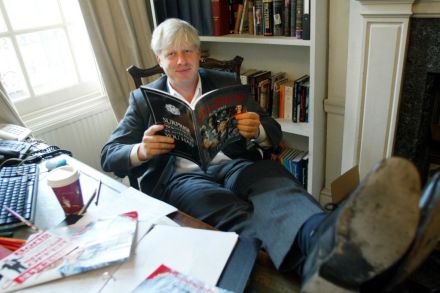
The conviction has been spreading among French people in recent days that les Britanniques have just elected Donald Trump. The papers are filled with meditations on British anxieties over lost empire, descriptions of Boris Johnson’s hair and the wildest speculations about what he might do as Prime Minister. Every squib about European overregulation that Johnson wrote during his stint as a Brussels correspondent for the Telegraph in the 1980s and 1990s has by now been vetted, stripped of its humorous intent and found wanting. Johnson exaggerated the threat of European regulations to prawn cocktail-flavoured crisps! Nowhere did he cite a single EU directive banning the large-sized condoms that an Englishman requires!

Who’ll blink first?

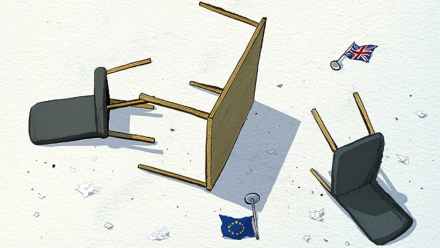
On Sunday, Boris Johnson’s cabinet ministers were summoned to a conference call for an update on his Brexit strategy. The EU had not yet indicated any shift in its position, he said, but that should in no way deter the government from its current course. He was confident, he told his cabinet, that if he stuck to his guns the EU would move eventually. This, then, is the new government’s position. The Prime Minister told ministers that he does not think no deal is the most likely outcome — but if the government is not prepared for it, nothing will change. Is he right? Will the EU blink first? Many in the EU are unwilling to give ground. They don’t think the UK can possibly get ready to leave the EU with no deal by 31 October.

The diverse party

I’ve never voted Conservative and I never will. Having been raised in a working-class home, I can’t get past the fact that had the Labour party not come into being, the Tories would have kept my people serfs for as long as inhumanly possible. But I’m also an extreme Brexiteer; far from the past three years being boring (anyone who says this reveals themselves as such a monumental dullard that we should remove their right to vote), I consider that this nation spent the four decades up to 23 June 2016 sleepwalking into the shadowlands of EU dreariness — and disaster. Only a halfwit could fail to comprehend that the whole repulsive gravy--train is set to run into the buffers very soon and that it makes sense for us to pull the communication cord and hop off ASAP.

An alternative route

Just 48 hours before the conclusion of the Conservative leadership contest, Allan Cook, chairman of HS2, wrote to the government to confess that the costs of the project could rise from the current projection of £56 billion to as much as £86 billion. Given that Boris had already announced that he is to review the project, it was pretty much akin to a condemned prisoner writing a letter of confession. The Prime Minister is not fond of doomsters and gloomsters who pooh-pooh things for the sake of it, and as we know is partial to the odd vanity project. More-over, he seems as fond of trains as he is of model buses.

Great and small

‘I’m not going to your place, it looks like a crack den.’ It’s not exactly a vote of confidence when your mother describes your home that way. Admittedly, the bedsit I have lived in for ten years is tiny. There is no central heating. The white blinds have faded to yellow. It’s not much good for house parties: I could fit four people, five if I sat between the sink and the microwave. However, I would like to defend living in bedsits. Whenever I hear people complaining about housing in London, I wonder whether they have considered a bedsit. I’m autistic and work as a part-time carer, but even on my salary I was able to go on holiday abroad four times last year, thanks to my living arrangements. In London, rent is my biggest expense by a huge margin.

Johnson & Johnson

To understand Boris Johnson, you have to understand the figure who has inspired him, shaped his worldview and accompanied him throughout his career. Admittedly Samuel Johnson has been dead since 1784, but his importance to Boris is unquestionable. Our next prime minister thinks the other Johnson is a ‘genius’ who ‘gave the world compassionate conservatism’. Britain, Boris once wrote, ‘has never produced an author with a better or more generous understanding of human nature’. It’s not just that Boris admires Samuel’s essays, his poetry and the pioneering Dictionary of the English Language. The influence goes deeper than that.

Best of three

With Boris Johnson finally in No. 10 we now have a prime minister who says he is committed to Britain leaving the EU on 31 October, deal or no deal. According to popular wisdom, the only way of avoiding the latter is for the government to negotiate a modified version of Theresa May’s deal, perhaps with the removal of the hated Irish backstop, or at least with a more easily digestible version. But these are not the only two options. As Boris hinted during his leadership campaign, only to be unfairly cut down, there is a third way. May’s deal is based on a withdrawal agreement (WA) negotiated under Article 50 of the Treaty on European Union.

The Boris show

Boris Johnson’s first 100 days will make or break him — which is what makes his premiership unlike any other. In his favour is his ability to rally support in the country; against him the realities of a hung parliament. How will he begin? It’s already clear that Boris Johnson intends to be an unconventional prime minister. His personality is such that he’s likely to eclipse all else in government. This is going to be the Boris Johnson show. Supporters and critics alike will be determined to keep him in the spotlight. He won’t change his style now that he has got the top job and privately, he is dismissive of those calling for a more sombre — ‘statesmanlike’ — tone. Just as significantly, his No.

Antisocial media

Two considerable injustices were undone this week. The first was the reinstatement of Sir Roger Scruton to the government’s ‘Building better, building beautiful’ commission. The second was the prosecution of Carl Beech for fraud and perverting the course of justice. The cases may be very far apart in their details, but their origins lie in precisely the same contemporary malady. Scruton was sacked from his unpaid position in April. The root cause was a doctored and false interview carried out by George Eaton. The New Statesman subsequently apologised for misleading its readers.

Poles apart | 18 July 2019

Have you ever seen a Pole on British television? Poles are the biggest immigrant group in Britain, numbering between 900,000 and one million, so you might think they would be all over the TV. But no, there are hardly any. There is a Polish character on Coronation Street, who might turn out to be a sex-trafficker. There was also a Polish character on EastEnders, although the actor who played him left the show to become the Pole on Coronation Street. As a British person living in Poland, I have spoken to many Poles who have lived in the UK. They have told me eye-widening stories about exploitation, crime, poverty and xenophobia, but also about dedication, luck, success and self-discovery.

Watson’s new plot

Ever since Jeremy Corbyn was elected as leader of the Labour party, many of his MPs have dreamed of deposing him. They’ve tried mass shadow ministerial resignations, a no-confidence motion, even a formal leadership contest — but to no avail. Some, like Chuka Umunna, left the party, hoping (in vain) that others would join their breakaway group. Other MPs gave up hope, resigned and found jobs outside of politics — concluding no plot would ever work. But that might now be changing. The Corbynites, who have stuck together for so long, are fighting with each other. Party members, once the human shield who protected their leader, are beginning to doubt him.

Penned in

Cynical old hacks like me have been amused by the chorus of establishment applause for the Mail on Sunday’s great Kim Darroch scoop. Our elected masters were outraged, rightly, by threats from the Met’s Assistant Commissioner Neil Basu to criminalise editors who publish leaked memos. Politicians left, right and centre condemned an assault on press freedom. Alan Rusbridger, saintly ex-editor of the Guardian, demanded to know what they taught budding bobbies in police college these days. ‘I would like to suggest a new and compulsory course,’ he said. ‘Let’s call it “The Basics Of Free Speech”. Lesson number one. The police do not tell newspaper editors what to write.

Test match

Why do we need tie-breaks and photo finishes? If competitors have been nip-and-tuck all the way, why can’t they just share victory? England supporters who watched the ICC Cricket World Cup final might have been febrile with joy when the extra-time ‘super over’ ended in another tie, giving England the margin on boundaries, but New Zealand’s Black Caps lost by less than a whisker. Why shouldn’t they have halved the triumph? Why shouldn’t Roger Federer, who went toe-to-toe with Novak Djokovic in the longest-ever Wimbledon final, have lifted one side of that famous trophy? The answer is that human beings need resolution. Spectators need to know the thing has been finally settled. Professional sport is a test of nerve; it is not simply a physical contest.

Kent’s new Rose

East Kent is bracing itself. Its Church of England clergy are enjoying their last quiet months before Rose Hudson-Wilkin arrives as the new Bishop of Dover in the autumn, replacing Trevor Willmott. History is being made — the C of E is to have its first black woman bishop. But some members are clutching their heads in despair at what they see as Justin Welby’s predictably flashy appointment. Behind the scenes, there’s a lot of sighing going on. Rose Hudson-Wilkin is the Chaplain to the Speaker of the House of Commons. Known for her dangly earrings, she is widely loved in the Palace of Westminster and is in her element as she strolls the corridors in her red clericals, purveying hugs and prayers at moments of political crisis.

Health warning

Everyone agrees something dramatic has to be done to help the NHS. It is crumbling and the canary in the mine is general practice. I work as a psychiatrist but my GP colleagues are almost all frazzled, overworked and frustrated at not being able to give the care they want to their patients. They’re quitting in their droves. So it makes sense that politicians, desperate for a quick and easy answer to an overwhelming and complex problem, have leapt on technology as a solution. And, in particular, on  the idea of an app that offers a GP consultation via your mobile phone. In theory, it sounds great: the patient can dial up, speak to and (via phone camera) see a doctor, who could be anywhere. The poster boy is an app called GP at Hand, run by British start-up Babylon.

Sue the Normans!

Restorative justice for the victims of colonialism is an idea whose time has come. A few years ago, the Indian diplomat Shashi Tharoor suggested Britain pay India compensation to atone for centuries of colonial rule. ‘I’d be quite happy if it was one pound a year for the next two hundred years,’ he said. In April, Cambridge University announced a two-year study into how buildings and wine cellars might have been constructed on the backs of slaves. ‘There is growing public and academic interest in the links between the older British universities and the slave trade, and it is only right that Cambridge should look into its own exposure to the profits of coerced labour during the colonial period,’ said Vice-Chancellor Stephen Toope. Too right.