David Gunnlaugsson

David Gunnlaugsson served as prime minister of Iceland

Iceland is used to living in the shadow of a volcano

From our UK edition

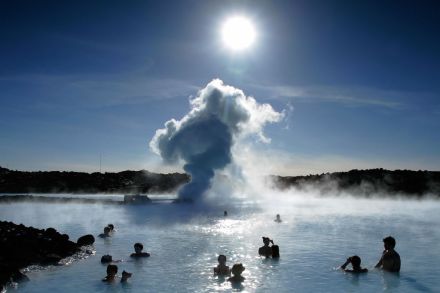
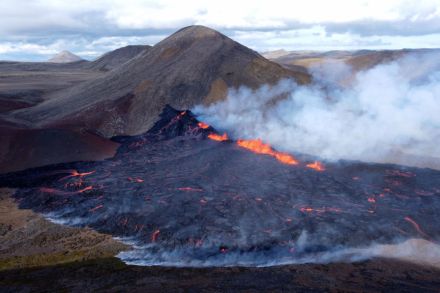
Iceland’s twelfth biggest settlement has been abandoned. For the past few weeks, Grindavík, a thriving town with a strong community of working people and a long history going back as far as 930 AD, has experienced terrifying earthquakes. The population was then evacuated after a magma dyke started pushing its way up to the surface. The dyke stretches for several kilometres, past an important geothermal power plant and the Blue Lagoon geothermal spa, then directly under the town and into the ocean. The magma is searching for a way up and getting closer to the surface. An eruption might begin at any moment, even before I finish this article. Hopefully it either stops soon or at least erupts in an uninhabited area.
How trans ideology took over Iceland

From our UK edition

Just as I sat down to watch the Friday evening news last week, I received a distress call. On the phone was a man I had never met. He was desperately searching for a venue for a lesbian, gay and bisexual organisation wishing to hold a one-day seminar taking place the next day.This was at the height of Iceland´s annual pride week and the organisation had arranged to hold their conference at an auditorium rented out by the National Museum of Iceland. A few days earlier the museum had suddenly cancelled the event following complaints by activists, who objected to their views on trans rights. How did we get to a point where public institutions and political parties are threatened for hosting a meeting to discuss human rights issues?

Why Britain will feel the cold more than Iceland this winter

From our UK edition

A winter of discontent is underway in Europe. Germany, France and Britain are the biggest economies in Europe: all face a battle to keep the lights on over the coming months. There are warnings of energy rationing, blackouts and the forced closure of factories as the continent weans itself off Russian gas. How did it come to this? The countries that drove the industrial revolution are out in the cold. Europe is stuck in a quagmire of its own making. But these countries could do worse than look north – to Iceland – for inspiration on how to make it through winter. As the name suggests, my home country can get rather cold in winter when the temperature can hit -30 °C. In fact, it is chilly in Iceland most of the year; even in summer, the average temperature is 10°C.

A woke church is doomed to fail

From our UK edition

My church attendance leaves something to be desired and I can’t cite Bible verses for every occasion. Yet for as long as I can remember, I have been a staunch supporter of the Christian church. But while I’m always willing to speak up for the church, it is not always willing to defend itself. Iceland became a Christian country over a thousand years ago. Here, as in other Western countries, the teachings of Christianity and the work of the church have been enormously influential in shaping our societies. Yet all too often nowadays, the church in Western societies is silent on the issues that matter. All too often, it fails to offer even a basic defence of Christianity and Western values.

A defence of Priti Patel

From our UK edition

Claims that Priti Patel broke the Ministerial Code and the resulting furore have exposed one of the greatest problems facing modern politics. No, not the widespread bullying of civil servants by ministers. But rather a systematic breakdown in the effectiveness of the fundamental ideals of liberal democracies. We politicians have for years increasingly outsourced political power to various incarnations of an unelected establishment: civil servants, bureaucrats, experts, committees and quangos. In so doing, we are giving away something that is not ours to give, effectively disenfranchising the voters.  Political power is owned by the electorate and only lent to their representatives for a few years at a time.

Iceland and the story of a very British invasion

From our UK edition

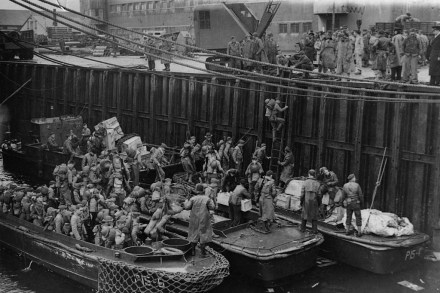
May 10, 1940 is known in Britain as the day when Winston Churchill became prime minister. In my home country of Iceland that same day, 80 years ago, is remembered for a very different reason. On the day Churchill took control of defending the United Kingdom against invasion, Iceland was invaded: by the United Kingdom. When the invading force arrived in Reykjavík in the early hours of the morning they were met by a policeman on a bicycle. What followed turned out to be a quintessentially British – and simultaneously Icelandic – affair. Since gaining independence in 1918, Iceland had stuck to a policy of neutrality. Britain had already offered the country protection and trade deals in exchange for joining the Allies.

Iceland has good and bad news about the coronavirus

From our UK edition

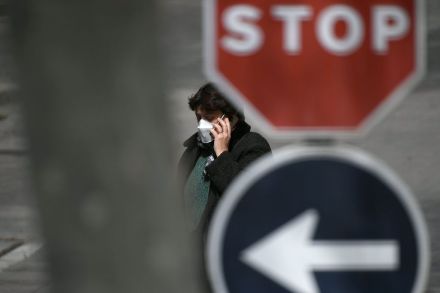
Iceland’s 648 confirmed cases of coronavirus seem to indicate that our country now has one of the highest infection rates per capita in the world. But what do confirmed numbers really tell us about the spread of the virus? Only a few weeks ago, planes filled with passengers returning to Iceland from ski resorts in Italy and Austria continued to land. These aircraft brought with them an influx of people infected with coronavirus. In a matter of days, it was clear that coronavirus had well and truly arrived in Reykjavik. But while the number of cases in Iceland is alarming, these figures are also testament to a rigorous testing programme which is virtually unparalleled anywhere in the world.

Iceland’s melting glaciers are nothing to panic about

From our UK edition

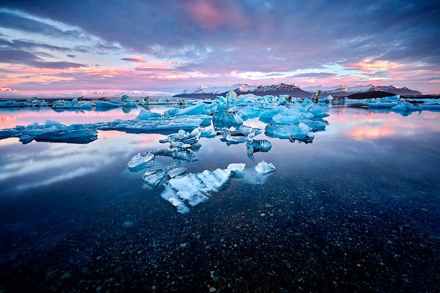
Is Iceland on the global warming front line? You’d be forgiven for thinking so. We’ve all seen the documentaries where teary-eyed reporters stand perilously close to melting glaciers. In August, a funeral was even held for the first Icelandic glacier ‘lost to climate change’. Foreign dignitaries now hardly visit my country without taking a trip to witness the ‘horror’ of what is unfolding. They return home telling stories of how they have seen for themselves the effects of climate change. But the truth is this: Iceland’s melting glaciers are nothing to panic about. No, I’m not a climate change ‘denier’. It’s clear to me that rising carbon dioxide levels are having an effect on the planet.

Why the EU should listen to Boris Johnson – not Parliament

From our UK edition

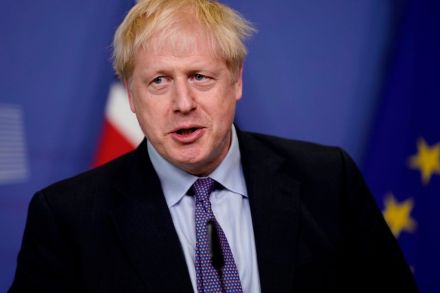
Boris Johnson has been criticised for sending the European Union a letter conveying his real opinion about a Brexit extension along with a photocopy of the letter Parliament dictated and forced him to send. Yet the Prime Minister was entirely justified – and right – in doing so. Parliament certainly can – and should – decide what a Government is allowed to do. But no parliament can tell a prime minister what to think, what to feel or what to believe. And the consequences of MPs attempting to do that could quickly backfire.  Take the European Union. Dealing with the EU is the role of the executive. When my government decided to withdraw Iceland’s application for EU membership, it was an executive decision. Parliamentary approval was not sought.

Parliament wants to destroy the UK’s negotiating position

From our UK edition

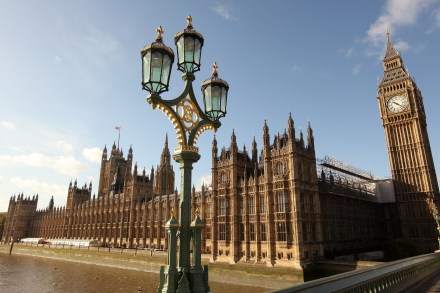
For onlookers it is astonishing to see the British establishment, commentators and a majority of MPs try to scuttle the negotiating position of their own country in its most important negotiations in living memory. Admittedly Iceland, my small country, has had its own share of fifth column interventions in times of crises. Still, it is heart-breaking for a Britophile to watch a country that has been a world leader in diplomatic strategy for centuries – a country that has persevered through existential challenges and achieved incredible things – turn against its fundamental interests. How can anyone imagine, or try to convince others, that negotiating, while stating that not accepting a deal would be illegal, can result in an acceptable outcome for the UK?

Why Britain, like Iceland, will thrive outside the EU

From our UK edition

I have no doubt that Britain will thrive after leaving the EU, whether or not it leaves with a deal. I say this as a former prime minister of a country, Iceland, which left the EU before it had even joined — and which went on to prosper in a way which would have been impossible had its application for membership been carried through to conclusion. I think Britain can learn from Iceland’s experience and find a way to avoid any major disruption when 31 October comes round. In late 2008 Iceland suffered especially harshly from the international financial crisis. The country’s banking system experienced a near-total collapse. The value of the currency tumbled, inflation surged, government debt as a percentage of GDP more than tripled in an instant.