Features

An ‘I’ for a ‘my’: why we’re terrified of getting our grammar wrong

Jonathan Agnew recently described off-the-record interviews as those where you agree that it’s ‘between you and I’. Last month, Jess Phillips tweeted that she had ‘read a few wild accounts of Boris Johnson and I in the lobby’. And a Times journalist wrote about someone who had ‘made Jenny and I feel so welcome’. All three are articulate, intelligent people. And yet all three wrote ‘I’ where they meant ‘me’. It’s happening more and more. The only explanation can be self-doubt. Give any of these people a second to think about it, and they’ll reply that yes, of course they should have said ‘me’. It’s easy to work out: just remove the other person from the sentence.
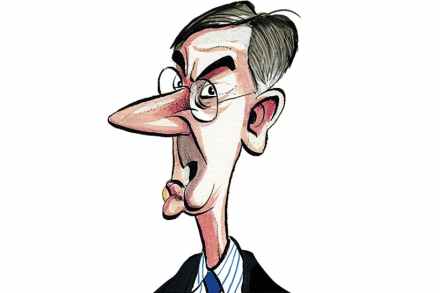
Jacob Rees-Mogg: ‘I am enormously environmentally friendly by driving old Bentleys’

Jacob Rees-Mogg sits at a mahogany table in his office drinking black coffee from a Spode cup. Across from him sit three aides — laptops out and ears pricked. These days, the Moggster comes with an entourage, and their determination to be present sometimes surprises him. ‘I kept on saying to them on Sunday that they didn’t need to come to the thing in the evening but I think they’re worried about me saying the wrong thing!’ They’d have had good reason to worry. Since his election in 2010, Rees-Mogg has been one of the most quotably outspoken Tory MPs: now he is Leader of the House of Commons, his words carry more weight.

Tat Britain: Museum gift shops are naff – but necessary

Exit through the gift shop. Pick up a postcard, a magnet, a novelty eggcup in the shape of Queen Elizabeth I. Treat yourself to a replica Rosetta Stone, a Babylonian bookend, a build-your-own Leonardo trebuchet. Tuck your little one up at night with a cuddly Anubis the dog. Nicholas Coleridge, chairman of the Victoria & Albert Museum, has put the tat among the pigeons by telling the Cheltenham Literature Festival that the V&A shop is more successful than the BM’s.

Pax Russica: as Trump abandons Syria’s Kurds, Russia is ready to expand its empire

While American troops were hurriedly leaving north-eastern Syria, a young female Kurdish politician called Hervin Khalaf was pulled from her car and executed by the side of the road. Actually, the Kurdish media said she was raped and then stoned to death. They blamed one of the Arab militias being used by Turkey in its invasion. A grim video posted online shows a man holding a Kalashnikov nudging her body with the tip of his boot, as you would a dead animal. The video has not been authenticated and the militia accused of doing this says it was miles away at the time. But in Khalaf the Syrian Kurds have found a martyr to the American ‘betrayal’. She was a human rights activist who formed her own political party to bring Arabs and Kurds together.

The Canadian election is turning into a comedy of cringe

Next week my compatriots will cast their votes in what has arguably been the worst Canadian election ever. By ‘worst’ I don’t mean allegations of voter fraud or political corruption or scenes of civil unrest but a collective release of hot prairie wind followed by a vague sinking sensation — the feeling of a prosperous nation of decent people settling into a new low of political disillusionment. The campaign kicked off with a bang, as Time, a US magazine, humiliated the Canadian press by breaking the story of the year: yearbook images of our dreamboat PM — the thinking non-gender-binary person’s gluten--free crumpet — cavorting in blackface back when he was teacher at a private Vancouver high school. Since then the spiral has continued.

Should Muslim parents be allowed to challenge LGBT lessons?

We saw two different worlds, or at least two different value systems, collide in the High Court in Birmingham this week. On one side there was Sarah Hewitt-Clarkson, the headmistress of Anderton Park, a little primary school in Sparkhill, a largely Pakistani bit of the city; on the other, two men who represent Muslim parents there. You may well have heard about the case. It has turned into one of those totemic issues: tolerant Britain vs backward religious people. At issue is the question of whether and how children should be taught about gay relationships — and whether and how parents who don’t like it should be allowed to protest about it.

The commercialisation of shooting may kill the whole sport

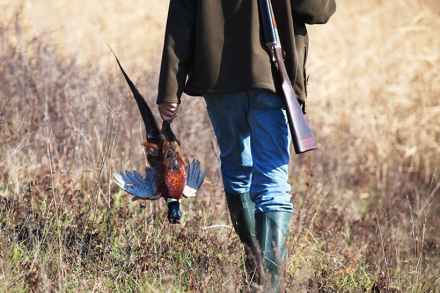
A few years ago I was sitting on the sofa at Sandringham enjoying a ham sandwich with the Queen’s then-head gamekeeper, David Clarke. The thing about working for the royals, he said, is that if a drive’s a flop, they completely understand. What Clarke meant is that even if no royal bags a bird, they won’t complain. It’s about the day, not the numbers dead. Sandringham (unsurprisingly) provides a snapshot of a bygone sporting era, a time when most shooting syndicates were collections of friends and locals, before entrepreneurial types sussed there was a few quid to be made out of shooting. Nowadays, armed with just an iPhone, a bloke on his City law firm lunch break can book a day where a bag of 500 pheasants is guaranteed.

Germany’s ailing economy can’t afford a no-deal Brexit

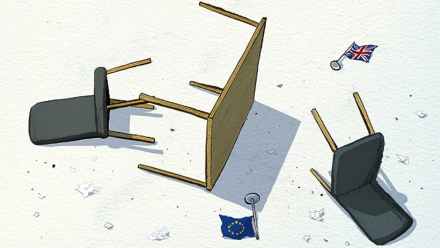
The UK was the ‘sick man’ when we ‘joined Europe’ in 1973. Now, with Britain on the cusp of leaving, the European Union’s largest economy is decidedly out of sorts. After failing to recover over the summer, Germany is now almost certainly in recession. The state of the fourth biggest economy on earth always matters — but with Germany dragging down the broader eurozone, its declining health could decisively impact Brexit negotiations too. Politically, Brussels and Dublin are bullish. They have dismissed Boris Johnson’s proposals, gambling on an extension and perhaps Brexit being cancelled entirely. But such intransigence could yet cause a disorderly no-deal Brexit — which would have a pretty big impact on all major economies on the continent.

Could this self-made billionaire become France’s first Muslim president?

The French writer Michel Houellebecq has a disconcerting habit of correctly predicting unsettling events. In 2001 in Plateforme he predicted a terrorist attack on tourists that duly occurred in Bali a year later. Sérotonine, written last year, foretold the gilet jaunes. In Soumission (2015), he famously predicted that France would elect a Muslim president by 2022. This remains improbable, with the three-year timescale. Yet the odds have improved slightly thanks to the businessman Mohed Altrad, a Syrian exile turned building tycoon who employs 30,000 people worldwide and is due to run for mayor of Montpellier next year, in a country where the mairie is a well-trodden stepping stone to higher office.

The cult of youth damages everyone

We’ve begun to behave as if young people are special; more virtuous and wiser than adults. It’s wrong and it’s creepy and we’ve got to stop it — not for our sake so much as for theirs. It looked, for a terrible moment this week, as if 16-year-old Greta Thunberg would win the Nobel peace prize. On Thursday, 96 per cent bets placed with William Hill were for Greta. Though in the end, the prize went to Abiy Ahmed, the sheer volume of votes for Greta was proof that even the most sophisticated adults in the world have signed up to the bonkers idea that children can somehow intuit the answers to humanity’s existential problems, though Lord knows what the grown-ups expect the kids to do — build a better world on Minecraft?

To solve Britain’s social care crisis, follow the Dutch example

More than a decade ago, four Dutch nurses decided something needed to be done about their country’s care in the community. Back then, it was almost as bad as it is in Britain now — where a recent report found that at least 400 pensioners a week sell their homes to pay for social care. Nursing in the Netherlands had taken a terrible turn in the 1990s, when the government decided healthcare should be more ‘professional’. The ensuing bureaucracy and management doubled the cost, and the quality plummeted. Nurses were forced to spend more time on paperwork and, for want of help, elderly patients ended up in hospital when they could and should have been at home.

For political discourse to survive, we must be more honest about language

When I was an English literature undergraduate, we were all very careful to avoid what used to be called the ‘intentional fallacy’. This is the idea that you can use a text to get at what the author ‘really meant’. The so-called New Critics said, quite reasonably, that the text is all you’ve got to go on and, what’s more, it’s impertinent and irrelevant for a critic to start trying to figure out, say, whether Shakespeare is a racist from the evidence in ‘My mistress’ eyes are nothing like the sun’. This is a useful principle in academic literary criticism (or one sort of academic literary criticism; that’s an argument for another day).

The death of civilised debate

Today nearly all real public discussion has become impossible. Which is why nearly all public thinking has become impossible. Which is why the thinking has gone bad on nearly every major issue now facing us. It isn’t just politics that is finding it hard to operate. It is also the media and every other piece of sense-making apparatus we used to possess. The negatives accrued to any individual or institution for thinking or saying anything remotely controversial now means that they don’t bother any more. We’ve lost the art of discussion and with it the ability to find honest solutions. There are a number of causes. Take the collapse of the ideas of private and public language brought about by technology.

‘It wasn’t the Russian people who poisoned Skripal, it was just a few guys’: Alexander Lebedev interviewed

Who wants to be a billionaire? Not, apparently, Alexander Lebedev, the self-described ‘Russian ex-oligarch’ who has tried billionaredom and found it not to his liking. Lebedev opens his new book, Hunt the Banker, with a nostalgic riff on his happy youth in a tiny Moscow apartment and the observation that ‘the ideal menu consists of buckwheat (60 cents a kilo), extra virgin flaxseed oil, vegetables and a little fish’. Money, he reckons, ‘warms only a shallow soul. It shrivels the heart, gives no peace, and problems proliferate’. Why, then, did Lebedev leave a comfortable post as a KGB spy in London to pursue a career in banking in post-Soviet Russia?

The men I’ve groped (including Boris)

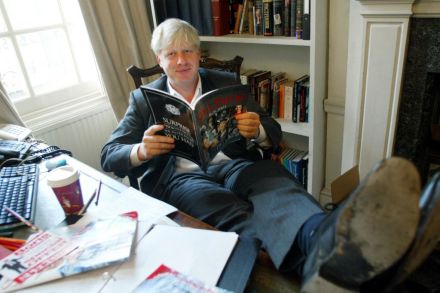
Charlotte Edwardes reports that Boris put his hand on her leg during lunch 20 years ago. Full disclosure, I put my hand on Boris’s leg 20 years ago during lunch. It wasn’t that I was making a pass at him. I just wanted to hold his attention while I was telling him something I wanted him to listen to. Now I am worrying. What if Boris and/or a cohort of other males come forward? ‘Mary assaulted me in a historic sex abuse incident. #SheToo.’ These are topsy-turvy times. Anything could happen and now I think about it, I’m sure I have been putting my hands on legs and generally assaulting men for years — absentmindedly. But the past was a foreign country. They did things differently there.

Brexit grifters are making a killing selling useless advice

Over the past three years, as we have torturously debated our departure from the European Union, we have heard a lot from the Brexiteers about the industries that might benefit from leaving the EU. Some of these predictions may materialise, others may not. There is one industry, however, that is already doing very well as a result of the referendum. Lots of consultants are making a shedload of money. In the past few weeks, it has become clear just how much.

Cast off: how knitters turned nasty

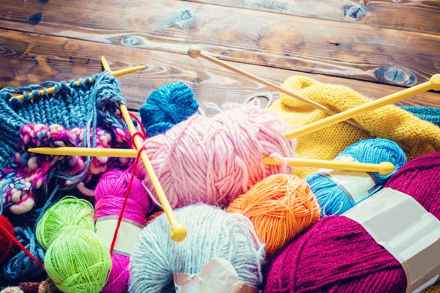
At first glance, Nathan Taylor might seem the very definition of a ‘right on’ hipster. He goes by the name of ‘Sockmatician’ online and he’s famous in the knitting world for his complicated double-knit patterns. On his Instagram, in between videos of people speed-knitting and many, many photos of socks, Taylor had posts about what it was like to be an HIV-positive man who came out in the 1980s. He dislikes Donald Trump and Brexit. He has even set up ‘inclusive hashtags’ such as #diversknitty, and his profile carefully sets out the pronouns people should use to address him. So far, so woke.