Manfred Manera

Manfred Manera is an Italian documentary maker.

Why were Germany’s Covid files redacted?

From our UK edition

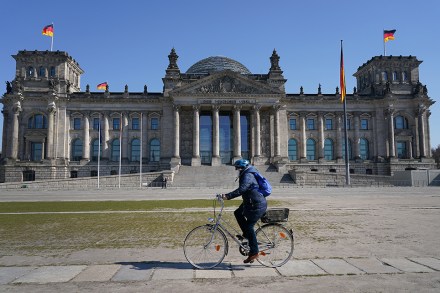
There are two kinds of long Covid. One is a medical syndrome, the other manifests as a healthy obsession – an urge to shed light on what happened during the pandemic crisis. Too many questions remain unanswered: why did Sweden come out of the pandemic better than other countries without having endured a lockdown? Why were masks imposed when scientific studies repeatedly demonstrated that they were unnecessary? Why was discrimination introduced between the vaccinated and the unvaccinated when it was clear that vaccines were incapable of blocking the transmission of the infection? And why, since the lockdowns, has there been such a high excess-death rate in Europe? Why were masks imposed when scientific studies repeatedlyshowed they were unnecessary?
How to travel India by steamboat

From our UK edition

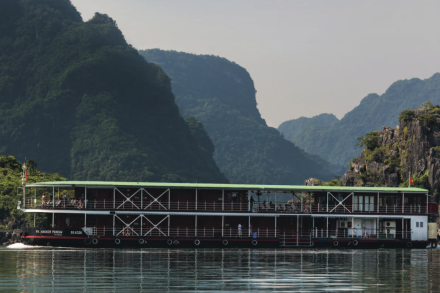
‘The road to hell is paved with good intentions’. Nowhere is this so true as in the streets of Calcutta, departing point of our cruise. The legacy of Mother Teresa has placed a stigma on the ancient capital of the British Raj, now forever considered a city of the dying and destitute. Unsurprisingly, Calcutta does not feature all that much in tourist guides, which is a mistake, because from my experience, it is the most friendly, cultivated and humane among all of the Indian megacities. A visit should be planned sooner than later since, if nothing is done, the beautiful palaces will hardly survive another decade. They are quickly crumbling under the embrace of vegetation which has turned the city into a kind of living Angkor Wat.

Venice needs Venexit

From our UK edition

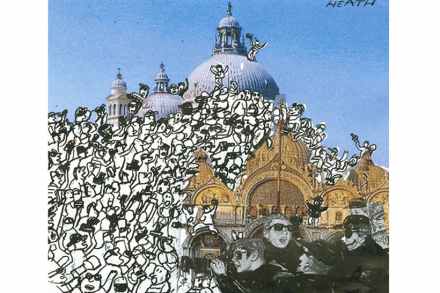
Some of Venice’s problems are well known: the challenge of conserving her famous buildings, the dangers of poorly managed mass tourism — not to mention the fact that the city might well simply drown, a threat made all the more obvious by last week’s floods, the worst in 50 years. Since 1987 billions have been spent on the Mose project, a still unfinished and controversial system of underwater dams intended to protect the city from flooding. The authorities have repeatedly shifted the completion date: 1995, 2012, 2016 and now 2021. Venetians suspect these delays were just attempts to hide serious faults. They view the most recent floods as a clear sign of a major dysfunction in the way the city is politically managed.

Italy’s anti-Green Pass movement has a new figurehead

From our UK edition

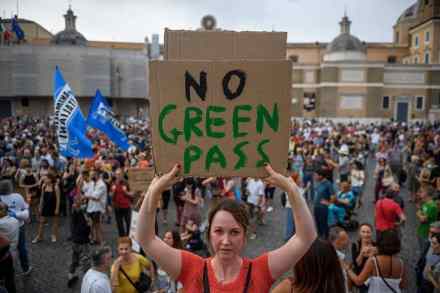
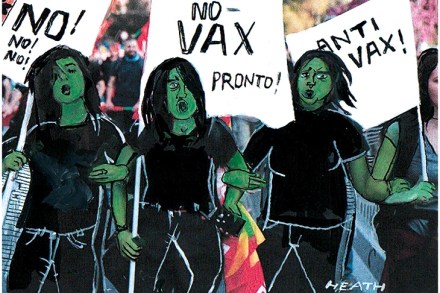
Rome From this week, all workers in Italy must show a ‘green pass’ certificate in order to access any public place. A green pass shows that you’ve either been vaccinated, tested negative or recovered from Covid-19, and anyone without a pass could be suspended from work and fined. But why is the Mario Draghi administration restricting basic public freedoms in this way when the Italian vaccination rate is one of the highest in the world? It is nothing short of mind-boggling. We have a higher vaccination rate than the UK, for instance, though restrictions have been all but lifted there. Yes, Covid is dangerous, but this unjustified loss of freedom is dangerous too because Italians are angry and increasingly taking to the streets.

Was the US involved in neo-fascist Italian terrorism?

From our UK edition

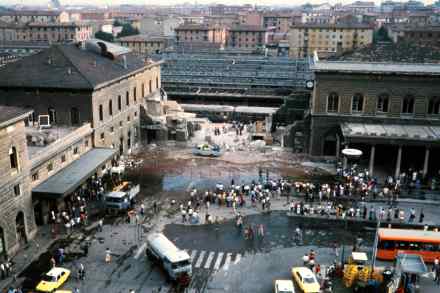
Last month, Italy’s Prime Minister Mario Draghi promised to declassify government documents involving two organisations: Gladio, an anti-communist paramilitary group linked to Nato and the CIA, and a masonic lodge known as P2. These two groups are believed by some to have been involved in the darkest moments of post-war Italian history. For much of the latter half of the 20th century, Italy had the unenviable position of being the epicentre of European terrorism. The blast at the Bologna train station in 1980, which left 76 people dead and more than 200 wounded, was at the time the bloodiest terrorist attack ever suffered by a European country. The bombing was pinned on a small neo-fascist militia called Armed Revolutionary Nucleus.

The heist: nobody is safe from Russia’s digital pirates

From our UK edition

37 min listen

What is the true threat of ransomware both to our governments and us individually?(00:30) Also on the podcast: What are the Italian ‘Green Pass’ Protests?(15:14) And finally… is it harder to be the good Samaritan in the modern world?(25:28)With former head of the national cyber security centre Ciaran Martian, white-hat hacker Tommy DeVoss, journalist Manfred Manera, former WHO scientist Francesco Zambon, Spectator contributor Cosmo Landesman and The Revd Lucy Winkett.

Italians are seeing red over the Covid ‘Green Pass’

From our UK edition

Rome Following Emmanuel Macron’s example, the Italian Prime Minister, Mario Draghi, has announced the introduction of a ‘Green Pass’. Draghi’s initiative, which was announced at a press conference on 24 July and comes into effect on 6 August, has sparked protests all over Italy The Green Pass will discriminate between Italians who are vaccinated and those who are not. Anyone who has not received their jabs, or cannot show a recent negative test or that they have recovered from Covid in the past six months, will be denied access to indoor restaurants, museums, cinemas and exhibitions. Further restrictions under discussion would prevent them from access to trains and ferries. There are also plans to limit entry into schools and universities to the vaccinated.

‘I was treated like a traitor’: An interview with WHO whistleblower Francesco Zambon

From our UK edition

Francesco Zambon is calling the World Health Organisation (WHO) to account. Zambon, who was based at the WHO’s Venice bureau, claims that the WHO suppressed critical information about the pandemic to serve the political interests of member countries. There are conflicts of interest at the highest levels of the institution, he says. As a result, according to Zambon, the world lost valuable time in mounting effective defences against the pandemic. Back in May 2020, Zambon and his team wrote a report for the WHO called: 'An unprecedented challenge: Italy’s first response to Covid-19'. The report, drafted in a time of emergency, was meant to help other nations still untouched by the virus, and it could have saved lives, says Zambon.