Johan Norberg

Johan Norberg

Johan Norberg is a historian of ideas, based in Stockholm. His latest book is 'Open: The Story of Human Progress'

The case for capitalism

From our UK edition

27 min listen

Kate Andrews is joined by Fraser Nelson and Johan Norberg, author of The Capitalist Manifesto: why the global free market will save the world. On the podcast Johan talks about its why lockdown societies never worked; whether he finds the word capitalism useful and his endless optimism for a better future.
Donald Trump and the limits of free speech

From our UK edition

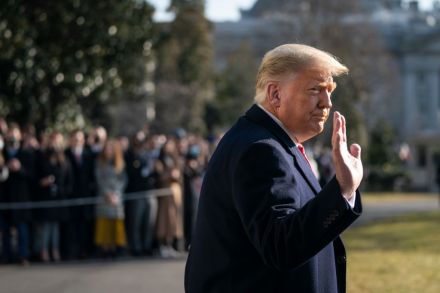
Is Donald Trump’s expulsion from Twitter an attack on free speech? A great many Republicans are saying so. You certainly can call it ‘deplatforming’: when you lose your speaking invite, your social media posting rights or your book deal. Josh Hawley, a Republican Senator, has claimed that his First Amendment rights were violated by Simon & Schuster when they decided not to publish his book. It’s a problematic definition, since it means that Simon & Schuster are also violating my free speech by not publishing my books. And in fact, the rights of most aspiring authors on the planet. But of course, the First Amendment expressly refers to laws made by Congress abridging the freedom of speech.

Why 2020 was the fourth best year in history

From our UK edition

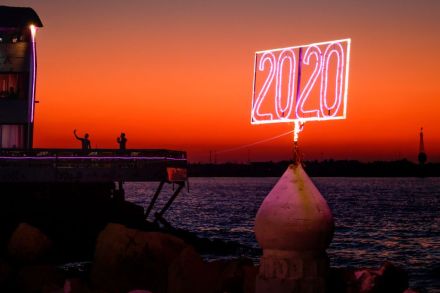
The Spectator has a long and proud history of fact-based optimism, sometimes represented by an end-of-the-year article explaining that statistics bear out that this was the best year ever, even if you didn’t get that impression when following the news. Well, 2020 is not a good candidate for such an article. 'The worst year ever', according to a Time Magazine cover story. We all share that sentiment to some extent. We will remember 2020 as a year of disease and death, and lockdowns that separated friends and relatives, and businesses from customers, causing depressions of both the economic and clinical sort. But if we were to take it literally – the worst year ever – it’s the kind of statement that can only be explained by a spectacularly short memory.

The Covid trap: will society ever open up again?

From our UK edition

44 min listen

Governments around the world have adopted extraordinary powers to deal with coronavirus – but could they end up doing more damage than good? (01:00) Next, is the best way to deal with the threat of Scottish secession to negotiate a hypothetical Scottish exit deal? (16:04) And finally, are Britain's graveyards suffering a spate of indecent behaviour? (31:38) The Spectator's deputy political editor Katy Balls is joined by historian Johan Norberg and the Wall Street Journal's Gerard Baker; The Spectator's political editor James Forsyth and Scotland editor Alex Massie; and journalist Andrew Watts alongside the Revd Fergus Butler-Gallie. Produced by Gus Carter, Max Jeffery and Sam Russell.

The Covid trap: will society ever open up again?

From our UK edition

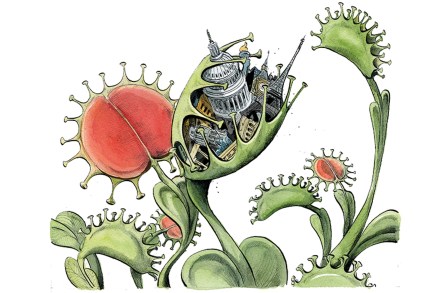
The great pandemic of 2020 has led to an extraordinary expansion of government power. Countries rushed to close their borders and half of the world’s population were forced into some sort of curfew. Millions of companies, from micropubs to mega corporations, were prohibited from carrying on business. In supposedly free and liberal societies, peaceful strollers and joggers were tracked by drones and stopped by policemen asking for their papers. It’s all in the name of defeating coronavirus; all temporary, we’re told. But it’s time to ask, just how temporary? As Milton Friedman used to warn: ‘Nothing is so permanent as a temporary government programme.’ Measures that seemed unthinkable a few months ago have been implemented in haste and without debate.

Can we trust Covid modelling? More evidence from Sweden

From our UK edition

At last we’re getting a debate about Covid-19 modelling. When people finally got to look under the hood of the famous Imperial College study, they found twisted and tangled code. And most of the model’s predictions bear little resemblance to what is actually happening. Some defend the models by saying that their predictions turned out to be wrong only because governments imposed harsher restrictions than the coders expected. If so, we have a perfect experiment. Sweden did not close borders, shut down schools, businesses, restaurants, gyms or shopping centres and did not issue stay at home orders. So it should be the one country where the models fit. Let’s see.

The rise – and disastrous fall – of the kibbutz

From our UK edition

Jeremy Corbyn and John McDonnell are part of a breed of socialists who argue that this time will be different. Socialism never failed, they insist: only the walls, barbed wire and jackboots did. So what they plan for Britain, while radical, is bound to work! True, it’s more radical than anything done in any European country today. Comparisons with Venezuela or Cuba or Soviet Russia are unfair, they say. But there is one model that today’s socialists talk fondly about: the Israeli kibbutz. Early versions of these communes were created by Zionist pioneers in the early 20th century, and they became popular after the foundation of the state of Israel. By 1950, 65,000 people lived in ‘kibbutzim’ — more than 5 per cent of the population.

Donald Trump last night exposed himself as Chavez without the beret

From our UK edition

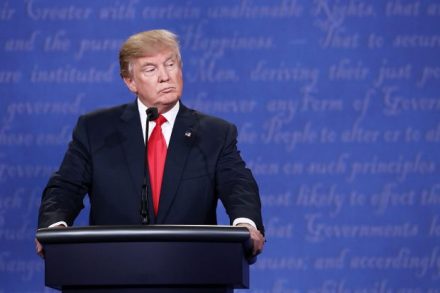
Much has been made of Donald Trump’s character but the big problem is not that he is a bad person who might turn the Oval Office into a locker room. 'We need good principles rather than good people. We need fixed rules, not fixers', as FA Hayek pointed out. And that’s the problem with Trump, as his scary stream of consciousness during last night's debate - indeed, every debate - with Hillary Clinton has revealed. He says openly that he wants to dismantle the fixed rules, the division of powers and the rule of law which make America great. If he wins, he promises to jail his opponent. If he loses, he will not accept the outcome of the election. It’s Putin without pectoral muscles, Chávez without the beret.

Our golden age

From our UK edition

‘We have fallen upon evil times, politics is corrupt and the social fabric is fraying.’ Who said that? Donald Trump or Bernie Sanders? Nigel Farage or Marine Le Pen? It’s difficult to keep track. They sound so alike, the populists of the left and the right. Everything is awful, so bring on the scapegoats and the knights on white horses. Pessimism resonates. A YouGov poll found that just 5 per cent of Britons think that the world, all things considered, is getting better. You would think that the chronically cheerful Americans might be more optimistic — well, yes, 6 per cent of them think that the world is improving. More Americans believe in astrology and reincarnation than in progress.

The fatal mistakes of Sweden’s David Cameron

From our UK edition

Cool, calm Sweden can still produce a surprise from time to time. Yes, our economic recovery has been the best of any major European country. Yes, our finance minister, the earringed and formerly pony-tailed Anders Borg, is hailed as the best in the world. And yes, our government has somehow managed to cut taxes so the disposable income of the average Swede is 18 per cent higher than before the crash. But when Swedes were asked to pass verdict on all this, in last weekend’s election, we decided to kick out the government. David Cameron has had another small northerly country to worry about of late, but the fate of his friend Fredrik Reinfeldt, the now-deposed prime minister, ought to alarm him.

Why Sweden has riots

From our UK edition

  Stockholm  ‘All of them should have been very happy,’ Robert A. Heinlein begins his 1942 novel Beyond This Horizon. The material problem has been solved on this future earth, poverty and disease have been eradicated, work is optional. And yet parts of the citizenry are not enthusiastic. Some are bored, others are preparing a revolt. Why should that be, in such a utopian world? A similar puzzlement has been the dominant reaction from commentators after riots broke out and cars and buildings were burned in heavily immigrant-populated suburbs of Stockholm in late May. Sweden?

The great debt bubble of 2011

From our UK edition

Have our governments averted a financial disaster – or paved the way for one? ‘The worst of the storm has passed,’ declared Barack Obama at the start of last year, seeking to calm the fearful. For his part, Gordon Brown assured Britain that talk of tough years ahead was ‘simply not true’. Both men spoke of their resolve to cure their economies, and did not seem to mind using the same techniques that created the old bubble. Bank bailouts and massive stimulus efforts have indeed encouraged us to borrow, spend and speculate again. Bank interest rates have dropped to historic lows, bringing cheap credit to the housing market and the high street. The mood this year is one of cautious optimism. It would all be reassuring, were it not so eerily familiar.

The noble feat of Nike

From our UK edition

Globalisation – otherwise known as 'ruthless international capitalism' – is enriching the world's poor, says Johan Norberg Nike. It means victory. It also means a type of expensive gym shoe. In the minds of the anti-globalisation movement, it stands for both at once. Nike stands for the victory of a Western footwear company over the poor and dispossessed. Spongy, smelly, hungered after by kids across the world, Nike is the symbol of the unacceptable triumph of global capital. A Nike is a shoe that simultaneously kicks people out of jobs in the West, and tramples on the poor in the Third World.