Features

I’m sorry because I failed: An interview with David Cameron

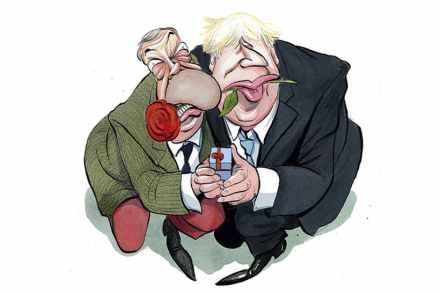
‘How have you been?’ David Cameron asks, bounding up to meet me. Fine, I say, then make the mistake of asking him the same question. His face drops. ‘Oh,’ he says. ‘Well. So-so.’ Watching the political news, he says, has been getting him down (in a way it didn’t when he was in office) and if you’ve picked up a newspaper in recent days, you’ll know why. His memoir, For the Record, is out and the extracts make it sound like a 700-page apology note to the nation. He’s sorry for the referendum result. Sorry for what came after. And above all, sorry for letting villains like Boris Johnson and Michael Gove get away with it. Standing in his jogging kit, fresh from his morning run, the former prime minister still looks a bit deflated.

How to live life like a drunk

Since I’m not an alcoholic, recovering or otherwise, I don’t belong to Alcoholics Anonymous (AA) but I am close to several people in this ‘12-step fellowship’ who have changed their lives for the better through it. Most of them say its ‘programme for living’ would help anyone, drinker or not, to cope more successfully with mental stress. I’ve certainly found the memorable sayings and catchphrases in which their fellowship abounds to be useful in confronting my own anxieties — and sometimes very funny, too. And not being subject to AA’s rules about engaging with the media, I’m at liberty to share them here. Some are simple in their profundity.

I was a Remainer – but I now want no deal

When I told two neighbours that I had become a no-deal Brexiter they physically recoiled from me. ‘You can’t.’ ‘But there’s no other option,’ I said. ‘You can vote Lib Dem,’ they said. ‘But that’s the same as a second referendum. Even if the Lib Dems came to power, the ones who hadn’t voted for them would hate the ones who had.’ Until 2016 I wanted to leave the EU. My thinking was half-baked. There were the silly laws driving farmers mad, the judgments of the European courts and the fact that Brussels hadn’t signed off its accounts for years. So when the chance came to vote to leave, I thought — good. But then I began to look into the consequences.

Boris has more in common with Corbyn than he thinks

Boris Johnson’s opponents love to accuse him of using the ‘Trump playbook’. Some on the left have become so obsessed with this comparison that they’ve even demanded that the Prime Minister be impeached. But over the past few weeks, Johnson’s behaviour has borne a far closer resemblance to a man he claims to look down on: Jeremy Corbyn. Both men stand on an anti-politics, anti-establishment platform. When Corbyn became leader he promised a ‘kinder, gentler politics’, and eschewed many of the traditions of the Commons. His advisers still believe that he is going to be the man-of-the-people candidate in the looming election, arguing that attacks from the media only bolster his anti-establishment credentials.

Why is everyone on Facebook so paranoid about their privacy?

There’s a line in Desperately Seeking Susan where Madonna (Susan) reads aloud the diary of Roberta, the bored housewife she has swapped places with: ‘Couldn’t sleep. Went into kitchen. Gary came in, turn off light. Gary left. Finished birthday cake.’ Then she exclaims: ‘Pages of it; it’s got to be a cover — nobody’s life could be this boring!’ A related naughty thought often comes to mind when I see my chums worrying on Facebook about The Man stealing photos of their cat wearing rabbit ears or their own preferences in caffeinated beverages. If there is a stealthy cabal of shadowy figures seeking to make puppets out of us — mere paper dolls capering powerlessly at the whim of our faceless masters!

Pericles for PM: Boris should forget Augustus and stay focused on his hero

Boris Johnson is a gung-ho classicist. He has supported the subject throughout his journalistic and political career, is a generous donor to the charity Classics for All, and has a bust of his hero Pericles in his study. Indeed, he says his reading of Pericles’s famous funeral speech (431 bc) when he was 12 or 13 had a powerful effect on him, especially Pericles’s statement that ‘Athens is called a demokratia because it runs its house in the interests not of the few but of the majority’. Last week, however, he turned into the Roman emperor Augustus to explain his sacking of 21 rebel MPs. Augustus, emerging as victor in 31 bc in the civil war against Antony and Cleopatra,  did just this, killing potential rivals and ushering in a long and peaceful reign.

Katharine Gun: the spy who tried to stop the Iraq war

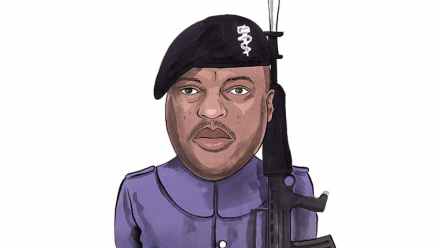
In his memoir of office, Decision Points, George W. Bush writes about going to see Tony Blair in the Azores in the last days before the invasion of Iraq in 2003. It was a crisis meeting because they had failed to get a second UN resolution, to give legal cover for the war. This was thought crucial to help Blair and his government survive a no-confidence motion in the House of Commons. After the meeting, the Brits and the Americans shook hands on the tarmac and walked to their planes. Bush remembers his national security adviser, Condoleezza Rice, saying to him: ‘I hope that’s not the last time we ever see them.

American universities are fuelled by amphetamines – so I tried them

 New York A biography of Freud to my left, a black leather lounger to my right. We were 30 minutes in. ‘Well,’ said the psychiatrist, sitting up in his chair, ‘what you’re describing sounds like ADHD.’ Oh? ‘And what we normally prescribe for that is Adderall.’ There they were. Ten blue, oblong capsules, in an orange cylinder with a white top. 20mg, extended release. To be taken once a day. They’d help me focus, sit still and finish my work. It’s odd that I didn’t come across them last year, while a student at New York University. They say Adderall, the brand name for a mix of amphetamine salts, is the most popular among the ‘study drugs’ now ubiquitous on American campuses.

The tricks and tactics of Miqdaad Versi

If truthful reporting risks increasing tension between communities, should it still be published? Do journalists have a social duty to repress certain topics which are unhelpful? These questions tend to separate free societies from those countries where the press is muzzled. In Britain, there has been a tradition: readers decide what is acceptable. But that tradition is under threat, not just from politicians but from the press regulator itself. You may not have heard of the Independent Press Standards Organisation, but it’s worth knowing about. It regulates this magazine and most British newspapers. When it was set up five years ago, its rules, laid out in the Editors’ Code, were meant to enforce accuracy and basic standards.

Gatekeeper anxiety: a new disease for our times

A general election looms, the outcome could go almost any way and those who normally offer themselves as experts are seized by panic. Parliamentarians, journalists and academics who previously exerted a degree of control over policy, debate and knowledge — or flattered themselves to think they did — worry their grip is being loosened. Behold gatekeeper anxiety: political and media elites locked in a feedback loop of despair. Sufferers’ symptoms range from anguish to hysterical anger. The backlash against Boris Johnson’s decision to prorogue parliament is a good example. His move was political skulduggery — but the gatekeeper class hallucinated a ‘coup’ and imagined themselves as democracy’s last line of defence against tyranny.

In defence of trophy hunting

‘Why would anyone want to destroy something so beautiful, then stuff its poor lifeless body to keep as some kind of macabre trophy?’ In her first speech after moving into Downing Street, Carrie Symonds, the PM’s girlfriend, chose to attack trophy hunting. ‘A trophy is meant to be a prize, something you’re awarded if you’ve achieved something of merit that requires great skill and talent,’ she said. ‘Trophy hunting is not that — it is the opposite of that. It is cruel, it is sick, it is cowardly and I will never, ever understand the motivation to do it.’ Carrie is not alone. Lately, it feels as though there isn’t a TV celebrity who doesn’t feel outraged about shooting big game.

Moving to the country for a better life was a huge mistake

As newlyweds in our late twenties, my husband and I decided to move from a crime-ridden (if trendy) London postcode to a picture-postcard village within commuting distance of the capital. We bought a rather run-down cottage which we imagined would be the perfect canvas for our aspirations: island benches, plantation shutters and lashings of Farrow & Ball. We’d get the house done and have some babies. There would be country dog walks, veg patches and village fêtes. What bliss. Before we moved in, we chatted to a friendly elderly man in the village. ‘Oh there’s been lots of change in the village lately,’ he told us. Like what? ‘People moving in, people moving out…’ How funny, we thought, that a few new residents counts as radical change.

Brexit has its risks. But staying in the EU is now unthinkable

This is one of the most crucial weeks in modern British history. We have a prime minister and cabinet who understand the stakes in terms of our future independence. But the forces fighting them — some of them sincere, many of them cynical — are fearsome. There are risks in proceeding with Brexit. But there are far greater risks in abandoning it. This endless crisis has led to widespread criticism of British politicians of all hues, some of it justified. I find it deeply distasteful to see very senior Conservatives plotting with the opposition to bring down the Prime Minister. But far less criticism has been levelled at the EU itself — which is odd, because Brussels is the cause of our agonies, past and present.

Boris Johnson could be about to lose everything – or redefine British politics

Boris Johnson has already decided on his election message: vote for me and get Brexit, vote for anyone else and get Jeremy Corbyn. He will ask voters: who can you imagine negotiating best with Brussels? Me, or Corbyn? Clear as the message may be, the Prime Minister is risking everything in this contest. He could lose it all: Brexit, his premiership, the party, the works. He could go down in history as the shortest-lived occupant of No. 10. Or he could win, take this country out of the EU, then realign and reshape British politics. As one of those intimately involved in the decision to go for an election puts it: ‘It is a massive gamble. Nobody knows how it will pan out.’ One secretary of state admits that the outcome of the election is ‘totally unknowable.

The Queen can handle coups – she’s been on the receiving end of one

Supplies of Brexit invective are now almost exhausted. While the Prime Minister is denounced for denouncing Remainers as ‘collaborators’, his denouncers denounce him as a ‘tin pot dictator’ in need of a ‘rope’ and ‘lamp-post’. Of all the bellicose hyperbole, however, it is the battle cry of ‘Stop the coup’ which is the loudest this week. There are plenty of charges which can be levelled at this government. But to apply the term ‘coup d’état’ to a trio of genuflecting members of the Privy Council asking the Queen for the umpteenth prorogation of her reign is risible.

The treatment of EU nationals will be a litmus test of Boris Johnson’s Brexit

What makes Boris Johnson an improvement on Theresa May? Those of us who cheered him on into 10 Downing Street have a long list. He backed Brexit, so would stand a far greater chance of getting it done. He’d hire better people, who could outwit and outmanoeuvre his parliamentary enemies (as we have seen this week). He is acting with a pace and with a daring that is extraordinary – and commensurate with the challenge he faces over Brexit. But the real point of Boris as leader is that he promised to give his party a better chance of healing the divisions of the referendum and uniting the country. This might sound fanciful, when his enemies are howling over the prorogation of parliament and referring to him as a dictator.

What does Totnes think of Sarah Wollaston, its defecting MP?

‘Totnes? It’s hippie central.’ A friend warned me what to expect when I visited the affluent, left-leaning town in south-east Devon to assess public opinion about the local MP, Dr Sarah Wollaston. In March she left the Tories to join Change UK and she now sits as a Liberal Democrat. I equipped myself with a photo of her and wandered the streets last Monday. A chap in the Wild Fig Deli told me that her disloyalty would terminate her career. ‘You can change party, all right, but you hold a by-election. She’s lost her credibility.’ In 2011 Wollaston backed a private members’ bill requiring MPs who change parties to stand for re-election. She has yet to meet this obligation herself.

Germany’s military has become a complete joke

It is not hard to think of times when German military weakness would have been lauded as good news across the rest of Europe, but perhaps not when the German minister accused of running her country’s armed forces into the ground has just been named as the next president of the European Commission. The most recent embarrassment for the Bundeswehr — the grounding of all 53 of its Tiger helicopters this month due to technical faults — is just the latest in a long series of humiliations to have sprung from Ursula von der Leyen’s spell as defence minister. A country once feared for its ruthless military efficiency has become a joke among European powers.