Features

Islam’s reformation: an Arab-Israeli alliance is taking shape in the Middle East

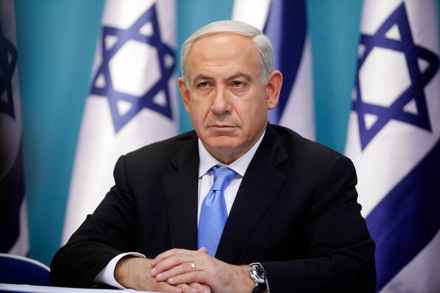
When Benjamin Netanyahu visited Oman in 2018 in a gesture of goodwill to Israel’s neighbours, the welcome was not universal. For an Israeli Prime Minister to be warmly greeted in a proud Arab state was, for some, far too much. The Omani foreign minister, Yusuf bin Alawi bin Abdullah, was asked on Al Jazeera why the visit had been allowed. The reply went viral: ‘Why not? Is it forbidden to us? Israel is a nation among the nations of the Middle East. We should embark on a new journey for the future.’ A new narrative is emerging in the Middle East. New maps of the Muslim mind are being drawn and old hatreds are on the run. The anti-Semitic craze to destroy Israel was powerful in the 1960s, uniting Egypt’s President Nasser with his fellow Arabs.
This year, I’m performing all 32 of Beethoven’s sonatas. Here’s why

For the past several decades, little in my life as a professional pianist has been as constant as my relationship with Beethoven. It has been intense, immersive, impassioned, hugely demanding and hugely enriching. In the current season, though, it has become something it never was before: exclusive. Let me explain. Like any serious piano student, I first began to work on one of Beethoven’s piano sonatas around the age of ten. From that point on, the work has never stopped. Beethoven’s music, in addition to its mastery, beauty and spirituality, has a force of personality perhaps unequalled by any other artist’s work in any medium or any era.

I was born to be a pantomime Dame (oh yes I was!)

‘Flamenco, lambada/ But hip hop is harder/ We moonwalk the foxtrot/ Then polka the salsa…’ I’m sure you know those lines from the Spice Girls’ anthem ‘Spice Up Your Life’, which happens to be the biggest song-and-dance number in this year’s Jack and the Beanstalk pantomime at Helmsley Arts Centre in North Yorkshire. It’s also a spotlight moment for the Dame, who’s required to wiggle extravagantly downstage then pirouette for the next line — ‘Shake it, shake it, shake it’ — and do just that. I’m told it’s called twerking. And yes, the Dame is me, your veteran weekly business columnist. How did I get here? You may well ask.

History may hold the secrets of statecraft – but not the secrets of business leadership

‘How can one person lead one hundred?’ That was one of the questions in my Cambridge entrance exams back in 1981, and although I can’t now recall whether I tried to answer it in the three hours we were given, it has fascinated me ever since. So when I was given the splendid opportunity of delivering nine Lehrman Institute lectures on military history at the New-York Historical Society three years ago, I used them to try to answer it, at least in terms of war leadership. What became apparent was what a total waste of time and effort most of the modern ‘leadership skills’ industry is whenever it tries to apply the lessons of war leadership to anything else, and especially business.

Roger Scruton: My 2019

  January My 2018 ended with a hate storm, in response to my appointment as chair of the government’s Building Better, Building Beautiful Commission. But the new year brings a lull, and I hope and pray that the Grand Inquisitor enthroned by social media will find another target. February The 27th is my 75th birthday, and as it happens the last Wednesday meet of foxhounds for the season. We host the meet and celebrate with our neighbours. Despite my wife Sophie’s protests, I maintain my resolve to give up hunting at 75, counting again the broken bones, sprains and muscular disorders acquired over 35 years in the saddle, or, rather, out of it. On my last hunt, I am glad to say, I stay in the saddle all day.

We’ve just had the best decade in human history. Seriously

Let nobody tell you that the second decade of the 21st century has been a bad time. We are living through the greatest improvement in human living standards in history. Extreme poverty has fallen below 10 per cent of the world’s population for the first time. It was 60 per cent when I was born. Global inequality has been plunging as Africa and Asia experience faster economic growth than Europe and North America; child mortality has fallen to record low levels; famine virtually went extinct; malaria, polio and heart disease are all in decline. Little of this made the news, because good news is no news. But I’ve been watching it all closely.

‘Cook it like a prayer’: Bip Ling’s Christmas curry

This dish is refreshing and super yummy. It’s a recipe that Didas (my Indian grandmother) taught me. The zesty tomato flavour makes my mouth water. You can’t go wrong with this curry. Everyone loves it and always asks for more! It’s comforting and warm, especially when it’s cold outside during Christmas time. Cook the dish like a prayer. The more you enjoy the process, the better it will taste. You can use the same recipe with different meat, or try it with vegetables. Make sure you taste the sauce as you cook, and add more spices if you desire. It’s even more fun to cook with the song ‘Curry’ by Bip Ling in the background.

‘I’ve had two totally successful marriages’: Stanley Johnson interviewed

If anything could make me feel sorry for Boris Johnson, it’s meeting his father, Stanley. Before we met, he sent me a great list of press cuttings about his appearances with the Extinction Rebellion campaign, and ordered me to watch his recent reality show Celebrity Hunted on Channel 4 and read his latest novel, Kompromat. (The former, where celebrities become ‘fugitives’ and go on the run, was excruciating. But the novel — soon to be retitled The Brexit Conspiracy — is good fun, containing thinly disguised portraits of Putin, Trump, Murdoch, and also an ex-London mayor ‘whose ebullient exterior concealed a razor-sharp mind and a pronounced streak of political cunning’.

‘I was a tortured, obviously brilliant child’: James Ellroy interviewed

James Ellroy is occasionally quoted as saying he’s the greatest American crime novelist ever. The man sometimes called the ‘demon dog of American letters’ has no hesitation in affirming it when he arrives in The Spectator’s London offices to record a podcast. ‘Oh yes, I think that’s been proven,’ he says matter-of-factly. Has he always thought that? ‘When I finished the LA Quartet. I knew there was nobody like me and there wasn’t.’ Ellroy’s new book, This Storm, is the second novel in a projected set of prequels to his LA Quartet (The Black Dahlia, The Big Nowhere, LA Confidential and White Jazz) set between LA and the Baja peninsula in Mexico in the aftermath of Pearl Harbor.

Trans activists are making life harder for trans people

This was the year that the word ‘non-binary’ went mainstream. It has now officially entered the dictionary — lexicographers at Collins have defined the term as ‘a gender or sexual identity that does not belong to the binary categories of male or female, heterosexual or homosexual’. Non-binary also entered the Liberal Democrat manifesto, though Jo Swinson may now be regretting this decision. Non-binary is easy to announce; it’s rather more challenging to explain to the electorate — or to journalists. In a series of difficult interviews this week, she even denied the fact that every human being is either male or female. I’m a science teacher; if she had been one of my pupils, I think I would have despaired.

The chilling stories from inside China’s Muslim internment camps

Vegetable-seller Kairat Samarkhan didn’t know why he had been summoned to the police station. ‘I had to empty my pockets and hand over my belt and laces. Then they started to ask questions,’ he says. After days of interrogation, during which he was hardly allowed to sleep, officers pulled a sack over his head and drove him to a camp near the city of Altai. Samarkhan, a Muslim Kazakh, told me about his experience in the camp: ‘Every day, we had to renounce the Muslim faith and confirm that we respect the laws of China. Before every meal, we chorused: “Long live Xi Jinping!” ’ In the past two years China has — almost unnoticed by others — built the largest network of internment camps in the world.

The new Conservatism has begun

Elections should be carnivals of democracy, yet the campaign we have just been through has felt more like amateur dramatics at times – the standard of debate has not risen to the importance of the issues at stake. Yet this election will go down as one of the most consequential in British history. It has brought a profound change to our politics: not just that Brexit is now certain to happen, but also in the way that both main parties have transmogrified before our eyes – in terms of what they stand for, and who they appeal to. The list of Tory gains shows the extent of the change that has just taken place: Leigh, Workington, Clwyd South, Darlington, Wrexham, Burnley, Redcar, Scunthorpe and a slew of other working-class seats north of the Watford Gap.

All the world’s a stage: this election has echoes of Shakespeare and Dickens

The Christmas election has unfolded like a series of mini-dramas from panto, Dickens and other popular classics. Boris has come across as a Dick Whittington figure, already twice mayor of London, and hoping to establish his seat in the capital on a more permanent footing. Jeremy Corbyn resembles Mother Goose flinging sugary treats at gullible children. And Jo Swinson has clearly been reading Cinderella (and believing every word of it). Swinson positioned herself as the long-suffering drudge who must tidy away the mess left by the Ugly Sisters, namely the Tory and Labour parties. In the story, Cinderella ends up as a princess (‘I’m standing to be your next prime minister’). The snag is that elections rarely turn out like fairy tales.

Finland’s new PM has wowed the world. But what about Finland?

 Helsinki Sanna Marin is the world’s new feminist political icon. At the age of 34, she’s just been appointed the prime minister of Finland after a power struggle in the five-party coalition government that forced Antti Rinne out of office only six months after he won the general election. Marin isn’t just young and a woman — she was brought up by two mothers in a small town south of Tampere, an industrial region that isn’t known for championing progressive values. That backstory has earned her the plaudits of feminists on both the left and the right. To the Daily Telegraph, she’s a ‘trailblazer’. For the Guardian, her coalition of women-led parties reminds us ‘that another politics is possible’.

‘Corbyn is led by ideology, I’m led by economics’: Sajid Javid’s spending plan

If Boris Johnson wins next week, it will be on a manifesto of change. He will not deliver the fourth term of the same Tory government, he says, but a new agenda guided by a new philosophy — and the big difference will be spending. Gone are the days when Tories defined themselves by a determination to balance the books. Sajid Javid, the Chancellor, promises a ‘new economic plan for a new era’, which would mean investment on a scale that would have made George Osborne baulk. Providing, of course, that his party is still in government by the end of the next week. ‘There is a path to victory,’ he says when we meet while he is campaigning on the outskirts of Birmingham. ‘But it’s a narrow path.

It’s possible to talk to children about politics without leading them in one direction

My six-year-old son announced, from the back of the car, that he was backing Boris Johnson. My wife, who’s voting Lib Dem, was horrified, accusing me of indoctrinating the boy; I resisted the temptation to film a video and post it on Twitter, to be retweeted by Tories and hate-tweeted by others accusing me of brain-washing, even child abuse. But when we questioned our son it soon emerged that he had heard — whether from a news report, or from his parents talking — that Boris Johnson was in favour of cake and in favour of eating it, and this was very much a policy he could get behind. It’s easy to assume that any political opinion expressed by a child must be the result of indoctrination, but it’s not true.

This election will change Britain – and Europe – for good

This election campaign feels unreal. Commentators focus on spending plans and personal foibles, but what will make next week’s vote historic is something else, something so momentous that we draw back from discussing it seriously. The Lib Dems boast of Stopping Brexit, knowing that as things are now they will never have to try. Jeremy Corbyn pleads neutrality: the first leader not sure which side he was on since poor Henry VI in the Wars of the Roses. The Conservatives, whose hopes of office depend entirely on this issue, downplay its importance: ‘Get Brexit Done,’ ministers repeat, as if it were a tiresome distraction from real politics. Perhaps it is, if ‘real politics’ is only about mending potholes and recruiting nurses.

‘You either are panto, or you aren’t’: Christopher Biggins on his favourite time of year

Christopher Biggins has managed to bag some of the nation’s favourite TV characters over the years: Lukewarm in Porridge and Nero in I, Claudius, to name but two. Yet there’s a good chance he wouldn’t have had a career at all if it hadn’t been for his Aunty Vi. She was ‘the most terrible snob’, he tells me. The family accent (a mishmash of northern and broad Wiltshire) troubled her, so she sent the young Biggins off for elocution lessons. His teacher was also into theatre, and saw he had potential. Her encouragement and the new accent saw him start in rep on £2 a week. He left school at 16, bitten by the bug. Fifty-five years later he’s still busy, still bitten.