Features

Could this self-made billionaire become France’s first Muslim president?

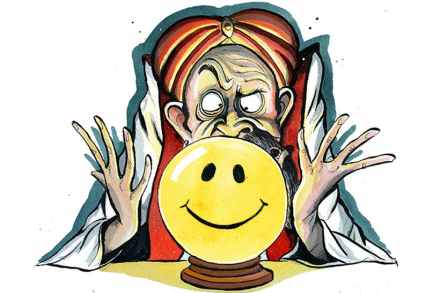
The French writer Michel Houellebecq has a disconcerting habit of correctly predicting unsettling events. In 2001 in Plateforme he predicted a terrorist attack on tourists that duly occurred in Bali a year later. Sérotonine, written last year, foretold the gilet jaunes. In Soumission (2015), he famously predicted that France would elect a Muslim president by 2022. This remains improbable, with the three-year timescale. Yet the odds have improved slightly thanks to the businessman Mohed Altrad, a Syrian exile turned building tycoon who employs 30,000 people worldwide and is due to run for mayor of Montpellier next year, in a country where the mairie is a well-trodden stepping stone to higher office.

The cult of youth damages everyone

We’ve begun to behave as if young people are special; more virtuous and wiser than adults. It’s wrong and it’s creepy and we’ve got to stop it — not for our sake so much as for theirs. It looked, for a terrible moment this week, as if 16-year-old Greta Thunberg would win the Nobel peace prize. On Thursday, 96 per cent bets placed with William Hill were for Greta. Though in the end, the prize went to Abiy Ahmed, the sheer volume of votes for Greta was proof that even the most sophisticated adults in the world have signed up to the bonkers idea that children can somehow intuit the answers to humanity’s existential problems, though Lord knows what the grown-ups expect the kids to do — build a better world on Minecraft?

To solve Britain’s social care crisis, follow the Dutch example

More than a decade ago, four Dutch nurses decided something needed to be done about their country’s care in the community. Back then, it was almost as bad as it is in Britain now — where a recent report found that at least 400 pensioners a week sell their homes to pay for social care. Nursing in the Netherlands had taken a terrible turn in the 1990s, when the government decided healthcare should be more ‘professional’. The ensuing bureaucracy and management doubled the cost, and the quality plummeted. Nurses were forced to spend more time on paperwork and, for want of help, elderly patients ended up in hospital when they could and should have been at home.

For political discourse to survive, we must be more honest about language

When I was an English literature undergraduate, we were all very careful to avoid what used to be called the ‘intentional fallacy’. This is the idea that you can use a text to get at what the author ‘really meant’. The so-called New Critics said, quite reasonably, that the text is all you’ve got to go on and, what’s more, it’s impertinent and irrelevant for a critic to start trying to figure out, say, whether Shakespeare is a racist from the evidence in ‘My mistress’ eyes are nothing like the sun’. This is a useful principle in academic literary criticism (or one sort of academic literary criticism; that’s an argument for another day).

The death of civilised debate

Today nearly all real public discussion has become impossible. Which is why nearly all public thinking has become impossible. Which is why the thinking has gone bad on nearly every major issue now facing us. It isn’t just politics that is finding it hard to operate. It is also the media and every other piece of sense-making apparatus we used to possess. The negatives accrued to any individual or institution for thinking or saying anything remotely controversial now means that they don’t bother any more. We’ve lost the art of discussion and with it the ability to find honest solutions. There are a number of causes. Take the collapse of the ideas of private and public language brought about by technology.

‘It wasn’t the Russian people who poisoned Skripal, it was just a few guys’: Alexander Lebedev interviewed

Who wants to be a billionaire? Not, apparently, Alexander Lebedev, the self-described ‘Russian ex-oligarch’ who has tried billionaredom and found it not to his liking. Lebedev opens his new book, Hunt the Banker, with a nostalgic riff on his happy youth in a tiny Moscow apartment and the observation that ‘the ideal menu consists of buckwheat (60 cents a kilo), extra virgin flaxseed oil, vegetables and a little fish’. Money, he reckons, ‘warms only a shallow soul. It shrivels the heart, gives no peace, and problems proliferate’. Why, then, did Lebedev leave a comfortable post as a KGB spy in London to pursue a career in banking in post-Soviet Russia?

The men I’ve groped (including Boris)

Charlotte Edwardes reports that Boris put his hand on her leg during lunch 20 years ago. Full disclosure, I put my hand on Boris’s leg 20 years ago during lunch. It wasn’t that I was making a pass at him. I just wanted to hold his attention while I was telling him something I wanted him to listen to. Now I am worrying. What if Boris and/or a cohort of other males come forward? ‘Mary assaulted me in a historic sex abuse incident. #SheToo.’ These are topsy-turvy times. Anything could happen and now I think about it, I’m sure I have been putting my hands on legs and generally assaulting men for years — absentmindedly. But the past was a foreign country. They did things differently there.

Brexit grifters are making a killing selling useless advice

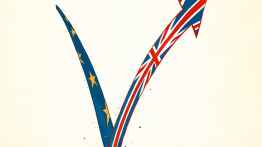
Over the past three years, as we have torturously debated our departure from the European Union, we have heard a lot from the Brexiteers about the industries that might benefit from leaving the EU. Some of these predictions may materialise, others may not. There is one industry, however, that is already doing very well as a result of the referendum. Lots of consultants are making a shedload of money. In the past few weeks, it has become clear just how much.

Cast off: how knitters turned nasty

At first glance, Nathan Taylor might seem the very definition of a ‘right on’ hipster. He goes by the name of ‘Sockmatician’ online and he’s famous in the knitting world for his complicated double-knit patterns. On his Instagram, in between videos of people speed-knitting and many, many photos of socks, Taylor had posts about what it was like to be an HIV-positive man who came out in the 1980s. He dislikes Donald Trump and Brexit. He has even set up ‘inclusive hashtags’ such as #diversknitty, and his profile carefully sets out the pronouns people should use to address him. So far, so woke.

Why try to impeach Donald Trump?

Democrats have long criticized Donald Trump for his addiction to Twitter, his rolling-news attention span, the backlit narcissism of his reality-TV presidency. But the most media-addled people in public life are, in fact, Trump’s critics. Nobody is quicker to reach the most hysterical conclusions. The anti-Trump show must go on, just like the president’s Twitter feed, never mind the details. Take Nancy Pelosi’s announcement this week that the Democrats are forming a committee to look into whether Trump should be impeached because of his dodgy negotiations with Ukraine. This is Big Trump News: impeachments always are. It’s also a foregone conclusion. There can only be one verdict.

The torture chamber: how opposition MPs plan to humiliate Boris

When Jeremy Corbyn declared at Labour conference that his party would only allow an election once no deal had been taken off the table, MPs began to wonder if it could be put off until the new year. The Prime Minister’s tormentors can’t agree when exactly they would like to go to the country, but all agree that there are plenty of ways to torture Boris Johnson. It’s as good a way as any to pass the time. The Tories no longer have a working majority, so these opposition MPs — aided by activist Speaker John Bercow — now hold the power. What will they do? Well, the Conservatives are meant to be gathering in Manchester this weekend for their annual meeting. However, opposition MPs plan to vote against any conference recess.

There is only one law: there must be no Brexit

You’re surprised? Really? What are you surprised by? The specifics — that 11 non-elected, mostly public-school-educated judges, and doubtlessly Remainers I’d guess, should put the final nail into the lid of Brexit? Yeah, sure — that knocked me for six. Never saw that coming. Or was it the generality that surprised you — we’re not getting Brexit after all? If it’s the latter, I don’t think there’s much hope for you. What seemed to me fairly plain on 24 June 2016 — that they, meaning our liberal establishment, would never let it happen — became an absolute certainty by the turn of this year. By January it was either no Brexit or Brexit in name only.

The alliance between America and Saudi Arabia is over

The oil-for-security alliance between the US and Saudi Arabia, forged in 1945 when Franklin D. Roosevelt met King Abdul Aziz aboard a US Navy destroyer, is now over. Just look at the American reaction to the attack by Iran on Saudi oil facilities. Secretary of State Mike Pompeo duly called it an ‘act of war’; the Wall Street Journal told us the attack was ‘the big one’. But then nothing: President Donald Trump merely shrugged and declared the US energy independent. ‘We don’t need Middle Eastern Oil & Gas,’ he said. Industry experts warned that such an assessment was premature; but oil prices stabilised and the sound of war drums faded. We are witnessing the beginning of a new geopolitics in the Middle East.

Justin Trudeau is not a racist – but he is a fool

The election campaign was off to an unexciting start even by Canada’s standards. A well-known but fluffy incumbent, Liberal Justin Trudeau, faced a Conservative leader, Andrew Scheer, whose strategy had been to lay low. The Trudeau message these past four years has been total  political correctness: equal numbers of male and female cabinet members, ‘peoplekind’ instead of ‘mankind’ and requiring summer employment project hirees to sign a pledge to uphold abortion rights. Probably as many Canadians groaned at these fatuities as were impressed by them, but it assisted the Liberals in taking votes from the left, as the Conservatives unhistrionically asked for common sense.

Why do we write dedications in books?

When my siblings and I were clearing out my dad’s bookshelves (he died earlier this year), I made sure to keep any books in which I’d written a personal dedication to him. For some reason I baulked at the idea of them passing into the hands of strangers, or just being left to languish in the anonymous corners of charity bookshops. Worse than that would have been copies of my own novels, dedicated on the title page to ‘Dad’. (‘So even his own father didn’t bother keeping them…’) Why do we write dedications in books? I understand it as a romantic gesture: a way to show off your tremendous good taste to someone you fancy.

As Greta and Malala show, the children know best

The first book I ever produced, some 50 years ago, was a collection of poetry written by children. I called it Children’s Words. There are poems in there by the young Daniel Day Lewis and Montagu Don, among others, and another by one Samuel Taylor Coleridge. I was a young teacher trying all I could to help children find their voices. It was at a time when teachers were not so confined to and driven by a narrow curriculum, the children not so taught to the exam, not so force-fed. So teachers like me could all have more time and space to explore ideas, discover worlds, write our poetry, tell our tales, sing our songs, paint our pictures, make and act our plays. It was a good time to teach.

How to stop drones

Drones have come of age in the war on terror. When the United States and Britain invaded Afghanistan in 2001, the technology was barely out of the lab. Today, these flying machines represent a huge security threat. If reports are to be believed, a Houthi rebel-launched drone attack in Saudi Arabia last weekend shut down 5 per cent of the world’s global oil supply and caused the largest spike in the price of oil since the first Gulf War in 1990. This is what the future of warfare looks like. So far, drones have been mostly on our side: used, very effectively, to disrupt and damage terrorist networks. The campaign against Al-Qaeda in Afghanistan and Pakistan that started in 2004 has been dubbed the Drone War. It’s estimated drones killed some 2,000 militants.

Judgment day: the danger of courts taking over politics

Who runs Britain? When Boris Johnson’s lawyers made their case in front of the Supreme Court this week, defending his right to prorogue parliament, they in effect brought it back to this simple question. This was a controversy for politicians to settle, not courts. Judges, they said, should think twice about ‘entering the political arena’ and unsettling the UK’s ‘careful constitutional and political balance’. He may be the first prime minister to frame the matter so starkly, but no previous prime minister has had to. This is about far more than Brexit. Britain is witnessing political litigation on a hitherto unseen scale. We have a government that has lost a working majority and is being forced by legislation to act against its own central policy.