Features

General election 2019: can Boris Johnson succeed where Theresa May failed?

This general election isn’t the most important in a generation, it is the most significant in the lifetime of anyone born since 1945. It will decide whether Brexit happens, whether Britain has the most left-wing prime minister in its history, whether the Scottish Nationalists are able to secure a second independence referendum and whether Britain’s two--party system can survive. Boris Johnson has taken a risk. A winter poll at a time of unprecedented electoral volatility is dangerous and he has no safety net. The Tories have to win outright to govern: they have no potential partners anymore. The Liberal Democrats’ position on Brexit is irreconcilable with the Tory one; the DUP won’t be doing another deal with them any time soon.

Toxic regulations, not the fire brigade, are to blame for the Grenfell deaths

It has been bizarre to hear the London Fire Brigade taking the brunt of the blame for the deaths of 72 people at Grenfell Tower. Its commissioner Dany Cotton certainly deserves condemnation for persisting in telling residents to stay put when it ought to have been clear early on that fire was engulfing the building and it needed to be evacuated. Her suggestion that she ‘wouldn’t change anything we did on the night’ — in spite of the role her advice played in boosting the death toll — compounds her errors. Yet by the time the fire service arrived, tragedy was already assured. To pin the blame on Ms Cotton, or anyone in the fire service, risks missing the moral of Grenfell.

Rachel Johnson: everyone in my family is getting quince paste for Christmas

Brrring! Freddy Gray of this parish is on the blower. ‘How about a piece for this week saying he’s won, I’ve lost, let’s Get Brexit Done, that sort of thing,’ he pitched. ‘Sorry Freddy, can’t talk, am making membrillo,’ I snapped as I gazed down into my second batch of chopped quinces, vanilla, lemon and sugar — which were rendering down in my magic machine to be set into claggy slabs of mahogany fruit fudge — while snorting the heady, tangy fumes as if they were mummy’s special marching powders. ‘You what?

The family that helped Maro Itoje become a sports star

‘Education, education, education.’ At the time when Tony Blair was repeating this phrase after Labour’s victory in 1997, a Nigerian special needs teacher living in north London named Efe Itoje was drumming that same lesson into his young son. The boy was superb at football, rugby and athletics but his father insisted he focus just as hard on his studies. Or, as he later put it: ‘I told him he needed to make a decision. If he wanted to play rugby then fine, but if his grades dropped I’d declare war on him.’ He ended up at Harrow and when the rugby scouts came knocking, the Itojes insisted that a university education was the minimum required downpayment.

Maro Itoje is a national hero for our time

Sport is a paradox. It’s supposed to be. Sport divides, but then again, sport unites. The England rugby union team play in the World Cup final in Japan on Saturday morning, thereby dividing the English from the South Africans, and dividing those who follow the game into two camps — England supporters and everybody else. Closer to home, it divides the English most particularly from the Welsh, who suffered the great misfortune of losing their semi-final to the South Africans. But in these times of bitter divisions — perhaps the deepest the country has known since the time of the General Strike — England will, at least for a couple of hours, feel united.

Boris Johnson’s Brexit deal has changed everything

Ever since Boris Johnson became Prime Minister his opponents — both inside and outside his party — have been convinced that his ‘do or die’ pledge to have the UK out of the EU by 31 October would be his greatest vulnerability. ‘We’ll make him miss this deadline,’ they thought, ‘and his credibility will be shot.’ Brexit party voters would write him off as another blusterer from a Tory party unable to deliver. He seemed to think so too, repeatedly saying that ‘extension means extinction’. His enemies have now succeeded; the defeat of the government’s Brexit timetable in Tuesday night’s vote means it is near impossible for him to meet that pledge.

A Halloween short story: by The Woman in Black’s Susan Hill

‘This is a true story…’ Right. Only this time, it really is. There are no wails, whistling winds or taps on window panes, so you may find it a trifle prosaic, but because my tale has none of the traditional accoutrements that may make it all the more chilling. Stay with me. In June this year we had two cars, a Vauxhall Antara and a Volkswagen Tiguan, and it was in the Antara that we set off to the Cotswolds, from where my partner would continue to London for an event requiring evening clothes — which she had left behind in the house. By wondrous chance, we were passing a shopping centre, into which she dashed for a substitute outfit, taking her phone because she was expecting an important call. She returned to the car sans phone.

Bomb attacks are now a normal part of Swedish life

 Stockholm Until recently no one would have thought of adding a column on bombings to the crime statistics One night last week, explosions took place in three different locations in and around Stockholm. There were no injuries this time, just the usual shattered windows, scattered debris and shocked people woken by the blast. The police bomb squad was already on its way to the first explosion in the district of Vaxholm when it had to turn around and prioritise the detonation at a residential building in the more densely populated city centre. Residents whose doors had been deformed by the shock wave had to be rescued. The third target (seemingly unrelated) was a facility belonging to a Syriac Orthodox church, which had already been bombed twice in the past year.

An ‘I’ for a ‘my’: why we’re terrified of getting our grammar wrong

Jonathan Agnew recently described off-the-record interviews as those where you agree that it’s ‘between you and I’. Last month, Jess Phillips tweeted that she had ‘read a few wild accounts of Boris Johnson and I in the lobby’. And a Times journalist wrote about someone who had ‘made Jenny and I feel so welcome’. All three are articulate, intelligent people. And yet all three wrote ‘I’ where they meant ‘me’. It’s happening more and more. The only explanation can be self-doubt. Give any of these people a second to think about it, and they’ll reply that yes, of course they should have said ‘me’. It’s easy to work out: just remove the other person from the sentence.

Jacob Rees-Mogg: ‘I am enormously environmentally friendly by driving old Bentleys’

Jacob Rees-Mogg sits at a mahogany table in his office drinking black coffee from a Spode cup. Across from him sit three aides — laptops out and ears pricked. These days, the Moggster comes with an entourage, and their determination to be present sometimes surprises him. ‘I kept on saying to them on Sunday that they didn’t need to come to the thing in the evening but I think they’re worried about me saying the wrong thing!’ They’d have had good reason to worry. Since his election in 2010, Rees-Mogg has been one of the most quotably outspoken Tory MPs: now he is Leader of the House of Commons, his words carry more weight.

Tat Britain: Museum gift shops are naff – but necessary

Exit through the gift shop. Pick up a postcard, a magnet, a novelty eggcup in the shape of Queen Elizabeth I. Treat yourself to a replica Rosetta Stone, a Babylonian bookend, a build-your-own Leonardo trebuchet. Tuck your little one up at night with a cuddly Anubis the dog. Nicholas Coleridge, chairman of the Victoria & Albert Museum, has put the tat among the pigeons by telling the Cheltenham Literature Festival that the V&A shop is more successful than the BM’s.

Pax Russica: as Trump abandons Syria’s Kurds, Russia is ready to expand its empire

While American troops were hurriedly leaving north-eastern Syria, a young female Kurdish politician called Hervin Khalaf was pulled from her car and executed by the side of the road. Actually, the Kurdish media said she was raped and then stoned to death. They blamed one of the Arab militias being used by Turkey in its invasion. A grim video posted online shows a man holding a Kalashnikov nudging her body with the tip of his boot, as you would a dead animal. The video has not been authenticated and the militia accused of doing this says it was miles away at the time. But in Khalaf the Syrian Kurds have found a martyr to the American ‘betrayal’. She was a human rights activist who formed her own political party to bring Arabs and Kurds together.

The Canadian election is turning into a comedy of cringe

Next week my compatriots will cast their votes in what has arguably been the worst Canadian election ever. By ‘worst’ I don’t mean allegations of voter fraud or political corruption or scenes of civil unrest but a collective release of hot prairie wind followed by a vague sinking sensation — the feeling of a prosperous nation of decent people settling into a new low of political disillusionment. The campaign kicked off with a bang, as Time, a US magazine, humiliated the Canadian press by breaking the story of the year: yearbook images of our dreamboat PM — the thinking non-gender-binary person’s gluten--free crumpet — cavorting in blackface back when he was teacher at a private Vancouver high school. Since then the spiral has continued.

Should Muslim parents be allowed to challenge LGBT lessons?

We saw two different worlds, or at least two different value systems, collide in the High Court in Birmingham this week. On one side there was Sarah Hewitt-Clarkson, the headmistress of Anderton Park, a little primary school in Sparkhill, a largely Pakistani bit of the city; on the other, two men who represent Muslim parents there. You may well have heard about the case. It has turned into one of those totemic issues: tolerant Britain vs backward religious people. At issue is the question of whether and how children should be taught about gay relationships — and whether and how parents who don’t like it should be allowed to protest about it.

The commercialisation of shooting may kill the whole sport

A few years ago I was sitting on the sofa at Sandringham enjoying a ham sandwich with the Queen’s then-head gamekeeper, David Clarke. The thing about working for the royals, he said, is that if a drive’s a flop, they completely understand. What Clarke meant is that even if no royal bags a bird, they won’t complain. It’s about the day, not the numbers dead. Sandringham (unsurprisingly) provides a snapshot of a bygone sporting era, a time when most shooting syndicates were collections of friends and locals, before entrepreneurial types sussed there was a few quid to be made out of shooting. Nowadays, armed with just an iPhone, a bloke on his City law firm lunch break can book a day where a bag of 500 pheasants is guaranteed.

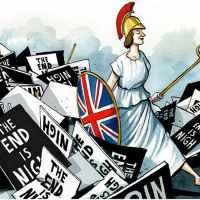
The Brexit blame game

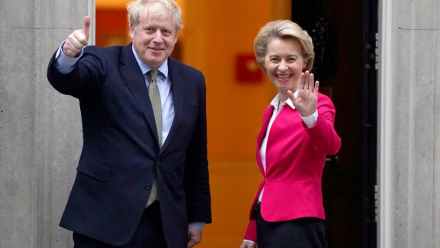
There will be no last-minute deal. The talks between the UK and the EU have effectively broken down. It isn’t that there’s no light at the end of the tunnel, it’s that there’s no tunnel at all. The blame game is now far more advanced than the negotiations. The diplomatic crockery has been smashed even before Boris Johnson and the leaders of the EU27 have arrived in Brussels for this month’s European Council. The question now is whether the talks can ever be resuscitated at a later date —  or if we are in a world where the only options are no Brexit or no deal. The assumption had long been that as the 31 October deadline neared, one side or the other would blink. That the pressure would produce a compromise.

Germany’s ailing economy can’t afford a no-deal Brexit

The UK was the ‘sick man’ when we ‘joined Europe’ in 1973. Now, with Britain on the cusp of leaving, the European Union’s largest economy is decidedly out of sorts. After failing to recover over the summer, Germany is now almost certainly in recession. The state of the fourth biggest economy on earth always matters — but with Germany dragging down the broader eurozone, its declining health could decisively impact Brexit negotiations too. Politically, Brussels and Dublin are bullish. They have dismissed Boris Johnson’s proposals, gambling on an extension and perhaps Brexit being cancelled entirely. But such intransigence could yet cause a disorderly no-deal Brexit — which would have a pretty big impact on all major economies on the continent.