Features

Trans activists are making life harder for trans people

This was the year that the word ‘non-binary’ went mainstream. It has now officially entered the dictionary — lexicographers at Collins have defined the term as ‘a gender or sexual identity that does not belong to the binary categories of male or female, heterosexual or homosexual’. Non-binary also entered the Liberal Democrat manifesto, though Jo Swinson may now be regretting this decision. Non-binary is easy to announce; it’s rather more challenging to explain to the electorate — or to journalists. In a series of difficult interviews this week, she even denied the fact that every human being is either male or female. I’m a science teacher; if she had been one of my pupils, I think I would have despaired.

The chilling stories from inside China’s Muslim internment camps

Vegetable-seller Kairat Samarkhan didn’t know why he had been summoned to the police station. ‘I had to empty my pockets and hand over my belt and laces. Then they started to ask questions,’ he says. After days of interrogation, during which he was hardly allowed to sleep, officers pulled a sack over his head and drove him to a camp near the city of Altai. Samarkhan, a Muslim Kazakh, told me about his experience in the camp: ‘Every day, we had to renounce the Muslim faith and confirm that we respect the laws of China. Before every meal, we chorused: “Long live Xi Jinping!” ’ In the past two years China has — almost unnoticed by others — built the largest network of internment camps in the world.

The new Conservatism has begun

Elections should be carnivals of democracy, yet the campaign we have just been through has felt more like amateur dramatics at times – the standard of debate has not risen to the importance of the issues at stake. Yet this election will go down as one of the most consequential in British history. It has brought a profound change to our politics: not just that Brexit is now certain to happen, but also in the way that both main parties have transmogrified before our eyes – in terms of what they stand for, and who they appeal to. The list of Tory gains shows the extent of the change that has just taken place: Leigh, Workington, Clwyd South, Darlington, Wrexham, Burnley, Redcar, Scunthorpe and a slew of other working-class seats north of the Watford Gap.

All the world’s a stage: this election has echoes of Shakespeare and Dickens

The Christmas election has unfolded like a series of mini-dramas from panto, Dickens and other popular classics. Boris has come across as a Dick Whittington figure, already twice mayor of London, and hoping to establish his seat in the capital on a more permanent footing. Jeremy Corbyn resembles Mother Goose flinging sugary treats at gullible children. And Jo Swinson has clearly been reading Cinderella (and believing every word of it). Swinson positioned herself as the long-suffering drudge who must tidy away the mess left by the Ugly Sisters, namely the Tory and Labour parties. In the story, Cinderella ends up as a princess (‘I’m standing to be your next prime minister’). The snag is that elections rarely turn out like fairy tales.

Finland’s new PM has wowed the world. But what about Finland?

 Helsinki Sanna Marin is the world’s new feminist political icon. At the age of 34, she’s just been appointed the prime minister of Finland after a power struggle in the five-party coalition government that forced Antti Rinne out of office only six months after he won the general election. Marin isn’t just young and a woman — she was brought up by two mothers in a small town south of Tampere, an industrial region that isn’t known for championing progressive values. That backstory has earned her the plaudits of feminists on both the left and the right. To the Daily Telegraph, she’s a ‘trailblazer’. For the Guardian, her coalition of women-led parties reminds us ‘that another politics is possible’.

‘Corbyn is led by ideology, I’m led by economics’: Sajid Javid’s spending plan

If Boris Johnson wins next week, it will be on a manifesto of change. He will not deliver the fourth term of the same Tory government, he says, but a new agenda guided by a new philosophy — and the big difference will be spending. Gone are the days when Tories defined themselves by a determination to balance the books. Sajid Javid, the Chancellor, promises a ‘new economic plan for a new era’, which would mean investment on a scale that would have made George Osborne baulk. Providing, of course, that his party is still in government by the end of the next week. ‘There is a path to victory,’ he says when we meet while he is campaigning on the outskirts of Birmingham. ‘But it’s a narrow path.

It’s possible to talk to children about politics without leading them in one direction

My six-year-old son announced, from the back of the car, that he was backing Boris Johnson. My wife, who’s voting Lib Dem, was horrified, accusing me of indoctrinating the boy; I resisted the temptation to film a video and post it on Twitter, to be retweeted by Tories and hate-tweeted by others accusing me of brain-washing, even child abuse. But when we questioned our son it soon emerged that he had heard — whether from a news report, or from his parents talking — that Boris Johnson was in favour of cake and in favour of eating it, and this was very much a policy he could get behind. It’s easy to assume that any political opinion expressed by a child must be the result of indoctrination, but it’s not true.

This election will change Britain – and Europe – for good

This election campaign feels unreal. Commentators focus on spending plans and personal foibles, but what will make next week’s vote historic is something else, something so momentous that we draw back from discussing it seriously. The Lib Dems boast of Stopping Brexit, knowing that as things are now they will never have to try. Jeremy Corbyn pleads neutrality: the first leader not sure which side he was on since poor Henry VI in the Wars of the Roses. The Conservatives, whose hopes of office depend entirely on this issue, downplay its importance: ‘Get Brexit Done,’ ministers repeat, as if it were a tiresome distraction from real politics. Perhaps it is, if ‘real politics’ is only about mending potholes and recruiting nurses.

‘You either are panto, or you aren’t’: Christopher Biggins on his favourite time of year

Christopher Biggins has managed to bag some of the nation’s favourite TV characters over the years: Lukewarm in Porridge and Nero in I, Claudius, to name but two. Yet there’s a good chance he wouldn’t have had a career at all if it hadn’t been for his Aunty Vi. She was ‘the most terrible snob’, he tells me. The family accent (a mishmash of northern and broad Wiltshire) troubled her, so she sent the young Biggins off for elocution lessons. His teacher was also into theatre, and saw he had potential. Her encouragement and the new accent saw him start in rep on £2 a week. He left school at 16, bitten by the bug. Fifty-five years later he’s still busy, still bitten.

Our tree-planting obsession may do more harm than good

‘Four beef burgers is the same as flying to New York and back! FOUR BURGERS!’ When I arrived at the Extinction Rebellion demo, the first person I met was a woman activist, clad from head to foot in ocean-polluting, synthetic fibres, talking absolute nonsense. And because I’m a beef farmer, I felt I should set her straight. I explained that no, my grass-fed beef does not harm the planet, and asked her what on earth she expected the farmers of Britain to do if they couldn’t keep cows. ‘Ah,’ she says, folding her arms, ‘they should just grow trees.’ Trees are fast becoming the answer to everything. Worried about floods? Don’t bother dredging rivers, just plant forests. Anxious about the effect on the environment of flying?

What the Tories don’t understand about Corbyn voters

Until recently, the Tories seemed pretty confident about next week’s election. Despite spending three and a half years blundering over Brexit, they were still comfortably ahead of Labour in the polls. In Jeremy Corbyn, they had an opposition leader denounced as a terrorist sympathiser, an unreconstructed communist, a rabid anti-Semite and — in general — an enemy of Britain. You might regard Corbyn this way yourself. If so, then it’s worth asking: if he really is so bad, why has support for Labour been steadily increasing since the election was called? Is the nation going mad — or might there be more to it? I’ve supported and campaigned for Corbyn’s type of politics most of my adult life.

Nightmare on Downing Street: what could happen on Friday 13th?

Radicalism does not usually work out well for the Labour party. Michael Foot fought the 1983 general election on a hard-left manifesto famously dubbed ‘the longest suicide note in history’ and saw his party’s worst result since the first world war. But as next week’s general election approaches, despite running on an even more sweepingly statist programme, Labour is rising in the polls. The most left-wing government in British history is now a real possibility. On the face of it, this makes no sense. Why, after the chaos of the last hung parliament, would voters choose another one?

Trump’s visit couldn’t come at a worse time – for Boris and for Nato

In the next few days, on 3 and 4 December, Prime Minister Boris Johnson will host a grand international conference of 29 North American and European nations to mark the 70th anniversary of the foundation of Nato — the North Atlantic Treaty Organisation, which, led by the United States, kept the peace during the fraught years of Cold War confrontation with the Soviet Union. We are told that the Queen will give a reception in honour of the heads of state and government and that Donald Trump has accepted the invitation. Just over a week later, the British general election takes place. Intrinsically the two events are quite unconnected. In reality they are bound together by the common menace of the President of the United States, who bobs beneath them like an untethered floating mine.

‘My wife sends me sleep bubbles’: The extraordinary world of Pete Townshend

When most rock stars have trouble sleeping, they fall back on Valium, temazepam, heroin or Jack Daniel’s. But Pete Townshend, guitarist and songwriter for The Who and — we’re pleased to discover — Spectator subscriber, isn’t much like most rock stars. Sober now for three decades, he calls instead on his wife Rachel’s psychic powers. ‘Sometimes,’ he says, ‘when I’m having difficulty sleeping, Rachel — who has some… certainly, some kind of healing powers — will say to me, “Do you want me to send you a sleep bubble?” Now, I often go’ — he mimes squirming like a reluctant child — ‘“No, of course I don’t need you to send me a bloody sleep bubble!

Allegations of anti-Semitism are damaging to Labour, but not toxic

Ephraim Mirvis, the Chief Rabbi, was right to take the unprecedented action of denouncing Jeremy Corbyn’s Labour for endemic anti-Jewish prejudice. James Cleverly, the Conservative chairman, was right to draw attention to polls showing half of British Jews are contemplating emigration if Labour wins. The Jewish Chronicle was right to turn its cover into an unprecedented open letter, begging Britain’s non-Jews not to vote for Corbyn. But if support for Labour does not collapse as a result of all this condemnation, don’t be surprised. In fact, Labour is doing rather well. Before the Commons voted to hold an election, Labour averaged 23 per cent support in the polls.

Wisdom of the ages: we must keep listening to the elderly

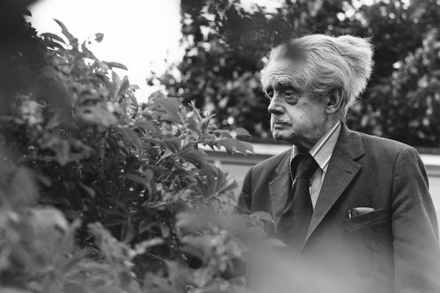
My beloved grandmother died at 90, and my mother at 89, after having Alzheimer’s for 11 years. So I am not rattled by the old; I find their memory lapses challenging rather than frightening. (If I were the full-time carer of an elderly husband, it might be another matter. One woman described it as being strangled slowly by a python.) I recently visited 96-year-old Sir Peregrine Worsthorne, former columnist, journalist and editor of the Sunday Telegraph, at his house in Bucks. In May, his wife (writer Lucinda Lambton) and a kind Croatian carer were present. This time, the two of us were alone for three hours. Perhaps this made it easier for Perry, and me, to focus. I brought up key figures from his past.

Venice needs Venexit

Some of Venice’s problems are well known: the challenge of conserving her famous buildings, the dangers of poorly managed mass tourism — not to mention the fact that the city might well simply drown, a threat made all the more obvious by last week’s floods, the worst in 50 years. Since 1987 billions have been spent on the Mose project, a still unfinished and controversial system of underwater dams intended to protect the city from flooding. The authorities have repeatedly shifted the completion date: 1995, 2012, 2016 and now 2021. Venetians suspect these delays were just attempts to hide serious faults. They view the most recent floods as a clear sign of a major dysfunction in the way the city is politically managed.