Features

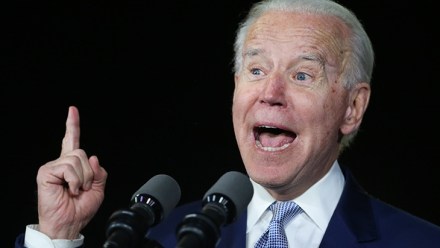
Is there method – or madness – behind Trump’s actions in Iraq?

Leaders are often accused of escalating a conflict abroad in order to distract from headaches at home. On Tuesday, before Iran’s missiles were fired, Donald Trump seemed to be doing the opposite. He and his media surrogates started their now all-too-familiar yabbering about impeachment and the Democrats. It felt as if they were trying to move the news cycle away from the Iran crisis. We’re in an election year after all, and the polls suggest a large majority of American voters don’t want more war. Then Tehran launched what it is calling ‘Operation Martyr Soleimani’, which at first prompted a rare nervous silence in Washington. The White House led reporters to believe the President would gravely address the nation that night, but he postponed.

Britain after Brexit: it’s time to decide on our place in the world

‘Global Britain’: a phrase that provokes mockery and even indignation. As an alternative to EU membership many consider it impossible and worse, undesirable. Are we capable of true independence, or is this an illusion? Does ‘global Britain’, as its bitterest critics accuse, draw on imperial nostalgia and nationalistic arrogance? Or is it a rational response to a changing world? It is certainly not a new response. Britain has been a global player since the 1730s. Since the early 1800s we have had to be: with a population of 14 million we were no longer able to feed ourselves, and Britain’s enemies looked forward to the day when it would starve.

Fight fire with fire: controlled burning could have protected Australia

 Sydney By modern standards, my grandfather would probably be considered an environmental criminal. To clear land for his farmhouse in north-eastern Victoria — and for his milking sheds, pig pens, chicken sheds, blacksmith shop and other outbuildings — he cleared hundreds of trees. And he cleared thousands more for his wheat fields, cattle paddocks and shearing sheds. Old man Hobbs would probably be found guilty of cultural appropriation, too, because he adopted the Aboriginal method of land-clearing. He burned all of those trees. He also established fire-delaying dirt paths through surrounding bushland.

My clash with Cameron

MPs have a standard approach to political biographies, which falls into three phases: first, preliminary gossip about what will or won’t (always a lot more interesting) be in it; second, mildly salacious enjoyment of the usually tepid leaks and excerpts in the press beforehand; and third, once the book comes out, the inevitable furtive rummaging through the index to see if they get any mentions. Stage three is hardly restricted to MPs, of course: William F. Buckley famously sent Norman Mailer a book with ‘Hi Norman’ inscribed in the index, knowing Mailer would look there first.

‘I aspire to write for posterity’: An interview with Tom Stoppard

Sir Tom Stoppard is Britain’s — perhaps the world’s — leading playwright. Born Tomas Straussler in Zlin, Czechoslovakia, in 1937, his family left as the German army moved in. The Strausslers were Jewish. In adulthood he learned that all four of his grandparents were killed by the Nazis. His father was killed by the Japanese on a boat out of Singapore as he tried to rejoin his wife and two sons. In India his mother married again, to an English Army man who gave his stepchildren his surname. Stoppard has lifted the lid on his early life only once before, in a piece for Talk magazine in 1999.

Boris’s Britain: How the PM intends to deliver for his new friends in the North

The era of uncertainty has ended. Boris Johnson’s decisive victory has not only broken the Brexit deadlock created by Theresa May’s disastrous 2017 campaign, but also turned the page on almost a decade of weak government. The previous three general elections have all resulted in constrained prime ministers. First, David Cameron was forced to govern in coalition with the Liberal Democrats. Then, in 2015, his slim majority left him dependent on Tories who would be on the other side from him in the EU referendum he had had to promise. The May debacle left her at the mercy of — and defeated by — her own warring factions. But now we’re looking at something very different: a Prime Minister who is king of all he surveys at Westminster.

Words to live by from Saint John Henry Newman

On 13 October, John Henry Newman, a distinguished and distinctive Englishman, was officially declared a Saint. A well-known saying of his is: ‘To live is to change; to be perfect is to change often.’ How did that work in his life and, to a lesser extent, how has it worked in mine? In 1833, Newman was desperate to get back to England from a trip to Italy, including to Rome, for which he acquired a deep dislike. He had his plans ready, among them a determination to lead the Church of England in a profound renewal. But he fell ill and then, heading for Marseilles, his ship was becalmed in the Strait of Bonifacio, between Corsica and Sardinia. His frustration deepened. But then a change.

The best Christmas gift you can give yourself is to learn some poetry by heart

Every Christmas I find I am living in the past. I blame my father. He was born in 1910 — before radio, before TV, before cinema had sound, so he and his siblings made their own entertainment at Christmas. He brought up his children to do the same, which is why my unfortunate offspring have a Christmas that’s essentially a century out of date. There are three elements at its heart: board games that end in rows, parlour games that end in tears, and party pieces performed around the Christmas tree. I owe my very existence to my father’s love of board games. As a boy, his favourite was a game of military strategy called L’Attaque, invented in France in 1908.

Islam’s reformation: an Arab-Israeli alliance is taking shape in the Middle East

When Benjamin Netanyahu visited Oman in 2018 in a gesture of goodwill to Israel’s neighbours, the welcome was not universal. For an Israeli Prime Minister to be warmly greeted in a proud Arab state was, for some, far too much. The Omani foreign minister, Yusuf bin Alawi bin Abdullah, was asked on Al Jazeera why the visit had been allowed. The reply went viral: ‘Why not? Is it forbidden to us? Israel is a nation among the nations of the Middle East. We should embark on a new journey for the future.’ A new narrative is emerging in the Middle East. New maps of the Muslim mind are being drawn and old hatreds are on the run. The anti-Semitic craze to destroy Israel was powerful in the 1960s, uniting Egypt’s President Nasser with his fellow Arabs.

This year, I’m performing all 32 of Beethoven’s sonatas. Here’s why

For the past several decades, little in my life as a professional pianist has been as constant as my relationship with Beethoven. It has been intense, immersive, impassioned, hugely demanding and hugely enriching. In the current season, though, it has become something it never was before: exclusive. Let me explain. Like any serious piano student, I first began to work on one of Beethoven’s piano sonatas around the age of ten. From that point on, the work has never stopped. Beethoven’s music, in addition to its mastery, beauty and spirituality, has a force of personality perhaps unequalled by any other artist’s work in any medium or any era.

I was born to be a pantomime Dame (oh yes I was!)

‘Flamenco, lambada/ But hip hop is harder/ We moonwalk the foxtrot/ Then polka the salsa…’ I’m sure you know those lines from the Spice Girls’ anthem ‘Spice Up Your Life’, which happens to be the biggest song-and-dance number in this year’s Jack and the Beanstalk pantomime at Helmsley Arts Centre in North Yorkshire. It’s also a spotlight moment for the Dame, who’s required to wiggle extravagantly downstage then pirouette for the next line — ‘Shake it, shake it, shake it’ — and do just that. I’m told it’s called twerking. And yes, the Dame is me, your veteran weekly business columnist. How did I get here? You may well ask.

History may hold the secrets of statecraft – but not the secrets of business leadership

‘How can one person lead one hundred?’ That was one of the questions in my Cambridge entrance exams back in 1981, and although I can’t now recall whether I tried to answer it in the three hours we were given, it has fascinated me ever since. So when I was given the splendid opportunity of delivering nine Lehrman Institute lectures on military history at the New-York Historical Society three years ago, I used them to try to answer it, at least in terms of war leadership. What became apparent was what a total waste of time and effort most of the modern ‘leadership skills’ industry is whenever it tries to apply the lessons of war leadership to anything else, and especially business.

A soldier’s legacy: how a baby’s cry saved a family

It was early evening on Sunday 6 August 1944. The Allies’ bloody struggle to liberate Normandy from the Nazis had reached the village of Vaudry. As gunfire broke out on a farm near the Pont du Vaudry, 40 members of one French family threw themselves into a trench next to the house. They pulled torn mattresses and tarpaulins over their heads; those sheltering ranged in age from very elderly grandparents to a four-week-old baby. The lives of the Le Chevalliers hung in the balance as Allied and German bullets were exchanged just above their heads. The family had inadvertently made their situation yet more dangerous: the tarpaulins they hid under were distinctively German.

We’ve just had the best decade in human history. Seriously

Let nobody tell you that the second decade of the 21st century has been a bad time. We are living through the greatest improvement in human living standards in history. Extreme poverty has fallen below 10 per cent of the world’s population for the first time. It was 60 per cent when I was born. Global inequality has been plunging as Africa and Asia experience faster economic growth than Europe and North America; child mortality has fallen to record low levels; famine virtually went extinct; malaria, polio and heart disease are all in decline. Little of this made the news, because good news is no news. But I’ve been watching it all closely.

‘Cook it like a prayer’: Bip Ling’s Christmas curry

This dish is refreshing and super yummy. It’s a recipe that Didas (my Indian grandmother) taught me. The zesty tomato flavour makes my mouth water. You can’t go wrong with this curry. Everyone loves it and always asks for more! It’s comforting and warm, especially when it’s cold outside during Christmas time. Cook the dish like a prayer. The more you enjoy the process, the better it will taste. You can use the same recipe with different meat, or try it with vegetables. Make sure you taste the sauce as you cook, and add more spices if you desire. It’s even more fun to cook with the song ‘Curry’ by Bip Ling in the background.

‘I’ve had two totally successful marriages’: Stanley Johnson interviewed

If anything could make me feel sorry for Boris Johnson, it’s meeting his father, Stanley. Before we met, he sent me a great list of press cuttings about his appearances with the Extinction Rebellion campaign, and ordered me to watch his recent reality show Celebrity Hunted on Channel 4 and read his latest novel, Kompromat. (The former, where celebrities become ‘fugitives’ and go on the run, was excruciating. But the novel — soon to be retitled The Brexit Conspiracy — is good fun, containing thinly disguised portraits of Putin, Trump, Murdoch, and also an ex-London mayor ‘whose ebullient exterior concealed a razor-sharp mind and a pronounced streak of political cunning’.

‘I was a tortured, obviously brilliant child’: James Ellroy interviewed

James Ellroy is occasionally quoted as saying he’s the greatest American crime novelist ever. The man sometimes called the ‘demon dog of American letters’ has no hesitation in affirming it when he arrives in The Spectator’s London offices to record a podcast. ‘Oh yes, I think that’s been proven,’ he says matter-of-factly. Has he always thought that? ‘When I finished the LA Quartet. I knew there was nobody like me and there wasn’t.’ Ellroy’s new book, This Storm, is the second novel in a projected set of prequels to his LA Quartet (The Black Dahlia, The Big Nowhere, LA Confidential and White Jazz) set between LA and the Baja peninsula in Mexico in the aftermath of Pearl Harbor.